
Bare loops give a superconducting sensor a magnetic reference
A journal publication describes an experimentally tested array design. The result first appeared as a 2025 preprint.
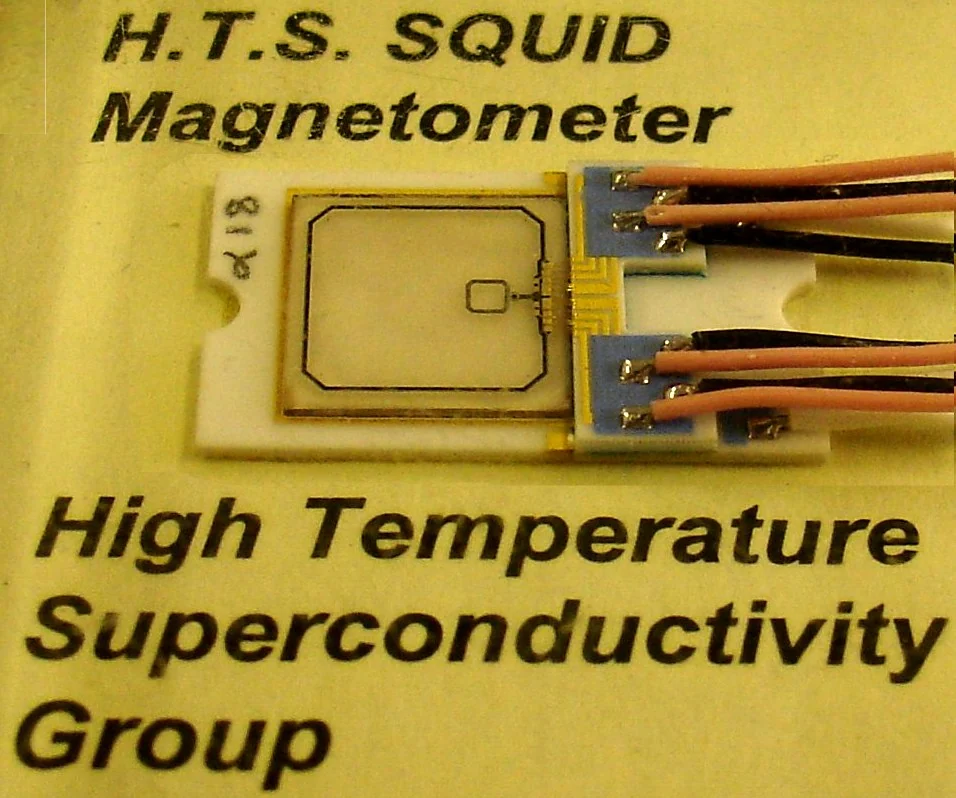

A Physical Review Applied paper reports that inserting superconducting loops without into a two-dimensional SQUID array can create an absolute magnetic-field response without physically varying the loop areas. The authors connect an analytical model with measurements on fabricated arrays. This is a laboratory sensing result, not evidence of a clinical instrument or measured medical benefit.[1][3]
The publisher dates the paper to October 26, 2026. Adelaide University's announcement followed on October 27. The first preprint appeared on November 19, 2025 and the current author manuscript is version 6, revised October 17, 2026. This is a journal-publication milestone for an existing research result.[1][2]
Editorial interpretation
A magnetic sensor needs more than a response to small changes: an operator may also need a usable reference point. The design changes how the array supplies that reference. A practical comparison would still need noise, bandwidth, repeatability and calibration measurements under matched conditions.
For a reader comparing sensing research, a reference response and a sensitivity claim should remain separate. One asks how the instrument identifies a field value; the other asks what change can be resolved under specified conditions. A useful follow-up would explain both tasks with the same test configuration. That would make it possible to see what the proposed design improves without assuming that every performance measure improves together.
Chronology also changes the meaning of the news. A journal-publication milestone gives readers a new publication record for a result already in public discussion. It does not reset the experiment’s discovery date. Keeping the first manuscript, current revision and journal date together helps a reader trace the evidence and share the result accurately, while leaving room for a later methods comparison when the final text can be inspected.