Complete credits without JavaScript
Use your browser's Find command to locate an image, article, creator or asset ID.
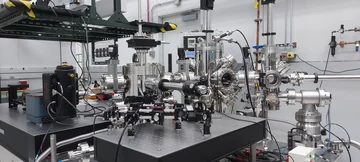
Nvidia DGX Spark oblique view dllu
An NVIDIA DGX Spark photographed by Daniel Lu in May 2026. Hardware context for one of the GPU systems discussed in Qblox’s announcement; this is not Qblox’s benchmark setup or evidence of its reported latency.
Nvidia DGX Spark oblique view dllu — Daniel Lu (dllu). CC BY-SA 4.0. Source photograph date: 2026-05-16. · CC BY-SA 4.0
Full composition proportionally resized to 640 × 395 and 1200 × 741, encoded as WebP at quality 76. Original EXIF, XMP and ICC metadata carried when present. No crop, recoloring, retouching or generated elements. These image versions retain CC BY-SA 4.0. Editorial context only. Retain creator, source, exact license and modification notice. No endorsement is implied. Adapted image remains under the same ShareAlike license.
Original source · Reuse terms
Used for: Qblox reports microsecond GPU control links, with different timings for Blackwell and DGX Spark
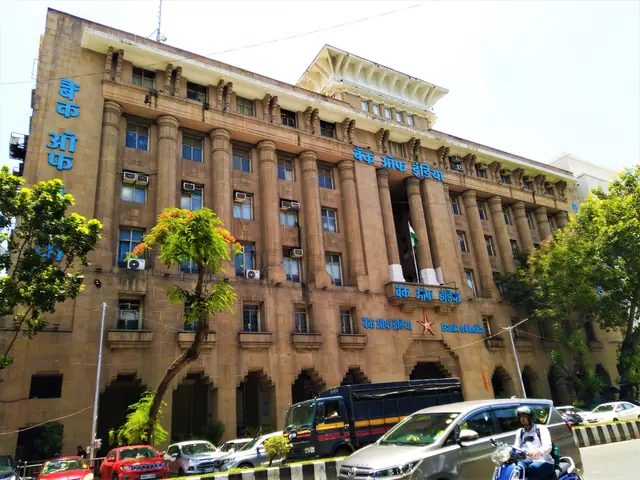
西北大学长安校区北门.JPG (North gate, Chang’an campus, Northwest University)
Northwest University's Chang'an campus north gate in Xi'an, photographed in 2011. The institution is an affiliation of the authors of the new theoretical study of coherence and extractable work in quantum batteries.
西北大学长安校区北门.JPG (North gate, Chang’an campus, Northwest University) — Acstar. CC BY-SA 3.0 Unported. Source photograph date: 2011-06-01. · CC BY-SA 3.0 Unported
Full composition proportionally resized to 640 × 427 and 1200 × 800, encoded as WebP at quality 76. Original EXIF, XMP and ICC metadata carried when present. No crop, recoloring, retouching or generated elements. These image versions retain CC BY-SA 3.0 Unported. Editorial context only. Retain creator, source, exact license and modification notice. No endorsement is implied. Adapted image remains under the same ShareAlike license.
Original source · Reuse terms
Used for: Quantum-battery analysis separates coherence from usable work
Chemocline water Lake Mahoney
Archival biological context: water containing purple photosynthetic bacteria sampled at Lake Mahoney, Canada, in 2008. The paper draws inspiration from bacterial light-harvesting architecture; this photograph does not show a sample, device or experiment from the study.
Chemocline water Lake Mahoney — MethanoJen. CC BY-SA 4.0 International. Source photograph date: 2008-07-09. · CC BY-SA 4.0 International
Full composition proportionally resized to 640 × 853 and 1200 × 1600, encoded as WebP at quality 76. Original EXIF, XMP and ICC metadata carried when present. No crop, recoloring, retouching or generated elements. These image versions retain CC BY-SA 4.0 International. Editorial context only. Retain creator, source, exact license and modification notice. No endorsement is implied. Adapted image remains under the same ShareAlike license.
Original source · Reuse terms
Used for: Quantum-battery theory finds different designs favor different outputs
CipherDisk2000.jpg
A mechanical substitution-cipher disc photographed in 2013. Historical cryptography context; the study evaluates statistical acceptance rules for simulated quantum key search, not this physical device.
CipherDisk2000.jpg — Hubert Berberich (HubiB). Public-domain dedication by copyright holder. Source photograph date: 2013-05-08. · Public-domain dedication by copyright holder
Full composition proportionally resized to 640 × 640 and 1200 × 1200, encoded as WebP at quality 76. Original EXIF, XMP and ICC metadata carried when present. No crop, recoloring, retouching or generated elements. Editorial context only. Retain creator, source, exact license and modification notice. No endorsement is implied.
Original source · Reuse terms
Used for: Quantum cipher study tests what makes a decrypted message plausible
Marco Antenna.jpg
A NASA MarCO CubeSat with its antenna and solar array deployed during ground testing. Archival small-satellite context; this is not a WISeSat spacecraft, a SEALSQ payload or evidence that the proposed capacity agreement has closed.
Courtesy NASA/JPL-Caltech. MarCO spacecraft during ground testing. Source published September 13, 2018. Used under the JPL image use policy. · NASA/JPL image use permission; Commons marks US public domain
Full composition proportionally resized to 640 × 360 and 1200 × 675, encoded as WebP at quality 76. Original EXIF, XMP and ICC metadata carried when present. No crop, recoloring, retouching or generated elements. Editorial context only. Retain creator, source, exact license and modification notice. No endorsement is implied.
Original source · Reuse terms
Used for: SEALSQ signs a $15 million satellite-capacity letter of intent for QSOC
KDB HQ.jpg
Korea Development Bank headquarters, photographed in May 2010. Archival institutional context for the fund discussed in the article; no 2026 eligibility decision, allocation or award is pictured.
KDB HQ.jpg — Swp307. CC BY-SA 4.0. Source photograph date: 2010-05-26. · CC BY-SA 4.0
Full composition proportionally resized to 640 × 427 and 1200 × 800, encoded as WebP at quality 76. Original EXIF, XMP and ICC metadata carried when present. No crop, recoloring, retouching or generated elements. These image versions retain CC BY-SA 4.0. Editorial context only. Retain creator, source, exact license and modification notice. No endorsement is implied. Adapted image remains under the same ShareAlike license.
Original source · Reuse terms
Used for: South Korea proposes adding quantum to growth fund support
Cold atoms experiment 04.JPG
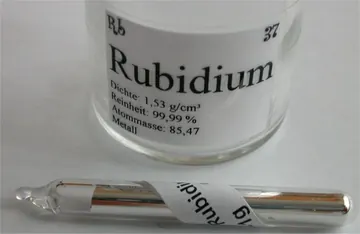
Rubidium atoms in a cooling and trapping experiment photographed in 2015. This is neutral-atom hardware context, not QuEra’s Aquila apparatus or the reported magnet simulation.
“Cold atoms experiment 04.JPG” by Tomasz Kawalec. CC BY-SA 4.0. Full available source composition retained. Proportionally resized and converted to WebP; no retouching or generated elements. · CC BY-SA 4.0
Full available source composition retained. Proportionally resized and converted to WebP; no retouching or generated elements. Retain the creator credit, source link, linked reuse terms and transformation notice. Editorial context; no endorsement or participation in the reported research is implied. Any adaptations of this photograph retain the linked ShareAlike licence; no additional restrictions on the licensed photograph are imposed.
Original source · Reuse terms
Used for: Structured noise reveals hidden order in a small quantum experiment
Used for: A Quantum Atom Array Tests What a Real Magnet Might Do Next
Liquid helium dewar.jpg
A liquid-helium storage dewar photographed in 2011. This is helium-handling context; it does not show helium-3 qubits or the proposed computer.
“Liquid helium dewar.jpg” by Alkamid. CC BY-SA 3.0. Full available source composition retained. Proportionally resized and converted to WebP; no retouching or generated elements. · CC BY-SA 3.0
Full available source composition retained. Proportionally resized and converted to WebP; no retouching or generated elements. Retain the creator credit, source link, linked reuse terms and transformation notice. Editorial context; no endorsement or participation in the reported research is implied. Any adaptations of this photograph retain the linked ShareAlike licence; no additional restrictions on the licensed photograph are imposed.
Original source · Reuse terms
Used for: Helium Could Be Quantum Computing’s Next Unlikely Ingredient
Cold atoms experiment 02.JPG
A rubidium cooling and trapping setup photographed in 2015. Archival neutral-atom laboratory context; this is not Oratomic’s equipment or a facility funded by the financing discussed here.
“Cold atoms experiment 02.JPG” by Tomasz Kawalec. CC BY-SA 4.0. Full available source composition retained. Proportionally resized and converted to WebP; no retouching or generated elements. · CC BY-SA 4.0
Full available source composition retained. Proportionally resized and converted to WebP; no retouching or generated elements. Retain the creator credit, source link, linked reuse terms and transformation notice. Editorial context; no endorsement or participation in the reported research is implied. Any adaptations of this photograph retain the linked ShareAlike licence; no additional restrictions on the licensed photograph are imposed.
Original source · Reuse terms
Used for: Rydberg atoms distinguish phone signals in a new laboratory test
Used for: Inside Oratomic’s $775 million quantum computing bet
Cold atoms experiment 01.JPG
An optical setup used to cool and trap rubidium atoms, photographed in 2015. It illustrates neutral-atom experimental hardware, not a demonstration of the partial-fault-tolerance proposal.
“Cold atoms experiment 01.JPG” by Tomasz Kawalec. CC BY-SA 4.0. Full available source composition retained. Proportionally resized and converted to WebP; no retouching or generated elements. · CC BY-SA 4.0
Full available source composition retained. Proportionally resized and converted to WebP; no retouching or generated elements. Retain the creator credit, source link, linked reuse terms and transformation notice. Editorial context; no endorsement or participation in the reported research is implied. Any adaptations of this photograph retain the linked ShareAlike licence; no additional restrictions on the licensed photograph are imposed.
Original source · Reuse terms
Used for: Partial fault tolerance trades some protection for a smaller resource bill
Cold atoms experiment 03.JPG
Rubidium cooling and trapping apparatus photographed in 2015. Archival context for handling atoms with light; this photograph does not show the reported automatic-refilling system.
“Cold atoms experiment 03.JPG” by Tomasz Kawalec. CC BY-SA 4.0. Full available source composition retained. Proportionally resized and converted to WebP; no retouching or generated elements. · CC BY-SA 4.0
Full available source composition retained. Proportionally resized and converted to WebP; no retouching or generated elements. Retain the creator credit, source link, linked reuse terms and transformation notice. Editorial context; no endorsement or participation in the reported research is implied. Any adaptations of this photograph retain the linked ShareAlike licence; no additional restrictions on the licensed photograph are imposed.
Original source · Reuse terms
Used for: Pasqal highlights an unexplained slowdown in a 256-qubit quantum magnet
Used for: This Quantum Computer Replaces Its Own Missing Atoms
John preskill in 2026.jpg
John Preskill at Caltech in September 2026, one of the three researchers discussed in this article. Photograph by Christopher Michel.
“John preskill in 2026.jpg” by Christopher Michel (Cmichel67). CC BY-SA 4.0. Full available source composition retained. Proportionally resized and converted to WebP; no retouching or generated elements. · CC BY-SA 4.0
Full available source composition retained. Proportionally resized and converted to WebP; no retouching or generated elements. Retain the creator credit, source link, linked reuse terms and transformation notice. Editorial context; no endorsement or participation in the reported research is implied. Any adaptations of this photograph retain the linked ShareAlike licence; no additional restrictions on the licensed photograph are imposed.
Original source · Reuse terms
Used for: Three People Making Quantum’s Future Feel Less Like Science Fiction.
Micrograph of a SQUID amplifier (13586380573).jpg
A NIST SQUID readout-amplifier micrograph from a device made in 2012. Signal-measurement context only; the article’s 50-qubit examples are numerical studies, not measurements from this circuit.
“Micrograph of a SQUID amplifier (13586380573).jpg” by National Institute of Standards and Technology. NIST public-information use terms. Full available source composition retained. Proportionally resized and converted to WebP; no retouching or generated elements. · NIST public-information use terms
Full available source composition retained. Proportionally resized and converted to WebP; no retouching or generated elements. Retain the creator credit, source link, linked reuse terms and transformation notice. Editorial context; no endorsement or participation in the reported research is implied.
Original source · Reuse terms
Used for: Can local measurements reveal a quantum processor’s global behavior?
Dilution refrigerator at BBN Technologies, 2009.jpg
A dilution refrigerator at BBN Technologies in 2009. Archival superconducting-hardware context; this photograph does not show the reported decoder tests or their results.
“Dilution refrigerator at BBN Technologies, 2009.jpg” by Daderot. CC0 1.0. Full available source composition retained. Proportionally resized and converted to WebP; no retouching or generated elements. · CC0 1.0
Full available source composition retained. Proportionally resized and converted to WebP; no retouching or generated elements. Retain the creator credit, source link, linked reuse terms and transformation notice. Editorial context; no endorsement or participation in the reported research is implied.
Original source · Reuse terms
Used for: Repeated gates leave measurable traces on neighboring qubits
Used for: Local quantum decoders improve when they exchange the right error information
IBM Quantum Computer Demo at ITUWTSA 2024, Delhi.jpg
An IBM quantum-computer demonstration exhibit at ITU-WTSA in Delhi in October 2024. Educational hardware context for qubit reset; no reset experiment is shown.
“IBM Quantum Computer Demo at ITUWTSA 2024, Delhi.jpg” by Dev Jadiya. CC BY-SA 4.0. Full available source composition retained. Proportionally resized and converted to WebP; no retouching or generated elements. · CC BY-SA 4.0
Full available source composition retained. Proportionally resized and converted to WebP; no retouching or generated elements. Retain the creator credit, source link, linked reuse terms and transformation notice. Editorial context; no endorsement or participation in the reported research is implied. Any adaptations of this photograph retain the linked ShareAlike licence; no additional restrictions on the licensed photograph are imposed.
Original source · Reuse terms
Used for: Quantum Computing Has a Hidden Chore: Cleaning Up After Itself
DILUTION REFRIGERATOR GUST - INSERT - NARA - 17424230.jpg
A NASA archival photograph of a dilution-refrigerator insert, dated November 1974. Cryogenic-hardware context; this is not the processor or teleportation dataset reported in the article.
“DILUTION REFRIGERATOR GUST - INSERT - NARA - 17424230.jpg” by Martin Brown / NASA. NASA public-image use terms. Archival scan with its original cyan border/background and tonal treatment retained. Full available source composition proportionally resized and converted to WebP; no retouching or generated elements. · NASA public-image use terms
Archival scan with its original cyan border/background and tonal treatment retained. Full available source composition proportionally resized and converted to WebP; no retouching or generated elements. Retain the creator credit, source link, linked reuse terms and transformation notice. Editorial context; no endorsement or participation in the reported research is implied.
Original source · Reuse terms
Used for: Moving a logical quantum state puts error tolerance to the test
Full wafer of Intel quantum computers.jpg
An Intel quantum-computing wafer photographed in 2018. Physical-chip context for a mathematical discussion of code layouts; this wafer does not implement the proposed topological-code boundaries.
“Full wafer of Intel quantum computers.jpg” by Steve Jurvetson. CC BY 2.0. Full available source composition retained. Proportionally resized and converted to WebP; no retouching or generated elements. · CC BY 2.0
Full available source composition retained. Proportionally resized and converted to WebP; no retouching or generated elements. Retain the creator credit, source link, linked reuse terms and transformation notice. Editorial context; no endorsement or participation in the reported research is implied.
Original source · Reuse terms
Used for: Why a quantum error-correcting code needs carefully designed edges
NIST Demonstrates Sustained Quantum Processing in Step Toward Building Quantum Computers (5941059262).jpg
NIST’s segmented ion trap, photographed for earlier quantum-processing research. Archival trapped-ion hardware context; this is not a demonstration of private or blind quantum computing.
“NIST Demonstrates Sustained Quantum Processing in Step Toward Building Quantum Computers (5941059262).jpg” by J. Jost / NIST. NIST public-information use terms. Full available source composition retained. Proportionally resized and converted to WebP; no retouching or generated elements. · NIST public-information use terms
Full available source composition retained. Proportionally resized and converted to WebP; no retouching or generated elements. Retain the creator credit, source link, linked reuse terms and transformation notice. Editorial context; no endorsement or participation in the reported research is implied.
Original source · Reuse terms
Used for: Can a Quantum Computer Solve a Problem It Cannot See?
ISS-57 Kenya and Somalia, Indian Ocean coastline.jpg
The Indian Ocean coastline of Kenya and Somalia photographed from the International Space Station in November 2018. Earth-observation context; this is an optical photograph, not radar data or an IonQ change-detection result.
“ISS-57 Kenya and Somalia, Indian Ocean coastline.jpg” by NASA. NASA public-image use terms. Full available source composition retained. Proportionally resized and converted to WebP; no retouching or generated elements. · NASA public-image use terms
Full available source composition retained. Proportionally resized and converted to WebP; no retouching or generated elements. Retain the creator credit, source link, linked reuse terms and transformation notice. Editorial context; no endorsement or participation in the reported research is implied.
Original source · Reuse terms
Used for: A Quantum Computer Looked at Earth. The Interesting Part Was What Changed.
Prototype Imaging Density Interferometer is on the Optical table in the foreground.jpg
A prototype imaging-density interferometer on an optical table in 2012. Interferometry context; this is not Oxford’s hybrid quantum loop.
“Prototype Imaging Density Interferometer is on the Optical table in the foreground.jpg” by notnef from Canberra, Australia. CC BY 2.0. Full available source composition retained. Proportionally resized and converted to WebP; no retouching or generated elements. · CC BY 2.0
Full available source composition retained. Proportionally resized and converted to WebP; no retouching or generated elements. Retain the creator credit, source link, linked reuse terms and transformation notice. Editorial context; no endorsement or participation in the reported research is implied.
Original source · Reuse terms
Used for: Oxford’s tiny quantum loop turns two routes into no way through
Gold Ion Trap (6029437325).jpg
A NIST gold ion trap used in microwave quantum-computing research in 2011. Archival trapped-ion hardware context; this is not Quantinuum’s Helios processor.
“Gold Ion Trap (6029437325).jpg” by Y. Colombe / NIST. NIST public-information use terms. Full available source composition retained. Proportionally resized and converted to WebP; no retouching or generated elements. · NIST public-information use terms
Full available source composition retained. Proportionally resized and converted to WebP; no retouching or generated elements. Retain the creator credit, source link, linked reuse terms and transformation notice. Editorial context; no endorsement or participation in the reported research is implied.
Original source · Reuse terms
Used for: Helios Has 98 Qubits. The Error Rate Tells You More.
Googleplex building 43.jpg
Googleplex building 43 in Mountain View, photographed in July 2014. Company context for Google’s circuit-compilation research; no algorithm, processor or benchmark is depicted.
“Googleplex building 43.jpg” by Runner1928. CC BY-SA 3.0. Full available source composition retained. Proportionally resized and converted to WebP; no retouching or generated elements. · CC BY-SA 3.0
Full available source composition retained. Proportionally resized and converted to WebP; no retouching or generated elements. Retain the creator credit, source link, linked reuse terms and transformation notice. Editorial context; no endorsement or participation in the reported research is implied. Any adaptations of this photograph retain the linked ShareAlike licence; no additional restrictions on the licensed photograph are imposed.
Original source · Reuse terms
Used for: Google’s verifiable quantum circuit compilation challenge
Googleplex HQ.jpg
Google’s Mountain View campus photographed in 2016. Company context for magic-state research; the photograph does not depict state cultivation, its yield or a quantum processor.
“Googleplex HQ.jpg” by The Pancake of Heaven!. CC BY-SA 4.0. Full available source composition retained. Proportionally resized and converted to WebP; no retouching or generated elements. · CC BY-SA 4.0
Full available source composition retained. Proportionally resized and converted to WebP; no retouching or generated elements. Retain the creator credit, source link, linked reuse terms and transformation notice. Editorial context; no endorsement or participation in the reported research is implied. Any adaptations of this photograph retain the linked ShareAlike licence; no additional restrictions on the licensed photograph are imposed.
Original source · Reuse terms
Used for: Google’s magic-state cultivation: what the yield numbers mean
Googleplex north side.jpg
The north side of the Googleplex photographed in 2006. Archival company context; this is not an error record, a processor or a depiction of the reported cancellation method.
“Googleplex north side.jpg” by Coolcaesar at English Wikipedia. CC BY-SA 3.0. Full available source composition retained. Proportionally resized and converted to WebP; no retouching or generated elements. · CC BY-SA 3.0
Full available source composition retained. Proportionally resized and converted to WebP; no retouching or generated elements. Retain the creator credit, source link, linked reuse terms and transformation notice. Editorial context; no endorsement or participation in the reported research is implied. Any adaptations of this photograph retain the linked ShareAlike licence; no additional restrictions on the licensed photograph are imposed.
Original source · Reuse terms
Used for: Google’s Quantum Error Records Could Get a Second Life After the Run
JohnMartinisAtIEEETechIgnite2017.jpg
John Martinis discussing Google’s quantum-computing efforts at IEEE TechIgnite in 2017. Historical research context; the photograph does not establish his involvement in the later Willow retuning experiment.
“JohnMartinisAtIEEETechIgnite2017.jpg” by DanielPenfield. CC BY-SA 4.0. Full available source composition retained. Proportionally resized and converted to WebP; no retouching or generated elements. · CC BY-SA 4.0
Full available source composition retained. Proportionally resized and converted to WebP; no retouching or generated elements. Retain the creator credit, source link, linked reuse terms and transformation notice. Editorial context; no endorsement or participation in the reported research is implied. Any adaptations of this photograph retain the linked ShareAlike licence; no additional restrictions on the licensed photograph are imposed.
Original source · Reuse terms
Used for: Google Uses Error Signals to Retune Willow's Quantum Controls
Alice and Bob Cryostat.jpg
A cryostat at Alice & Bob’s headquarters, photographed in 2024. Company hardware context; the photograph does not establish which device produced the reported cat-qubit results.
“Alice and Bob Cryostat.jpg” by Nilhope. CC BY-SA 4.0. Full available source composition retained. Proportionally resized and converted to WebP; no retouching or generated elements. · CC BY-SA 4.0
Full available source composition retained. Proportionally resized and converted to WebP; no retouching or generated elements. Retain the creator credit, source link, linked reuse terms and transformation notice. Editorial context; no endorsement or participation in the reported research is implied. Any adaptations of this photograph retain the linked ShareAlike licence; no additional restrictions on the licensed photograph are imposed.
Original source · Reuse terms
Used for: Alice & Bob tests cat-qubit building blocks, with threshold still ahead
NEC Super Tower.jpg
NEC’s headquarters in Tokyo, photographed in 2006. Archival company context for the hardware-exit report.
“NEC Super Tower.jpg” by KW~jawiki at Japanese Wikipedia. CC BY-SA 3.0. Full available source composition retained. Proportionally resized and converted to WebP; no retouching or generated elements. · CC BY-SA 3.0
Full available source composition retained. Proportionally resized and converted to WebP; no retouching or generated elements. Retain the creator credit, source link, linked reuse terms and transformation notice. Editorial context; no endorsement or participation in the reported research is implied. Any adaptations of this photograph retain the linked ShareAlike licence; no additional restrictions on the licensed photograph are imposed.
Original source · Reuse terms
Used for: A Quantum Pioneer Quit the Hardware Race. NEC’s Exit Raises a Bigger Question.
Quantum Simulator Crystal.jpg
A NIST ion-crystal fluorescence image from earlier quantum-simulator research. Scientific-image context for quantum states; this is not a histogram or evidence from repeated runs of the program discussed here.
“Quantum Simulator Crystal.jpg” by Joe Britton / NIST. NIST public-information use terms. Full available source composition retained. Proportionally resized and converted to WebP; no retouching or generated elements. · NIST public-information use terms
Full available source composition retained. Proportionally resized and converted to WebP; no retouching or generated elements. Retain the creator credit, source link, linked reuse terms and transformation notice. Editorial context; no endorsement or participation in the reported research is implied.
Original source · Reuse terms
Used for: Your Quantum Program Gave a Different Answer. That May Be Good News.
Cryptographic device-IMG 0583-black.jpg
A historic cryptographic device in the Swiss Army collection. Archival cryptography context; this device does not implement HAWK and is not an artifact of the reported cryptanalysis.
“Cryptographic device-IMG 0583-black.jpg” by Rama. CC BY-SA 2.0 fr. Full available source composition retained. Proportionally resized and converted to WebP; no retouching or generated elements. · CC BY-SA 2.0 fr
Full available source composition retained. Proportionally resized and converted to WebP; no retouching or generated elements. Retain the creator credit, source link, linked reuse terms and transformation notice. Editorial context; no endorsement or participation in the reported research is implied. Any adaptations of this photograph retain the linked ShareAlike licence; no additional restrictions on the licensed photograph are imposed.
Original source · Reuse terms
Used for: HAWK Team Withdraws Signature Candidate After Anthropic Cryptanalysis
Front of server racks at NERSC.jpg
Server racks at NERSC photographed in October 2011. Archival data-infrastructure context for long-lived encrypted information; no interception or decryption activity is shown.
“Front of server racks at NERSC.jpg” by Derrick Coetzee from Berkeley, CA, USA. CC0 1.0. Full available source composition retained. Proportionally resized and converted to WebP; no retouching or generated elements. · CC0 1.0
Full available source composition retained. Proportionally resized and converted to WebP; no retouching or generated elements. Retain the creator credit, source link, linked reuse terms and transformation notice. Editorial context; no endorsement or participation in the reported research is implied.
Original source · Reuse terms
Used for: The Quantum Security Risk Starts Before the Quantum Computer
Juniper Networks SRX3400 service gateway and security appliance.jpg
A Juniper SRX3400 network-security appliance photographed in 2015. Infrastructure context only; this is not a SEALSQ device or evidence that the appliance implements the ML-KEM research discussed here.
“Juniper Networks SRX3400 service gateway and security appliance.jpg” by Juniper Networks. CC BY-SA 3.0. Full available source composition retained. Proportionally resized and converted to WebP; no retouching or generated elements. · CC BY-SA 3.0
Full available source composition retained. Proportionally resized and converted to WebP; no retouching or generated elements. Retain the creator credit, source link, linked reuse terms and transformation notice. Editorial context; no endorsement or participation in the reported research is implied. Any adaptations of this photograph retain the linked ShareAlike licence; no additional restrictions on the licensed photograph are imposed.
Original source · Reuse terms
Used for: SEALSQ presents ML-KEM implementation-security research at LightSec
Optical Table with doubled Nd-YAG Laser.jpg
An optical table with a frequency-doubled Nd:YAG laser, photographed in 2010. Light-control context; this is not the crystal or photon-storage experiment reported in the article.
“Optical Table with doubled Nd-YAG Laser.jpg” by Giorgio Brida from Torino, Italy. CC BY 2.0. Full available source composition retained. Proportionally resized and converted to WebP; no retouching or generated elements. · CC BY 2.0
Full available source composition retained. Proportionally resized and converted to WebP; no retouching or generated elements. Retain the creator credit, source link, linked reuse terms and transformation notice. Editorial context; no endorsement or participation in the reported research is implied.
Original source · Reuse terms
Used for: This Crystal Gives Quantum Light 180 Microseconds to Wait
MASBuilding-Singapore-20090914.jpg
The Monetary Authority of Singapore building in September 2009. Institutional context for the UK-Singapore financial-policy dialogue; this photograph does not show the meeting.
“MASBuilding-Singapore-20090914.jpg” by Nicolas Lannuzel from Singapore.. CC BY-SA 2.0. Full available source composition retained. Proportionally resized and converted to WebP; no retouching or generated elements. · CC BY-SA 2.0
Full available source composition retained. Proportionally resized and converted to WebP; no retouching or generated elements. Retain the creator credit, source link, linked reuse terms and transformation notice. Editorial context; no endorsement or participation in the reported research is implied. Any adaptations of this photograph retain the linked ShareAlike licence; no additional restrictions on the licensed photograph are imposed.
Original source · Reuse terms
Used for: Quantum security reaches the UK-Singapore financial-policy agenda
Ytterbium Lattice Double Clock with Photons at NIST.jpg
A NIST ytterbium optical-clock apparatus photographed in 2014. Atomic-spectroscopy context; this is not the apparatus or measurement dataset of the newly reported study.
“Ytterbium Lattice Double Clock with Photons at NIST.jpg” by N. Phillips / NIST. NIST public-information use terms. Full available source composition retained. Proportionally resized and converted to WebP; no retouching or generated elements. · NIST public-information use terms
Full available source composition retained. Proportionally resized and converted to WebP; no retouching or generated elements. Retain the creator credit, source link, linked reuse terms and transformation notice. Editorial context; no endorsement or participation in the reported research is implied.
Original source · Reuse terms
Used for: Ytterbium spectroscopy points toward new sensing tests
Bank of America Tower 001.jpg
Bank of America Tower in New York, photographed in January 2011. Company context for the investment commentary, not evidence of quantum-computing revenue or returns.
“Bank of America Tower 001.jpg” by Bosc d'Anjou. CC BY 2.0. Full available source composition retained. Proportionally resized and converted to WebP; no retouching or generated elements. · CC BY 2.0
Full available source composition retained. Proportionally resized and converted to WebP; no retouching or generated elements. Retain the creator credit, source link, linked reuse terms and transformation notice. Editorial context; no endorsement or participation in the reported research is implied.
Original source · Reuse terms
Used for: Wall Street Calls Quantum a “Fire Moment.” Here’s the Reality Check.
University of Maryland, College Park. (5062733545).jpg
The University of Maryland, College Park campus in October 2010. Regional research and talent context; this photograph does not show Riverlane’s premises.
“University of Maryland, College Park. (5062733545).jpg” by carmichaellibrary. CC BY 2.0. Full available source composition retained. Proportionally resized and converted to WebP; no retouching or generated elements. · CC BY 2.0
Full available source composition retained. Proportionally resized and converted to WebP; no retouching or generated elements. Retain the creator credit, source link, linked reuse terms and transformation notice. Editorial context; no endorsement or participation in the reported research is implied.
Original source · Reuse terms
Used for: Quantum’s Error Problem Is Getting a New Address.
Niels Bohr Institute 2.jpg
The Niels Bohr Institute in Copenhagen in 2005. Academic context for Peter Lodahl’s research background; this is not a portrait of Lodahl or Sparrow Quantum’s headquarters.
“Niels Bohr Institute 2.jpg” by Thue (Commons uploader; author not specified). Public domain. Full available source composition retained. Proportionally resized and converted to WebP; no retouching or generated elements. · Public domain
Full available source composition retained. Proportionally resized and converted to WebP; no retouching or generated elements. Retain the creator credit, source link, linked reuse terms and transformation notice. Editorial context; no endorsement or participation in the reported research is implied.
Original source · Reuse terms
Used for: Sparrow Quantum puts founder Peter Lodahl in the CEO role
Moscow, Bolshaya Ordynka 24 - Rosatom building (22060662843).jpg
Rosatom’s building on Bolshaya Ordynka in Moscow, photographed in November 2015. Institutional context; the photograph does not show the Vietnam cooperation agreement or a quantum facility.
“Moscow, Bolshaya Ordynka 24 - Rosatom building (22060662843).jpg” by Sergey Norin from Moscow, Russia. CC BY 2.0. Full available source composition retained. Proportionally resized and converted to WebP; no retouching or generated elements. · CC BY 2.0
Full available source composition retained. Proportionally resized and converted to WebP; no retouching or generated elements. Retain the creator credit, source link, linked reuse terms and transformation notice. Editorial context; no endorsement or participation in the reported research is implied.
Original source · Reuse terms
Used for: Vietnam and Rosatom put training and research access at the center of a quantum roadmap
Stylus trap (5940501089).jpg
NIST’s stylus ion trap, photographed in 2008. Archival microfabricated trapped-ion hardware context; this is not IonQ’s Superion device or evidence of its production capacity.
“Stylus trap (5940501089).jpg” by Maiwald / NIST. NIST public-information use terms. Full available source composition retained. Proportionally resized and converted to WebP; no retouching or generated elements. · NIST public-information use terms
Full available source composition retained. Proportionally resized and converted to WebP; no retouching or generated elements. Retain the creator credit, source link, linked reuse terms and transformation notice. Editorial context; no endorsement or participation in the reported research is implied.
Original source · Reuse terms
Used for: IonQ Says Its Next Quantum Computer Can Be Built by the Hundreds
Ion trap (5941060224).jpg
NIST’s X-trap assembly and a close-up of its electrode junction. Archival ion-transport hardware context; this is not the autonomous-error-correction memory in the reported experiment.
“Ion trap (5941060224).jpg” by R. B. Blakestad / NIST. NIST public-information use terms. Full available source composition retained. Proportionally resized and converted to WebP; no retouching or generated elements. · NIST public-information use terms
Full available source composition retained. Proportionally resized and converted to WebP; no retouching or generated elements. Retain the creator credit, source link, linked reuse terms and transformation notice. Editorial context; no endorsement or participation in the reported research is implied.
Original source · Reuse terms
Used for: A trapped-ion memory removes errors without measurement feedback
High Performance Computing Center Stuttgart HLRS 2015 03 Cray XC40 Hazel Hen blades.jpg
Cray XC40 Hazel Hen compute blades at the University of Stuttgart in December 2015. Classical-computing context for comparing solvers; no QCentroid benchmark is shown.
“High Performance Computing Center Stuttgart HLRS 2015 03 Cray XC40 Hazel Hen blades.jpg” by Julian Herzog (Website). CC BY 4.0. Full available source composition retained. Proportionally resized and converted to WebP; no retouching or generated elements. · CC BY 4.0
Full available source composition retained. Proportionally resized and converted to WebP; no retouching or generated elements. Retain the creator credit, source link, linked reuse terms and transformation notice. Editorial context; no endorsement or participation in the reported research is implied.
Original source · Reuse terms
Used for: QCentroid Missions starts with the solver a business already uses
Quantum computer, Germany (06).jpg
Supercomputer infrastructure at the Leibniz Supercomputing Centre in January 2026. Classical simulation and integration context; this is not a Welinq detector-error-model run or its measured speedup.
© European Union, 2026, licensed under CC BY 4.0. Photograph: Sebastian Widmann. Full available source composition retained. Proportionally resized and converted to WebP; no retouching or generated elements. · CC BY 4.0
Full available source composition retained. Proportionally resized and converted to WebP; no retouching or generated elements. Retain the creator credit, source link, linked reuse terms and transformation notice. Editorial context; no endorsement or participation in the reported research is implied. Retain the European Union 2026 copyright credit; no endorsement implied.
Original source · Reuse terms · Attribution source
Used for: Welinq speeds up one step in testing modular quantum computers
Atom interferometer.jpg
An M Squared atom interferometer displayed at an ESA quantum-technology workshop in 2016. Quantum-sensing context; this is not equipment from Delta Gold’s proposed research programmes.
“Atom interferometer.jpg” by European Space Agency. CC BY-SA 2.0. Full available source composition retained. Proportionally resized and converted to WebP; no retouching or generated elements. · CC BY-SA 2.0
Full available source composition retained. Proportionally resized and converted to WebP; no retouching or generated elements. Retain the creator credit, source link, linked reuse terms and transformation notice. Editorial context; no endorsement or participation in the reported research is implied. Any adaptations of this photograph retain the linked ShareAlike licence; no additional restrictions on the licensed photograph are imposed.
Original source · Reuse terms
Used for: Delta Gold expands Penn State and Toronto research into quantum sensing
A Guiding Star.jpg
A laser guide star above ESO’s Very Large Telescope at Paranal, photographed in March 2013. Astronomical-observation context; this is not an output or validation example from the hybrid stellar classifier.
“A Guiding Star.jpg” by ESO/J. Girard (djulik.com). CC BY 4.0. Full available source composition retained. Proportionally resized and converted to WebP; no retouching or generated elements. · CC BY 4.0
Full available source composition retained. Proportionally resized and converted to WebP; no retouching or generated elements. Retain the creator credit, source link, linked reuse terms and transformation notice. Editorial context; no endorsement or participation in the reported research is implied. Display the full ESO/J. Girard (djulik.com) credit beside the photograph, with the photographer link active.
Original source · Reuse terms · Attribution source
Used for: A hybrid stellar classifier shows why the classical baseline matters
Chaotic Looking Optical Table.jpg
An optical laboratory bench photographed in April 2011. Experimental-hardware context; the image does not show the AI-designed circuits, evaluator or resource estimates discussed in this preprint.
“Chaotic Looking Optical Table.jpg” by paul_houle. CC BY-SA 2.0. Full available source composition retained. Proportionally resized and converted to WebP; no retouching or generated elements. · CC BY-SA 2.0
Full available source composition retained. Proportionally resized and converted to WebP; no retouching or generated elements. Retain the creator credit, source link, linked reuse terms and transformation notice. Editorial context; no endorsement or participation in the reported research is implied. Any adaptations of this photograph retain the linked ShareAlike licence; no additional restrictions on the licensed photograph are imposed.
Original source · Reuse terms
Used for: AI proposes a quantum circuit. A separate evaluator checks the answer.
Cu Catalyst.jpg
A scanning-electron micrograph of a copper catalyst, published in 2021. Catalyst-surface context; this is not a sample or result from the BIRD-backed project.
“Cu Catalyst.jpg” by SvenOras. CC BY 4.0. Full available source composition retained. Proportionally resized and converted to WebP; no retouching or generated elements. · CC BY 4.0
Full available source composition retained. Proportionally resized and converted to WebP; no retouching or generated elements. Retain the creator credit, source link, linked reuse terms and transformation notice. Editorial context; no endorsement or participation in the reported research is implied.
Original source · Reuse terms
Used for: BIRD backs a quantum project aimed at the surface of a catalyst
Frontier Supercomputer (3).jpg
The classical Frontier supercomputer at Oak Ridge National Laboratory in 2022. Computing-resource context; this is not a Classiq system or a physical implementation of its fault-tolerant resource estimates.
“Frontier Supercomputer (3).jpg” by OLCF at ORNL. CC BY 2.0. Full available source composition retained. Proportionally resized and converted to WebP; no retouching or generated elements. · CC BY 2.0
Full available source composition retained. Proportionally resized and converted to WebP; no retouching or generated elements. Retain the creator credit, source link, linked reuse terms and transformation notice. Editorial context; no endorsement or participation in the reported research is implied.
Original source · Reuse terms
Used for: A quantum algorithm needs a resource budget before it needs a machine
A Wafer of the Latest D-Wave Quantum Computers (39188583425).jpg
A D-Wave superconducting-processor wafer photographed in 2018. Hardware context for connectivity constraints; these annealing processors are not the gate-based neural-network experiments evaluated by ConQUESTA.
“A Wafer of the Latest D-Wave Quantum Computers (39188583425).jpg” by Steve Jurvetson. CC BY 2.0. Full available source composition retained. Proportionally resized and converted to WebP; no retouching or generated elements. · CC BY 2.0
Full available source composition retained. Proportionally resized and converted to WebP; no retouching or generated elements. Retain the creator credit, source link, linked reuse terms and transformation notice. Editorial context; no endorsement or participation in the reported research is implied.
Original source · Reuse terms
Used for: Pruning a quantum neural network works better when the chip’s wiring is counted
Container ship being loaded in Long Beach container port.jpg
A container ship being loaded at Long Beach in October 2008. Supply-chain context; this is not an Arkansas research site or evidence of a quantum-optimization result.
“Container ship being loaded in Long Beach container port.jpg” by biofriendly. CC BY 2.0. Full available source composition retained. Proportionally resized and converted to WebP; no retouching or generated elements. · CC BY 2.0
Full available source composition retained. Proportionally resized and converted to WebP; no retouching or generated elements. Retain the creator credit, source link, linked reuse terms and transformation notice. Editorial context; no endorsement or participation in the reported research is implied.
Original source · Reuse terms
Used for: What would make Arkansas’s quantum supply-chain research useful?
NTT Communications (headquarters).jpg
NTT Communications’ Tokyo headquarters photographed in May 2006. Archival company context; the image does not show an NTT-Classiq pilot or an enterprise adoption result.
“NTT Communications (headquarters).jpg” by Lombroso. Public domain. Full available source composition retained. Proportionally resized and converted to WebP; no retouching or generated elements. · Public domain
Full available source composition retained. Proportionally resized and converted to WebP; no retouching or generated elements. Retain the creator credit, source link, linked reuse terms and transformation notice. Editorial context; no endorsement or participation in the reported research is implied.
Original source · Reuse terms
Used for: What would make a quantum pilot worth the money?
IBM CHQ - Oct 2014.jpg
IBM’s corporate headquarters in Armonk in October 2014. Company context for the earnings report; the image does not establish a quantum-revenue figure.
“IBM CHQ - Oct 2014.jpg” by Treesmittenex. CC BY-SA 4.0. Full available source composition retained. Proportionally resized and converted to WebP; no retouching or generated elements. · CC BY-SA 4.0
Full available source composition retained. Proportionally resized and converted to WebP; no retouching or generated elements. Retain the creator credit, source link, linked reuse terms and transformation notice. Editorial context; no endorsement or participation in the reported research is implied. Any adaptations of this photograph retain the linked ShareAlike licence; no additional restrictions on the licensed photograph are imposed.
Original source · Reuse terms
Used for: IBM’s $17.1 billion quarter leaves a separate question: quantum revenue
Table chamber GWMorley.jpg
A vacuum chamber used for laser trapping of nanodiamonds, photographed in 2016. Experimental quantum-optics context; the codeword-sensing result discussed here is theoretical and was not demonstrated in this apparatus.
“Table chamber GWMorley.jpg” by Gavin Morley. CC BY-SA 4.0. Full available source composition retained. Proportionally resized and converted to WebP; no retouching or generated elements. · CC BY-SA 4.0
Full available source composition retained. Proportionally resized and converted to WebP; no retouching or generated elements. Retain the creator credit, source link, linked reuse terms and transformation notice. Editorial context; no endorsement or participation in the reported research is implied. Any adaptations of this photograph retain the linked ShareAlike licence; no additional restrictions on the licensed photograph are imposed.
Original source · Reuse terms
Used for: A Quantum Sensor Remembers Weak Signals That Classical Memory Forgets
National Physical Laboratory (United Kingdom) buildings 01.jpg
National Physical Laboratory buildings in Teddington, photographed in September 2016. Institutional context; the photograph does not show the new ion-trap packaging process.
“National Physical Laboratory (United Kingdom) buildings 01.jpg” by Jonathan Cardy. CC BY-SA 3.0. Full available source composition retained. Proportionally resized and converted to WebP; no retouching or generated elements. · CC BY-SA 3.0
Full available source composition retained. Proportionally resized and converted to WebP; no retouching or generated elements. Retain the creator credit, source link, linked reuse terms and transformation notice. Editorial context; no endorsement or participation in the reported research is implied. Any adaptations of this photograph retain the linked ShareAlike licence; no additional restrictions on the licensed photograph are imposed.
Original source · Reuse terms
Used for: Quantum computers need repeatable parts. NPL is working on the packaging.
Quantum Annealing - 5714485682.jpg
A D-Wave wafer photographed in 2011. Archival quantum-hardware context; the article evaluates gate-based QAOA comparisons, not the performance of the annealing hardware pictured here.
“Quantum Annealing - 5714485682.jpg” by Steve Jurvetson. CC BY 2.0. Full available source composition retained. Proportionally resized and converted to WebP; no retouching or generated elements. · CC BY 2.0
Full available source composition retained. Proportionally resized and converted to WebP; no retouching or generated elements. Retain the creator credit, source link, linked reuse terms and transformation notice. Editorial context; no endorsement or participation in the reported research is implied.
Original source · Reuse terms
Used for: When Has a Quantum Optimizer Actually Done Better?
Fourier Transform, Beryllium Ions (5883951063).jpg
A NIST fluorescence image of three trapped beryllium ions from 2005. Scientific-image context for quantum measurement; this does not depict the two-copy protocol or its reported error reduction.
“Fourier Transform, Beryllium Ions (5883951063).jpg” by National Institute of Standards and Technology. NIST public-information use terms. Full available source composition retained. Proportionally resized and converted to WebP; no retouching or generated elements. · NIST public-information use terms
Full available source composition retained. Proportionally resized and converted to WebP; no retouching or generated elements. Retain the creator credit, source link, linked reuse terms and transformation notice. Editorial context; no endorsement or participation in the reported research is implied.
Original source · Reuse terms
Used for: Two Quantum Copies Can Cut Measurement Error—But Not for Every Observable
NIST physicist Andrew Ludlow and the ytterbium lattice clock (13586701404).jpg
NIST physicist Andrew Ludlow beside a ytterbium optical-lattice clock in October 2013. Optical-lattice hardware context; this is not a gate-speed experiment or evidence that Ludlow participated in the theoretical study.
“NIST physicist Andrew Ludlow and the ytterbium lattice clock (13586701404).jpg” by Burrus / NIST. NIST public-information use terms. Full available source composition retained. Proportionally resized and converted to WebP; no retouching or generated elements. · NIST public-information use terms
Full available source composition retained. Proportionally resized and converted to WebP; no retouching or generated elements. Retain the creator credit, source link, linked reuse terms and transformation notice. Editorial context; no endorsement or participation in the reported research is implied.
Original source · Reuse terms
Used for: A 1,000× Quantum Speedup on Paper. Now Comes the Lab Test.
High Performance Computing Center Stuttgart HLRS 2015 09 Cray XC40 Hazel Hen.jpg
The Cray XC40 Hazel Hen supercomputer at the University of Stuttgart in December 2015. Classical-computing context for fair optimization comparisons; this is not the reported benchmark suite or a performance result.
“High Performance Computing Center Stuttgart HLRS 2015 09 Cray XC40 Hazel Hen.jpg” by Julian Herzog (Website). CC BY 4.0. Full available source composition retained. Proportionally resized and converted to WebP; no retouching or generated elements. · CC BY 4.0
Full available source composition retained. Proportionally resized and converted to WebP; no retouching or generated elements. Retain the creator credit, source link, linked reuse terms and transformation notice. Editorial context; no endorsement or participation in the reported research is implied.
Original source · Reuse terms
Used for: QOBLIB Expands Shared Benchmarks for Quantum Optimization
Helium dilution refrigerator.jpg
A helium dilution refrigerator photographed by Mark Somoza in 2003. Archival low-temperature hardware context; the photograph does not show an implementation or test of the proposed Helix code.
“Helium dilution refrigerator.jpg” by Mark Somoza. CC BY-SA 2.5. Full available source composition retained. Proportionally resized and converted to WebP; no retouching or generated elements. · CC BY-SA 2.5
Full available source composition retained. Proportionally resized and converted to WebP; no retouching or generated elements. Retain the creator credit, source link, linked reuse terms and transformation notice. Editorial context; no endorsement or participation in the reported research is implied. Any adaptations of this photograph retain the linked ShareAlike licence; no additional restrictions on the licensed photograph are imposed.
Original source · Reuse terms
Used for: The Helix code connects quantum memory with logical operations
1225 site cold cesium atom array.png
An averaged, false-colour fluorescence image of cesium atoms in an optical-trap array. Recorded atom-array context; this is not the transport trajectory or deadline calculation discussed in the article.
“1225 site cold cesium atom array.png” by PrestonHuft. CC BY 4.0. Full available source composition retained. Proportionally resized and converted to WebP; no retouching or generated elements. · CC BY 4.0
Full available source composition retained. Proportionally resized and converted to WebP; no retouching or generated elements. Retain the creator credit, source link, linked reuse terms and transformation notice. Editorial context; no endorsement or participation in the reported research is implied.
Original source · Reuse terms
Used for: Moving an atom array is a calculation with a physical deadline
Radio Wave Cooling Offers New Twist on Laser Cooling (5940523223).jpg
A NIST micrograph of a silicon cantilever used in radio-frequency cooling research in 2007. Historical cooling-research context; this is not evidence for the noise-assisted theoretical result discussed here.
“Radio Wave Cooling Offers New Twist on Laser Cooling (5940523223).jpg” by J. Britton / NIST. NIST public-information use terms. Full available source composition retained. Proportionally resized and converted to WebP; no retouching or generated elements. · NIST public-information use terms
Full available source composition retained. Proportionally resized and converted to WebP; no retouching or generated elements. Retain the creator credit, source link, linked reuse terms and transformation notice. Editorial context; no endorsement or participation in the reported research is implied.
Original source · Reuse terms
Used for: Noise can speed cooling when it leaves the ground state alone
Virginia Tech - data center.jpg
Virginia Tech data-center equipment, shown as classical-computing context. These servers are not identified as running the decoder simulation or a quantum processor.
“Virginia Tech - data center.jpg” by Christopher Bowns. CC BY-SA 2.0. Source and rights record: Wikimedia Commons. · CC BY-SA 2.0
Full composition preserved. Proportionally resized without upscaling and converted to WebP by QubitWire; EXIF orientation honored. No crop, retouching or color alteration. Image derivatives remain under CC BY-SA 2.0. Preserve creator attribution, source, exact rights statement and changes notice. Contextual editorial use; no endorsement or involvement in the reported experiment is implied.
Original source · Reuse terms
Used for: AI decoder reaches an 18.1% simulation threshold, with hardware questions still open
TSMC Global R&D Center at night.jpg
TSMC’s research and development building, shown as semiconductor-manufacturing context. This is not an Anderon factory or evidence that its proposed facility has been built.
“TSMC Global R&D Center at night.jpg” by 曾 成訓. CC BY 2.0. Source and rights record: Wikimedia Commons. · CC BY 2.0
Full composition preserved. Proportionally resized without upscaling and converted to WebP by QubitWire; EXIF orientation honored. No crop, retouching or color alteration. Preserve creator attribution, source, exact rights statement and changes notice. Contextual editorial use; no endorsement or involvement in the reported experiment is implied.
Original source · Reuse terms
Used for: The Next Big Quantum Breakthrough Might Look Like a Factory.
Amazon Spheres 00.jpg
Amazon’s Spheres in Seattle, shown as company context. This photograph does not show a signing service or a post-quantum deployment.
“Amazon Spheres 00.jpg” by Buiobuione. CC BY-SA 4.0. Source and rights record: Wikimedia Commons. · CC BY-SA 4.0
Full composition preserved. Proportionally resized without upscaling and converted to WebP by QubitWire; EXIF orientation honored. No crop, retouching or color alteration. Image derivatives remain under CC BY-SA 4.0. Preserve creator attribution, source, exact rights statement and changes notice. Contextual editorial use; no endorsement or involvement in the reported experiment is implied.
Original source · Reuse terms
Used for: AWS’s Quantum-Resistant Signing Guide Shows Where Policy Stops
Blue hour front view of California State Capitol dllu 2018.jpg
California’s State Capitol in an archival photograph. State-government context for the workforce awards, not a funded training facility.
“Blue hour front view of California State Capitol dllu 2018.jpg” by Dllu. CC BY-SA 4.0. Source and rights record: Wikimedia Commons. · CC BY-SA 4.0
Full composition preserved. Proportionally resized without upscaling and converted to WebP by QubitWire; EXIF orientation honored. No crop, retouching or color alteration. Image derivatives remain under CC BY-SA 4.0. Preserve creator attribution, source, exact rights statement and changes notice. Contextual editorial use; no endorsement or involvement in the reported experiment is implied.
Original source · Reuse terms
Used for: California puts $5.7 million behind quantum and fusion career pathways
Summit supercomputer (31430045337).jpg
Oak Ridge’s Summit supercomputer in an archival photograph. Classical-computing context; this is not evidence that Summit ran the FeMo calculation discussed in the article.
“Summit supercomputer (31430045337).jpg” by Oak Ridge National Laboratory. CC BY 2.0. Source and rights record: Wikimedia Commons. · CC BY 2.0
Full composition preserved. Proportionally resized without upscaling and converted to WebP by QubitWire; EXIF orientation honored. No crop, retouching or color alteration. Preserve creator attribution, source, exact rights statement and changes notice. Contextual editorial use; no endorsement or involvement in the reported experiment is implied.
Original source · Reuse terms
Used for: A new sampler looks for rare quantum-code failures without getting trapped
Used for: A Famous Quantum Chemistry Challenge Just Got Harder to Win
Multimedia Workshop 2009 016.jpg
Participants using laptops at a 2009 multimedia workshop. Archival training context; these people are not identified as Classiq or Freeya trainees and this is not the planned Romanian facility.
“Multimedia Workshop 2009 016.jpg” by Erik Moeller. CC BY-SA 3.0. Source and rights record: Wikimedia Commons. · CC BY-SA 3.0
Full composition preserved. Proportionally resized without upscaling and converted to WebP by QubitWire; EXIF orientation honored. No crop, retouching or color alteration. Image derivatives remain under CC BY-SA 3.0. Preserve creator attribution, source, exact rights statement and changes notice. Contextual editorial use; no endorsement or involvement in the reported experiment is implied.
Original source · Reuse terms
Used for: Romania’s quantum hub adds software and training before the facility opens
Laser reflectors.JPG
A solid-state laser installation at Sofia University’s non-linear optics laboratory. Photonics context; this is not Clavina’s computer or a demonstration of its operation.
“Laser reflectors.JPG” by Tourbillon. CC BY-SA 3.0. Source and rights record: Wikimedia Commons. · CC BY-SA 3.0
Full composition preserved. Proportionally resized without upscaling and converted to WebP by QubitWire; EXIF orientation honored. No crop, retouching or color alteration. Image derivatives remain under CC BY-SA 3.0. Preserve creator attribution, source, exact rights statement and changes notice. Contextual editorial use; no endorsement or involvement in the reported experiment is implied.
Original source · Reuse terms
Used for: This “Shape-Shifting” Quantum Computer Changes What Light Can Do
Cloudflare office entrance area.jpg
Cloudflare’s office entrance, shown as company context. The regional key-management beta is a software service, not equipment visible here.
“Cloudflare office entrance area.jpg” by HaeB. CC BY-SA 4.0. Source and rights record: Wikimedia Commons. · CC BY-SA 4.0
Full composition preserved. Proportionally resized without upscaling and converted to WebP by QubitWire; EXIF orientation honored. No crop, retouching or color alteration. Image derivatives remain under CC BY-SA 4.0. Preserve creator attribution, source, exact rights statement and changes notice. Contextual editorial use; no endorsement or involvement in the reported experiment is implied.
Original source · Reuse terms
Used for: Cloudflare tests regional controls for quantum-resistant key use
Nuclear Magnetic Resonance Laboratory.jpg
A nuclear magnetic resonance laboratory, shown as molecular-spin research context. It does not show the diamond-defect candidates or the specific screening method discussed.
“Nuclear Magnetic Resonance Laboratory.jpg” by Shandchem from Scotland. CC BY 2.0. Source and rights record: Wikimedia Commons. · CC BY 2.0
Full composition preserved. Proportionally resized without upscaling and converted to WebP by QubitWire; EXIF orientation honored. No crop, retouching or color alteration. Preserve creator attribution, source, exact rights statement and changes notice. Contextual editorial use; no endorsement or involvement in the reported experiment is implied.
Original source · Reuse terms
Used for: Chemistry Offers a Smaller Model for Diamond Qubit Candidates
ESR-STM at QNS in Ewha - front view.jpg
An electron-spin-resonance scanning tunneling microscope at the Center for Quantum Nanoscience in Ewha. Context for atomic-scale investigation, not the reported Pd5AlI2 experiment.
“ESR-STM at QNS in Ewha - front view.jpg” by Rickinasia. CC BY-SA 4.0. Source and rights record: Wikimedia Commons. · CC BY-SA 4.0
Full composition preserved. Proportionally resized without upscaling and converted to WebP by QubitWire; EXIF orientation honored. No crop, retouching or color alteration. Image derivatives remain under CC BY-SA 4.0. Preserve creator attribution, source, exact rights statement and changes notice. Contextual editorial use; no endorsement or involvement in the reported experiment is implied.
Original source · Reuse terms
Used for: How electron waves can stay trapped inside a metal
Fiber optics verification (20231013 151223-CC).jpg
Fiber-optics inspection in a laboratory. Optical-hardware context; this is not the off-the-shelf entangled-photon source or a measurement of its brightness.
“Fiber optics verification (20231013 151223-CC).jpg” by International Gemini Observatory/NOIRLab/NSF/AURA. CC BY 4.0. Source and rights record: Wikimedia Commons. · CC BY 4.0
Full composition preserved. Proportionally resized without upscaling and converted to WebP by QubitWire; EXIF orientation honored. No crop, retouching or color alteration. Preserve creator attribution, source, exact rights statement and changes notice. Contextual editorial use; no endorsement or involvement in the reported experiment is implied.
Original source · Reuse terms
Used for: An Entangled-Photon Source Made From Off-the-Shelf Parts Faces a Familiar Tradeoff
Fujitsu Kawasaki.jpg
Fujitsu’s Kawasaki site, shown as company context. This is not the planned New Mexico quantum research center.
“Fujitsu Kawasaki.jpg” by Akonnchiroll. CC BY-SA 4.0. Source and rights record: Wikimedia Commons. · CC BY-SA 4.0
Full composition preserved. Proportionally resized without upscaling and converted to WebP by QubitWire; EXIF orientation honored. No crop, retouching or color alteration. Image derivatives remain under CC BY-SA 4.0. Preserve creator attribution, source, exact rights statement and changes notice. Contextual editorial use; no endorsement or involvement in the reported experiment is implied.
Original source · Reuse terms
Used for: What Fujitsu’s planned New Mexico research centre still has to build
Scanning electron microscope - UFCH JH (2020) 01.jpg
A scanning electron microscope used for materials characterization. Laboratory context; this does not show the proposed hBN shield or measured loss reduction.
“Scanning electron microscope - UFCH JH (2020) 01.jpg” by Tadeáš Bednarz. CC BY-SA 4.0. Source and rights record: Wikimedia Commons. · CC BY-SA 4.0
Full composition preserved. Proportionally resized without upscaling and converted to WebP by QubitWire; EXIF orientation honored. No crop, retouching or color alteration. Image derivatives remain under CC BY-SA 4.0. Preserve creator attribution, source, exact rights statement and changes notice. Contextual editorial use; no endorsement or involvement in the reported experiment is implied.
Original source · Reuse terms
Used for: A Proposed Quantum-Chip Shield Comes With a Noise Tradeoff
A 1.3 GHz nine-cell superconducting radio frequency.JPG
A superconducting radio-frequency cavity. Context for physical resonators; this accelerator component is not the hybrid oscillator-qubit simulator discussed.
“A 1.3 GHz nine-cell superconducting radio frequency.JPG” by Z22. CC BY-SA 4.0. Source and rights record: Wikimedia Commons. · CC BY-SA 4.0
Full composition preserved. Proportionally resized without upscaling and converted to WebP by QubitWire; EXIF orientation honored. No crop, retouching or color alteration. Image derivatives remain under CC BY-SA 4.0. Preserve creator attribution, source, exact rights statement and changes notice. Contextual editorial use; no endorsement or involvement in the reported experiment is implied.
Original source · Reuse terms
Used for: Why a Quantum Simulator Might Need More Than Qubits
IBM and The Future of Computing Reporting Tour - 54297947437.jpg
An IBM research visit in Yorktown in January 2025. Archival company context; the photograph does not establish the device configuration or result of the later sampling experiment.
“IBM and The Future of Computing Reporting Tour - 54297947437.jpg” by U.S. Department of State, Foreign Press Centers. Public domain. Source and rights record: Wikimedia Commons. · Public domain
Full composition preserved. Proportionally resized without upscaling and converted to WebP by QubitWire; EXIF orientation honored. No crop, retouching or color alteration. Preserve creator attribution, source, exact rights statement and changes notice. Contextual editorial use; no endorsement or involvement in the reported experiment is implied.
Original source · Reuse terms
Used for: IBM Tests Built-In Checks in a 70-Logical-Qubit Sampling Experiment
IBM and The Future of Computing Reporting Tour - 54299068923.jpg
IBM research equipment photographed during a January 2025 visit. Archival company context; the error-mitigation software does not change the hardware pictured.
“IBM and The Future of Computing Reporting Tour - 54299068923.jpg” by U.S. Department of State, Foreign Press Centers. Public domain. Source and rights record: Wikimedia Commons. · Public domain
Full composition preserved. Proportionally resized without upscaling and converted to WebP by QubitWire; EXIF orientation honored. No crop, retouching or color alteration. Preserve creator attribution, source, exact rights statement and changes notice. Contextual editorial use; no endorsement or involvement in the reported experiment is implied.
Original source · Reuse terms
Used for: IBM Opens Its Error-Mitigation Stack—Without Claiming Better Qubits
Microwave Apparatus (6029992084).jpg
NIST microwave-control apparatus for trapped ions, in an archival composite photograph with a colorized laser path. Control-hardware context; this image does not demonstrate the decoupling sequences discussed.
“Microwave Apparatus (6029992084).jpg” by Y. Colombe / NIST. Public domain. Source and rights record: Wikimedia Commons. · Public domain
Full composition preserved. Proportionally resized without upscaling and converted to WebP by QubitWire; EXIF orientation honored. No crop, retouching or color alteration. Preserve creator attribution, source, exact rights statement and changes notice. Contextual editorial use; no endorsement or involvement in the reported experiment is implied.
Original source · Reuse terms
Used for: Quantum Computers Can Make Mistakes While They Wait
Campeon Headquarters of Infineon Technologies AG.jpg
Infineon’s Campeon headquarters in an archival photograph. Company context for the manufacturing partnership; no ion-trap production line is shown.
“Campeon Headquarters of Infineon Technologies AG.jpg” by Mucber. CC BY-SA 4.0. Source and rights record: Wikimedia Commons. · CC BY-SA 4.0
Full composition preserved. Proportionally resized without upscaling and converted to WebP by QubitWire; EXIF orientation honored. No crop, retouching or color alteration. Image derivatives remain under CC BY-SA 4.0. Preserve creator attribution, source, exact rights statement and changes notice. Contextual editorial use; no endorsement or involvement in the reported experiment is implied.
Original source · Reuse terms
Used for: Quantum computing’s next challenge: making the breakthrough repeatable
Trapped diamond July 2016 GWMorley.jpg
An optical setup used to trap a nanodiamond. Archival diamond-control context; this is not IonQ’s memory device or a demonstrated network link.
“Trapped diamond July 2016 GWMorley.jpg” by Gavin Morley. CC BY-SA 4.0. Source and rights record: Wikimedia Commons. · CC BY-SA 4.0
Full composition preserved. Proportionally resized without upscaling and converted to WebP by QubitWire; EXIF orientation honored. No crop, retouching or color alteration. Image derivatives remain under CC BY-SA 4.0. Preserve creator attribution, source, exact rights statement and changes notice. Contextual editorial use; no endorsement or involvement in the reported experiment is implied.
Original source · Reuse terms
Used for: Quantum computers need to talk. A diamond memory may help them wait.
123Net Data Center (DC2).jpg
A 123Net data center, shown as network-infrastructure context. This is not an IonQ or Elisity installation, and the photograph does not demonstrate a zero-trust security configuration.
“123Net Data Center (DC2).jpg” by 123net. CC BY-SA 3.0. Source and rights record: Wikimedia Commons. · CC BY-SA 3.0
Full composition preserved. Proportionally resized without upscaling and converted to WebP by QubitWire; EXIF orientation honored. No crop, retouching or color alteration. Image derivatives remain under CC BY-SA 3.0. Preserve creator attribution, source, exact rights statement and changes notice. Contextual editorial use; no endorsement or involvement in the reported experiment is implied.
Original source · Reuse terms
Used for: IonQ’s Proposed $1.3 Billion Security Deal Goes Beyond Quantum Computers
Vtt headquarters espoo finland.jpg
VTT’s headquarters in Espoo in an archival photograph. Institutional context for the Japan–Finland cooperation, not a completed joint project.
“Vtt headquarters espoo finland.jpg” by Vttfinland. CC BY-SA 4.0. Source and rights record: Wikimedia Commons. · CC BY-SA 4.0
Full composition preserved. Proportionally resized without upscaling and converted to WebP by QubitWire; EXIF orientation honored. No crop, retouching or color alteration. Image derivatives remain under CC BY-SA 4.0. Preserve creator attribution, source, exact rights statement and changes notice. Contextual editorial use; no endorsement or involvement in the reported experiment is implied.
Original source · Reuse terms
Used for: Japan and Finland connect their quantum industries. Projects come next.
NIST-F2 cesium fountain atomic clock.jpg
NIST physicists with the NIST-F2 cesium fountain clock. Archival timekeeping context; this is not the lutetium clock in the reported study.
“NIST-F2 cesium fountain atomic clock.jpg” by National Institute of Standards and Technology. Public domain. Source and rights record: Wikimedia Commons. · Public domain
Full composition preserved. Proportionally resized without upscaling and converted to WebP by QubitWire; EXIF orientation honored. No crop, retouching or color alteration. Preserve creator attribution, source, exact rights statement and changes notice. Contextual editorial use; no endorsement or involvement in the reported experiment is implied.
Original source · Reuse terms
Used for: How High Is Your Clock? At This Precision, It Matters.
Muza Kawasaki.jpg
MUZA Kawasaki, the building containing NEDO’s Kawasaki headquarters. Institutional context; the award-winning projects are not pictured.
“Muza Kawasaki.jpg” by snufkin. CC BY 1.0. Source and rights record: Wikimedia Commons. · CC BY 1.0
Full composition preserved. Proportionally resized without upscaling and converted to WebP by QubitWire; EXIF orientation honored. No crop, retouching or color alteration. Preserve creator attribution, source, exact rights statement and changes notice. Contextual editorial use; no endorsement or involvement in the reported experiment is implied.
Original source · Reuse terms
Used for: NEDO’s quantum awards range from drug models to music
2019 New York State Capitol northwest facade, Albany, New York.jpg
New York’s State Capitol in Albany. Government context for the quantum study and future spending decisions.
“2019 New York State Capitol northwest facade, Albany, New York.jpg” by Beyond My Ken. CC BY-SA 4.0. Source and rights record: Wikimedia Commons. · CC BY-SA 4.0
Full composition preserved. Proportionally resized without upscaling and converted to WebP by QubitWire; EXIF orientation honored. No crop, retouching or color alteration. Image derivatives remain under CC BY-SA 4.0. Preserve creator attribution, source, exact rights statement and changes notice. Contextual editorial use; no endorsement or involvement in the reported experiment is implied.
Original source · Reuse terms
Used for: New York’s quantum study puts the next spending decisions in focus
Black smartphone in hand (Unsplash).jpg
A smartphone held in one hand. Everyday-device context; this photograph does not identify an app tested by NowSecure or a verified post-quantum capability.
“Black smartphone in hand (Unsplash).jpg” by Dennis Cortés cortes. CC0 1.0. Source and rights record: Wikimedia Commons. · CC0 1.0
Full composition preserved. Proportionally resized without upscaling and converted to WebP by QubitWire; EXIF orientation honored. No crop, retouching or color alteration. Preserve creator attribution, source, exact rights statement and changes notice. Contextual editorial use; no endorsement or involvement in the reported experiment is implied.
Original source · Reuse terms
Used for: NowSecure’s mobile PQC survey reveals an inventory gap
NVIDIA Headquarters.jpg
NVIDIA’s headquarters in an archival photograph. Company context for the announced science commitment, not a newly funded installation.
“NVIDIA Headquarters.jpg” by Coolcaesar. CC BY-SA 4.0. Source and rights record: Wikimedia Commons. · CC BY-SA 4.0
Full composition preserved. Proportionally resized without upscaling and converted to WebP by QubitWire; EXIF orientation honored. No crop, retouching or color alteration. Image derivatives remain under CC BY-SA 4.0. Preserve creator attribution, source, exact rights statement and changes notice. Contextual editorial use; no endorsement or involvement in the reported experiment is implied.
Original source · Reuse terms
Used for: NVIDIA’s $1 billion science push: why quantum still needs classical computers
Oracle Headquarters Redwood Shores.jpg
Oracle’s Redwood Shores campus in an archival photograph. This company-context image does not show a Database 19c installation or its connection settings.
“Oracle Headquarters Redwood Shores.jpg” by Håkan Dahlström. CC BY 2.0. Source and rights record: Wikimedia Commons. · CC BY 2.0
Full composition preserved. Proportionally resized without upscaling and converted to WebP by QubitWire; EXIF orientation honored. No crop, retouching or color alteration. Preserve creator attribution, source, exact rights statement and changes notice. Contextual editorial use; no endorsement or involvement in the reported experiment is implied.
Original source · Reuse terms
Used for: Oracle's quantum beta opens a limited route to Helios evaluation
Used for: Oracle maps the switch to post-quantum database connections
Cloud of ultracold atoms levitated in a magneto-optical trap.webp
Ultracold rubidium atoms in a magneto-optical trap at the Max Planck Institute of Quantum Optics. Neutral-atom research context; this is not Pasqal’s toolkit or its validation output.
“Cloud of ultracold atoms levitated in a magneto-optical trap.webp” by Balping. CC BY-SA 4.0. Source and rights record: Wikimedia Commons. · CC BY-SA 4.0
Full composition preserved. Proportionally resized without upscaling and converted to WebP by QubitWire; EXIF orientation honored. No crop, retouching or color alteration. Image derivatives remain under CC BY-SA 4.0. Preserve creator attribution, source, exact rights statement and changes notice. Contextual editorial use; no endorsement or involvement in the reported experiment is implied.
Original source · Reuse terms
Used for: A Clean Quantum Run Can Still Measure the Wrong Thing
Discover Supercomputer 1 (4642524242).jpg
NASA’s Discover supercomputer, shown as classical-computing context. This is not a machine identified as running the reported challenge solutions.
“Discover Supercomputer 1 (4642524242).jpg” by NASA / Pat Izzo. Public domain. Source and rights record: Wikimedia Commons. · Public domain
Full composition preserved. Proportionally resized without upscaling and converted to WebP by QubitWire; EXIF orientation honored. No crop, retouching or color alteration. Preserve creator attribution, source, exact rights statement and changes notice. Contextual editorial use; no endorsement or involvement in the reported experiment is implied.
Original source · Reuse terms
Used for: Organizer Report: Two Classical Solvers Broke a Quantum-Advantage Challenge
Single-Photon-Counting-Module Excelitas.jpg
A commercial single-photon counting module, shown as detection context. A detector click alone does not establish the fidelity of a prepared quantum state.
“Single-Photon-Counting-Module Excelitas.jpg” by Geek3. CC BY-SA 4.0. Source and rights record: Wikimedia Commons. · CC BY-SA 4.0
Full composition preserved. Proportionally resized without upscaling and converted to WebP by QubitWire; EXIF orientation honored. No crop, retouching or color alteration. Image derivatives remain under CC BY-SA 4.0. Preserve creator attribution, source, exact rights statement and changes notice. Contextual editorial use; no endorsement or involvement in the reported experiment is implied.
Original source · Reuse terms
Used for: A photonic design study asks when a success signal is misleading
Coinkite Coldcard Hardware Wallet (30029559777).png
A Coinkite Coldcard hardware wallet, shown as digital-asset custody context. No relationship with Relm or Project Eleven is implied.
“Coinkite Coldcard Hardware Wallet (30029559777).png” by Gareth Halfacree from Bradford, UK. CC BY-SA 2.0. Source and rights record: Wikimedia Commons. · CC BY-SA 2.0
Full composition preserved. Proportionally resized without upscaling and converted to WebP by QubitWire; EXIF orientation honored. No crop, retouching or color alteration. Image derivatives remain under CC BY-SA 2.0. Preserve creator attribution, source, exact rights statement and changes notice. Contextual editorial use; no endorsement or involvement in the reported experiment is implied.
Original source · Reuse terms
Used for: Relm and Project Eleven explore how quantum risk could enter insurance
Laser Optics - Idaho National Laboratory.jpg
Laser-optics work at Idaho National Laboratory. Photonics context; this is not a Dirac-3S system and does not depict its variable count or optimization performance.
“Laser Optics - Idaho National Laboratory.jpg” by Idaho National Laboratory. CC BY 2.0. Source and rights record: Wikimedia Commons. · CC BY 2.0
Full composition preserved. Proportionally resized without upscaling and converted to WebP by QubitWire; EXIF orientation honored. No crop, retouching or color alteration. Preserve creator attribution, source, exact rights statement and changes notice. Contextual editorial use; no endorsement or involvement in the reported experiment is implied.
Original source · Reuse terms
Used for: A geometric-phase protocol explores sensing beyond the standard quantum limit
Used for: QCi’s 9,980-Variable Optimizer: What the Number Really Means
Code on computer monitor (Unsplash).jpg
Code displayed on a computer monitor, shown as software-development context. This is not a screenshot of Qiskit 2.6 or its C API.
“Code on computer monitor (Unsplash).jpg” by Markus Spiske markusspiske. CC0 1.0. Source and rights record: Wikimedia Commons. · CC0 1.0
Full composition preserved. Proportionally resized without upscaling and converted to WebP by QubitWire; EXIF orientation honored. No crop, retouching or color alteration. Preserve creator attribution, source, exact rights statement and changes notice. Contextual editorial use; no endorsement or involvement in the reported experiment is implied.
Original source · Reuse terms
Used for: Qiskit 2.6 gives compiled languages more control over quantum circuits
Forschungszentrum Jülich proefopstelling kwantumcomputer.jpg
An archival quantum-computing research setup at Forschungszentrum Jülich. This 2022 photograph does not identify the newly reported 10-qubit or 30-qubit QSolid systems.
“Forschungszentrum Jülich proefopstelling kwantumcomputer.jpg” by Pimvantend. CC BY-SA 4.0. Source and rights record: Wikimedia Commons. · CC BY-SA 4.0
Full composition preserved. Proportionally resized without upscaling and converted to WebP by QubitWire; EXIF orientation honored. No crop, retouching or color alteration. Image derivatives remain under CC BY-SA 4.0. Preserve creator attribution, source, exact rights statement and changes notice. Contextual editorial use; no endorsement or involvement in the reported experiment is implied.
Original source · Reuse terms
Used for: QSolid opens access to 10-qubit hardware as a 30-qubit system enters testing
Programmer writing code with Unit Tests.jpg
A programmer working with unit tests. Software-testing context; this photograph does not show QTestBench or the tests evaluated in the study.
“Programmer writing code with Unit Tests.jpg” by Joonspoon. CC BY-SA 4.0. Source and rights record: Wikimedia Commons. · CC BY-SA 4.0
Full composition preserved. Proportionally resized without upscaling and converted to WebP by QubitWire; EXIF orientation honored. No crop, retouching or color alteration. Image derivatives remain under CC BY-SA 4.0. Preserve creator attribution, source, exact rights statement and changes notice. Contextual editorial use; no endorsement or involvement in the reported experiment is implied.
Original source · Reuse terms
Used for: AI-Written Quantum Tests Can Miss the Bug
Drop on the tip.jpg
A pipette over a laboratory vessel. Chemistry-work context; this is not the Pfizer experiment or a demonstration of an AI-generated quantum circuit.
“Drop on the tip.jpg” by Alexander Bogatyrev. CC BY 4.0. Source and rights record: Wikimedia Commons. · CC BY 4.0
Full composition preserved. Proportionally resized without upscaling and converted to WebP by QubitWire; EXIF orientation honored. No crop, retouching or color alteration. Preserve creator attribution, source, exact rights statement and changes notice. Contextual editorial use; no endorsement or involvement in the reported experiment is implied.
Original source · Reuse terms
Used for: Quantinuum, NVIDIA and Pfizer Test AI-Generated Chemistry Circuits
FMN Lab team (2).jpg
A researcher working on nanoscale fabrication in a cleanroom. Fabrication context; the layout-automation software and its reported benchmark are not pictured.
“FMN Lab team (2).jpg” by FMNLab. CC BY 4.0. Source and rights record: Wikimedia Commons. · CC BY 4.0
Full composition preserved. Proportionally resized without upscaling and converted to WebP by QubitWire; EXIF orientation honored. No crop, retouching or color alteration. Preserve creator attribution, source, exact rights statement and changes notice. Contextual editorial use; no endorsement or involvement in the reported experiment is implied.
Original source · Reuse terms
Used for: A Quantum-Chip Layout Tool Has a Promising Result—and a Public-Release Catch
BalticServers data center.jpg
Server equipment at BalticServers, shown as classical-computing infrastructure context. These are not the supercomputer or quantum processor used for the reported protein calculation.
“BalticServers data center.jpg” by BalticServers.com. CC BY-SA 3.0. Source and rights record: Wikimedia Commons. · CC BY-SA 3.0
Full composition preserved. Proportionally resized without upscaling and converted to WebP by QubitWire; EXIF orientation honored. No crop, retouching or color alteration. Image derivatives remain under CC BY-SA 3.0. Preserve creator attribution, source, exact rights statement and changes notice. Contextual editorial use; no endorsement or involvement in the reported experiment is implied.
Original source · Reuse terms
Used for: A 12,635-Atom Quantum Calculation Didn’t Work Alone
Photon Detector (5881385271).jpg
NIST single-photon detector research in an archival photograph. Quantum-optics context; this does not show the processor or verification protocol used for the reported random numbers.
“Photon Detector (5881385271).jpg” by National Institute of Standards and Technology. Public domain. Source and rights record: Wikimedia Commons. · Public domain
Full composition preserved. Proportionally resized without upscaling and converted to WebP by QubitWire; EXIF orientation honored. No crop, retouching or color alteration. Preserve creator attribution, source, exact rights statement and changes notice. Contextual editorial use; no endorsement or involvement in the reported experiment is implied.
Original source · Reuse terms
Used for: A Quantum Computer Made Random Numbers. The Wild Part Was Checking Them.
Quantum refrigerator at UCL (17626619658).jpg
A dilution refrigerator at University College London in an archival photograph. Quantum-hardware context; a magic-state factory is a logical protocol, not the apparatus pictured here.
“Quantum refrigerator at UCL (17626619658).jpg” by UCL Mathematical and Physical Sciences from London, UK. CC BY 2.0. Source and rights record: Wikimedia Commons. · CC BY 2.0
Full composition preserved. Proportionally resized without upscaling and converted to WebP by QubitWire; EXIF orientation honored. No crop, retouching or color alteration. Preserve creator attribution, source, exact rights statement and changes notice. Contextual editorial use; no endorsement or involvement in the reported experiment is implied.
Original source · Reuse terms
Used for: Quantum Computers Need “Magic.” Making Enough Is the Hard Part.
Cold Atoms; Hot Gallium; Focused Ion Beams (5887833284).jpg
NIST researcher Jabez McClelland adjusting a magneto-optical trap ion source. Archival control-hardware context; the algorithm discussed is not shown or validated by this photograph.
“Cold Atoms; Hot Gallium; Focused Ion Beams (5887833284).jpg” by Holmes / NIST. Public domain. Source and rights record: Wikimedia Commons. · Public domain
Full composition preserved. Proportionally resized without upscaling and converted to WebP by QubitWire; EXIF orientation honored. No crop, retouching or color alteration. Preserve creator attribution, source, exact rights statement and changes notice. Contextual editorial use; no endorsement or involvement in the reported experiment is implied.
Original source · Reuse terms
Used for: A quantum control algorithm makes the input and output bargain explicit
IBM and The Future of Computing Reporting Tour - 54299052949.jpg
Computing equipment photographed during a 2025 IBM research tour. Archival context for evaluating quantum systems; no QUOPS score can be inferred from this image.
“IBM and The Future of Computing Reporting Tour - 54299052949.jpg” by U.S. Department of State, Foreign Press Centers. Public domain. Source and rights record: Wikimedia Commons. · Public domain
Full composition preserved. Proportionally resized without upscaling and converted to WebP by QubitWire; EXIF orientation honored. No crop, retouching or color alteration. Preserve creator attribution, source, exact rights statement and changes notice. Contextual editorial use; no endorsement or involvement in the reported experiment is implied.
Original source · Reuse terms
Used for: Quantum Computers Are Getting a New Scoreboard. Qubit Count Isn’t Enough.
Ti Sapphire laser TIS-SF-07.jpg
A titanium-sapphire laser on an optical table. Optical-laboratory context; this photograph does not demonstrate a quantum switch or indefinite operation order.
“Ti Sapphire laser TIS-SF-07.jpg” by Sergey100. Public domain. Source and rights record: Wikimedia Commons. · Public domain
Full composition preserved. Proportionally resized without upscaling and converted to WebP by QubitWire; EXIF orientation honored. No crop, retouching or color alteration. Preserve creator attribution, source, exact rights statement and changes notice. Contextual editorial use; no endorsement or involvement in the reported experiment is implied.
Original source · Reuse terms
Used for: A Quantum Switch Can Put Two Operations in Both Orders
TAU campus7710.JPG
Tel Aviv University’s campus, where IQCC operates. Institutional context; the Arbel processor and error-correction experiment are not pictured.
“TAU campus7710.JPG” by יעקב. CC BY-SA 4.0. Source and rights record: Wikimedia Commons. · CC BY-SA 4.0
Full composition preserved. Proportionally resized without upscaling and converted to WebP by QubitWire; EXIF orientation honored. No crop, retouching or color alteration. Image derivatives remain under CC BY-SA 4.0. Preserve creator attribution, source, exact rights statement and changes notice. Contextual editorial use; no endorsement or involvement in the reported experiment is implied.
Original source · Reuse terms
Used for: Quantum X Labs takes its error-correction workflow onto Arbel hardware
Original chip holder and waveguide (5940495983).jpg
An archival NIST chip holder and microwave waveguide. Context for the hardware surrounding low-temperature circuits; this is not QuantumCore’s proposed magnetless circulator.
“Original chip holder and waveguide (5940495983).jpg” by Hamilton and Benz / NIST. Public domain. Source and rights record: Wikimedia Commons. · Public domain
Full composition preserved. Proportionally resized without upscaling and converted to WebP by QubitWire; EXIF orientation honored. No crop, retouching or color alteration. Preserve creator attribution, source, exact rights statement and changes notice. Contextual editorial use; no endorsement or involvement in the reported experiment is implied.
Original source · Reuse terms
Used for: A shared microwave line controls parallel quantum gates in a new test
Used for: QuantumCore targets the signal-routing hardware around superconducting qubits
Laptop Programmcode.jpg
A laptop displaying programming code. Software-development context; this is not a demonstration of RhymeQ or a connected quantum backend.
“Laptop Programmcode.jpg” by Negative Space. CC0 1.0. Source and rights record: Wikimedia Commons. · CC0 1.0
Full composition preserved. Proportionally resized without upscaling and converted to WebP by QubitWire; EXIF orientation honored. No crop, retouching or color alteration. Preserve creator attribution, source, exact rights statement and changes notice. Contextual editorial use; no endorsement or involvement in the reported experiment is implied.
Original source · Reuse terms
Used for: RhymeQ outlines a shorter route from Python to quantum backends
Scanning tunnelling microscope (11797091876).jpg
An archival scanning tunneling microscope. Context for probing surfaces at small scales; this is not the reported single-atom NMR apparatus.
“Scanning tunnelling microscope (11797091876).jpg” by UCL Mathematical and Physical Sciences from London, UK. CC BY 2.0. Source and rights record: Wikimedia Commons. · CC BY 2.0
Full composition preserved. Proportionally resized without upscaling and converted to WebP by QubitWire; EXIF orientation honored. No crop, retouching or color alteration. Preserve creator attribution, source, exact rights statement and changes notice. Contextual editorial use; no endorsement or involvement in the reported experiment is implied.
Original source · Reuse terms
Used for: Reading a nuclear spin one surface atom at a time
Programming Work.jpg
A person working on a laptop. Computer-use context for accessing cloud tools; no quantum job, provider interface or current access entitlement is shown.
“Programming Work.jpg” by Freddylihamba. CC BY-SA 4.0. Source and rights record: Wikimedia Commons. · CC BY-SA 4.0
Full composition preserved. Proportionally resized without upscaling and converted to WebP by QubitWire; EXIF orientation honored. No crop, retouching or color alteration. Image derivatives remain under CC BY-SA 4.0. Preserve creator attribution, source, exact rights statement and changes notice. Contextual editorial use; no endorsement or involvement in the reported experiment is implied.
Original source · Reuse terms
Used for: You Can Try a Real Quantum Computer. Your Laptop Is Enough.
Waseda university - Waseda campus.JPG
Waseda University’s campus in an archival photograph. Institutional context for the distributed-computing project, not a deployed system or project result.
“Waseda university - Waseda campus.JPG” by XIIIfromTOKYO. CC BY-SA 3.0. Source and rights record: Wikimedia Commons. · CC BY-SA 3.0
Full composition preserved. Proportionally resized without upscaling and converted to WebP by QubitWire; EXIF orientation honored. No crop, retouching or color alteration. Image derivatives remain under CC BY-SA 3.0. Preserve creator attribution, source, exact rights statement and changes notice. Contextual editorial use; no endorsement or involvement in the reported experiment is implied.
Original source · Reuse terms
Used for: Japan’s seven-party quantum project targets the problem between the processor and the business
Sun-crypto-accelerator-1000.jpg
An archival Sun cryptographic accelerator card. Security-hardware context; this card is not a post-quantum upgrade and does not demonstrate protection against quantum attacks.
“Sun-crypto-accelerator-1000.jpg” by Retro-Computing Society of Rhode Island. CC BY-SA 3.0. Source and rights record: Wikimedia Commons. · CC BY-SA 3.0
Full composition preserved. Proportionally resized without upscaling and converted to WebP by QubitWire; EXIF orientation honored. No crop, retouching or color alteration. Image derivatives remain under CC BY-SA 3.0. Preserve creator attribution, source, exact rights statement and changes notice. Contextual editorial use; no endorsement or involvement in the reported experiment is implied.
Original source · Reuse terms
Used for: The Web Is Quietly Changing Its Locks Before Quantum Computers Arrive
Electron microscope in Seagate's R&D lab.jpg
Electron-microscope work at a Seagate research laboratory. Characterization context; this is not the zinc-oxide quantum-dot device described in the study.
“Electron microscope in Seagate's R&D lab.jpg” by Robert Scoble. CC BY 2.0. Source and rights record: Wikimedia Commons. · CC BY 2.0
Full composition preserved. Proportionally resized without upscaling and converted to WebP by QubitWire; EXIF orientation honored. No crop, retouching or color alteration. Preserve creator attribution, source, exact rights statement and changes notice. Contextual editorial use; no endorsement or involvement in the reported experiment is implied.
Original source · Reuse terms
Used for: Zinc oxide quantum dots gain essential charge-sensing tools
IBEX Paul trap.jpg
The IBEX Paul ion trap at Rutherford Appleton Laboratory. Archival ion-trapping context; this is not ZuriQ hardware or a delivered Rhonexum controller.
“IBEX Paul trap.jpg” by Suzie Sheehy. CC BY-SA 4.0. Source and rights record: Wikimedia Commons. · CC BY-SA 4.0
Full composition preserved. Proportionally resized without upscaling and converted to WebP by QubitWire; EXIF orientation honored. No crop, retouching or color alteration. Image derivatives remain under CC BY-SA 4.0. Preserve creator attribution, source, exact rights statement and changes notice. Contextual editorial use; no endorsement or involvement in the reported experiment is implied.
Original source · Reuse terms
Used for: ZuriQ lines up cryogenic control electronics for its ion-trap roadmap
Man typing on laptop (Unsplash).jpg
Everyday laptop use in May 2013. Archival context for devices that use online credentials; this photograph does not show 1Password, an ML-DSA passkey or a supported-device test.
“Man typing on laptop (Unsplash).jpg” by Alejandro Escamilla. CC0 1.0. · CC0 1.0
Resized and converted to WebP; thumbnail and social preview cropped by QubitWire. Retain attribution, source and license links. Contextual editorial use; no endorsement implied.
Original source · Reuse terms
Used for: 1Password adds post-quantum passkeys, but websites and devices still determine availability
Data Center (22370911658).jpg
A server room photographed in November 2015. Archival context for enterprise computing; this photograph does not identify Oracle Database software, its deployment or a post-quantum connection.
“Data Center (22370911658).jpg” by Carl Lender. CC BY 2.0. · CC BY 2.0
Resized and converted to WebP; thumbnail and social preview cropped by QubitWire. Retain attribution, source and license links. Contextual editorial use; no endorsement implied.
Original source · Reuse terms
Network Operations Center (NOC-IUPUI)
A network operations center photographed in June 2006. Archival infrastructure context; this is not a Kaspersky workplace, a FlashHole victim or evidence of the reported intrusion.
Network Operations Center (NOC-IUPUI). Photo: Alan Levine. CC BY 2.0. Cropped/resized; no generative edits. · CC BY 2.0
Cropped/resized; no generative edits. Reuse with creator credit, source link, license link and a notice of cropping/resizing. No endorsement implied. QubitWire’s reviewed use is editorial articles, cards and linked previews; wider reuse remains permitted under the linked CC license, with no additional restrictions imposed here.
Original source · Reuse terms
Used for: Kaspersky finds post-quantum key exchange in a reported Lazarus malware chain
BSC-MareNostrum4-B.jpg
IBM server and storage equipment at Barcelona Supercomputing Center’s MareNostrum 4 in February 2019. Archival classical-computing context; this is not Waseda’s project, the Tsurugi database or a quantum processor.
“BSC-MareNostrum4-B.jpg” — Vcarceler, CC BY-SA 4.0, via Wikimedia Commons. · CC BY-SA 4.0
EXIF orientation applied where present; resized and converted to WebP. Complete source composition retained; no retouching or generative edits. Retain attribution, original source, archival context and CC BY-SA 4.0 license. The full-frame WebP rendition retains that license. No endorsement or connection to the reported Japanese project is implied.
Original source · Reuse terms
ORNL optical spin-coherence laboratory
Optics in an ORNL laboratory generate pulses used to measure spin lifetimes and coherence. Archival photograph from January 2020. Archival context only; this does not show the new experiment, apparatus or organization described in the article.
Oak Ridge National Laboratory / CC BY 2.0. ORNL optical spin-coherence laboratory. https://commons.wikimedia.org/wiki/File:Quantum_lab_(53804603313).jpg · CC BY 2.0
Resized and converted to WebP/JPEG by QubitWire. Article renditions retain the complete original frame. Thumbnail is contained on a neutral background. Social derivatives crop the photograph and add QubitWire title/credit outside the image; microscopy is contained without cropping. Image derivatives retain the stated image license. Credit creator and source, link license, disclose any subsequent crop/resize. Preserve factual context; do not imply endorsement.
Original source · Reuse terms
Quantum lab (53804358991).jpg
An ORNL dilution refrigerator configured for optical and scanning-probe microscopy. Photographed in January 2020. Archival context only; this does not show the new experiment, apparatus or organization described in the article.
“Quantum lab (53804358991).jpg” — Oak Ridge National Laboratory, January 17, 2020. CC BY 2.0, via Wikimedia Commons; original ORNL Flickr image 53804358991. · CC BY 2.0
Original downloaded image bytes preserved. No crop, resize, conversion, retouching or generated changes. Editorial context only. Retain creator, title, source, license and copyright notices. No implied endorsement. Cards and social previews must link to the credited article.
Original source · Reuse terms
Used for: Logical qubits become entangled on IBM's Phoenix processor
NIST magnetic sensor with lid removed
A NIST miniature magnetic sensor with its lid removed, exposing a rubidium vapor cell and connections. Archival image available by 2011. Archival context only; this does not show the new experiment, apparatus or organization described in the article.
S. Knappe / NIST · US federal public domain. Archival photograph. Capture date is not established; the source/report date is not a camera timestamp. · US federal public domain
Existing full-frame QubitWire rendition reused. Proportionally resized and converted to WebP; no new crop, retouching or generated elements. Retain credit, source, license, date qualification and modifications. Historical context only; do not imply a later experiment or endorsement.
Original source · Reuse terms
IBM cryogenic-system exhibit in Delhi
An exposed IBM cryogenic-system display at ITU-WTSA in Delhi, photographed in October 2024. Archival context only; this does not show the new experiment, apparatus or organization described in the article.
Dev Jadiya · CC BY-SA 4.0. Archival photograph. Capture date 2024-10-15 is established by the source; no timezone supplied. · CC BY-SA 4.0
Full-frame photograph rendition extracted from the supplied atlas, proportionally resized and converted to WebP. No crop, retouching or generated elements. Retain credit, source, license, date qualification and modifications. Historical context only; do not imply a later experiment or endorsement.
Original source · Reuse terms
ORNL vibrometer research team
J.D. Rice, Trevor Michelson and Chris Seck review a monitor during vibration measurements. The image accompanied an ORNL report in May 2024. Archival context only; this does not show the new experiment, apparatus or organization described in the article.
Carlos Jones / ORNL, U.S. Department of Energy · CC BY 2.0. Archival photograph. Capture date is not established; the source/report date is not a camera timestamp. · CC BY 2.0
Full-frame photograph rendition extracted from the supplied atlas, proportionally resized and converted to WebP. No crop, retouching or generated elements. Additional responsive previews proportionally downsample the existing rendition and use WebP quality 82. Full frame and original rendition retained. Retain credit, source, license, date qualification and modifications. Historical context only; do not imply a later experiment or endorsement.
Original source · Reuse terms
Used for: Adaptive quantum-state certification sharpens confidence, with a worst-case limit
ORNL ion-trap vibration measurements
Trevor Michelson and Chris Seck work beside a cryogenic ion-trap apparatus and laser-scanning vibrometer heads. Archival image published with a May 2024 report. Archival context only; this does not show the new experiment, apparatus or organization described in the article.
Carlos Jones / ORNL, U.S. Department of Energy · CC BY 2.0. Archival photograph. Capture date is not established; the source/report date is not a camera timestamp. · CC BY 2.0
Full-frame photograph rendition extracted from the supplied atlas, proportionally resized and converted to WebP. No crop, retouching or generated elements. Additional responsive previews proportionally downsample the existing rendition and use WebP quality 82. Full frame and original rendition retained. Retain credit, source, license, date qualification and modifications. Historical context only; do not imply a later experiment or endorsement.
Original source · Reuse terms
Used for: Finite-data tests put uncertainty beside quantum-resource claims
Brookhaven quantum-dot laboratory
Researchers in a Brookhaven National Laboratory quantum-dot laboratory, photographed in December 2013. Archival New York research context. Archival context only; this does not show the new experiment, apparatus or organization described in the article.
U.S. Department of Energy · US federal public domain. Archival photograph. Capture date 2013-12-12 is established by the source; no timezone supplied. · US federal public domain
Existing full-frame QubitWire rendition reused. Proportionally resized and converted to WebP; no new crop, retouching or generated elements. Additional responsive previews proportionally downsample the existing rendition and use WebP quality 82. Full frame and original rendition retained. Retain credit, source, license, date qualification and modifications. Historical context only; do not imply a later experiment or endorsement.
Original source · Reuse terms
Used for: A theory sharpens how one atom-thin layer senses another
US Treasury Building, photographed in 2007
The US Treasury Building in Washington, DC, photographed on 27 March 2007. This archival location photograph provides context for Treasury rulemaking; it does not show the October 2026 announcement.
Loren / Wikimedia Commons · Public domain / US Treasury Building.jpg. Full frame proportionally resized and converted to WebP; thumbnail also proportionally resized. No crop, retouching or generated elements. Source file includes Stybn’s 2011 exposure, perspective and crop revision of Loren’s 2007 photograph. · Public domain (copyright-holder dedication)
Full frame proportionally resized and converted to WebP; thumbnail also proportionally resized. No crop, retouching or generated elements. Source file includes Stybn’s 2011 exposure, perspective and crop revision of Loren’s 2007 photograph. Current Commons file is an upstream 2011 exposure, perspective and crop revision of the 2007 photograph. This audit downloaded it byte-for-byte and made no changes. Keep the actual capture date and contextual caption.
Original source · Reuse terms
Used for: Treasury proposes extending quantum-investment rules to algorithms and applications
Mini-SIM, micro-SIM and nano-SIM formats, 2012
Mini-SIM, micro-SIM and nano-SIM cards photographed on 20 October 2012. These archival cards illustrate physical form factors; they are not IDEMIA or KT post-quantum pilot hardware.
Bidouille82 / Wikimedia Commons · CC BY-SA 3.0 / Formats de cartes SIM.jpg. Full frame proportionally resized and converted to WebP; thumbnail also proportionally resized. No crop, retouching or generated elements. · CC BY-SA 3.0
Full frame proportionally resized and converted to WebP; thumbnail also proportionally resized. No crop, retouching or generated elements. Keep the credit, source and CC BY-SA 3.0 link with the image. If adapted, indicate changes and keep the image adaptation under the same or a compatible license. The IDEMIA article remains on hold separately. Keep the actual capture date and contextual caption.
Original source · Reuse terms
NBS low-temperature experiment, 1967
E. R. Pfeiffer, left, and C. S. Koonce position a Dewar in a magnet at the US National Bureau of Standards on 1 September 1967 for a strontium-titanate superconducting-transition experiment. This archival photograph documents low-temperature research, not a quantum computer.
National Institute of Standards and Technology Digital Collections, Gaithersburg, MD 20899 · US public domain / AtomicPhysics003.jpg. Full frame proportionally resized and converted to WebP; thumbnail also proportionally resized. No crop, retouching or generated elements. · US federal public domain
Full frame proportionally resized and converted to WebP; thumbnail also proportionally resized. No crop, retouching or generated elements. The file page requests the exact NIST Digital Collections attribution. The numeric source date 9/1/1967 is resolved by file EXIF as 1 September 1967. Keep the actual capture date and contextual caption.
Original source · Reuse terms
Federal Helium Reserve at Amarillo, 2015
Buildings and process equipment at the Federal Helium Reserve in Amarillo, Texas, photographed on 27 January 2015. The image provides archival helium-supply context; it does not depict the 2026 critical-material designation or establish current ownership or operating status.
Bureau of Land Management / mypubliclands · CC BY 2.0 / My Public Lands Roadtrip- Federal Helium Reserve in Amarillo, Texas (20493177736).jpg. Full frame proportionally resized and converted to WebP; thumbnail also proportionally resized. No crop, retouching or generated elements. · CC BY 2.0; also identified as US federal public domain
Full frame proportionally resized and converted to WebP; thumbnail also proportionally resized. No crop, retouching or generated elements. The exact Commons file page records CC BY 2.0 and US federal public-domain status; the item-specific Flickr license was reviewed in 2025. Use CC attribution as a portable credit basis. Do not repeat the source description’s unrelated monetary claim. Keep the actual capture date and contextual caption.
Original source · Reuse terms
Used for: Helium’s new US status brings quantum cooling into the supply-chain debate
Optics Laboratory (top view)
An optical laboratory photographed by Giorgio Brida in 2010. Archival context for laboratory photonics; this is not the Southeast University single-qubit Mpemba apparatus or a measurement of the reported effect. Resized; previews cropped.
“Optics Laboratory (top view)” by Giorgio Brida. CC BY 2.0. Resized and converted to WebP/JPEG; thumbnail and social preview cropped to 16:9. No generative edits. · CC BY 2.0
Resized and converted to WebP/JPEG; thumbnail and social preview cropped to 16:9. No generative edits. Retain attribution, source and license links and modification notice. Contextual editorial use; no endorsement implied.
Original source · Reuse terms
Used for: A single-qubit experiment changes the order of quantum relaxation
WetEtchBench.jpg
Archive photograph of a wet-etch bench at the Danchip cleanroom in Denmark. Context for chip fabrication—not the planned Quantum Foundry Copenhagen facility. Uploaded in 2006; capture date not supplied.
“WetEtchBench.jpg” — Kristian Mølhave, CC BY 2.5, via Wikimedia Commons. Creative Commons Attribution 2.5 Generic. · CC BY 2.5
Full source composition and original 2013 × 1123 pixel dimensions retained. Web delivery JPEG recompressed at quality 92 with progressive encoding and 4:4:4 color sampling; this is not lossless. Original ICC, EXIF, IPTC, XMP and other JPEG metadata segments retained where present. No crop, retouching or generated elements. Source original retained separately. Historical contextual image, not a photograph of the planned Quantum Foundry Copenhagen facility. Retain creator, work title, source and license links; no implied endorsement. Cards and social previews link to the credited article.
Original source · Reuse terms
Used for: Quantum chips need a factory, too. Copenhagen has a plan
IBM Quantum System One.jpg
IBM Quantum System One at the Thomas J. Watson Research Center in Yorktown Heights, New York, photographed in 2024. Context image for IBM quantum hardware—not Nighthawk r2 or a verified Nighthawk installation.
“IBM Quantum System One.jpg” — Onri Jay Benally / OJB Quantum, CC BY 4.0, via Wikimedia Commons. Creative Commons Attribution 4.0 International. · CC BY 4.0
Wikimedia-supplied 960-pixel preview; original also retained in the downloadable editorial pack. No local retouching. This is System One, not a photograph of Nighthawk r2 or a verified Nighthawk installation. Retain the exact System One identification in the caption.
Original source · Reuse terms
Used for: IBM Made Its Quantum Chip Faster by Making It Wait Less
01 JION eleQtron - by sichtplan
A detail of the JION trapped-ion quantum computer, released for its September 2026 launch at Forschungszentrum Jülich.
“01 JION eleQtron - by sichtplan” — Sichtplan / Forschungszentrum Jülich. Explicit permission for press coverage of JION with source credit. · JION press image — source credit required
Original supplied image preserved. No local image edits. Use with the JION news article and its editorial listing. This is a topic-specific press permission, not a blanket Creative Commons license for unrelated uses.
Original source · Reuse terms
Used for: JION Launch Brings Microwave-Controlled Ions to Jülich
NIST Josephson voltage chip
A NIST Josephson voltage-standard chip beside a U.S. penny. Context for superconducting-device manufacturing; this is not a Princeton device or a qubit processor.
“NIST Josephson voltage chip” — NIST. NIST U.S. government work: public domain in the United States; royalty-free worldwide reuse under NIST's published terms. · NIST public-domain image / NIST reuse terms
Full source composition and original 1491 × 1119 pixel dimensions retained. Web delivery JPEG recompressed at quality 92 with progressive encoding and 4:4:4 color sampling; this is not lossless. Original JPEG metadata segments retained. No crop, retouching or generated elements. Source original retained separately. This is NIST's voltage-standard chip, not a Princeton chip, Princeton cleanroom, qubit processor, or photograph of the proposed institute.
Original source · Reuse terms
Used for: A twisted superconducting diode shows why maximum rectification is not always the goal
Used for: A $27.9 Million Institute Targets a Microscopic Quantum-Chip Bottleneck
Minister Clark visit to the Dawn Supercomputer and Wolfson Brain Imaging Centre at Cambridge, United Kingdom on 13 January 2025 - 5.jpg
Feryal Clark visits Cambridge’s Dawn supercomputer in January 2025. Archive image of UK advanced-computing infrastructure, not the 2026 funding announcement or a quantum computer.
“Minister Clark visit to the Dawn Supercomputer and Wolfson Brain Imaging Centre at Cambridge, United Kingdom on 13 January 2025 - 5.jpg” — Benjamin Britworth Collier / DSIT, CC BY 2.0, via Wikimedia Commons. Creative Commons Attribution 2.0 Generic. · CC BY 2.0
Full source composition and original 1996 × 1331 pixel dimensions retained. Web delivery JPEG recompressed at quality 92 with progressive encoding and 4:4:4 color sampling; this is not lossless. Original ICC, EXIF, IPTC, XMP and other JPEG metadata segments retained where present. No crop, retouching or generated elements. Source original retained separately. This depicts a January 2025 visit, not the 2026 UKRI funding announcement or a quantum computer. Retain the archive/context date to avoid implying otherwise.
Original source · Reuse terms
Used for: UKRI Opens £17 Million Call for Quantum, AI and Supercomputer Workflows
Great Dome, Massachusetts Institute of Technology, Cambridge MA.jpg
MIT’s Great Dome, photographed on October 15, 2011. Campus context for the arm-qubit research; this is not a photograph of the proposed device.
“Great Dome, Massachusetts Institute of Technology, Cambridge MA.jpg” — John Phelan, CC BY 3.0, via Wikimedia Commons. · CC BY 3.0
Wikimedia-supplied 960 × 720 preview. Exact downloaded preview bytes preserved; no local image editing. Retain work title, creator, source and license links. Historical campus image; do not identify it as the arm qubit, its laboratory, or a 2026 event.
Original source · Reuse terms
Used for: MIT’s proposed qubit gives fragile memory an arm
NIST researchers mount a superconducting camera
NIST’s Bakhrom Oripov, left, and Ryan Morgenstern mount a superconducting camera in an archive photograph published by NASA in May 2024. Context for photon-detector engineering; this is not the 2026 wide-detector experiment.
Photograph by Adam McCaughan / NIST, published by NASA. NIST employee work: not subject to U.S. copyright protection; worldwide royalty-free reuse under NIST’s published terms. · NIST U.S. government work; worldwide royalty-free reuse under NIST terms
NASA-supplied 1024 × 769 responsive photograph. Exact downloaded image bytes preserved; no local image editing. Archive/context use only. Retain photographer/NIST credit and the distinction from the 2026 detector. Do not imply endorsement.
Original source · Reuse terms
Used for: NIST’s bigger photon detectors have a quieter way to see
0049 Quantum Inspire
An archive view of Quantum Inspire’s working environment, supplied in QuTech’s 2023 press pack. Context for the new integration unit; this is not a photograph of its September 2026 launch.
“0049 Quantum Inspire” — Cheeseworks for QuTech. Supplied in QuTech’s Quantum Inspire press pack with permission for use in QuTech-related content and required filename credit. · QuTech press-photo permission for QuTech-related content
Original image extracted from the supplied ZIP; image bytes preserved. No local image edits. Use only for QuTech-related coverage. Credit exactly “Cheeseworks for QuTech”. This is a topic-specific press grant, not a blanket open license. Avoid implying the pictured individuals are members of the 2026 unit.
Original source · Reuse terms
Used for: A quantum chip is not a computer. QuTech is connecting the pieces
Everyday matter, reimagined
An imagined molecular world inside an everyday orange. Conceptual illustration, not a scientific model.
Original illustration created for QubitWire. · QubitWire original illustration
Resized to 1440 × 810 and encoded as WebP from the original PNG; no compositional edits. Conceptual artwork; do not describe it as a photograph of an experiment, a real quantum material, or a scientific diagram.
Original source · Reuse terms
Used for: Quantum Computers Could Change What the World Is Made Of
Laser experiment - Photonics Laboratory - Physics Department - Ateneo de Manila University.jpg
A laser experiment in Ateneo de Manila University’s Photonics Laboratory, photographed in 2011. Context for the optical components discussed in AIST’s roadmap—not an AIST facility or a photonic quantum computer.
“Laser experiment - Photonics Laboratory - Physics Department - Ateneo de Manila University.jpg” — Physics Department, Ateneo de Manila University, CC BY 2.0, via Wikimedia Commons. · CC BY 2.0
Original JPEG bytes preserved. The responsive site may crop or shade the displayed image with CSS; stored pixels are unchanged. Contextual photonics-laboratory image only. Do not identify it as AIST, a quantum computer or the roadmap’s apparatus. Retain creator, work title, source and license links; do not imply endorsement.
Original source · Reuse terms
Used for: AIST Maps the Parts Photonic Quantum Computers Still Need
Decoder architecture and benchmark stretch (Figure 1)
The preprint’s Figure 1 maps compiled circuits onto walking-cat memory blocks, shows how decoder backlog stalls a schedule and plots simulated stretch against assumed CNOT error probability. These are diagrams and simulation results, not a photograph or measurement of operating quantum hardware.
“Decoder architecture and benchmark stretch” (Figure 1) by Min Ye, Andrii Maksymov and Nicolas Delfosse, from arXiv:2608.25027v2, CC BY 4.0. · CC BY 4.0
Rendered PDF page 2 to an RGB PNG at 160 dpi and cropped to the complete four-panel Figure 1; no plotted data, labels or panel content were altered. Retain title, authors, arXiv source, CC BY 4.0 license link and crop/render notice. Describe it only as the paper’s architecture diagrams and simulated decoder-stretch plot; do not present it as measured quantum hardware.
Original source · Reuse terms
Used for: IonQ Preprint Tests MegaQuOp Decoding on One Laptop CPU
A Smarter Qubit Router Cut Modeled Network Traffic by 24% — conceptual diagram
Original diagram of DPRQ's block-spanning routing idea beside a greedy block-local baseline. The 24.40% average and 85.06% maximum reductions are simulated EPR-cost results across the paper's 80 tested configurations, not hardware measurements.
Original conceptual diagram by QubitWire research and applications desk. Use with the exact honest concept-diagram caption; do not present as a hardware photo, measured network trace, literal topology, paper-figure reproduction or proof of end-to-end speedup. · Original QubitWire conceptual diagram
Original reviewed PNG preserved without edits. Use with the exact honest concept-diagram caption; do not present as a hardware photo, measured network trace, literal topology, paper-figure reproduction or proof of end-to-end speedup.
Original source · Reuse terms
Used for: A Smarter Qubit Router Cut Modeled Network Traffic by 24%
Why One Logical Qubit Can Need 101 Physical Qubits — conceptual diagram
A logical qubit encodes information across physical data and measurement qubits while classical decoding interprets repeated parity checks. The 101-to-one callout is the Willow distance-7 memory example, not a universal conversion ratio.
Original conceptual diagram by QubitWire editorial desk. Use with the exact honest diagram caption; do not present as a photograph, literal processor layout or universal physical-to-logical ratio. · Original QubitWire conceptual diagram
Original reviewed PNG preserved without edits. Use with the exact honest diagram caption; do not present as a photograph, literal processor layout or universal physical-to-logical ratio.
Original source · Reuse terms
Used for: Why One Logical Qubit Can Need 101 Physical Qubits
Telecom Quantum Dot Keeps a Hole Spin Coherent for 21.8 Nanoseconds — conceptual diagram
Conceptual view of a hole spin in an InAs/InAlGaAs quantum dot coupled to 1.55-micrometre light through a circular Bragg grating. The reported T2* value is 21.8 ± 0.2 ns at 20 mT; this is not a device micrograph or measured plot.
Original conceptual diagram by QubitWire hardware desk. Use with the exact honest conceptual-diagram caption; do not present as a micrograph, measurement curve, literal processor layout, network demonstration or universal coherence value. · Original QubitWire conceptual diagram
Original reviewed PNG preserved without edits. Use with the exact honest conceptual-diagram caption; do not present as a micrograph, measurement curve, literal processor layout, network demonstration or universal coherence value.
Original source · Reuse terms
Used for: Telecom Quantum Dot Keeps a Hole Spin Coherent for 21.8 Nanoseconds
Simulation Rankings Can Mislead Quantum Decoder Selection — conceptual diagram
Original conceptual diagram of the preprint’s simulation-to-hardware comparison. The shared comparison covers code distances 3, 5 and 7 over rounds 2–30; greater calibration did not consistently improve ranking agreement.
Original QubitWire diagram. Source/method: Manor, Erhili and Jebbouri, arXiv:2609.04557v1 (2026). Use with the exact conceptual caption. Not a photograph, measured-results plot, claimed code release, peer-reviewed result or general advantage demonstration. · Original QubitWire conceptual diagram
Original reviewed PNG preserved without edits. Use with the exact conceptual caption. Not a photograph, measured-results plot, claimed code release, peer-reviewed result or general advantage demonstration.
Original source · Reuse terms
Used for: Simulation Rankings Can Mislead Quantum Decoder Selection
Conceptual double-resonator coupling paths
Conceptual view of the proposed double-resonator coupler: two abstract resonator paths link physical qubits through a tunable junction. This original diagram is not a fabricated device, measured layout or reproduction of the preprint's figures.
Original QubitWire conceptual diagram based on factual architecture descriptions in Seunghyeon Jin et al., arXiv:2609.05222 (2026). · Original QubitWire work
PNG rendered from the QW02-authored SVG; no third-party pixels, logos, manuscript panels, equations, layouts or measured charts used. Use with the exact conceptual-diagram caption. Do not present as a device photograph, literal circuit layout, measured result, peer-reviewed finding or demonstrated gate.
Original source · Reuse terms
Used for: Double-Resonator Coupler Design Simulates a 20-Nanosecond CZ Gate
The scope of a Braket device spending limit
Original conceptual diagram of the scope described in AWS documentation. It is not an account test, hardware photograph or guarantee of total expenditure.
Original QubitWire conceptual diagram, rendered from QW10-authored SVG using factual AWS service-scope descriptions. · Original QubitWire work
Original vector and PNG, no copied third-party pixels or logo. Preserve conceptual caption; no claims of tested spending enforcement or comprehensive bill cap.
Original source · Reuse terms
Used for: What a Braket Spending Limit Does Not Cover
How the Wukong quantum-router experiment directs and filters a query
Conceptual view of quantum-address routing and erasure detection in the Wukong experiment. The paper tested individual routers and a two-layer network; this original diagram is not the processor layout, a measured plot or a reproduction of the paper’s figure.
Original QubitWire conceptual diagram based on factual method descriptions in Sheng Zhang et al., Physical Review X 16, 031051 (2026). · Original QubitWire work
PNG rendered from the QW02-authored SVG; no third-party pixels, logos, paper panels or measured charts used. Use with the exact conceptual-diagram caption. Do not present as a processor photograph, literal circuit layout, measurement chart, complete QRAM or proof of application advantage.
Original source · Reuse terms
Used for: Wukong Tests a Two-Layer Quantum Memory Router
How the complement-sampling game checks quantum behavior
Simplified original diagram of the complement-sampling protocol. Each round uses one fresh subset-state copy; the reported hardware test reached 55 physical qubits while referee and player remained on one H2 processor.
Original QubitWire diagram. Source/method: Benedetti et al., Nature Communications (2026), DOI 10.1038/s41467-026-77413-3. · Original QubitWire work
Original QW11 SVG rasterized to PNG; no third-party figure pixels, artwork or measured data plot reused. Use only with the exact conceptual caption and stated public article use. Do not present as a circuit schematic, measured-results plot, photograph, independent reproduction, useful application advantage or fully device-independent test.
Original source · Reuse terms
Used for: Quantinuum's 55-Qubit Game Makes Non-Classicality Easier to Check
Quantum wings for power-grid event classification
Original conceptual diagram of the paper's simulated wing architecture. Two three-qubit modules feed separate sensor features into a fixed 12-qubit core; the reported internal-validation result rose from 83.6% at 13 qubits to 85.2% at 19.
Original QubitWire diagram. Source/method: Kim et al., arXiv:2609.05408v1 (2026). · Original QubitWire work
QW03 authored the SVG from factual architectural concepts without copying, tracing or adapting a source figure, paper artwork, logo, person, photograph or measured plot. The PNG is an exact local rasterization of that SVG. Use only with the exact conceptual caption and stated QubitWire article use. Do not present as a hardware photograph, executed circuit, measured plot, live-grid deployment or independent reproduction.
Original source · Reuse terms
Used for: Quantum 'Wings' Give AI More Room to Read the Grid
SkyWater and Qolab Put a Foundry Model Behind Superconducting Hardware
The announced path links SkyWater's SC250 superconducting wafer services to Qolab's planned package for cryogenic wiring, filters and amplifiers; no completed SC250 processor or performance benchmark was disclosed.
Diagram: QubitWire. Based on SkyWater and Qolab company materials reviewed September 8-9, 2026. · Original QubitWire work
QW02 authored the SVG from factual manufacturing stages using geometric cards, typography and QubitWire colors only; no SkyWater or Qolab logo, product image, source figure, webpage layout or measured plot is copied. Exact SkyWater-Qolab editorial use only. Preserve caption and credit. Do not present as documentary imagery, a literal wafer or package layout, a fabricated customer device, production volume, measured yield, benchmark or independent validation.
Original source · Reuse terms
Used for: SkyWater and Qolab Put a Foundry Model Behind Superconducting Hardware
Entangled link — Alex optical system — DARPA Quantum Network
The Alex optical system for an entangled link in the DARPA Quantum Network at BBN, December 2004. This historical research setup provides context for the classical instruments and computers surrounding quantum experiments.
“Entangled link - Alex optical system - DARPA Quantum Network - P1010004” by Daderot, CC0 1.0, via Wikimedia Commons. The apparatus was created by Boston University and BBN. Resized and converted to WebP by QubitWire; responsive cover display crops the visible frame. · CC0 1.0
Resized and converted to WebP by QubitWire; responsive cover display crops the visible frame. Historical quantum-network apparatus used as context; do not identify it as a current general-purpose quantum computer.
Original source · Reuse terms
Used for: 5 Jobs Quantum Computers Still Give to Ordinary Computers
Attocube table GWMorley
A 532-nanometre laser used to control individual nitrogen-vacancy centres in diamond in Gavin Morley’s laboratory, photographed in 2016. Contextual quantum-optics photography; it does not show a teleportation experiment.
“Attocube table GWMorley” by Gavin Morley, CC BY-SA 4.0, via Wikimedia Commons. Resized and converted to WebP by QubitWire; responsive cover display crops the visible frame. This adaptation remains available under CC BY-SA 4.0. · CC BY-SA 4.0
Resized and converted to WebP by QubitWire; responsive cover display crops the visible frame. This adaptation remains available under CC BY-SA 4.0. Credit creator, source and license. Keep any adapted image under CC BY-SA 4.0. Contextual imagery, not evidence of quantum teleportation.
Original source · Reuse terms
Used for: 5 Rules of Quantum Teleportation That Make It Stranger Than Science Fiction
MINOS detector in the Soudan Underground Laboratory
The MINOS particle detector in Minnesota’s Soudan Underground Laboratory. This historical photograph provides context for experiments that study penetrating particles underground; it is not a quantum-computing installation.
“U.S. Department of Energy - Science - 270 001 009 (9789433936)” by the U.S. Department of Energy, U.S. Government work in the public domain, via Wikimedia Commons. Resized and converted to WebP by QubitWire; responsive cover display crops the visible frame. · U.S. Government work
Resized and converted to WebP by QubitWire; responsive cover display crops the visible frame. Contextual particle-physics photograph; do not present as the site of a quantum-computer radiation experiment.
Original source · Reuse terms
Used for: A Cosmic Ray Can Spoil a Quantum Computer’s Day
Measuring a qubit leaves no room for error
Engineers at FMN Laboratory, Bauman Moscow State Technical University, assemble cryogenic quantum-computing hardware in December 2019. Hardware context for the control and measurement of superconducting qubits.
“Measuring a qubit leaves no room for error” by FMNLab; photographer Sergey Kushlevich, identified in the photograph’s metadata. CC BY 4.0, via Wikimedia Commons. Resized and converted to WebP by QubitWire; responsive cover display crops the visible frame. · CC BY 4.0
Resized and converted to WebP by QubitWire; responsive cover display crops the visible frame.
Original source · Reuse terms
Used for: Rochester's qudit research asks when more quantum levels are useful
Used for: 5 Jobs Quantum Computers Still Give to Ordinary Computers
Used for: Quantum Computing Has a Hidden Chore: Cleaning Up After Itself
Quantum-computer-Chalmers 2017
A processor with three qubits and three readout cavities, fabricated at Chalmers University of Technology in 2017. This real device illustrates the physical hardware behind quantum algorithms; it is not a demonstration of the uncomputation example.
“Quantum-computer-Chalmers 2017” by Anita Fors (Chalmers), CC BY-SA 4.0, via Wikimedia Commons. Resized and converted to WebP by QubitWire; responsive cover display crops the visible frame. This adaptation remains available under CC BY-SA 4.0. · CC BY-SA 4.0
Resized and converted to WebP by QubitWire; responsive cover display crops the visible frame. This adaptation remains available under CC BY-SA 4.0. Credit creator, source and license. Keep any adapted image under CC BY-SA 4.0. Historical hardware context.
Original source · Reuse terms
Used for: A Cosmic Ray Can Spoil a Quantum Computer’s Day
Used for: Your Quantum Program Gave a Different Answer. That May Be Good News.
Quantinuum Finalizes a $100 Million CHIPS Research Award
Quantinuum says its final $100 million CHIPS R&D award will support ion-trap wafer, electronics, laser and optical-component work; scaled delivery, fault-tolerant workloads and independent performance remain unproven.
Diagram: QubitWire. Original contextual diagram based on Quantinuum's September 8 announcement and NIST CHIPS program context. · Original QubitWire work
QW10 authored the SVG from factual funding and manufacturing stages using geometric cards, typography and QubitWire colors only; no company or government logo, product image, source figure, webpage layout or measured plot is copied. Exact Quantinuum CHIPS award editorial use only. Preserve caption and credit. Do not present as documentary imagery, a literal chip or optical layout, proof of spending, a delivered system, benchmark, independent validation or demonstrated fault tolerance.
Original source · Reuse terms
Used for: Quantinuum Finalizes a $100 Million CHIPS Research Award
TETRIS-Q Tries to Box In a Quantum Chip's Radiation Errors
Original conceptual diagram of the simulated TETRIS-Q approach. Modeled substrate barriers divide neighboring qubits into zones, while code interleaving separates qubits that belong to the same error-correction block.
Original QubitWire diagram. Source/method: Vallero et al., arXiv:2609.05226v1 (2026). · Original QubitWire work
QW03 authored the SVG from factual architectural concepts using abstract geometry and QubitWire typography without copying, tracing or adapting a paper figure, measured plot, logo, person or photograph. The PNG is an exact local rasterization of that SVG. Use only with the exact conceptual caption and stated QubitWire article use. Do not present as a hardware photograph, fabricated barrier layout, executed circuit, measured error map or independent reproduction.
Original source · Reuse terms
Used for: TETRIS-Q Tries to Box In a Quantum Chip's Radiation Errors
Earth's Hidden Water Has Weight. NASA Wants a Quantum Sensor to Track It
Water and ice add mass to Earth. A changing underground reservoir can therefore slightly change the gravity field above it. NASA's proposed pathfinder would test the quantum-sensing technology from orbit; this QubitWire diagram is schematic, not mission imagery or measured data.
Diagram: QubitWire. Original schematic based on NASA Earth Science Technology Office's April 13, 2026 QGGPf description. · Original QubitWire work
QW11 authored the exact SVG from factual concepts using geometric shapes, typography and QubitWire brand colors only; no NASA, Infleqtion or third-party pixels, logos, maps, charts, product renderings or source layouts were copied or adapted. The PNG is its exact local rasterization. Exact NASA hidden-water explainer use only. Preserve the schematic qualifier, caption, alt and credit. Do not present as documentary imagery, measured data, instrument geometry, individual-aquifer output, achieved resolution or a confirmed launch.
Original source · Reuse terms
Used for: Earth's Hidden Water Has Weight. NASA Wants a Quantum Sensor to Track It
Earth's Hidden Water Has Weight. NASA Wants a Quantum Sensor to Track It
In atom interferometry, laser pulses split and recombine the wave-like quantum states of ultracold atoms. Gravity changes the resulting interference pattern. Path separation is exaggerated here, and the pathfinder has not yet demonstrated individual-aquifer mapping or a science-grade spatial resolution.
Diagram: QubitWire. Original mechanism schematic based on NASA ESTO and Infleqtion descriptions. · Original QubitWire work
QW11 authored the exact SVG from factual concepts using geometric shapes, typography and QubitWire brand colors only; no third-party pixels, logos, instrument renderings, charts, measured traces or source layouts were copied or adapted. The PNG is its exact local rasterization. Exact NASA hidden-water explainer use only. Preserve the schematic and exaggerated-path qualifiers, caption, alt and credit. Do not present as documentary imagery, measured data, literal instrument geometry, achieved mapping performance or a confirmed launch.
Original source · Reuse terms
Used for: Earth's Hidden Water Has Weight. NASA Wants a Quantum Sensor to Track It
IBM Q at CES (39660636671)
IBM’s cryogenic prototype on display at CES 2018. This historic exhibit is not the 2022 Goldeneye fridge or the connected modules announced in 2026.
“IBM Q at CES (39660636671)” — Lars Plougmann. CC BY-SA 2.0. · CC BY-SA 2.0
Resized and converted to WebP by QubitWire; full downloaded framing retained. Responsive cards may crop the photograph. This adaptation remains under CC BY-SA 2.0.
Original source · Reuse terms
Used for: That Gold Quantum Chandelier? It’s Actually a Very Serious Fridge
Dilution Refrigerator (39016294284)
Inside a dilution refrigerator at the London Centre for Nanotechnology. A separate example of the cooling infrastructure used in low-temperature quantum experiments.
“Dilution Refrigerator (39016294284)” — Pavlos Apostolidis / UCL Mathematical & Physical Sciences. CC BY 2.0. · CC BY 2.0
Resized and converted to WebP by QubitWire; full downloaded framing retained. Responsive cards may crop the photograph.
Original source · Reuse terms
Used for: That Gold Quantum Chandelier? It’s Actually a Very Serious Fridge
QuEra Aquila Optical Layout
QuEra’s Aquila optical layout shows the laser apparatus behind a neutral-atom computer. This is context, not Caltech’s 6,100-atom experiment.
“QuEra Aquila Optical Layout” — QuEra Computing, Inc.. CC BY 4.0. · CC BY 4.0
Resized and converted to WebP by QubitWire; full downloaded framing retained. Responsive cards may crop the photograph.
Original source · Reuse terms
Used for: Scientists Picked Up 6,100 Atoms With Light. Yes, Individually.
AtomicPhysics004
William Phillips with early neutral-atom trapping apparatus at NIST. Archival context for the development of atom control, not the modern Caltech array.
“AtomicPhysics004” — National Institute of Standards and Technology Digital Collections, Gaithersburg, MD 20899.. U.S. Government work / Public domain in the United States. · U.S. Government work / Public domain in the United States
Resized and converted to WebP by QubitWire; full downloaded framing retained. Responsive cards may crop the photograph.
Original source · Reuse terms
Used for: Scientists Picked Up 6,100 Atoms With Light. Yes, Individually.
Attocube beamsplitter GWMorley
A green laser and beamsplitter used to control nitrogen-vacancy centers in Gavin Morley’s laboratory. This is not the Fraunhofer accelerator or QuTech prototype.
“Attocube beamsplitter GWMorley” — Gavin Morley. CC BY-SA 4.0. · CC BY-SA 4.0
Resized and converted to WebP by QubitWire; full downloaded framing retained. Responsive cards may crop the photograph. This adaptation remains under CC BY-SA 4.0.
Original source · Reuse terms
Used for: This Diamond’s Flaw Is the Whole Point: It Can Hold a Qubit
Irradiated spot of diamond with high concentration of nitrogen-vacancy centers
Fluorescence microscopy reveals a concentrated spot of nitrogen-vacancy centers in a diamond sample. The color scale records measured light emission; this is not a drawing or a photograph of either computer discussed here.
“Irradiated spot of diamond with high concentration of nitrogen-vacancy centers” — Lillian B. Hughes, Zhiran Zhang, Chang Jin, Simon A. Meynell, Bingtian Ye, Weijie Wu, Zilin Wang, Emily J. Davis, Thomas E. Mates, Norman Y. Yao, Kunal Mukherjee, Ania C. Bleszynski Jayich. CC BY 4.0. · CC BY 4.0
Resized and converted to WebP by QubitWire; full downloaded framing retained. Responsive cards may crop the photograph.
Original source · Reuse terms
Used for: This Diamond’s Flaw Is the Whole Point: It Can Hold a Qubit
CURBy team members Palfree, Kavuri and Shalm
CURBy team members Jasper Palfree, Gautam Kavuri and Krister Shalm in the laboratory that produces publicly verifiable quantum random numbers. Context from a separate NIST/CU Boulder randomness project; this is not the Quantinuum H2-1 experiment.
“CURBy team members Palfree, Kavuri and Shalm” — NIST. NIST public information reuse policy. · NIST public information reuse policy
Resized and converted to WebP by QubitWire; full downloaded framing retained. Responsive cards may crop the photograph.
Original source · Reuse terms
NIST Quantum Physicist Krister Shalm
NIST physicist Krister Shalm at an optical setup. The 2023 profile describes his research on entanglement, randomness and quantum networks. Context for optical quantum research; this is not the Quantinuum H2-1 experiment.
“NIST Quantum Physicist Krister Shalm” — R. Wilson / NIST. NIST public information reuse policy. · NIST public information reuse policy
Resized and converted to WebP by QubitWire; full downloaded framing retained. Responsive cards may crop the photograph.
Original source · Reuse terms
Used for: A Quantum Computer Made Random Numbers. The Wild Part Was Checking Them.
QubitMechanicalResonator
A quantum chip photographed in the Martinis Group at UC Santa Barbara in 2010, containing a superconducting qubit coupled to a mechanical resonator. Historical superconducting-hardware context; it is not Google’s time-crystal experiment.
“QubitMechanicalResonator” — Erik Lucero, Martinis Group, University of California, Santa Barbara. CC BY-SA 3.0. · CC BY-SA 3.0
Converted the Wikimedia thumbnail to WebP by QubitWire; full downloaded framing retained. This adaptation remains CC BY-SA 3.0.
Original source · Reuse terms
Used for: A Quantum Computer Made a Time Crystal. The Name Is Only Half the Fun.
NIST Develops Powerful Method of Suppressing Errors in Many Types of Quantum Computers (5940501143)
Roughly 300 trapped beryllium ions form a spatial hexagonal crystal in a NIST experiment. This is an example of order in space, not the Google time crystal or its superconducting qubits.
“NIST Develops Powerful Method of Suppressing Errors in Many Types of Quantum Computers (5940501143)” — National Institute of Standards and Technology. U.S. Government work / Public domain in the United States. · U.S. Government work / Public domain in the United States
Resized and converted to WebP by QubitWire; full downloaded framing retained. Responsive cards may crop the photograph.
Original source · Reuse terms
Used for: A Quantum Computer Made a Time Crystal. The Name Is Only Half the Fun.
NIST Racetrack Ion Trap
NIST’s racetrack ion trap, described in March 2010. Its electrode pattern defines zones for storing, transporting and probing ions. This archive device is not Quantinuum’s H2 processor.
“NIST Racetrack Ion Trap” — J. Amini / NIST. NIST public information, reusable under NIST’s published terms; also identified as a U.S. Government work in the Wikimedia Commons rights record. · U.S. Government work; NIST public-information reuse permission
Resized without cropping and converted to WebP by QubitWire. Original image content, source annotations and visible credits retained. Retain credit and 2010 archive context. Do not identify this as H2 or infer that the 150 trap zones represent 150 operating qubits.
Original source · Reuse terms
Used for: Some Quantum Computers Move Their Atoms to Do the Math
X-Junction ion trap
NIST’s annotated photograph of a multi-zone ion trap. The central X-shaped junction provides routes for reordering ions; the labels identify different working zones.
“X-Junction ion trap” — NIST. Reproduced under NIST’s published public-information reuse terms. Original source annotations retained. · NIST public-information reuse permission
Resized without cropping and converted to WebP by QubitWire. Original image content, source annotations and visible credits retained. Retain NIST credit and source labels; this is a NIST research trap, not a photograph of Quantinuum H2.
Original source · Reuse terms
Used for: Some Quantum Computers Move Their Atoms to Do the Math
Quantum drum duet
Colorized micrograph of the two mechanical drums featured in NIST’s 2021 entanglement experiment. Each aluminum membrane contains approximately a trillion atoms. Colors were added by the source.
“Quantum drum duet” — J. Teufel / NIST. Colorized micrograph reproduced under NIST’s published public-information reuse terms. · NIST public-information reuse permission
Resized without cropping and converted to WebP by QubitWire. Original image content, source annotations and visible credits retained. Identify this as a colorized micrograph of the 2021 experiment, not a new 2026 experiment, a visible quantum state, or a practical quantum computer.
Original source · Reuse terms
Used for: These Tiny Drums Share a Quantum Beat
John Teufel with his Micro Drum
John Teufel holding a chip holder for micro-drum experiments in a July 2011 NIST photograph. This is an earlier archive image, not the two-drum apparatus reported in 2021.
“John Teufel with his Micro Drum” — Burrus / NIST, July 6, 2011. Reproduced under NIST’s published public-information reuse terms. · NIST public-information reuse permission
Resized without cropping and converted to WebP by QubitWire. Original image content, source annotations and visible credits retained. Retain July 2011 archive context and Burrus/NIST credit. The photograph shows a chip holder, not a close-up of the microscopic drum.
Original source · Reuse terms
Used for: These Tiny Drums Share a Quantum Beat
Card Catalog
A card catalogue photographed in February 2006 by Tulane Public Relations. It illustrates the idea of searching records; an ordered catalogue is not itself the unstructured search problem in Grover’s algorithm.
“Card Catalog” — Tulane Public Relations, February 9, 2006, CC BY 2.0, via Wikimedia Commons. Original visible © Tulane University credit retained. · CC BY 2.0
Resized without cropping and converted to WebP by QubitWire. Original image content, source annotations and visible credits retained. Retain title, creator, source and license links, including the image’s visible © Tulane University mark. Contextual photograph; do not present it as a quantum experiment or as an actually shuffled catalogue.
Original source · Reuse terms
Used for: The Quantum Trick for Searching a Million Possibilities
Ikerbasque IBM Quantum System Two.jpg
IBM Quantum System Two at Ikerbasque, photographed through the building’s windows on December 10, 2025. Hardware context for quantum algorithms; the photograph does not document a Grover benchmark.
“Ikerbasque IBM Quantum System Two.jpg” — Luistxo, December 10, 2025, CC BY-SA 4.0, via Wikimedia Commons. · CC BY-SA 4.0
Resized without cropping and converted to WebP by QubitWire. Original image content, source annotations and visible credits retained. This adapted image remains available under CC BY-SA 4.0. Retain title, creator, source and license links. Any adapted image must retain the same or a compatible license. Do not imply a measured search speedup on the photographed machine.
Original source · Reuse terms
Used for: The Quantum Trick for Searching a Million Possibilities
Inside Sandia’s optical-nanofiber experiment, announced in September 2026. The chip-scale navigator remains a development goal.
Inside Sandia’s optical-nanofiber experiment, announced in September 2026. The chip-scale navigator remains a development goal.
Craig Fritz / Sandia National Laboratories · Resized/re-encoded for web; no generative edits. · Sandia editorial media permission
Resized/re-encoded for web; no generative edits. Social card retains the supplied photographic crop within a native layout, with credit in a separate footer. Use in relevant editorial reporting with photographer/Sandia credit. Not represented as public-domain stock.
Original source · Reuse terms
Used for: GPS Can Be Jammed. Could Atoms Become the Backup?
Making the ultrathin optical fiber used as a testbed for guiding cold atoms.
Making the ultrathin optical fiber used as a testbed for guiding cold atoms.
Craig Fritz / Sandia National Laboratories · Resized/re-encoded for web; no generative edits. · Sandia editorial media permission
Resized/re-encoded for web; no generative edits. Use in relevant editorial reporting with photographer/Sandia credit. Not represented as public-domain stock.
Original source · Reuse terms
Used for: GPS Can Be Jammed. Could Atoms Become the Backup?
Archival context: Sandia’s compact cold-atom interferometer, publicized in 2022—not the 2026 nanofiber setup.
Archival context: Sandia’s compact cold-atom interferometer, publicized in 2022—not the 2026 nanofiber setup.
Bret Latter / Sandia National Laboratories · Resized/re-encoded for web; no generative edits. · Sandia editorial media permission
Resized/re-encoded for web; no generative edits. Use in relevant editorial reporting with photographer/Sandia credit. Not represented as public-domain stock.
Original source · Reuse terms
Used for: GPS Can Be Jammed. Could Atoms Become the Backup?
The actual quantum-battery prototype: a small experimental device, not a replacement phone battery.
The actual quantum-battery prototype: a small experimental device, not a replacement phone battery.
© Copyright CSIRO Australia, 2026 · Resized/re-encoded for web; no generative edits. · CSIRO directly related news-use permission
Resized/re-encoded for web; no generative edits. Only in news directly related to this CSIRO research. Display © Copyright CSIRO Australia, 2026 adjacent to each photograph. Not general stock or paid-ad permission.
Original source · Reuse terms
Used for: The Quantum Battery Is Real. Your Phone Still Has to Wait.
The fabrication laboratory behind CSIRO’s quantum-battery research.
The fabrication laboratory behind CSIRO’s quantum-battery research.
© Copyright CSIRO Australia, 2026 · Resized/re-encoded for web; no generative edits. · CSIRO directly related news-use permission
Resized/re-encoded for web; no generative edits. Social card retains the supplied photographic crop within a native layout, with credit in a separate footer. Only in news directly related to this CSIRO research. Display © Copyright CSIRO Australia, 2026 adjacent to each photograph. Not general stock or paid-ad permission.
Original source · Reuse terms
Used for: The Quantum Battery Is Real. Your Phone Still Has to Wait.
A researcher with the CSIRO quantum-battery project.
A researcher with the CSIRO quantum-battery project.
© Copyright CSIRO Australia, 2026 · Resized/re-encoded for web; no generative edits. · CSIRO directly related news-use permission
Resized/re-encoded for web; no generative edits. Only in news directly related to this CSIRO research. Display © Copyright CSIRO Australia, 2026 adjacent to each photograph. Not general stock or paid-ad permission.
Original source · Reuse terms
Used for: The Quantum Battery Is Real. Your Phone Still Has to Wait.
Real superconducting hardware in a supplied photographic diptych. Context images—not a demonstration of the new theoretical control method.
Real superconducting hardware in a supplied photographic diptych. Context images—not a demonstration of the new theoretical control method.
Chalmers University of Technology / Malin Arnesson and Anna-Lena Lundquist · Resized/re-encoded for web; no generative edits. · Chalmers institutional press-image terms
Resized/re-encoded for web; no generative edits. Social card retains the supplied photographic crop within a native layout, with credit in a separate footer. Journalistic/informational use with university and photographer credit. Cropping/resizing for format is allowed; do not alter factual content. Do not use for product/service advertising.
Original source · Reuse terms
The research team pictured with superconducting laboratory hardware. The proposed single-cycle method still needs an experimental demonstration.
The research team pictured with superconducting laboratory hardware. The proposed single-cycle method still needs an experimental demonstration.
Chalmers University of Technology / Lovisa Håkansson · Resized/re-encoded for web; no generative edits. · Chalmers institutional press-image terms
Resized/re-encoded for web; no generative edits. Journalistic/informational use with university and photographer credit. Cropping/resizing for format is allowed; do not alter factual content. Do not use for product/service advertising.
Original source · Reuse terms
NIST’s quantum-networking research equipment, pictured in the August 2026 announcement.
NIST’s quantum-networking research equipment, pictured in the August 2026 announcement.
Megan King / NIST · Resized/re-encoded for web; no generative edits. · NIST public-information reuse policy
Resized/re-encoded for web; no generative edits. Social card retains the supplied photographic crop within a native layout, with credit in a separate footer. NIST allows copying/distribution of material not marked as third-party copyrighted. Retain the specified credit; no endorsement implied.
Original source · Reuse terms
Used for: Quantum Entanglement Took the Suburban Route
Archival context: a gated photon-source experiment, published by NIST in 2011. The original includes false-colour beam-path overlays; this is not the Maryland link’s installation.
Archival context: a gated photon-source experiment, published by NIST in 2011. The original includes false-colour beam-path overlays; this is not the Maryland link’s installation.
Brida, INRIM (via NIST) · Resized/re-encoded for web; no generative edits. · NIST public-information reuse policy
Resized/re-encoded for web; no generative edits. NIST allows copying/distribution of material not marked as third-party copyrighted. Retain the specified credit; no endorsement implied.
Original source · Reuse terms
Used for: Quantum Entanglement Took the Suburban Route
The atom chip used in the experiment. During operation, the cold atoms were manipulated beneath it.
The atom chip used in the experiment. During operation, the cold atoms were manipulated beneath it.
Ben-Gurion University of the Negev · Resized/re-encoded for web; no generative edits. · Research-release editorial image permission
Resized/re-encoded for web; no generative edits. Social card retains the supplied photographic crop within a native layout, with credit in a separate footer. Editorial purposes relating to this press release only. Credit required. Must not be sold to third parties or uploaded to image databases without permission. No paid-ad use.
Original source · Reuse terms
Used for: One Atom, Two Paths—and a New Test of Einstein
The cold-atom source feeding the experiment’s vacuum chamber.
The cold-atom source feeding the experiment’s vacuum chamber.
Or Dobkowski · Resized/re-encoded for web; no generative edits. · Research-release editorial image permission
Resized/re-encoded for web; no generative edits. Editorial purposes relating to this press release only. Credit required. Must not be sold to third parties or uploaded to image databases without permission. No paid-ad use.
Original source · Reuse terms
Used for: One Atom, Two Paths—and a New Test of Einstein
The real experimental apparatus: a vacuum chamber surrounded by coils, antennas and optical fibers.
The real experimental apparatus: a vacuum chamber surrounded by coils, antennas and optical fibers.
Or Dobkowski · Resized/re-encoded for web; no generative edits. · Research-release editorial image permission
Resized/re-encoded for web; no generative edits. Editorial purposes relating to this press release only. Credit required. Must not be sold to third parties or uploaded to image databases without permission. No paid-ad use.
Original source · Reuse terms
Used for: One Atom, Two Paths—and a New Test of Einstein
QuEra Aquila optical table
QuEra’s Aquila optical layout. This is real neutral-atom computing hardware, not the 3,000-atom replenishment experiment described here. Cropped/resized; no generative edits.
QuEra Aquila optical table. Photo: QuEra Computing, Inc.. CC BY 4.0. Cropped/resized; no generative edits. · CC BY 4.0
Cropped/resized; no generative edits. Reuse with creator credit, source link, license link and a notice of cropping/resizing. No endorsement implied. QubitWire’s reviewed use is editorial articles, cards and linked previews; wider reuse remains permitted under the linked CC license, with no additional restrictions imposed here.
Original source · Reuse terms
Quantum Lab — Sandia neutral-atom apparatus
Sandia’s neutral-atom apparatus, with a vacuum chamber and surrounding optics. Historical hardware context, not the Chiu team’s system. Cropped/resized; no generative edits.
Quantum Lab — Sandia neutral-atom apparatus. Photo: Craig Fritz / Sandia National Laboratories. Sandia editorial media permission. Cropped/resized; no generative edits. · Sandia editorial media permission
Cropped/resized; no generative edits. Sandia welcomes media reuse with credit. Limited here to contextual editorial use within this packet, its story thumbnails and article-link previews. Not represented as public-domain stock or permission for paid advertisements. Contextual editorial use; no endorsement, paid ads or standalone social uploads.
Original source · Reuse terms
Used for: This Quantum Computer Replaces Its Own Missing Atoms
Sandia optical-nanofiber laboratory
A separate Sandia quantum-sensing laboratory uses light to work with cold atoms. It illustrates the experimental setting, not the reported computing result. Cropped/resized; no generative edits.
Sandia optical-nanofiber laboratory. Photo: Craig Fritz / Sandia National Laboratories. Sandia editorial media permission. Cropped/resized; no generative edits. · Sandia editorial media permission
Cropped/resized; no generative edits. Sandia welcomes media reuse with credit. Limited here to contextual editorial use within this packet, its story thumbnails and article-link previews. Not represented as public-domain stock or permission for paid advertisements. Contextual editorial use; no endorsement, paid ads or standalone social uploads.
Original source · Reuse terms
Used for: This Quantum Computer Replaces Its Own Missing Atoms
Fugaku classical supercomputer at RIKEN
Fugaku at RIKEN: a real classical supercomputer. Context for the classical competition, not a claim that this machine produced the FeMo result. Cropped/resized; no generative edits.
Fugaku classical supercomputer at RIKEN. Photo: Barsaka2. CC0 1.0. Cropped/resized; no generative edits. · CC0 1.0
Cropped/resized; no generative edits. CC0 dedication. Credit and source are retained for provenance; no endorsement implied. QubitWire’s reviewed use is editorial articles, cards and linked previews; wider reuse remains permitted under the linked CC license, with no additional restrictions imposed here.
Original source · Reuse terms
Used for: JIJ and Mitsubishi Electric put a hybrid solver into an industrial test program
IBM Quantum System Two at Ikerbasque
An IBM Quantum System Two installation. A real quantum platform, shown for comparison—not a device tested in the classical FeMo study. Cropped/resized; no generative edits.
ISG06602.jpg — IBM Quantum System Two at Ikerbasque. Photo: Íñigo Sierra / Irekia–Eusko Jaurlaritza. CC BY 3.0 ES. Cropped/resized; no generative edits. · CC BY 3.0 ES
Cropped/resized; no generative edits. Originating Irekia photograph licensed under CC BY 3.0 ES. Attribution, source and license link required; cropped/resized notice retained. No endorsement implied. This review covers commercial editorial use; the CC license itself permits broader reuse under its terms.
Original source · Reuse terms
Used for: A Famous Quantum Chemistry Challenge Just Got Harder to Win
IBM Q System One (Fraunhofer) installation
Engineers installing an IBM Quantum System One in Germany. Hardware context: the chemistry study discussed here used classical methods. Cropped/resized; no generative edits.
IBM Q System One (Fraunhofer) installation. Photo: Holger Muench / IBM Research. CC BY 2.0. Cropped/resized; no generative edits. · CC BY 2.0
Cropped/resized; no generative edits. Reuse with creator credit, source link, license link and a notice of cropping/resizing. No endorsement implied. QubitWire’s reviewed use is editorial articles, cards and linked previews; wider reuse remains permitted under the linked CC license, with no additional restrictions imposed here.
Original source · Reuse terms
Used for: A Famous Quantum Chemistry Challenge Just Got Harder to Win
Linear Paul ion trap vacuum chamber
A real linear Paul ion trap inside a vacuum chamber. Trapped-ion hardware context, not the Oxford blind-computing experiment’s apparatus. Cropped/resized; no generative edits. Adapted image: CC BY-SA 4.0.
Linear Paul ion trap vacuum chamber. Photo: Coldsmokerider. CC BY-SA 4.0. Cropped/resized; no generative edits. Adapted image: CC BY-SA 4.0. · CC BY-SA 4.0
Cropped/resized; no generative edits. Adapted image: CC BY-SA 4.0. Reuse with creator credit, source link, license link and a notice of cropping/resizing. No endorsement implied. This crop and every adapted rendition remain under the same CC BY-SA 4.0 license; preserve an image-level license notice. QubitWire’s reviewed use is editorial articles, cards and linked previews; wider reuse remains permitted under the linked CC license, with no additional restrictions imposed here.
Original source · Reuse terms
Used for: AQT's LYNX preprint separates processor size from benchmark scale
NIST beryllium-ion trapping apparatus
NIST’s beryllium-ion trapping chip and enclosure. Historical context for matter-based qubits, not the server used in the Oxford experiment. Cropped/resized; no generative edits.
NIST beryllium-ion trapping apparatus. Photo: Y. Colombe / NIST. NIST public-information reuse. Cropped/resized; no generative edits. · NIST public-information reuse
Cropped/resized; no generative edits. NIST policy permits copying/distribution of material not marked as copyrighted. Exact source credit retained. No endorsement; do not extend permission to third-party images on NIST pages. Contextual editorial use; no endorsement, paid ads or standalone social uploads.
Original source · Reuse terms
Used for: Can a Quantum Computer Solve a Problem It Cannot See?
NIST entangled-photon distribution equipment
NIST equipment for distributing entangled photons. Related quantum-networking context, not a photograph of blind quantum computation. Cropped/resized; no generative edits.
NIST entangled-photon distribution equipment. Photo: Megan King / NIST. NIST public-information reuse. Cropped/resized; no generative edits. · NIST public-information reuse
Cropped/resized; no generative edits. NIST policy permits copying/distribution of material not marked as copyrighted. Exact source credit retained. No endorsement; do not extend permission to third-party images on NIST pages. Contextual editorial use; no endorsement, paid ads or standalone social uploads.
Original source · Reuse terms
Used for: Can a Quantum Computer Solve a Problem It Cannot See?
Latest D-Wave 2000 Qubit Processor
A D-Wave 2000-qubit processor photographed in 2018. Historical annealing hardware—not the 5,564-qubit machine used in the false-vacuum study. Cropped/resized; no generative edits.
Latest D-Wave 2000 Qubit Processor. Photo: Steve Jurvetson. CC BY 2.0. Cropped/resized; no generative edits. · CC BY 2.0
Cropped/resized; no generative edits. Reuse with creator credit, source link, license link and a notice of cropping/resizing. No endorsement implied. QubitWire’s reviewed use is editorial articles, cards and linked previews; wider reuse remains permitted under the linked CC license, with no additional restrictions imposed here.
Original source · Reuse terms
D-Wave Two at NASA
A D-Wave Two installation at NASA’s Advanced Supercomputing Facility. Historical platform context, not the reported false-vacuum apparatus. Cropped/resized; no generative edits. Adapted image: CC BY-SA 4.0.
D-Wave Two at NASA. Photo: Oleg Alexandrov. CC BY-SA 4.0. Cropped/resized; no generative edits. Adapted image: CC BY-SA 4.0. · CC BY-SA 4.0
Cropped/resized; no generative edits. Adapted image: CC BY-SA 4.0. Reuse with creator credit, source link, license link and a notice of cropping/resizing. No endorsement implied. This crop and every adapted rendition remain under the same CC BY-SA 4.0 license; preserve an image-level license notice. QubitWire’s reviewed use is editorial articles, cards and linked previews; wider reuse remains permitted under the linked CC license, with no additional restrictions imposed here.
Original source · Reuse terms
Used for: Physicists Simulated a False Vacuum. The Universe Is Fine.
Fugaku classical supercomputer at RIKEN
RIKEN’s Fugaku classical supercomputer. Computational context only; it is neither a quantum annealer nor an image of the study’s bubble dynamics. Cropped/resized; no generative edits.
Fugaku classical supercomputer at RIKEN. Photo: Barsaka2. CC0 1.0. Cropped/resized; no generative edits. · CC0 1.0
Cropped/resized; no generative edits. CC0 dedication. Credit and source are retained for provenance; no endorsement implied. QubitWire’s reviewed use is editorial articles, cards and linked previews; wider reuse remains permitted under the linked CC license, with no additional restrictions imposed here.
Original source · Reuse terms
Used for: Physicists Simulated a False Vacuum. The Universe Is Fine.
Network Operations Center (NOC-IUPUI)
A network operations center photographed in 2006. Ordinary infrastructure context, not evidence of an intrusion or a quantum attack. Cropped/resized; no generative edits.
Network Operations Center (NOC-IUPUI). Photo: Alan Levine. CC BY 2.0. Cropped/resized; no generative edits. · CC BY 2.0
Cropped/resized; no generative edits. Reuse with creator credit, source link, license link and a notice of cropping/resizing. No endorsement implied. QubitWire’s reviewed use is editorial articles, cards and linked previews; wider reuse remains permitted under the linked CC license, with no additional restrictions imposed here.
Original source · Reuse terms
Fiber Splice Lab
A mobile fiber-splicing lab accessing underground cable. Network-infrastructure context, not an interception scene or quantum-security installation. Cropped/resized; no generative edits.
Fiber Splice Lab. Photo: Dhaluza at English Wikipedia. CC BY 3.0. Cropped/resized; no generative edits. · CC BY 3.0
Cropped/resized; no generative edits. Reuse with creator credit, source link, license link and a notice of cropping/resizing. No endorsement implied. QubitWire’s reviewed use is editorial articles, cards and linked previews; wider reuse remains permitted under the linked CC license, with no additional restrictions imposed here.
Original source · Reuse terms
IBM Quantum System Two at Ikerbasque
IBM Quantum System Two hardware. Its appearance does not imply it can break deployed encryption; the article concerns a possible future threat. Cropped/resized; no generative edits.
ISG06602.jpg — IBM Quantum System Two at Ikerbasque. Photo: Íñigo Sierra / Irekia–Eusko Jaurlaritza. CC BY 3.0 ES. Cropped/resized; no generative edits. · CC BY 3.0 ES
Cropped/resized; no generative edits. Originating Irekia photograph licensed under CC BY 3.0 ES. Attribution, source and license link required; cropped/resized notice retained. No endorsement implied. This review covers commercial editorial use; the CC license itself permits broader reuse under its terms.
Original source · Reuse terms
CNMS clean room
Quantum photonic-circuit fabrication at Oak Ridge National Laboratory. A magic-state “factory” is a computational process, not this kind of physical factory. Cropped/resized; no generative edits.
CNMS clean room. Photo: Oak Ridge National Laboratory. CC BY 2.0. Cropped/resized; no generative edits. · CC BY 2.0
Cropped/resized; no generative edits. Reuse with creator credit, source link, license link and a notice of cropping/resizing. No endorsement implied. QubitWire’s reviewed use is editorial articles, cards and linked previews; wider reuse remains permitted under the linked CC license, with no additional restrictions imposed here.
Original source · Reuse terms
QuEra Aquila optical table
QuEra’s Aquila optical layout. Neutral-atom platform context; this is not identified as the logical magic-state distillation experiment’s hardware. Cropped/resized; no generative edits.
QuEra Aquila optical table. Photo: QuEra Computing, Inc.. CC BY 4.0. Cropped/resized; no generative edits. · CC BY 4.0
Cropped/resized; no generative edits. Reuse with creator credit, source link, license link and a notice of cropping/resizing. No endorsement implied. QubitWire’s reviewed use is editorial articles, cards and linked previews; wider reuse remains permitted under the linked CC license, with no additional restrictions imposed here.
Original source · Reuse terms
Used for: Quantum Computers Need “Magic.” Making Enough Is the Hard Part.
Quantum Lab — Sandia neutral-atom apparatus
Sandia’s neutral-atom apparatus. Related hardware context, not the Harvard, MIT and QuEra distillation experiment. Cropped/resized; no generative edits.
Quantum Lab — Sandia neutral-atom apparatus. Photo: Craig Fritz / Sandia National Laboratories. Sandia editorial media permission. Cropped/resized; no generative edits. · Sandia editorial media permission
Cropped/resized; no generative edits. Sandia welcomes media reuse with credit. Limited here to contextual editorial use within this packet, its story thumbnails and article-link previews. Not represented as public-domain stock or permission for paid advertisements. Contextual editorial use; no endorsement, paid ads or standalone social uploads.
Original source · Reuse terms
Used for: Quantum Computers Need “Magic.” Making Enough Is the Hard Part.
Google Sycamore chip on museum display
Google’s Sycamore chip on museum display. Historical quantum-processor context, not the device from the 2026 preprint or a physical wormhole. Cropped/resized; no generative edits. Adapted image: CC BY-SA 4.0.
Google Sycamore chip on museum display. Photo: Coldupnorth. CC BY-SA 4.0. Cropped/resized; no generative edits. Adapted image: CC BY-SA 4.0. · CC BY-SA 4.0
Cropped/resized; no generative edits. Adapted image: CC BY-SA 4.0. Reuse with creator credit, source link, license link and a notice of cropping/resizing. No endorsement implied. This crop and every adapted rendition remain under the same CC BY-SA 4.0 license; preserve an image-level license notice. QubitWire’s reviewed use is editorial articles, cards and linked previews; wider reuse remains permitted under the linked CC license, with no additional restrictions imposed here.
Original source · Reuse terms
Used for: They Put a “Wormhole” on a Quantum Chip. What Really Happened?
IBM Q System One (Fraunhofer) installation
Installation work on an IBM Quantum System One. Real quantum hardware, not the apparatus from the 2026 wormhole-inspired study. Cropped/resized; no generative edits.
IBM Q System One (Fraunhofer) installation. Photo: Holger Muench / IBM Research. CC BY 2.0. Cropped/resized; no generative edits. · CC BY 2.0
Cropped/resized; no generative edits. Reuse with creator credit, source link, license link and a notice of cropping/resizing. No endorsement implied. QubitWire’s reviewed use is editorial articles, cards and linked previews; wider reuse remains permitted under the linked CC license, with no additional restrictions imposed here.
Original source · Reuse terms
Used for: They Put a “Wormhole” on a Quantum Chip. What Really Happened?
IBM Quantum System One
IBM Quantum System One hardware in New York. Hardware context only; no photographed object here is a tunnel through space. Cropped/resized; no generative edits.
IBM Quantum System One. Photo: Onri Jay Benally / OJB Quantum. CC BY 4.0. Cropped/resized; no generative edits. · CC BY 4.0
Cropped/resized; no generative edits. Reuse with creator credit, source link, license link and a notice of cropping/resizing. No endorsement implied. QubitWire’s reviewed use is editorial articles, cards and linked previews; wider reuse remains permitted under the linked CC license, with no additional restrictions imposed here.
Original source · Reuse terms
Used for: They Put a “Wormhole” on a Quantum Chip. What Really Happened?
IBM Quantum System Two at Ikerbasque
An IBM Quantum System Two installation at Ikerbasque. This is real hardware, not a promise that this exact system is available to your account. Cropped/resized; no generative edits.
ISG06602.jpg — IBM Quantum System Two at Ikerbasque. Photo: Íñigo Sierra / Irekia–Eusko Jaurlaritza. CC BY 3.0 ES. Cropped/resized; no generative edits. · CC BY 3.0 ES
Cropped/resized; no generative edits. Originating Irekia photograph licensed under CC BY 3.0 ES. Attribution, source and license link required; cropped/resized notice retained. No endorsement implied. This review covers commercial editorial use; the CC license itself permits broader reuse under its terms.
Original source · Reuse terms
NIST planar ion-trap micrograph
NIST’s planar ion trap. An archival example of another qubit technology, not a backend selectable in the IBM exercise. Cropped/resized; no generative edits.
NIST planar ion-trap micrograph. Photo: Signe Seidelin and John Chiaverini / NIST. NIST public-information reuse. Cropped/resized; no generative edits. · NIST public-information reuse
Cropped/resized; no generative edits. NIST policy permits copying/distribution of material not marked as copyrighted. Exact source credit retained. No endorsement; do not extend permission to third-party images on NIST pages. Contextual editorial use; no endorsement, paid ads or standalone social uploads.
Original source · Reuse terms
Used for: You Can Try a Real Quantum Computer. Your Laptop Is Enough.
IBM Q System One (Fraunhofer) installation
Engineers installing an IBM Quantum System One. The photograph shows why cloud access and owning the hardware are very different things. Cropped/resized; no generative edits.
IBM Q System One (Fraunhofer) installation. Photo: Holger Muench / IBM Research. CC BY 2.0. Cropped/resized; no generative edits. · CC BY 2.0
Cropped/resized; no generative edits. Reuse with creator credit, source link, license link and a notice of cropping/resizing. No endorsement implied. QubitWire’s reviewed use is editorial articles, cards and linked previews; wider reuse remains permitted under the linked CC license, with no additional restrictions imposed here.
Original source · Reuse terms
Used for: You Can Try a Real Quantum Computer. Your Laptop Is Enough.
NIST beryllium-ion trapping apparatus
NIST’s ion-trapping apparatus. Real quantum hardware, not a demonstration of quantum AI or proof of a speed advantage. Cropped/resized; no generative edits.
NIST beryllium-ion trapping apparatus. Photo: Y. Colombe / NIST. NIST public-information reuse. Cropped/resized; no generative edits. · NIST public-information reuse
Cropped/resized; no generative edits. NIST policy permits copying/distribution of material not marked as copyrighted. Exact source credit retained. No endorsement; do not extend permission to third-party images on NIST pages. Contextual editorial use; no endorsement, paid ads or standalone social uploads.
Original source · Reuse terms
NIST entangled-photon distribution equipment
NIST quantum-networking equipment. A photograph of real quantum infrastructure, not a data-loading device used in the algorithms discussed here. Cropped/resized; no generative edits.
NIST entangled-photon distribution equipment. Photo: Megan King / NIST. NIST public-information reuse. Cropped/resized; no generative edits. · NIST public-information reuse
Cropped/resized; no generative edits. NIST policy permits copying/distribution of material not marked as copyrighted. Exact source credit retained. No endorsement; do not extend permission to third-party images on NIST pages. Contextual editorial use; no endorsement, paid ads or standalone social uploads.
Original source · Reuse terms
Fugaku classical supercomputer at RIKEN
Fugaku at RIKEN. Classical-computing context: a fair comparison must count the work on both sides, not just the quantum algorithm’s inner loop. Cropped/resized; no generative edits.
Fugaku classical supercomputer at RIKEN. Photo: Barsaka2. CC0 1.0. Cropped/resized; no generative edits. · CC0 1.0
Cropped/resized; no generative edits. CC0 dedication. Credit and source are retained for provenance; no endorsement implied. QubitWire’s reviewed use is editorial articles, cards and linked previews; wider reuse remains permitted under the linked CC license, with no additional restrictions imposed here.
Original source · Reuse terms
Used for: Quantum AI Has a Hidden Cost Before the Calculation Starts
Washington Moves Closer to the Quantum Cap Table — hero
Civic columns and circuit nodes represent public investment in quantum technology. Original conceptual illustration, not a government logo or photograph.
QubitWire original conceptual illustration. Created for editorial use, September 2026. · Original QubitWire work
Original geometric drawing supplied by the owner; corrected labels/layout and current facts before publication. Conceptual editorial illustration; not photography, a measured map, an actual hardware image, or evidence of endorsement.
Original source · Reuse terms
Washington Moves Closer to the Quantum Cap Table — numbers
Three awards, one industrial-policy signal.
QubitWire original conceptual illustration. Created for editorial use, September 2026. · Original QubitWire work
Original geometric drawing supplied by the owner; unchanged supplied PNG. Conceptual editorial illustration; not photography, a measured map, an actual hardware image, or evidence of endorsement.
Original source · Reuse terms
Washington Moves Closer to the Quantum Cap Table — bottlenecks
The award targets are mostly manufacturing problems.
QubitWire original conceptual illustration. Created for editorial use, September 2026. · Original QubitWire work
Original geometric drawing supplied by the owner; corrected labels/layout and current facts before publication. Conceptual editorial illustration; not photography, a measured map, an actual hardware image, or evidence of endorsement.
Original source · Reuse terms
A Quantum Link Just Rode the Same Fiber as 5G — hero
A shared fiber carries bright classical packets and one protected quantum signal.
QubitWire original conceptual illustration. Created for editorial use, September 2026. · Original QubitWire work
Original geometric drawing supplied by the owner; unchanged supplied PNG. Conceptual editorial illustration; not photography, a measured map, an actual hardware image, or evidence of endorsement.
Original source · Reuse terms
A Quantum Link Just Rode the Same Fiber as 5G — loop
Schematic of the reported deployed 2.8-kilometer loop. The quantum connection, Ethernet, 5G and control signals shared one fiber; this is not a measured route map.
QubitWire original conceptual illustration. Created for editorial use, September 2026. · Original QubitWire work
Original geometric drawing supplied by the owner; corrected labels/layout and current facts before publication. Conceptual editorial illustration; not photography, a measured map, an actual hardware image, or evidence of endorsement.
Original source · Reuse terms
A Quantum Link Just Rode the Same Fiber as 5G — stack
The quantum signal shared the path with traffic and control.
QubitWire original conceptual illustration. Created for editorial use, September 2026. · Original QubitWire work
Original geometric drawing supplied by the owner; unchanged supplied PNG. Conceptual editorial illustration; not photography, a measured map, an actual hardware image, or evidence of endorsement.
Original source · Reuse terms
The Web Is Quietly Changing Its Locks Before Quantum Computers Arrive — hero
A browser and stylized padlock represent the transition to post-quantum web security. Original conceptual illustration, not an actual browser interface or cryptographic design.
QubitWire original conceptual illustration. Created for editorial use, September 2026. · Original QubitWire work
Original geometric drawing supplied by the owner; unchanged supplied PNG. Conceptual editorial illustration; not photography, a measured map, an actual hardware image, or evidence of endorsement.
Original source · Reuse terms
The Web Is Quietly Changing Its Locks Before Quantum Computers Arrive — timeline
NIST’s first three standards arrived in 2024. The U.K. NCSC targets planning by 2028, priority migration by 2031 and completion by 2035; these are migration goals, not predictions of a quantum attack.
QubitWire original conceptual illustration. Created for editorial use, September 2026. · Original QubitWire work
Original geometric drawing supplied by the owner; unchanged supplied PNG. Conceptual editorial illustration; not photography, a measured map, an actual hardware image, or evidence of endorsement.
Original source · Reuse terms
The Web Is Quietly Changing Its Locks Before Quantum Computers Arrive — handshake
Conceptual overview of combining classical and post-quantum key establishment. The arrows are not a literal protocol sequence and do not depict sending secret keys over the network.
QubitWire original conceptual illustration. Created for editorial use, September 2026. · Original QubitWire work
Original geometric drawing supplied by the owner; corrected labels/layout and current facts before publication. Conceptual editorial illustration; not photography, a measured map, an actual hardware image, or evidence of endorsement.
Original source · Reuse terms
A Quantum Protein Simulation Reaches the Gordon Bell Finals — hero
A conceptual molecular chain bridges quantum and conventional computing. The reported 12,635-atom system includes the protein, a binding molecule and water; this is not a measured molecular structure.
QubitWire original conceptual illustration. Created for editorial use, September 2026. · Original QubitWire work
Original geometric drawing supplied by the owner; unchanged supplied PNG. Conceptual editorial illustration; not photography, a measured map, an actual hardware image, or evidence of endorsement.
Original source · Reuse terms
A Quantum Protein Simulation Reaches the Gordon Bell Finals — numbers
September 5 preprint totals: up to 94 qubits, 21,006 circuits, over 239 quantum execution hours and 3.0 billion outcomes. The largest 12,635-atom system includes protein, binding molecule and water.
QubitWire original conceptual illustration. Created for editorial use, September 2026. · Original QubitWire work
Original geometric drawing supplied by the owner; corrected labels/layout and current facts before publication. Conceptual editorial illustration; not photography, a measured map, an actual hardware image, or evidence of endorsement.
Original source · Reuse terms
A Quantum Protein Simulation Reaches the Gordon Bell Finals — workflow
Fragment, sample, process and stitch.
QubitWire original conceptual illustration. Created for editorial use, September 2026. · Original QubitWire work
Original geometric drawing supplied by the owner; unchanged supplied PNG. Conceptual editorial illustration; not photography, a measured map, an actual hardware image, or evidence of endorsement.
Original source · Reuse terms
A Jet Flew 4 Hours Without GPS by Reading Earth's Magnetic Fingerprint — hero
A stylized aircraft flies over conceptual magnetic contours. Original illustration, not the actual Embraer 170 or a measured magnetic map.
QubitWire original conceptual illustration. Created for editorial use, September 2026. · Original QubitWire work
Original geometric drawing supplied by the owner; unchanged supplied PNG. Conceptual editorial illustration; not photography, a measured map, an actual hardware image, or evidence of endorsement.
Original source · Reuse terms
A Jet Flew 4 Hours Without GPS by Reading Earth's Magnetic Fingerprint — route
Schematic of the reported Puget Sound–southern Alaska round trip, not a geographic or measured flight-path map. DIU reported 4 hours 23 minutes without GPS and 89% better position accuracy versus traditional backups—not versus GPS.
QubitWire original conceptual illustration. Created for editorial use, September 2026. · Original QubitWire work
Original geometric drawing supplied by the owner; unchanged supplied PNG. Conceptual editorial illustration; not photography, a measured map, an actual hardware image, or evidence of endorsement.
Original source · Reuse terms
A Jet Flew 4 Hours Without GPS by Reading Earth's Magnetic Fingerprint — layers
Conceptual overview of Honeywell’s broader layered navigation approach. These are possible sources of navigation information, not a claim that all four operated in the GPS-free flight test.
QubitWire original conceptual illustration. Created for editorial use, September 2026. · Original QubitWire work
Original geometric drawing supplied by the owner; unchanged supplied PNG. Conceptual editorial illustration; not photography, a measured map, an actual hardware image, or evidence of endorsement.
Original source · Reuse terms
Embraer 170 LOT SP-LDC 1
A LOT Embraer 170 at Hamburg Airport in 2013. Contextual photograph of the aircraft type used in the navigation trial; this is not Honeywell's test aircraft.
“Embraer 170 LOT SP-LDC 1” by Kasevutzki. CC0 1.0. · CC0 1.0
Resized and converted to WebP; thumbnail and social preview cropped by QubitWire. Retain attribution, source and license links. Contextual editorial use; no endorsement implied.
Original source · Reuse terms
Used for: A Jet Flew 4 Hours Without GPS by Reading Earth's Magnetic Fingerprint
Cockpit of LOT Embraer ERJ-175LR (SP-LIN)
The flight deck of a LOT Embraer E175, photographed in 2017. This related E-Jet cockpit provides avionics context and does not show the magnetic-navigation equipment used in the trial.
“Cockpit of LOT Embraer ERJ-175LR (SP-LIN)” by Oleg Belyakov. CC BY-SA 3.0. · CC BY-SA 3.0
Resized and converted to WebP; thumbnail and social preview cropped by QubitWire. Adaptations retain CC BY-SA 3.0. Retain attribution, source and license links. Contextual editorial use; no endorsement implied. Cropped and resized adaptations remain under the same share-alike license.
Original source · Reuse terms
Used for: A Jet Flew 4 Hours Without GPS by Reading Earth's Magnetic Fingerprint
Aerial view of Halibut Cove, Alaska (cropped)
Halibut Cove on Alaska's southern coast, photographed from the air in July 2008. A contextual view of the region, not a photograph taken during the Honeywell flight.
“Aerial view of Halibut Cove, Alaska (cropped)” by Andrew Otto; source crop by Wikimedia Commons user RadioKAOS. CC BY-SA 2.0. · CC BY-SA 2.0
Resized and converted to WebP; thumbnail and social preview cropped by QubitWire. Adaptations retain CC BY-SA 2.0. Retain attribution, source and license links. Contextual editorial use; no endorsement implied. Cropped and resized adaptations remain under the same share-alike license.
Original source · Reuse terms
Used for: A Jet Flew 4 Hours Without GPS by Reading Earth's Magnetic Fingerprint
Optical-fiber-distribution-frame-0a
An optical-fiber distribution frame, photographed in 2007. Contextual network hardware; the cabinet is not part of the reported quantum-link experiment.
“Optical-fiber-distribution-frame-0a” by Adamantios. CC BY-SA 3.0. · CC BY-SA 3.0
Resized and converted to WebP; thumbnail and social preview cropped by QubitWire. Adaptations retain CC BY-SA 3.0. Retain attribution, source and license links. Contextual editorial use; no endorsement implied. Cropped and resized adaptations remain under the same share-alike license.
Original source · Reuse terms
Used for: Quantum key distribution chips tackle two polarization channels at once
Used for: A Quantum Link Just Rode the Same Fiber as 5G
Krister Shalm working at an optical bench
NIST physicist Krister Shalm works with an optical setup used for quantum-light research. This contextual laboratory photograph does not show the strontium-ion fiber experiment.
“Krister Shalm working at an optical bench” by R. Wilson/NIST. NIST public information; reuse permitted with credit. · NIST public information; reuse permitted with credit
Resized and converted to WebP; thumbnail and social preview cropped by QubitWire. Retain attribution, source and license links. Contextual editorial use; no endorsement implied.
Original source · Reuse terms
Used for: A Quantum Link Just Rode the Same Fiber as 5G
Layout and installation of fiber optic cable in a communication rack in Queens
Fiber-optic cabling being installed in a communications rack in Queens, New York, in December 2019. A contextual view of deployed network infrastructure, separate from the reported 2.8-kilometer experiment.
“Layout and installation of fiber optic cable in a communication rack in Queens” by MTA Capital Construction Mega Projects. CC BY 2.0. · CC BY 2.0
Resized and converted to WebP; thumbnail and social preview cropped by QubitWire. Retain attribution, source and license links. Contextual editorial use; no endorsement implied.
Original source · Reuse terms
Used for: QQLink coordinates quantum workflows, with networked hardware still ahead
Used for: A Quantum Link Just Rode the Same Fiber as 5G
US Capitol west side at dusk.JPG
The west side of the U.S. Capitol at dusk, photographed in September 2013.
“US Capitol west side at dusk.JPG” by Martin Falbisoner. CC BY-SA 3.0. · CC BY-SA 3.0
Resized and converted to WebP; thumbnail and social preview cropped by QubitWire. Adaptations retain CC BY-SA 3.0. Retain attribution, source and license links. Contextual editorial use; no endorsement implied. Cropped and resized adaptations remain under the same share-alike license.
Original source · Reuse terms
Used for: Washington Moves Closer to the Quantum Cap Table
UC Davis Cleanroom (45490142612).jpg
A technician in UC Davis’s Center for Nano-MicroManufacturing cleanroom in 2018. This contextual photograph shows semiconductor fabrication work, not a facility receiving the reported awards.
“UC Davis Cleanroom (45490142612).jpg” by Lucy Knowles / UC Davis College of Engineering. CC BY 2.0. · CC BY 2.0
Resized and converted to WebP; thumbnail and social preview cropped by QubitWire. Retain attribution, source and license links. Contextual editorial use; no endorsement implied.
Original source · Reuse terms
Used for: Washington Moves Closer to the Quantum Cap Table
Quantum Computer (3796519198).jpg
A cryogenic enclosure at D-Wave in Burnaby, British Columbia, photographed in August 2009. The historical photograph shows an early system, not hardware funded by the reported awards.
“Quantum Computer (3796519198).jpg” by Steve Jurvetson. CC BY 2.0. · CC BY 2.0
Resized and converted to WebP; thumbnail and social preview cropped by QubitWire. Retain attribution, source and license links. Contextual editorial use; no endorsement implied.
Original source · Reuse terms
Used for: Washington Moves Closer to the Quantum Cap Table
RIKEN R-CCS Fugaku.jpg
Fugaku at RIKEN’s Center for Computational Science in Kobe, photographed during an open house in November 2024. The image shows the machine hall, not the reported protein simulation in progress.
“RIKEN R-CCS Fugaku.jpg” by Barsaka2. CC0 1.0. · CC0 1.0
Resized and converted to WebP; thumbnail and social preview cropped by QubitWire. Retain attribution, source and license links. Contextual editorial use; no endorsement implied.
Original source · Reuse terms
IBM Q System One (Fraunhofer) installation.jpg
Engineers install IBM Quantum System One in Ehningen, Germany, in May 2021. This contextual hardware photograph was not taken at the site of the reported protein experiment.
“IBM Q System One (Fraunhofer) installation.jpg” by IBM Research. CC BY 2.0. · CC BY 2.0
Resized and converted to WebP; thumbnail and social preview cropped by QubitWire. Retain attribution, source and license links. Contextual editorial use; no endorsement implied.
Original source · Reuse terms
Pipetting.jpg
A National Cancer Institute scientist transfers samples in Frederick, Maryland, in 2005. This contextual biomedical research photograph does not depict the Cleveland Clinic–RIKEN–IBM team.
“Pipetting.jpg” by Diane A. Reid / National Cancer Institute. Public domain. · Public domain
Resized and converted to WebP; thumbnail and social preview cropped by QubitWire. Retain attribution, source and license links. Contextual editorial use; no endorsement implied.
Original source · Reuse terms
Man typing on laptop (Unsplash).jpg
Everyday work on a laptop, photographed in 2013. The image illustrates the ordinary devices affected by changes to internet cryptography; it does not depict a specific security product or deployment.
“Man typing on laptop (Unsplash).jpg” by Alejandro Escamilla. CC0 1.0. · CC0 1.0
Resized and converted to WebP; thumbnail and social preview cropped by QubitWire. Retain attribution, source and license links. Contextual editorial use; no endorsement implied.
Original source · Reuse terms
Data Center (22370911658).jpg
A server room photographed in November 2015. This contextual infrastructure image does not document a particular post-quantum cryptography rollout.
“Data Center (22370911658).jpg” by Carl Lender. CC BY 2.0. · CC BY 2.0
Resized and converted to WebP; thumbnail and social preview cropped by QubitWire. Retain attribution, source and license links. Contextual editorial use; no endorsement implied.
Original source · Reuse terms
Used for: The Web Is Quietly Changing Its Locks Before Quantum Computers Arrive
Network switches.jpg
Network switches connected by Ethernet cables, photographed in 2008. The image provides context for the physical infrastructure beneath everyday internet services.
“Network switches.jpg” by Jon 'ShakataGaNai' Davis. CC BY-SA 3.0. · CC BY-SA 3.0
Resized and converted to WebP; thumbnail and social preview cropped by QubitWire. Adaptations retain CC BY-SA 3.0. Retain attribution, source and license links. Contextual editorial use; no endorsement implied. Cropped and resized adaptations remain under the same share-alike license.
Original source · Reuse terms
Used for: Quantum XChange updates the management layer for quantum-safe networks
Used for: The Web Is Quietly Changing Its Locks Before Quantum Computers Arrive
2024 Spanish Grand Prix (53811182883).jpg
An Alpine A524 at the 2024 Spanish Grand Prix. Archive photo; it does not show a quantum-designed car or the team’s 2026 model.
jtstewart / Wikimedia Commons / CC BY-SA 2.0. Existing crop by TaurusEmerald. Resized and converted to WebP. · CC BY-SA 2.0
Resize preserving source aspect ratio; WebP conversion; no additional crop, extension or scene alteration.
Original source · Reuse terms
Used for: Formula 1 Wants Quantum Computing. Here’s the Real Test.
2024 Alpine A524 Show car.jpg
A 2024 Alpine A524 show car. The new collaboration concerns proposed simulation work, not a demonstrated lap-time gain.
Calreyn88 / Wikimedia Commons / CC BY-SA 4.0. Resized and converted to WebP. · CC BY-SA 4.0
Resize preserving source aspect ratio; WebP conversion; no additional crop, extension or scene alteration.
Original source · Reuse terms
Used for: Formula 1 Wants Quantum Computing. Here’s the Real Test.
Physical bitcoin statistic coin.JPG
A physical Bitcoin-themed token, used as an illustration. IonQ’s publication is a resource estimate; no wallet was attacked.
AntanaCoins / Wikimedia Commons / CC BY-SA 3.0. Resized and converted to WebP. · CC BY-SA 3.0
Resize preserving source aspect ratio; WebP conversion; no additional crop, extension or scene alteration.
Original source · Reuse terms
Used for: Bitcoin’s “26-Day Quantum Attack” Is an Estimate, Not a Hack.
Ledger Nano S - Hard Wallet - Cold Storage for Cryptocurrency 01.jpg
A Ledger Nano S hardware wallet in a 2019 archive photograph. The image is illustrative and does not imply this product was tested, breached or endorsed.
Motokoka / Wikimedia Commons / CC BY-SA 4.0. Resized and converted to WebP. · CC BY-SA 4.0
Resize preserving source aspect ratio; WebP conversion; no additional crop, extension or scene alteration.
Original source · Reuse terms
Used for: Bitcoin’s “26-Day Quantum Attack” Is an Estimate, Not a Hack.
Select the single real photograph captioned: “A scientist inspects a dilution refrigerator set with a single cavity in the SQMS Quantum Lab.”
Superconducting quantum hardware at the SQMS Quantum Lab (archive photograph). This is not the apparatus used in the Chalmers study, which is theoretical.
Ryan Postel / Fermilab, via quantum.gov. Resized and converted to WebP. · Editorial reuse with attribution
Resize preserving source aspect ratio; WebP conversion; no additional crop, extension or scene alteration.
Original source · Reuse terms
Chalmers University of Technology 2026.jpg
Chalmers University of Technology in Gothenburg, photographed in August 2026. Researchers there are discussing an experimental test of the proposed control method.
Adrian Grycuk / Wikimedia Commons / CC BY 3.0 Poland. Raw-file redevelopment by Jacek Halicki. Resized and converted to WebP. · CC BY 3.0 Poland
Resize preserving source aspect ratio; WebP conversion; no additional crop, extension or scene alteration.
Original source · Reuse terms
Used for: A 1,000× Quantum Speedup on Paper. Now Comes the Lab Test.
LUMI supercomputer
The existing LUMI supercomputer. LUMI-IQ is a separate planned quantum system; this photograph does not show the future logical-qubit installation.
Fade Creative / LUMI. Copyright CSC. Resized and converted to WebP. · Editorial reuse with attribution
Resize preserving source aspect ratio; WebP conversion; no additional crop, extension or scene alteration.
Original source · Reuse terms
Used for: Why Finland’s Quantum Roadmap Aims for Nine Logical Qubits.
Data-centre construction in Kajaani, Finland, 2026
The interior of a new data-centre construction site in Kajaani in 2026. IQM’s staged LUMI-IQ plan describes future deployments, not a completed logical-qubit system.
Juha Torvinen / CSC. Copyright CSC. Resized and converted to WebP. · Editorial reuse with attribution
Resize preserving source aspect ratio; WebP conversion; no additional crop, extension or scene alteration.
Original source · Reuse terms
Used for: Why Finland’s Quantum Roadmap Aims for Nine Logical Qubits.
NEC Supertower at night.jpeg
NEC’s headquarters in an archive evening photograph. The September report concerns a hardware-development decision said to have taken effect in March.
Tyuvc / Wikimedia Commons / CC BY-SA 3.0. Resized and converted to WebP. · CC BY-SA 3.0
Resize preserving source aspect ratio; WebP conversion; no additional crop, extension or scene alteration.
Original source · Reuse terms
NEC Super Tower 2012-02-11.JPG
NEC’s Tokyo headquarters in a 2012 archive photograph. The image is not a photograph of a closed quantum laboratory.
Asanagi / Wikimedia Commons / CC0 1.0. Resized and converted to WebP. · CC0 1.0
Resize preserving source aspect ratio; WebP conversion; no additional crop, extension or scene alteration.
Original source · Reuse terms
Wilson Hall at Fermilab
Wilson Hall at Fermilab. Context photograph of the laboratory, not a photograph of the CUDA-Q Logical workflow.
Besselfunctions / Wikimedia Commons / CC BY 2.5. Resized and converted from JPEG to WebP on 2026-09-15; no crop, retouching, or added image elements. · CC BY 2.5
Resized and converted from JPEG to WebP on 2026-09-15; no crop, retouching, or added image elements. Contextual editorial use only. No endorsement implied.
Original source · Reuse terms
Used for: NVIDIA Says It Cut a Quantum Design Job From Five Months to Three Weeks
Researchers in Fermilab’s SQMS Quantum Garage
Researchers in Fermilab’s SQMS Quantum Garage. Laboratory context; this image does not document the software comparison.
Ryan Postel / Fermilab. Converted from JPEG to WebP on 2026-09-15; no crop, retouching, or added image elements. · Gallery reuse permission
Converted from JPEG to WebP on 2026-09-15; no crop, retouching, or added image elements. Contextual editorial use only. No endorsement implied.
Original source · Reuse terms
Used for: NVIDIA Says It Cut a Quantum Design Job From Five Months to Three Weeks
Ytterbium metal
Ytterbium metal. Yaqumo uses individual ytterbium atoms as qubits; the metal sample shown here is contextual, not the processor.
James St. John / Wikimedia Commons / CC BY 2.0. Resized and converted from JPEG to WebP on 2026-09-15; no crop, retouching, or added image elements. · CC BY 2.0
Resized and converted from JPEG to WebP on 2026-09-15; no crop, retouching, or added image elements. Contextual editorial use only. No endorsement implied.
Original source · Reuse terms
Used for: Fujitsu Is Testing Quantum Software on Atoms Held by Light
Neutral-atom apparatus from the Kaufman group
Neutral-atom apparatus from the Kaufman group. This system studies strontium, not Yaqumo’s ytterbium hardware.
Kaufman group, University of Colorado Boulder/Quantum Systems Accelerator; image metadata: P.Schine. Resized and converted from JPEG to WebP on 2026-09-15; no crop, retouching, or added image elements. · Gallery reuse permission
Resized and converted from JPEG to WebP on 2026-09-15; no crop, retouching, or added image elements. Contextual editorial use only. No endorsement implied.
Original source · Reuse terms
Used for: Fujitsu Is Testing Quantum Software on Atoms Held by Light
NIST physicist Krister Shalm with a photon source in a 2015 image
NIST physicist Krister Shalm with a photon source in a 2015 image. Historical entanglement-research context, not the Raman Research Institute experiment.
J. Burrus/NIST. Resized and converted from JPEG to WebP on 2026-09-15; no crop, retouching, or added image elements. · NIST non-SRD works policy
Resized and converted from JPEG to WebP on 2026-09-15; no crop, retouching, or added image elements. Contextual editorial use only. No endorsement implied.
NIST source and acknowledgment for A3-H
Source: https://www.nist.gov/open/copyright-fair-use-and-licensing-statements-srd-data-software-and-technical-series-publications
Photo credit: J. Burrus/NIST
Modified by QubitWire: resized from 3000x2000 to 1600x1067 and converted to WebP on 2026-09-15. No crop or retouching.
Data/works created by NIST employees that are not covered by the Standard Reference Data Act are subject to 17 U.S.C. §105 and generally are not subject to copyright protection within the United States. NIST data or other works may be subject to copyright protection in foreign countries. NIST may also obtain and hold copyright in data/works created by non-NIST employees (e.g., NIST contractors) when copyright is assigned to NIST. Distributions of non-SRD products should include the following statement: This data/work was created by employees of the National Institute of Standards and Technology (NIST), an agency of the Federal Government. Pursuant to title 17 United States Code Section 105, works of NIST employees are not subject to copyright protection in the United States. This data/work may be subject to foreign copyright. The data/work is provided by NIST as a public service and is expressly provided “AS IS.” NIST MAKES NO WARRANTY OF ANY KIND, EXPRESS, IMPLIED OR STATUTORY, INCLUDING, WITHOUT LIMITATION, THE IMPLIED WARRANTY OF MERCHANTABILITY, FITNESS FOR A PARTICULAR PURPOSE, NON-INFRINGEMENT AND DATA ACCURACY. NIST does not warrant or make any representations regarding the use of the data or the results thereof, including but not limited to the correctness, accuracy, reliability or usefulness of the data. NIST SHALL NOT BE LIABLE AND YOU HEREBY RELEASE NIST FROM LIABILITY FOR ANY INDIRECT, CONSEQUENTIAL, SPECIAL, OR INCIDENTAL DAMAGES (INCLUDING DAMAGES FOR LOSS OF BUSINESS PROFITS, BUSINESS INTERRUPTION, LOSS OF BUSINESS INFORMATION, AND THE LIKE), WHETHER ARISING IN TORT, CONTRACT, OR OTHERWISE, ARISING FROM OR RELATING TO THE DATA (OR THE USE OF OR INABILITY TO USE THIS DATA), EVEN IF NIST HAS BEEN ADVISED OF THE POSSIBILITY OF SUCH DAMAGES. To the extent that NIST may hold copyright in countries other than the United States, you are hereby granted the non-exclusive irrevocable and unconditional right to print, publish, prepare derivative works and distribute the NIST data, in any medium, or authorize others to do so on your behalf, on a royalty-free basis throughout the world. You may improve, modify, and create derivative works of the data or any portion of the data, and you may copy and distribute such modifications or works. Modified works should carry a notice stating that you changed the data and should note the date and nature of any such change. Please explicitly acknowledge the National Institute of Standards and Technology as the source of the data: Data citation recommendations are provided at https://www.nist.gov/open/license . Permission to use this data is contingent upon your acceptance of the terms of this agreement and upon your providing appropriate acknowledgments of NIST’s creation of the data/work.
Original source · Reuse terms
Used for: One Well-Timed Flip Can Delay Quantum “Sudden Death”
A two-photon Bell-test experiment at NASA Glenn
A two-photon Bell-test experiment at NASA Glenn. Optical-research context; this is not the apparatus used in the RRI study.
NASA. Resized and converted from JPEG to WebP on 2026-09-15; no crop, retouching, or added image elements. · Gallery reuse permission and NASA media guidelines
Resized and converted from JPEG to WebP on 2026-09-15; no crop, retouching, or added image elements. Contextual editorial use only. No endorsement implied.
Original source · Reuse terms
Used for: One Well-Timed Flip Can Delay Quantum “Sudden Death”
A superconducting device used in quantum sensing, shown beside a penny for scale
A superconducting device used in quantum sensing, shown beside a penny for scale. Context photograph; not the device in the new preprint.
Reidar Hahn / Fermilab. Converted from JPEG to WebP on 2026-09-15; no crop, retouching, or added image elements. · Gallery reuse permission
Converted from JPEG to WebP on 2026-09-15; no crop, retouching, or added image elements. Contextual editorial use only. No endorsement implied.
Original source · Reuse terms
Used for: A Quantum Search Algorithm Just Learned to Hunt a Real Signal
Cavity hardware at SQMS
Cavity hardware at SQMS. This illustrates one form of quantum-research equipment, not the specific cavity in the sensing experiment.
Ryan Postel / Fermilab. Resized and converted from JPEG to WebP on 2026-09-15; no crop, retouching, or added image elements. · Gallery reuse permission
Resized and converted from JPEG to WebP on 2026-09-15; no crop, retouching, or added image elements. Contextual editorial use only. No endorsement implied.
Original source · Reuse terms
Used for: A Quantum Search Algorithm Just Learned to Hunt a Real Signal
Photon-source equipment at NASA Glenn’s Quantum Communications Lab
Photon-source equipment at NASA Glenn’s Quantum Communications Lab. Laboratory context, not a prototype of the new theoretical design.
NASA. Resized and converted from JPEG to WebP on 2026-09-15; no crop, retouching, or added image elements. · Gallery reuse permission and NASA media guidelines
Resized and converted from JPEG to WebP on 2026-09-15; no crop, retouching, or added image elements. Contextual editorial use only. No endorsement implied.
Original source · Reuse terms
Used for: NASA Researchers Want to Give Quantum Networks a “Ready” Signal
A SCaN intern working in NASA Glenn’s Quantum Metrology Lab in 2023
A SCaN intern working in NASA Glenn’s Quantum Metrology Lab in 2023. Historical laboratory context, not a test of the September 2026 proposal.
NASA/Molly Kearns. Resized and converted from JPEG to WebP on 2026-09-15; no crop, retouching, or added image elements. · Gallery reuse permission and NASA media guidelines
Resized and converted from JPEG to WebP on 2026-09-15; no crop, retouching, or added image elements. Contextual editorial use only. No endorsement implied.
Original source · Reuse terms
Used for: NASA Researchers Want to Give Quantum Networks a “Ready” Signal
Measuring a qubit leaves no room for error
FMN Laboratory engineers assemble superconducting quantum hardware in 2019. Representative laboratory context, not NEC’s equipment. Resized; previews cropped.
“Measuring a qubit leaves no room for error” by Sergey Kushlevich / FMNLab. CC BY 4.0. Resized and converted to WebP/JPEG; thumbnail and social preview cropped to 16:9. No generative edits. · CC BY 4.0
Resized and converted to WebP/JPEG; thumbnail and social preview cropped to 16:9. No generative edits. Retain attribution, source and license links and modification notice. Contextual editorial use; no endorsement implied.
Original source · Reuse terms
NEC Super Tower 2012-02-11.JPG
NEC’s Tokyo headquarters in a 2012 archive photograph. The reported hardware-development decision took effect in March 2026. Resize preserving source aspect ratio; WebP conversion; no additional crop, extension or scene alteration.
Asanagi / Wikimedia Commons / CC0 1.0. Resized and converted to WebP. · CC0 1.0
Resize preserving source aspect ratio; WebP conversion; no additional crop, extension or scene alteration.
Original source · Reuse terms
Used for: A Quantum Pioneer Quit the Hardware Race. NEC’s Exit Raises a Bigger Question.
NIST beryllium-ion trapping apparatus
NIST’s ion-trapping chip and copper enclosure in 2011. Historical trapped-ion hardware, not IonQ’s Superion 256. Cropped/resized.
NIST beryllium-ion trapping apparatus. Photo: Y. Colombe / NIST. U.S. government work; public domain in the United States. Reuses a previously cropped derivative. Resized and converted to WebP/JPEG; thumbnail and social preview cropped to 16:9. No generative edits. · Public domain (U.S. government work)
Reuses a previously cropped derivative. Resized and converted to WebP/JPEG; thumbnail and social preview cropped to 16:9. No generative edits. Retain attribution, source and license links and modification notice. Contextual editorial use; no endorsement implied.
Original source · Reuse terms
UC Davis Cleanroom (45490142612).jpg
A technician works in UC Davis’s cleanroom. Manufacturing context, not SkyWater’s foundry or the fabrication of a Superion chip. Resized and converted to WebP; thumbnail and social preview cropped by QubitWire.
“UC Davis Cleanroom (45490142612).jpg” by Lucy Knowles / UC Davis College of Engineering. CC BY 2.0. · CC BY 2.0
Resized and converted to WebP; thumbnail and social preview cropped by QubitWire. Retain attribution, source and license links. Contextual editorial use; no endorsement implied.
Original source · Reuse terms
Used for: IonQ Says Its Next Quantum Computer Can Be Built by the Hundreds
Optics Laboratory (top view)
An optical laboratory photographed by Giorgio Brida in 2010. Representative photonics equipment, not the Clavina apparatus. Resized; previews cropped.
“Optics Laboratory (top view)” by Giorgio Brida. CC BY 2.0. Resized and converted to WebP/JPEG; thumbnail and social preview cropped to 16:9. No generative edits. · CC BY 2.0
Resized and converted to WebP/JPEG; thumbnail and social preview cropped to 16:9. No generative edits. Retain attribution, source and license links and modification notice. Contextual editorial use; no endorsement implied.
Original source · Reuse terms
Mass Weddings. NIST’s New Efficient 2-Photon Source
An optical fiber in a historical NIST paired-photon source. Context for preparing quantum light, not the Clavina experiment. Cropped to 16:9, resized and converted to WebP by QubitWire.
“Mass Weddings. NIST’s New Efficient 2-Photon Source” by A. Migdall / NIST. Reused under NIST public-information policy. · NIST public information / U.S. Government work
Cropped to 16:9, resized and converted to WebP by QubitWire.
Original source · Reuse terms
Used for: This “Shape-Shifting” Quantum Computer Changes What Light Can Do
UC Davis Cleanroom (45490142612).jpg
A technician in UC Davis’s cleanroom in 2018. Representative semiconductor fabrication, not GlobalFoundries’ Malta facility. Resized; previews cropped.
“UC Davis Cleanroom (45490142612).jpg” by Lucy Knowles / UC Davis College of Engineering. CC BY 2.0. Resized and converted to WebP/JPEG; thumbnail and social preview cropped to 16:9. No generative edits. · CC BY 2.0
Resized and converted to WebP/JPEG; thumbnail and social preview cropped to 16:9. No generative edits. Retain attribution, source and license links and modification notice. Contextual editorial use; no endorsement implied.
Original source · Reuse terms
Used for: The U.S. Is Betting Up to $375 Million on Quantum’s Factory Problem
CNMS clean room
Phil Evans fabricates quantum photonic circuits at Oak Ridge National Laboratory. Manufacturing context, not a GlobalFoundries production line. Cropped to 16:9, resized and converted to WebP by QubitWire.
“CNMS clean room” by Oak Ridge National Laboratory, CC BY 2.0, via Wikimedia Commons. · CC BY 2.0
Cropped to 16:9, resized and converted to WebP by QubitWire.
Original source · Reuse terms
Used for: The U.S. Is Betting Up to $375 Million on Quantum’s Factory Problem
IBM Q System One (Fraunhofer) installation.jpg
Engineers install IBM Quantum System One in Ehningen, Germany, in 2021. Hardware context; no Bank of America affiliation or endorsement is implied. Resized; previews cropped.
“IBM Q System One (Fraunhofer) installation.jpg” by Holger Muench / IBM Research. CC BY 2.0. Resized and converted to WebP/JPEG; thumbnail and social preview cropped to 16:9. No generative edits. · CC BY 2.0
Resized and converted to WebP/JPEG; thumbnail and social preview cropped to 16:9. No generative edits. Retain attribution, source and license links and modification notice. Contextual editorial use; no endorsement implied.
Original source · Reuse terms
NIST beryllium-ion trapping apparatus
A historical NIST ion-trapping experiment. Context for one hardware approach; not Quantinuum’s Helios processor or a commercial-advantage demonstration. Cropped/resized; no generative edits.
NIST beryllium-ion trapping apparatus. Photo: Y. Colombe / NIST. NIST public-information reuse. Cropped/resized; no generative edits. · NIST public-information reuse
Cropped/resized; no generative edits. NIST policy permits copying/distribution of material not marked as copyrighted. Exact source credit retained. No endorsement; do not extend permission to third-party images on NIST pages. Contextual editorial use; no endorsement, paid ads or standalone social uploads.
Original source · Reuse terms
Used for: Wall Street Calls Quantum a “Fire Moment.” Here’s the Reality Check.
QuEra Aquila optical table
QuEra’s Aquila optical table, shown as context for neutral-atom hardware. This is not the proposed helium-3 computer. Photo: QuEra Computing, Inc., CC BY 4.0. Cropped/resized.
QuEra’s Aquila optical table, shown as context for neutral-atom hardware. This is not the proposed helium-3 computer. Photo: QuEra Computing, Inc., CC BY 4.0. Cropped/resized. · CC BY 4.0
Existing crop preserved; downsampled where needed and re-encoded. No generative edits, composites, added beam paths or reconstructed hardware.
Original source · Reuse terms
Sandia optical-nanofiber laboratory
Jongmin Lee adjusts optical-nanofibre equipment at Sandia National Laboratories. Related quantum-sensing research, not a built helium processor. Photo: Craig Fritz / Sandia National Laboratories. Resized.
Jongmin Lee adjusts optical-nanofibre equipment at Sandia National Laboratories. Related quantum-sensing research, not a built helium processor. Photo: Craig Fritz / Sandia National Laboratories. Resized. · Sandia editorial media permission
Existing crop preserved; downsampled where needed and re-encoded. No generative edits, composites, added beam paths or reconstructed hardware.
Original source · Reuse terms
Used for: Helium Could Be Quantum Computing’s Next Unlikely Ingredient
A proposal, not a finished machine
Conceptual workflow for a proposed atom-based platform. Not a photograph, not to scale, and not a performance result.
QubitWire editorial schematic prepared for this pack. Original explanatory artwork; no third-party figure traced · Original explanatory artwork; no third-party figure traced
Supplied original SVG unchanged.
Original source · Reuse terms
Used for: Helium Could Be Quantum Computing’s Next Unlikely Ingredient
ISG06602.jpg — IBM Quantum System Two at Ikerbasque
IBM Quantum System Two at Ikerbasque in October 2025. Photo: Íñigo Sierra / Irekia–Eusko Jaurlaritza, CC BY 3.0 ES. Cropped/resized.
“ISG06602.jpg — IBM Quantum System Two at Ikerbasque” by Íñigo Sierra / Irekia–Eusko Jaurlaritza. CC BY 3.0 ES. Existing crop preserved; downsampled and re-encoded by QubitWire. · CC BY 3.0 ES
Existing crop preserved; downsampled where needed and re-encoded. No generative edits, composites, added beam paths or reconstructed hardware.
Original source · Reuse terms · Attribution source
Google Sycamore chip on museum display
Google’s Sycamore quantum chip on display at the Deutsches Museum in Munich, November 2025. Photo: Coldupnorth, CC BY-SA 4.0. Cropped/resized; adapted image retains CC BY-SA 4.0.
Google’s Sycamore quantum chip on display at the Deutsches Museum in Munich, November 2025. Photo: Coldupnorth, CC BY-SA 4.0. Cropped/resized; adapted image retains CC BY-SA 4.0. · CC BY-SA 4.0
Existing crop preserved; downsampled where needed and re-encoded. No generative edits, composites, added beam paths or reconstructed hardware.
Original source · Reuse terms
Used for: Quantum Computers Can Make Mistakes While They Wait
An idle interval can contain protective pulses
Qualitative timing schematic. Pulse spacing is illustrative; no measured error rate or improvement is plotted.
QubitWire editorial schematic prepared for this pack. Original explanatory artwork; no third-party figure traced · Original explanatory artwork; no third-party figure traced
Supplied original SVG unchanged.
Original source · Reuse terms
Used for: Quantum Computers Can Make Mistakes While They Wait
Linear Paul ion trap vacuum chamber
A linear Paul ion trap inside a vacuum chamber, photographed in 2023. Related trapped-ion hardware context. Photo: Coldsmokerider, CC BY-SA 4.0. Cropped/resized; adapted image retains CC BY-SA 4.0.
A linear Paul ion trap inside a vacuum chamber, photographed in 2023. Related trapped-ion hardware context. Photo: Coldsmokerider, CC BY-SA 4.0. Cropped/resized; adapted image retains CC BY-SA 4.0. · CC BY-SA 4.0
Existing crop preserved; downsampled where needed and re-encoded. No generative edits, composites, added beam paths or reconstructed hardware.
Original source · Reuse terms
Used for: A Qubit Has Two Levels. Why Stop There?
NIST planar ion-trap micrograph
A NIST planar ion-trap micrograph from 2006, shown as historical hardware context. Photo: Signe Seidelin and John Chiaverini / NIST. Cropped/resized.
A NIST planar ion-trap micrograph from 2006, shown as historical hardware context. Photo: Signe Seidelin and John Chiaverini / NIST. Cropped/resized. · NIST public-information reuse
Existing crop preserved; downsampled where needed and re-encoded. No generative edits, composites, added beam paths or reconstructed hardware.
Original source · Reuse terms
Used for: A Qubit Has Two Levels. Why Stop There?
Two, three and four basis states
Conceptual basis-state ladders. Spacing is not a measured energy spectrum. More levels do not mean all amplitudes can be read in one shot.
QubitWire editorial schematic prepared for this pack. Original explanatory artwork; no third-party figure traced · Original explanatory artwork; no third-party figure traced
Supplied original SVG unchanged.
Original source · Reuse terms
Used for: A Qubit Has Two Levels. Why Stop There?
CERN LHC ATLAS Detector, 2019
The ATLAS detector at CERN, photographed on 14 September 2019. Historical context for the experiment. Photo: SimonWaldherr, CC BY-SA 4.0. Resized by Wikimedia Commons; image retains CC BY-SA 4.0. Resized for publication; each rendition retains CC BY-SA 4.0. No endorsement implied.
The ATLAS detector at CERN, photographed on 14 September 2019. Historical context for the experiment. Photo: SimonWaldherr, CC BY-SA 4.0. Resized by Wikimedia Commons; image retains CC BY-SA 4.0. Resized for publication; each rendition retains CC BY-SA 4.0. No endorsement implied. · CC BY-SA 4.0
Wikimedia Commons resized the original from 5100×3400 to 3840×2560. No crop or local image editing performed. Proportionally resized and encoded as WebP/JPEG; no generative edits.
Original source · Reuse terms
Used for: Could Quantum Computers Help Make Sense of CERN’s Next Data Flood?
CERN Computer Center 06, 2019
Visitors at the CERN computer centre on 15 September 2019, beside classical computing equipment. Photo: SimonWaldherr, CC BY-SA 4.0. Resized for publication; each rendition retains CC BY-SA 4.0. No endorsement implied.
Visitors at the CERN computer centre on 15 September 2019, beside classical computing equipment. Photo: SimonWaldherr, CC BY-SA 4.0. Resized for publication; each rendition retains CC BY-SA 4.0. No endorsement implied. · CC BY-SA 4.0
Original file downloaded unchanged; no crop or local image editing performed. Proportionally resized and encoded as WebP/JPEG; no generative edits.
Original source · Reuse terms
Used for: Quantum diplomacy report asks who will benefit from access to the technology
Used for: Could Quantum Computers Help Make Sense of CERN’s Next Data Flood?
Where a quantum subroutine might fit
Research-workflow illustration, not a claim that CERN currently uses a production quantum advantage for this pipeline.
QubitWire editorial schematic prepared for this pack. Original explanatory artwork; no third-party figure traced · Original explanatory artwork; no third-party figure traced
Supplied original SVG unchanged.
Original source · Reuse terms
Used for: Could Quantum Computers Help Make Sense of CERN’s Next Data Flood?
CNMS clean room
Phil Evans fabricates quantum-photonic circuits at Oak Ridge National Laboratory’s CNMS cleanroom in 2011. Related photonics research, not either quantum-switch experiment discussed here.
Phil Evans fabricates quantum-photonic circuits at Oak Ridge National Laboratory’s CNMS cleanroom in 2011. Related photonics research, not either quantum-switch experiment discussed here. · CC BY 2.0
Existing crop preserved; downsampled where needed and re-encoded. No generative edits, composites, added beam paths or reconstructed hardware.
Original source · Reuse terms
NIST entangled-photon distribution equipment
NIST physicist Yicheng Shi beside equipment used to distribute entangled photons, pictured in NIST’s August 2026 report. Related photon research, not the quantum-switch apparatus discussed here.
NIST physicist Yicheng Shi beside equipment used to distribute entangled photons, pictured in NIST’s August 2026 report. Related photon research, not the quantum-switch apparatus discussed here. · NIST public-information reuse
Existing crop preserved; downsampled where needed and re-encoded. No generative edits, composites, added beam paths or reconstructed hardware.
Original source · Reuse terms
Used for: A Quantum Switch Can Put Two Operations in Both Orders
NMR instrument.jpg
A nuclear magnetic resonance spectrometer, photographed in November 2024. Context image, not the Google Quantum Echoes apparatus.
“NMR instrument.jpg” by SamihaAlam1999, via Wikimedia Commons, CC BY-SA 4.0. · CC BY-SA 4.0
Original JPEG bytes preserved. The article displays the complete photograph; listing cards may use a CSS crop. Any displayed crop remains CC BY-SA 4.0. Context only. Do not identify as Google, Willow or the Quantum Echoes experiment. Retain title, creator, source, license and modification notice.
Original source · Reuse terms
Used for: Google’s Quantum Echoes Has a Bigger Story Than Speed
Google Quantum Echoes — explanatory graphic
A simplified Quantum Echoes sequence. The experiment reverses programmed dynamics, not time itself. The benchmark and molecular demonstration are separate results. Sources: Google Research and the molecular-method manuscript.
Original editorial graphic supplied by QubitWire in LLL.pdf. Facts are attributed to the linked primary sources; this is not photography. · Original QubitWire editorial graphic
Exact embedded PNG bytes preserved; editable SVG supplied alongside. Editorial explanatory artwork. Do not present as a photograph, measured apparatus or evidence of independent replication.
Original source · Reuse terms
Used for: Google’s Quantum Echoes Has a Bigger Story Than Speed
Google Quantum Echoes — share card
Google’s estimate concerns a specific benchmark. The bigger idea is a checkable quantum signal.
Original editorial graphic supplied by QubitWire in LLL.pdf. Facts are attributed to the linked primary sources; this is not photography. · Original QubitWire editorial graphic
Exact embedded PNG bytes preserved; editable SVG supplied alongside. Editorial explanatory artwork. Do not present as a photograph, measured apparatus or evidence of independent replication.
Original source · Reuse terms
Quantinuum Helios — explanatory graphic
Three different ways to describe Helios: 98 physical qubits; about 99.921% average two-qubit gate fidelity in the hardware paper; and 50 error-detected logical qubits in a company-reported magnetism experiment. These metrics are not interchangeable. Sources: Nature and Quantinuum.
Original editorial graphic supplied by QubitWire in LLL.pdf. Facts are attributed to the linked primary sources; this is not photography. · Original QubitWire editorial graphic
Exact embedded PNG bytes preserved; editable SVG supplied alongside. Editorial explanatory artwork. Do not present as a photograph, measured apparatus or evidence of independent replication.
Original source · Reuse terms
Used for: Helios Has 98 Qubits. The Error Rate Tells You More.
Quantinuum Helios — share card
Helios pairs trapped ions with precise gates. Qubit count alone is not a performance verdict.
Original editorial graphic supplied by QubitWire in LLL.pdf. Facts are attributed to the linked primary sources; this is not photography. · Original QubitWire editorial graphic
Exact embedded PNG bytes preserved; editable SVG supplied alongside. Editorial explanatory artwork. Do not present as a photograph, measured apparatus or evidence of independent replication.
Original source · Reuse terms
Hybrid protein chemistry — explanatory graphic
Simplified division of labor in the protein-ligand study. The September 5 preprint reports 21,006 circuits, more than 239 quantum execution hours and 3.0 billion measurement outcomes across the study. The 12,635-atom system includes water. This is not a demonstration of quantum advantage. Source: preprint v2.
Original editorial graphic supplied by QubitWire in LLL.pdf. Facts are attributed to the linked primary sources; this is not photography. · Original QubitWire editorial graphic
Exact embedded PNG bytes preserved; editable SVG supplied alongside. Editorial explanatory artwork. Do not present as a photograph, measured apparatus or evidence of independent replication.
Original source · Reuse terms
Used for: A 12,635-Atom Quantum Calculation Didn’t Work Alone
Hybrid protein chemistry — share card
Protein + binding molecule + water. A hybrid workflow, not proven quantum advantage.
Original editorial graphic supplied by QubitWire in LLL.pdf. Facts are attributed to the linked primary sources; this is not photography. · Original QubitWire editorial graphic
Exact embedded PNG bytes preserved; editable SVG supplied alongside. Editorial explanatory artwork. Do not present as a photograph, measured apparatus or evidence of independent replication.
Original source · Reuse terms
IBM Nighthawk r2 — explanatory graphic
Three separate Nighthawk r2 measurements reported by IBM: about 25 ns effective energy-relaxation time during active reset, as little as 1 microsecond idle time between runs and more than 100,000 circuit executions per second under the reported conditions. These are not three ways to state a whole-application runtime.
Original editorial graphic supplied by QubitWire in LLL.pdf. Facts are attributed to the linked primary sources; this is not photography. · Original QubitWire editorial graphic
Exact embedded PNG bytes preserved; editable SVG supplied alongside. Editorial explanatory artwork. Do not present as a photograph, measured apparatus or evidence of independent replication.
Original source · Reuse terms
Used for: IBM Made Its Quantum Chip Faster by Making It Wait Less
IBM Nighthawk r2 — share card
Nighthawk r2: up to 25× circuit throughput, IBM reports. Not a universal application speedup.
Original editorial graphic supplied by QubitWire in LLL.pdf. Facts are attributed to the linked primary sources; this is not photography. · Original QubitWire editorial graphic
Exact embedded PNG bytes preserved; editable SVG supplied alongside. Editorial explanatory artwork. Do not present as a photograph, measured apparatus or evidence of independent replication.
Original source · Reuse terms
Post-quantum security — explanatory graphic
The harvest-now, decrypt-later threat is conditional on future capabilities and the cryptography protecting the captured information. It does not mean all encryption is broken today. The migration workflow is an editorial synthesis of NIST guidance, not a universal deadline.
Original editorial graphic supplied by QubitWire in LLL.pdf. Facts are attributed to the linked primary sources; this is not photography. · Original QubitWire editorial graphic
Exact embedded PNG bytes preserved; editable SVG supplied alongside. Editorial explanatory artwork. Do not present as a photograph, measured apparatus or evidence of independent replication.
Original source · Reuse terms
Used for: The Quantum Security Risk Starts Before the Quantum Computer
Post-quantum security — share card
A future quantum threat can matter now when information must stay secret for years.
Original editorial graphic supplied by QubitWire in LLL.pdf. Facts are attributed to the linked primary sources; this is not photography. · Original QubitWire editorial graphic
Exact embedded PNG bytes preserved; editable SVG supplied alongside. Editorial explanatory artwork. Do not present as a photograph, measured apparatus or evidence of independent replication.
Original source · Reuse terms
Apollo synthetic diamond
A chemical-vapour-deposition synthetic diamond. It is real diamond material shown as platform context, not the reported four-qubit experimental register.
“Apollo synthetic diamond” by Steve Jurvetson, CC BY 2.0. · CC BY 2.0
Cropped for social presentation; resized and re-encoded for web. No generative edits. This is a synthetic diamond, not the experimental register reported in the article. Retain that distinction in the caption.
Original source · Reuse terms
Used for: Four Qubits. One Diamond. No Deep Freeze.
Photoluminescence from synthetic diamond
Photoluminescence from a roughly two-millimetre synthetic-diamond sample under ultraviolet excitation. This illustrates defect-related optical behaviour, not the reported apparatus.
“DiaPL1” by Materialscientist, CC BY-SA 3.0. · CC BY-SA 3.0
Resized and re-encoded for web. No generative edits. Adapted files remain CC BY-SA 3.0. Do not label this sample as the reported four-qubit register or apparatus.
Original source · Reuse terms
Used for: Four Qubits. One Diamond. No Deep Freeze.
NV center in a solid immersion lens
A nitrogen-vacancy center beneath a solid immersion lens etched into diamond, shown with its photoluminescence map. This is a related configuration, not an image of the new experiment.
“NV center in solid immersion lens” by David A. Hopper, Henry J. Shulevitz and Lee C. Bassett, CC BY 4.0. · CC BY 4.0
Resized and re-encoded for web. No generative edits. This related NV-center image is not the newly reported four-qubit apparatus.
Original source · Reuse terms
Used for: Four Qubits. One Diamond. No Deep Freeze.
Mountain Pass rare-earth mine
The Mountain Pass rare-earth mine in California. The announced project concerns separation chemistry, not a newly discovered mine, and this is not a partner laboratory.
“Mountain Pass Rare Earth Mine, Mountain Pass, California” by Ken Lund, CC BY-SA 2.0. · CC BY-SA 2.0
Cropped for social presentation; resized and re-encoded for web. No generative edits. Adapted files remain CC BY-SA 2.0. Do not imply that the partnership discovered a mine or that this image shows its laboratory.
Original source · Reuse terms
Used for: Quantum Computing’s Next Test Is Hiding in Rare Earths
Praseodymium and neodymium salts
Praseodymium and neodymium salts produced from rare-earth minerals through acid extraction and filtration. This is chemistry context, not material from the announced project.
“Praseodymium and neodymium salts 04 — Museo di Chimica Unige” by DragoSabry, CC BY-SA 4.0. · CC BY-SA 4.0
Resized and re-encoded for web. No generative edits. Adapted files remain CC BY-SA 4.0. This museum photograph does not show material from the Pasqal, USA Rare Earth and Riven project.
Original source · Reuse terms
Used for: Quantum Computing’s Next Test Is Hiding in Rare Earths
Liquid-liquid extraction
A separatory funnel illustrating liquid-liquid extraction, a broader separation-chemistry technique. It is not equipment from the announced project.
“BC photo from research 1” by BCanalyst, CC BY-SA 4.0. · CC BY-SA 4.0
Resized and re-encoded for web. No generative edits. Adapted files remain CC BY-SA 4.0. Use only as generic separation-chemistry context; do not attribute this apparatus to the partners.
Original source · Reuse terms
Used for: Quantum Computing’s Next Test Is Hiding in Rare Earths
Silicon photonics wafer
A 300-millimetre silicon photonics wafer. This is fabrication context, not the newly reported 4-by-7-millimetre quantum frequency processor.
“Silicon Photonics 300mm wafer” by Ehsanshahoseini, CC BY-SA 4.0. · CC BY-SA 4.0
Cropped for social presentation; resized and re-encoded for web. No generative edits. Adapted files remain CC BY-SA 4.0. Do not identify this wafer as the reported quantum frequency processor.
Original source · Reuse terms
Used for: A Tiny Silicon Chip Is Learning to Control Quantum Light
Electro-optical integrated modulator
A separate electro-optical integrated modulator during wire bonding. It illustrates photonic-chip packaging, not the reported quantum frequency processor.
“FMN Lab electro-optical integrated modulator” by FMNLab, CC BY 4.0. · CC BY 4.0
Resized and re-encoded for web. No generative edits. This is a different photonic device and must not be labelled as the reported processor.
Original source · Reuse terms
Used for: A Tiny Silicon Chip Is Learning to Control Quantum Light
Photonic material fabrication
An FMNLab engineer forming materials for low-loss photonic circuits on silicon wafers. This is broader fabrication context, not the published experiment.
“Synthesis of photonic materials for Industry 4.0” by FMNLab, CC BY 4.0. · CC BY 4.0
Resized and re-encoded for web. No generative edits. Use only as fabrication context; this is not the reported quantum processor or team.
Original source · Reuse terms
Used for: A Tiny Silicon Chip Is Learning to Control Quantum Light
Frontier supercomputer
The Frontier supercomputer at Oak Ridge National Laboratory. It illustrates conventional HPC and is not a machine named in the Alice & Bob–CEA announcement.
“Frontier Supercomputer (1)” by OLCF at ORNL, CC BY 2.0. · CC BY 2.0
Cropped for social presentation; resized and re-encoded for web. No generative edits. Do not imply that Frontier participates in the Alice & Bob–CEA collaboration.
Original source · Reuse terms
Used for: Quantum Computers May Join Supercomputers, Not Replace Them
AFRL quantum photonics laboratory
A U.S. Air Force Research Laboratory scientist adjusts a laser in a quantum photonics laboratory. This is not Alice & Bob hardware or a CEA integration facility.
U.S. Air Force photograph by Keith Lewis. Public domain as a U.S. Government work. · Public domain — U.S. Government work
Resized and re-encoded for web. No generative edits. No endorsement implied. Do not label this as Alice & Bob hardware or a CEA laboratory.
Original source · Reuse terms
Used for: Quantum Computers May Join Supercomputers, Not Replace Them
Summit supercomputer launch
People inspect a Summit supercomputer cabinet at Oak Ridge National Laboratory in 2018. This is HPC context, not the announced hybrid workflow.
“ORNL Launches Summit Supercomputer” by Genevieve Martin / ORNL, CC BY 2.0. · CC BY 2.0
Resized and re-encoded for web. No generative edits. Do not imply that Summit or the people shown participate in the Alice & Bob–CEA collaboration.
Original source · Reuse terms
Used for: Quantum Computers May Join Supercomputers, Not Replace Them
Eleven-qubit superconducting quantum simulator
A scanning-electron-microscope image of a separate 11-qubit superconducting quantum simulator. It is not ibm_aachen or the device used in the reported preprint.
“A quantum simulator based on 11 superconducting qubits” by FMNLab, CC BY 4.0. · CC BY 4.0
Cropped for social presentation; resized and re-encoded for web. No generative edits. This is a different superconducting device and must not be presented as ibm_aachen or the preprint’s apparatus.
Original source · Reuse terms
Used for: Quantum’s Hidden Cost Is Doing the Same Job Again and Again
IBM four-qubit superconducting device
A 2017 IBM device with four transmon qubits, four buses and four readout resonators. It is historical architecture context, not ibm_aachen or the reported experiment.
“4 Qubit, 4 Bus, 4 Resonator IBM Device” by Jay M. Gambetta, Jerry M. Chow and Matthias Steffen, CC BY 4.0. · CC BY 4.0
Resized and re-encoded for web. No generative edits. This historical IBM device is not ibm_aachen and did not produce the reported result.
Original source · Reuse terms
Used for: Quantum’s Hidden Cost Is Doing the Same Job Again and Again
D-Wave 128-qubit processor chip
A historical D-Wave superconducting annealing chip. It is a different platform, shown to distinguish physical hardware from an algorithm’s performance claim.
“DWave 128chip” by D-Wave Systems, Inc., CC BY 3.0. · CC BY 3.0
Resized and re-encoded for web. No generative edits. This annealing processor is not IBM hardware and is not evidence for the reported error-mitigation result.
Original source · Reuse terms
Used for: Quantum’s Hidden Cost Is Doing the Same Job Again and Again
Four Qubits. One Diamond. No Deep Freeze. — share card
A room-temperature experiment takes a faster route to entanglement. The important number is four, not millions.
QubitWire editorial layout using “Apollo synthetic diamond” by Steve Jurvetson, CC BY 2.0. · CC BY 2.0
QubitWire editorial layout; source photograph cropped and resized; headline and section typography added. No generative edits. Editorial share card. This is a synthetic diamond, not the experimental register reported in the article. Retain that distinction in the caption.
Original source · Reuse terms
Quantum Computing’s Next Test Is Hiding in Rare Earths — share card
The hard part is not another futuristic chip. It is finding chemistry that separates valuable materials more effectively.
QubitWire editorial layout using “Mountain Pass rare-earth mine” by Ken Lund, CC BY-SA 2.0. · CC BY-SA 2.0
QubitWire editorial layout; source photograph cropped and resized; headline and section typography added. No generative edits. Editorial share card. Do not imply that the partnership discovered a mine or that this image shows its laboratory.
Original source · Reuse terms
A Tiny Silicon Chip Is Learning to Control Quantum Light — share card
A newly published photonics result puts several essential functions together. That is different from fitting an entire quantum computer on a chip.
QubitWire editorial layout using “Silicon photonics wafer” by Ehsanshahoseini, CC BY-SA 4.0. · CC BY-SA 4.0
QubitWire editorial layout; source photograph cropped and resized; headline and section typography added. No generative edits. Editorial share card. Do not identify this wafer as the reported quantum frequency processor.
Original source · Reuse terms
Quantum Computers May Join Supercomputers, Not Replace Them — share card
A new Alice & Bob and CEA collaboration is about making different machines work together, not declaring a winner.
QubitWire editorial layout using “Frontier supercomputer” by OLCF at ORNL, CC BY 2.0. · CC BY 2.0
QubitWire editorial layout; source photograph cropped and resized; headline and section typography added. No generative edits. Editorial share card. Do not imply that Frontier participates in the Alice & Bob–CEA collaboration.
Original source · Reuse terms
Quantum’s Hidden Cost Is Doing the Same Job Again and Again — share card
An IBM preprint explores how to reduce the measurement burden behind cleaner answers. Its 63-fold figure needs a careful label.
QubitWire editorial layout using “Eleven-qubit superconducting quantum simulator” by FMNLab, CC BY 4.0. · CC BY 4.0
QubitWire editorial layout; source photograph cropped and resized; headline and section typography added. No generative edits. Editorial share card. This is a different superconducting device and must not be presented as ibm_aachen or the preprint’s apparatus.
Original source · Reuse terms
QuantumMachine SEM MechanicalResonator.jpg
A suspended mechanical resonator in a 2010 electron micrograph by Aaron O’Connell, with the original 60-micrometer scale bar. Historical context for quantum control of mechanical motion; this is not the Stanford device reported in 2026.
“QuantumMachine SEM MechanicalResonator.jpg” — Aaron O’Connell, CC BY-SA 3.0, via Wikimedia Commons. Permission confirmed by Wikimedia VRT ticket 2010123010016439. · CC BY-SA 3.0
EXIF orientation applied where present; resized and converted to WebP. Complete source composition retained; no retouching or generative edits. Historical contextual micrograph only. Do not identify this as Stanford’s 2026 experiment. Preserve the complete scale bar and credit. Any adaptations must retain CC BY-SA 3.0 or a compatible license.
Original source · Reuse terms
Used for: Scientists Watched a Single Quantum of Sound Disappear
Teufel drum
A colorized micrograph of the aluminum drum used in NIST’s 2017 work on quantum cooling. It illustrates another kind of microscopic mechanical oscillator; this is a separate experiment from Stanford’s 2026 phonon-jump result.
“Teufel drum” — John Teufel / NIST. NIST employee work: public domain in the United States; worldwide royalty-free reuse under NIST’s published terms. · NIST U.S. government work; worldwide royalty-free reuse under NIST terms
EXIF orientation applied where present; resized and converted to WebP. Complete source composition retained; no retouching or generative edits. Archive/context use only. Do not label as the Stanford device or evidence of Stanford’s measured jumps. Retain NIST attribution; no implied endorsement.
Original source · Reuse terms
Used for: Scientists Watched a Single Quantum of Sound Disappear
IBM and The Future of Computing Reporting Tour - 54299246740.jpg
Quantum-computing hardware on display during a January 2025 visit to IBM’s Think Lab at the Thomas J. Watson Research Center. Context for IBM’s quantum research; the 2026 comparison with language-model architectures is theoretical.
“IBM and The Future of Computing Reporting Tour - 54299246740.jpg” — U.S. Department of State Foreign Press Centers (foreignpressctr), public domain via the author’s Public Domain Mark, retrieved from Wikimedia Commons. · Public domain — author-applied Public Domain Mark
EXIF orientation applied where present; resized and converted to WebP. Complete source composition retained; no retouching or generative edits. Contextual 2025 photograph. Do not identify it as a physical experiment testing the theoretical paper, a specific 2026 processor or proof of a chatbot benchmark. No implied institutional endorsement.
Original source · Reuse terms
Used for: Quantum vs. AI: What IBM’s New Theory Actually Shows
BSC-MareNostrum4-B.jpg
IBM server and storage equipment at Barcelona Supercomputing Center’s MareNostrum 4, photographed in 2019. Context for conventional computing hardware; it is not a language model or a machine benchmarked in the theoretical study.
“BSC-MareNostrum4-B.jpg” — Vcarceler, CC BY-SA 4.0, via Wikimedia Commons. · CC BY-SA 4.0
EXIF orientation applied where present; resized and converted to WebP. Complete source composition retained; no retouching or generative edits. Historical context for conventional computing. Do not claim it runs a specific LLM or was tested against quantum hardware in this study. Any adaptations must retain CC BY-SA 4.0 or a compatible license.
Original source · Reuse terms
Used for: Quantum vs. AI: What IBM’s New Theory Actually Shows
Scientists at the U.S. Army Research Laboratory researching quantum teleportation.jpg
Researchers at the U.S. Army Research Laboratory in Adelphi, Maryland, pictured during quantum-teleportation research in November 2012. This archive photograph provides research context; it does not show the hundred-channel experiment reported in 2026.
“Scientists at the U.S. Army Research Laboratory researching quantum teleportation.jpg” — Tom Faulkner / U.S. Army CCDC, CC BY 2.0, via Wikimedia Commons. · CC BY 2.0
EXIF orientation applied where present; resized and converted to WebP. Complete source composition retained; no retouching or generative edits. Historical contextual photograph. Do not name the photographed people as authors of the 2026 study or imply the Army participated in that study. Retain credit and license link; no implied endorsement.
Original source · Reuse terms
Used for: This Quantum Experiment “Teleported” a 100-Pixel Q
Table GWMorley.jpg
An optical table and vacuum chamber in Gavin Morley’s laboratory, photographed in 2016 for work on levitated nanodiamonds. Context for laboratory optics; this is not the apparatus used in the hundred-channel teleportation study.
“Table GWMorley.jpg” — Gavin Morley, CC BY-SA 4.0, via Wikimedia Commons. · CC BY-SA 4.0
EXIF orientation applied where present; resized and converted to WebP. Complete source composition retained; no retouching or generative edits. Contextual optics photograph only. The pictured experiment studies levitated nanodiamonds, not quantum teleportation. Any adaptations must retain CC BY-SA 4.0 or a compatible license.
Original source · Reuse terms
Used for: This Quantum Experiment “Teleported” a 100-Pixel Q
IQM hardware media asset 8
A close-up of IQM quantum hardware from the company’s official media gallery. Context for the supplier’s technology, not the Spark system planned for Eldorado in Campinas. Credit: IQM Quantum Computers.
IQM hardware media asset 8 — IQM Quantum Computers; individual photographer not named in source gallery. IQM media-gallery permission for articles and media coverage. Source: https://iqm.tech/company/press-releases/press-kit/media-assets/. · IQM media-gallery permission for articles and media coverage
EXIF orientation applied where present; resized and converted to WebP. Complete source composition retained; no retouching or generative edits. Use in this IQM-related editorial report only; preserve IQM credit. Do not claim the pictured hardware is Spark, a 54-qubit system, or a Campinas installation. No political or institutional endorsement implied.
Original source · Reuse terms
Used for: Why Brazil’s Eldorado Is Buying a Five-Qubit Quantum Computer
IQM hardware media asset 1
A researcher examines material through a microscope in an IQM cleanroom. Context for IQM’s hardware research and manufacturing, not an Eldorado laboratory or the planned Campinas installation. Credit: IQM Quantum Computers.
IQM hardware media asset 1 — IQM Quantum Computers; individual photographer not named in source gallery. IQM media-gallery permission for articles and media coverage. Source: https://iqm.tech/company/press-releases/press-kit/media-assets/. · IQM media-gallery permission for articles and media coverage
EXIF orientation applied where present; resized and converted to WebP. Complete source composition retained; no retouching or generative edits. Use in this IQM-related editorial report only; preserve IQM credit. Do not claim the pictured hardware is Spark, a 54-qubit system, or a Campinas installation. No political or institutional endorsement implied.
Original source · Reuse terms
Used for: Why Brazil’s Eldorado Is Buying a Five-Qubit Quantum Computer
A rectangular array of small detector elements and fine wiring mounted on a circuit board inside a gold-colored metal frame
An array of about 250 transition-edge sensors developed at NIST and used in the September 2026 nuclear-material measurement study. Credit: NIST.
A rectangular array of small detector elements and fine wiring mounted on a circuit board inside a gold-colored metal frame — NIST. NIST public-information reuse permission. Source: https://www.nist.gov/news-events/news/2026/09/nist-developed-quantum-sensors-improve-nuclear-monitoring. · NIST public-information reuse permission
EXIF orientation applied where present; resized and converted to WebP. Complete source composition retained; no retouching or generative edits. Keep NIST credit. No implied endorsement. This is the actual study sensor array.
Original source · Reuse terms
Used for: Quantum Sensors Are Making Nuclear Material Easier to Read
NIST composite photograph showing a detector chip close-up beside gold-colored stages and wiring inside a dilution refrigerator, with red callout lines linking the details
Context: NIST’s separate cryogenic decay-energy spectrometry facility in Gaithersburg uses a dilution refrigerator and transition-edge sensors. This instrument illustrates TES cooling and readout, not the setup used in the September 2026 X-ray study. Credit: NIST.
NIST composite photograph showing a detector chip close-up beside gold-colored stages and wiring inside a dilution refrigerator, with red callout lines linking the details — NIST. NIST public-information reuse permission. Source: https://www.nist.gov/laboratories/tools-instruments/cryogenic-decay-energy-spectrometry. · NIST public-information reuse permission
EXIF orientation applied where present; resized and converted to WebP. Complete source composition retained; no retouching or generative edits. Preserve full composite and red inset callout; do not crop away the context. Label as separate Gaithersburg instrument, not the reported study apparatus.
Original source · Reuse terms
Used for: Quantum Sensors Are Making Nuclear Material Easier to Read
A square blue-purple quantum processor chip with fine patterned structures on a circular gold-colored mount
An Advanced Quantum Testbed processor at Berkeley Lab. This is contextual imagery of quantum research hardware, not a Quantum Genesis Q winning system. Credit: Advanced Quantum Testbed/Berkeley Lab.
A square blue-purple quantum processor chip with fine patterned structures on a circular gold-colored mount — Advanced Quantum Testbed/Berkeley Lab. National Quantum Initiative gallery reuse permission; attribution required. Source: https://www.quantum.gov/quantum-image-gallery/. · National Quantum Initiative gallery reuse permission; attribution required
EXIF orientation applied where present; resized and converted to WebP. Complete source composition retained; no retouching or generative edits. Preserve credit; label as contextual. Do not claim this system won or meets Genesis Q targets.
Original source · Reuse terms
Used for: The $215 Million Quantum Race Is About Finishing the Calculation
A scientist examines electronic components through a microscope at a laboratory bench with cryogenic equipment in the background
A Fermilab scientist works on cryogenic electronics for quantum computing. Archive context for the engineering behind quantum hardware, not a Quantum Genesis Q award announcement. Photo: Reidar Hahn / Fermilab.
A scientist examines electronic components through a microscope at a laboratory bench with cryogenic equipment in the background — Reidar Hahn / Fermilab. National Quantum Initiative gallery reuse permission; attribution required. Source: https://www.quantum.gov/quantum-image-gallery/. · National Quantum Initiative gallery reuse permission; attribution required
EXIF orientation applied where present; resized and converted to WebP. Complete source composition retained; no retouching or generative edits. Credit photographer and Fermilab; no endorsement or competition-winner implication.
Original source · Reuse terms
Used for: The $215 Million Quantum Race Is About Finishing the Calculation
McKeldin Library Mall University Maryland College Park.jpg
McKeldin Library and the Mall at the University of Maryland. Context photograph; not Microsoft’s new research center. Credit: Blacktupelo. CC BY-SA 4.0.
Blacktupelo / CC BY-SA 4.0. Source and license linked in this record. · CC BY-SA 4.0
Supplied PDF rendition preserved without cropping or generative alteration. Responsive WebP copies resized proportionally. Any adaptation remains under CC BY-SA 4.0. Retain campus context; license derivative under CC BY-SA 4.0 and log modifications. Context imagery does not document the reported experiment.
Original source · Reuse terms
Used for: Microsoft’s New Quantum Lab Has an Important Audience: the People Checking It
DARPA HQ (52368078715).jpg
DARPA headquarters in Ballston, Virginia. Context photograph; this is not the Maryland research center or proof of a successful quantum evaluation. Credit: Ajay Suresh. CC BY 2.0.
Ajay Suresh / CC BY 2.0. Source and license linked in this record. · CC BY 2.0
Supplied PDF rendition preserved without cropping or generative alteration. Responsive WebP copies resized proportionally. Any adaptation remains under CC BY 2.0. Square or landscape; preserve location distinction; log modifications. Context imagery does not document the reported experiment.
Original source · Reuse terms
Used for: Nord Quantique secures $10 million to extend DARPA Stage B work
Used for: Microsoft’s New Quantum Lab Has an Important Audience: the People Checking It
Silicon carbide.jpg
A silicon-carbide crystal. Material context only; not the quantum node or sample used in the reported study. Credit: dokola. CC0 1.0.
dokola / CC0 1.0. Source and license linked in this record. · CC0 1.0
Supplied PDF rendition preserved without cropping or generative alteration. Responsive WebP copies resized proportionally. Any adaptation remains under CC0 1.0. Retain crystal outline; avoid overlays implying device circuitry; log modifications. Context imagery does not document the reported experiment.
Original source · Reuse terms
Used for: Quantum Entanglement Lasted 240 Times Longer, Without Deep Freezing
Green fiber, optical table and microscope.jpg
Optical-fiber and microscope research at the Institute for Photonics and Advanced Sensing. Context photograph, not the USTC experiment. Photograph: Jennie Groom; image courtesy of Professor Andre Luiten / IPAS. The original image credit is preserved. Source copyright notice: © 2013 Jennie Groom Photographer.
Jennie Groom; image courtesy of Professor Andre Luiten / IPAS; CC BY 2.0. Source and license linked in this record. © 2013 Jennie Groom Photographer. · CC BY 2.0
Supplied PDF rendition preserved without cropping or generative alteration. Responsive WebP copies resized proportionally. Any adaptation remains under CC BY 2.0. Use contain/full rendition, preserve visible adelaide.edu.au/ipas watermark. Link creator, courtesy, Flickr source and CC BY 2.0 license. Context imagery does not document the reported experiment.
Original source · Reuse terms · Attribution source
Used for: Quantum Entanglement Lasted 240 Times Longer, Without Deep Freezing
Transmission electron microscope (1).jpg
A conventional transmission electron microscope photographed in 2025. Context image, not a completed implementation of the proposed quantum-assisted microscope.
Gannu03 / Wikimedia Commons / CC BY-SA 4.0. Source and license linked in this record. · CC BY-SA 4.0
Supplied PDF rendition preserved without cropping or generative alteration. Responsive WebP copies resized proportionally. Any adaptation remains under CC BY-SA 4.0. Portrait. Preserve aspect ratio. If cropped, record crop and keep adaptation under CC BY-SA 4.0. Original file has rotated EXIF orientation; normalize before dimensions are recorded. Context imagery does not document the reported experiment.
Original source · Reuse terms
Used for: Could a Quantum Computer Help a Microscope Stop Destroying Its Subject?
Bacteriophage P2.jpg
Electron micrograph of bacteriophage P2. Historical biological imaging, not a result produced by the proposed quantum method.
Mostafa Fatehi / Wikimedia Commons / CC BY 3.0. Source and license linked in this record. · CC BY 3.0
Supplied PDF rendition preserved without cropping or generative alteration. Responsive WebP copies resized proportionally. Any adaptation remains under CC BY 3.0. Retain scale markings; no generative sharpening. Source upload dated May 26 2010 is not a confirmed capture date. File:PhageP2.jpg is a known alternate source identity for deduplication. Context imagery does not document the reported experiment.
Original source · Reuse terms
Used for: Could a Quantum Computer Help a Microscope Stop Destroying Its Subject?
Chattanooga Skyline 2018.jpg
Chattanooga's downtown skyline in 2018. Archival city context, not a photograph of EPB's quantum installation.
Breethol / Wikimedia Commons / CC BY-SA 4.0. Source and license linked in this record. · CC BY-SA 4.0
Supplied PDF rendition preserved without cropping or generative alteration. Responsive WebP copies resized proportionally. Any adaptation remains under CC BY-SA 4.0. Landscape hero. Label archival year. Preserve attribution and ShareAlike on derivatives. Commons lists numerous building crops from the same original; check visual identity as well as filename. Context imagery does not document the reported experiment.
Original source · Reuse terms
Used for: Chattanooga Has a Quantum Computer. Its First Job Is Close to Home.
Fiber optics testing.jpg
Workers assemble and test fiber-optic systems in a factory, photographed in 2005. General industry context, not EPB equipment or an entangled link to its quantum computer.
Steve Jurvetson / Wikimedia Commons / CC BY 2.0. Source and license linked in this record. · CC BY 2.0
Supplied PDF rendition preserved without cropping or generative alteration. Responsive WebP copies resized proportionally. Any adaptation remains under CC BY 2.0. Historical inline context. Commons source is photographer's Flickr account and carries license-review history. Do not imply EPB, Chattanooga or quantum-network hardware. Context imagery does not document the reported experiment.
Original source · Reuse terms
Used for: Chattanooga Has a Quantum Computer. Its First Job Is Close to Home.
OPM-MEG research, Figure 4 (2021)
Figure 4 from OPM-MEG research published in 2021: a setup diagram, shielded room and sensor helmet. Historical comparison, not Stanford's 2026 system.
Wittevrongel et al., BMC Biology 19, 158 (2021), Figure 4 / CC BY 4.0. Source and license linked in this record. · CC BY 4.0
Supplied PDF rendition preserved without cropping or generative alteration. Responsive WebP copies resized proportionally. Any adaptation remains under CC BY 4.0. Figure caption has no third-party exclusion. Display complete figure with labels legible. Do not crop to a panel or imply Stanford equipment. No original source pixel dimensions verified; dossier rendition is 1943 by 1002. Context imagery does not document the reported experiment.
Original source · Reuse terms
Used for: A New Brain Scanner Is Listening With Atoms
MEG UCHSC.jpg
A conventional MEG instrument at the University of Colorado Health Sciences Center. Historical equipment context, not Stanford's new OPM-MEG system.
Katie Youngpeter / Wikimedia Commons / CC BY-SA 3.0. Source and license linked in this record. · CC BY-SA 3.0
Supplied PDF rendition preserved without cropping or generative alteration. Responsive WebP copies resized proportionally. Any adaptation remains under CC BY-SA 3.0. Inline portrait only; too small for a large hero. File offers multiple licenses; CC BY-SA 3.0 selected. Keep ShareAlike for modifications. Context imagery does not document the reported experiment.
Original source · Reuse terms
Used for: A New Brain Scanner Is Listening With Atoms
Laser used to cool atoms with light.jpg
Laser optics used for cooling strontium atoms, photographed in 2025. Context image, not the trapped-ytterbium-ion string-breaking experiment.
Noahlw / Wikimedia Commons / CC BY 4.0. Source and license linked in this record. · CC BY 4.0
Supplied PDF rendition preserved without cropping or generative alteration. Responsive WebP copies resized proportionally. Any adaptation remains under CC BY 4.0. Landscape hero. Keep apparatus readable. Log final crop/resizing. The source specifically identifies strontium, not the paper's ytterbium. Context imagery does not document the reported experiment.
Original source · Reuse terms
Used for: A Quantum “String” Broke in the Lab. The Surprise Was Where It Started.
Linear Paul ion trap vacuum chamber
A linear Paul ion-trap apparatus. Context photograph, not IonQ Forte Enterprise or the radar experiment.
Linear Paul ion trap vacuum chamber. Photo: Coldsmokerider. CC BY-SA 4.0. Cropped/resized. Adapted image retains CC BY-SA 4.0. · CC BY-SA 4.0
Existing crop preserved; downsampled where needed and re-encoded. No generative edits, composites, added beam paths or reconstructed hardware. A linear Paul ion-trap apparatus. Context photograph, not IonQ Forte Enterprise or the radar experiment. Existing photograph reused with article-specific context; no endorsement implied.
Original source · Reuse terms
IBM Quantum System One at T. J. Watson
IBM Quantum System One hardware. Archival context photograph; not a photograph of the QUOPS experiment.
IBM Quantum System One at T. J. Watson. Photo: Onri Jay Benally / OJB Quantum. CC BY 4.0. Cropped/resized. · CC BY 4.0
Existing crop preserved; downsampled where needed and re-encoded. No generative edits, composites, added beam paths or reconstructed hardware. IBM Quantum System One hardware. Archival context photograph; not a photograph of the QUOPS experiment. Existing photograph reused with article-specific context; no endorsement implied.
Original source · Reuse terms
ORNL CNMS cleanroom
The CNMS cleanroom at Oak Ridge National Laboratory. Context photograph, not Anderon’s Albany foundry.
ORNL CNMS cleanroom. Photo: Oak Ridge National Laboratory. CC BY 2.0. Cropped/resized. · CC BY 2.0
Existing crop preserved; downsampled where needed and re-encoded. No generative edits, composites, added beam paths or reconstructed hardware. The CNMS cleanroom at Oak Ridge National Laboratory. Context photograph, not Anderon’s Albany foundry. Existing photograph reused with article-specific context; no endorsement implied.
Original source · Reuse terms
IBM Quantum System One installation in Germany
IBM engineers installing a Quantum System One in Germany in 2021. Archival engineering context; not Riverlane staff or its planned Maryland site.
IBM Quantum System One installation in Germany. Photo: Holger Muench / IBM Research. CC BY 2.0. Cropped/resized. · CC BY 2.0
Existing crop preserved; downsampled where needed and re-encoded. No generative edits, composites, added beam paths or reconstructed hardware. IBM engineers installing a Quantum System One in Germany in 2021. Archival engineering context; not Riverlane staff or its planned Maryland site. Existing photograph reused with article-specific context; no endorsement implied.
Original source · Reuse terms
QuEra Aquila optical table
QuEra’s Aquila optical layout. Context photograph illustrating the wider field; not a system built by the three featured people.
QuEra Aquila optical table. Photo: QuEra Computing, Inc.. CC BY 4.0. Cropped/resized. · CC BY 4.0
Existing crop preserved; downsampled where needed and re-encoded. No generative edits, composites, added beam paths or reconstructed hardware. QuEra’s Aquila optical layout. Context photograph illustrating the wider field; not a system built by the three featured people. Existing photograph reused with article-specific context; no endorsement implied.
Original source · Reuse terms
Selective photon loss through a DC-biased coupler
Conceptual two-to-one photon conversion: a DC bias selects an energy-matched exchange from memory to lossy buffer. This is not the experimental apparatus.
Original conceptual energy-conversion diagram by QubitWire. CC BY 4.0. Based on factual descriptions in arXiv:2608.31154v2; no source figure reproduced. · CC BY 4.0
Original authored SVG. No third-party media included.
Original source · Reuse terms
Used for: A Millionth of a Volt Makes a Quantum Circuit Shed Photons in Pairs
Two Australian quantum energy demonstrator grants
Two of six projects announced on October 2, 2026. Bars show grant amounts in Australian dollars, not measured performance or benefits. Original QubitWire chart based on the official government release.
Original chart by QubitWire, CC BY 4.0. Grant facts: Australian Government announcement, October 2, 2026. · CC BY 4.0
Original factual chart composed from announced grant amounts; no source photograph, logo, layout or figure is copied. Use as a funding comparison only. Preserve announced date, currency, project aims and not-performance caveat.
Original source · Reuse terms
Used for: Australia’s A$12.3 Million Quantum Bet Targets the Power Grid
D-Wave simulator-before-hardware roadmap distinction
D-Wave announced a gate-model simulator beta on October 1, 2026. The company’s physical gate-model system remains future hardware, with no delivery date in the release. Original QubitWire chart.
Original chart by QubitWire, CC BY 4.0. Roadmap facts based on D-Wave’s October 1, 2026 release. · CC BY 4.0
Original factual timeline; no source photograph, logo, layout or figure is copied. Preserve the distinction between current simulator access and future hardware; this chart is not a performance benchmark.
Original source · Reuse terms
Used for: D-Wave Opened a Gate-Model Simulator. The Quantum Computer Comes Later.
Folded OPI oracle-model score guarantees at code rate 0.3
At code rate 0.3, the paper proves a 0.65 classical threshold and an approximately 0.8571 DQI expected score; a stronger modified method reaches an approximately 0.9583 envelope on typical sampled instances. These are oracle-model theorem values, not hardware benchmarks. Original QubitWire chart.
Original chart by QubitWire, CC BY 4.0. Values and scope based on arXiv:2610.02145v1. · CC BY 4.0
Original factual chart; no source figure, logo or layout is copied. Preserve the oracle-model and typical-instance qualifiers; do not present these values as hardware performance.
Original source · Reuse terms
Used for: This Quantum Optimization Advantage Is Proven—and Deliberately Narrow
What changed superconducting-qubit readout decisions in the tested operating points
At the tested Q1 operating points, tuning the readout window improved fidelity by 2.4 to 5.6 percentage points. Per-sample weighting added up to 3.0 points over full-window integration but only 0.33 points beyond an already tuned eight-microsecond window. The frozen LMS filter retained 99.4% of boxcar discrimination SNR without a resolved fidelity gain. Original QubitWire chart.
Original chart by QubitWire, CC BY 4.0. Values and scope based on arXiv:2610.00783v1. · CC BY 4.0
Original factual chart; no source figure, logo or layout is copied. Preserve the device- and operating-point-specific scope; do not present the values as general readout performance.
Original source · Reuse terms
Used for: A Quantum Readout Got Cleaner. The Decision Did Not.
When fusion-network lattice surgery gains an interface-distance advantage
Hybrid fusion-network protocols increase modeled interface distances and reach a 50% interface-erasure threshold when local noise is absent. At local and resource-state error rates of 10^-3, the advantage is largely masked; improvements emerge as local noise falls to 10^-4 and below. Original QubitWire chart.
Original chart by QubitWire, CC BY 4.0. Values and scope based on arXiv:2610.01923v1. · CC BY 4.0
Original factual chart; no source figure, logo or layout is copied. Preserve the zero-local-noise condition on the 50% threshold and the modeled, preprint-only status.
Original source · Reuse terms
Used for: A Quantum Link Can Tolerate 50% Interface Erasure—Until Local Noise Arrives
A prototype QKD transmitter produced state-dependent radio-frequency emissions
A prototype QKD transmitter produced distinguishable RF patterns near the third harmonic of its 1241.6 MHz clock at three metres. Closing the shielding rack attenuated selected measured peaks by 12.7–36.6 dB, averaging 21.2 dB. Original QubitWire diagram.
Original diagram by QubitWire, CC BY 4.0. Values and scope based on arXiv:2610.01609 / IEEE Access 2026. · CC BY 4.0
Original factual diagram; no source figure, logo or layout is copied. Preserve the one-prototype scope and do not imply that secret key bits were recovered.
Original source · Reuse terms
Used for: A Prototype QKD Box Leaked State-Dependent Radio Signals at 3 Metres
The computational boundary in quantum impurity models
Two concurrent theory papers place ground energy and thermal-equilibrium tasks in polynomial-time classical reach for a fixed-size impurity, while proving quantum-computational hardness for distinct dynamical tasks. Original QubitWire diagram.
Original diagram by QubitWire, CC BY 4.0. Scope based on arXiv:2610.02130 and arXiv:2610.02167. · CC BY 4.0
Original factual diagram; no source figure, logo or layout is copied. Preserve the fixed-impurity and asymptotic-complexity qualifications; do not present this as a hardware benchmark.
Original source · Reuse terms
Used for: Two Teams Found the Same Boundary for Quantum Impurity Models
What the new shallow-circuit algorithm does and does not simulate
For fixed-depth, bounded-fan-in circuits, the algorithm estimates one chosen output probability in polynomial time with arbitrary connectivity. It does not supply efficient sampling or a full output distribution. Original QubitWire diagram.
Original diagram by QubitWire, CC BY 4.0. Scope based on arXiv:2610.02146. · CC BY 4.0
Original factual diagram; no source figure, logo or layout is copied. Preserve the fixed-depth, bounded-fan-in and additive single-probability qualifications; do not present this as efficient sampling or a hardware benchmark.
Original source · Reuse terms
Used for: Shallow Quantum Circuits Lost One Route to Advantage
How a streaming qubit classifier updates before a trace ends
The streaming model updates after each 100 ns chunk on stored five-qubit traces. Its reported 0.9084 fidelity nearly matches the full-trace neural network's 0.9100; 31–52 ns is a C-synthesis inference estimate, not end-to-end hardware latency. Original QubitWire diagram.
Original diagram by QubitWire, CC BY 4.0. Scope based on arXiv:2610.02129. · CC BY 4.0
Original factual diagram; no source figure, logo or layout is copied. Preserve the stored-data, five-qubit and synthesis-estimate qualifications; do not imply a live FPGA deployment or end-to-end controller benchmark.
Original source · Reuse terms
Used for: A Qubit Classifier Can Start Deciding Before the Measurement Ends
Where the quantum differential-privacy advantage applies
The constant-error quantum result applies only when parties return prescribed messages exactly and complete the protocol. Arbitrary measure-and-abort behavior defeats this construction. Original QubitWire diagram.
Original diagram by QubitWire, CC BY 4.0. Scope based on arXiv:2610.02113. · CC BY 4.0
Original factual diagram; no source figure, logo or layout is copied. Preserve the exact message-preserving model boundary; do not imply security against arbitrary malicious behavior or a deployed cryptographic system.
Original source · Reuse terms
Used for: A Quantum Message Beat a Classical Privacy Limit—Under One Strict Rule
How adaptivity changes stabilizer-learning copy complexity
For exact pure stabilizer-state learning, Bell sampling and adaptive single-copy measurements both use Theta(n) copies, while non-adaptive single-copy learning has an Omega(n-squared) lower bound. These are theorem-level sample complexities, not hardware runtimes. Original QubitWire diagram.
Original diagram by QubitWire, CC BY 4.0. Scaling based on arXiv:2610.02031. · CC BY 4.0
Original factual diagram; no source figure, logo or layout is copied. Preserve the exact pure stabilizer-state scope and theorem qualification; do not present the scaling as measured hardware speed or runtime.
Original source · Reuse terms
Used for: Classical Feedback Closed a Quadratic Gap in Stabilizer Learning
Precision and noise sensitivity tradeoff on Quantinuum H2-2
In the reported H2-2 ground-state experiment, the exact fermionic Fourier transform remained superior without noise, but local adiabatic evolution reached lower measured energy beyond roughly 20 sites. Original QubitWire diagram.
Original diagram by QubitWire, CC BY 4.0. Comparison based on arXiv:2610.01704. · CC BY 4.0
Original factual diagram; no source figure, logo or layout is copied. Keep the comparison task-specific; do not imply that lower precision always wins, or that the approximately 20-site crossover is universal.
Original source · Reuse terms
Used for: On Quantinuum Hardware, the Less Precise Circuit Won
Laser experiment - Photonics Laboratory - Physics Department - Ateneo de Manila University.jpg
Dr. Raphael Guerrero and a student performing a laser experiment at Ateneo de Manila University’s Photonics Laboratory in January 2011. Historical context for photonic systems; QCi’s Dirac-3S is a different apparatus.
“Laser experiment - Photonics Laboratory - Physics Department - Ateneo de Manila University.jpg” — Physics Department, Ateneo de Manila University, CC BY 2.0, via Wikimedia Commons. · CC BY 2.0
Original JPEG bytes preserved. The responsive site may crop or shade the displayed image with CSS; stored pixels are unchanged. Historical contextual laboratory photography. Do not identify the pictured researchers or equipment as QCi, Dirac-3S, or a demonstration of quantum advantage. Retain the work title, creator, source and license attribution; no endorsement is implied.
Original source · Reuse terms
Levitated optomechanics laboratory context
An optical table and vacuum chamber in Gavin Morley’s laboratory, photographed in 2016 for work levitating a roughly 40-nanometre nanodiamond. Context for optical tweezers and levitated optomechanics; this is not the Florence glass-nanosphere apparatus.
“Table GWMorley.jpg” — Gavin Morley, CC BY-SA 4.0, via Wikimedia Commons. · CC BY-SA 4.0
EXIF orientation applied where present; resized and converted to WebP. Complete source composition retained; no retouching or generative edits. Historical contextual photograph. The pictured experiment levitates a nanodiamond, not the Florence glass nanosphere. Any adaptations must retain CC BY-SA 4.0 or a compatible license.
Original source · Reuse terms
Used for: Glass Dust, Laser Light—and a Room-Temperature Quantum Link
AIST campus institutional context
An AIST facility photographed in 2024. AIST is one of five organizations in the NEDO-selected project and is developing the ABCI-Q infrastructure; the building is institutional context, not the project's laboratory or computing hardware.
“AIST.jpg” — Syced, CC0 1.0, via Wikimedia Commons. · CC0 1.0
EXIF orientation applied; resized to 1600 pixels wide and converted to WebP. No generative edits or retouching. Institutional context only. Do not identify the building as the neoantigen project laboratory or as ABCI-Q hardware.
Original source · Reuse terms
Used for: Quantum Meets Cancer Research—But the Real Test Is in the Lab
Photon research apparatus context
Representative NIST photon-based randomness apparatus, published in 2018. Credit: Shalm/NIST. Historical context; this is not the apparatus used in the reported study.
Shalm/NIST · Explicit NIST reuse permission for unmarked materials
Full source composition and original 2000 × 1500 pixel dimensions retained. Web delivery JPEG recompressed at quality 92 with progressive encoding and 4:4:4 color sampling; this is not lossless. Original ICC, EXIF, IPTC, XMP and other JPEG metadata segments retained where present. No crop, retouching or generated elements. Source original retained separately. NIST permits copying and distribution of unmarked materials and requests credit. Historical representative context; not the reported device.
Original source · Reuse terms
Used for: For Quantum Light, Matching Matters as Much as Making Photons
Superconducting chip context
Representative superconducting circuit on a sapphire chip, photographed at NIST in 2011. Credit: D. Schmidt/NIST. Historical context; this is not the apparatus used in the reported study.
D. Schmidt/NIST · Explicit NIST reuse permission for unmarked materials
Full source composition and original 2346 × 1500 pixel dimensions retained. Web delivery JPEG recompressed at quality 92 with progressive encoding and 4:4:4 color sampling; this is not lossless. Original ICC, EXIF, IPTC, XMP and other JPEG metadata segments retained where present. No crop, retouching or generated elements. Source original retained separately. NIST permits copying and distribution of unmarked materials and requests credit. Historical representative context; not the reported device.
Original source · Reuse terms
Used for: Why Matching Quantum Chips Can Still Behave Differently
Frontier supercomputer in 2022
Frontier at Oak Ridge National Laboratory, photographed in July 2022. The classical supercomputer supported simulations of the quantum circuits discussed in ORNL’s September 2026 LuGo update.
Oak Ridge National Laboratory / Wikimedia Commons / CC BY 2.0 · CC BY 2.0
Original JPEG bytes retained. No cropping, retouching or generative changes. Historical photograph. Frontier is a classical supercomputer, not a quantum processor.
Original source · Reuse terms
Used for: Fewer Quantum Gates Start With More Classical Work
Edinburgh Informatics Forum in 2009
The University of Edinburgh’s Informatics Forum, photographed in May 2009. Edinburgh researchers coauthored the September 2026 quantum-error-correction preprint; this is institutional context, not a photograph of the simulations or quantum hardware.
Joe Bain / Wikimedia Commons / CC BY 2.0 · CC BY 2.0
Original JPEG bytes retained. No cropping, retouching or generative changes. Historical photograph. Institutional context only; this is not a photograph of simulations or quantum hardware.
Original source · Reuse terms
Used for: AI Can Filter Bad Quantum Runs. The Rejected Runs Still Count.
ORNL and LANL quantum researchers work on a QKD system
ORNL quantum researchers Brian Williams, Phil Evans and Nick Peters work on a quantum key distribution system in June 2024. Historical context for QKD hardware—not the simulated adaptive attack in the October 2026 preprint.
“ORNL-, LANL-developed quantum technologies go the distance” — Genevieve Martin / Oak Ridge National Laboratory, CC BY 2.0, via Wikimedia Commons. · CC BY 2.0
Original 1,024 × 644 Wikimedia file bytes preserved; no local image edits. Historical contextual image. Retain creator, source and license links; do not imply this is the apparatus or authors behind the October 2026 learned-attack preprint.
Original source · Reuse terms
Used for: A Quantum Key Can Look Safe While the Eavesdropper Learns the Drift
Ionenfalle - Quantencomputer.jpg
An ion trap used with a quantum computer in Innsbruck, photographed on October 1, 2005. Historical trapped-ion hardware context—not the floating-electrode apparatus modeled in the October 2026 preprint.
“Ionenfalle - Quantencomputer.jpg” — Mnolf, CC BY-SA 3.0, via Wikimedia Commons. · CC BY-SA 3.0
Full source composition and original 640 × 480 pixel dimensions retained. Web delivery JPEG recompressed at quality 92 with progressive encoding and 4:4:4 color sampling; this is not lossless. Original JPEG metadata segments retained. No crop, retouching or generated elements. Source original retained separately. This image rendition remains under CC BY-SA 3.0. Historical contextual image. Retain creator, source and license links; do not identify this as the floating-electrode trap analyzed in the October 2026 preprint.
Original source · Reuse terms
Used for: The Noise in an Ion Trap May Be Hiding in the Materials
Optical bench with laser and image sensor
An optical bench with a laser at left and an image sensor at right, photographed in September 2025. Context for the physical optical paths that esQueranto models; this is not apparatus used in the preprint.
“Optische.Bank.P1186760.jpg” — Bautsch, CC0 1.0, via Wikimedia Commons. · CC0 1.0
Original JPEG bytes retained. No cropping, retouching or generative changes. Contextual photograph only. Do not imply this optical bench was used by the esQueranto authors or produced the simulations in the preprint.
Original source · Reuse terms
Used for: A Quantum-Optics Simulator Can Now Tune the Experiment It Models
IonQ headquarters in College Park
IonQ's College Park headquarters in December 2023. Institutional context for the Forte Enterprise spectroscopy study; this photograph does not show the processor or experiment.
"IonQ headquarters College Park MD" — Blacktupelo, CC BY-SA 4.0, via Wikimedia Commons. · CC BY-SA 4.0
Full source composition and original 3000 × 1717 pixel dimensions retained. Web delivery JPEG recompressed at quality 92 with progressive encoding and 4:4:4 color sampling; this is not lossless. Original JPEG metadata segments retained. No crop, retouching or generated elements. Source original retained separately. This image rendition remains under CC BY-SA 4.0. Attribution and ShareAlike required. Contextual institutional photograph only; do not imply it depicts the processor or reported experiment.
Original source · Reuse terms
Used for: IonQ’s 36-Qubit Spectroscopy Test Tracks a Quantum Magnet—With Classical Guardrails
Google campus at the Googleplex
Google's Mountain View campus in September 2016. Institutional context for the Google Quantum AI and DeepMind authors; this photograph does not show the proposed modules or error-correction hardware.
"Google Campus in Googleplex" — Drshaunakdas, CC BY-SA 4.0, via Wikimedia Commons. · CC BY-SA 4.0
Original JPEG bytes retained. No cropping, retouching or generative changes. Attribution and ShareAlike required. Contextual institutional photograph only; do not imply it depicts the proposed modular QEC architecture.
Original source · Reuse terms
Used for: Google’s Modular QEC Design Trades a Few Long Links for Far Fewer Qubits
Main building of Tsinghua University
Tsinghua University's main building in August 2015. Institutional context for the error-attribution authors; this photograph does not show a quantum processor or the simulated circuits.
"Main building of Tsinghua University" — そらみみ (Soramimi), CC BY-SA 4.0, via Wikimedia Commons. · CC BY-SA 4.0
Full source composition and original 3264 × 2448 pixel dimensions retained. Web delivery JPEG recompressed at quality 92 with progressive encoding and 4:4:4 color sampling; this is not lossless. Original ICC, EXIF, IPTC, XMP and other JPEG metadata segments retained where present. No crop, retouching or generated elements. Source original retained separately. This image rendition remains under CC BY-SA 4.0. Attribution and ShareAlike required. Contextual institutional photograph only; do not imply it depicts the simulated QEC circuits or hardware.
Original source · Reuse terms
Used for: A QEC Error Map Says Fix the 5% of Components That Hurt Most
University of Maryland computer-science building
The University of Maryland Computer Science Instructional Center in June 2025. Institutional context for QuICS-affiliated authors; this photograph does not show a quantum processor or the simulated compilation experiment.
"University of Maryland Computer Science Instructional Center (west)" — Gnupratchett, CC0 1.0, via Wikimedia Commons. · CC0 1.0 Universal
Original JPEG bytes retained. No cropping, retouching or generative changes. CC0 public-domain dedication. Contextual institutional photograph only; do not imply it depicts the paper's experiment or hardware.
Original source · Reuse terms
Used for: A Quantum Compiler Kept the Symmetry—and Recovered the Right Physics
Purdue Materials Science and Electrical Engineering Building
Purdue University's Materials Science and Electrical Engineering Building in 2007. Institutional context for Purdue-affiliated authors; this photograph does not show the biphoton experiment or tomography apparatus.
"Material Science and Electrical Engineering Building, Purdue University (2007)" — Jainrajat11, CC BY-SA 3.0, via Wikimedia Commons. · CC BY-SA 3.0
Original JPEG bytes retained. No cropping, retouching or generative changes. Attribution and share-alike required. Institutional context only; do not imply the photograph depicts the reported experiment.
Original source · Reuse terms
Used for: A 100-Dimensional Quantum State Needed Just 190 Projections
MIT Great Dome institutional context
MIT's Great Dome, photographed in 2011. Institutional context for the MIT-affiliated codeword-sensing authors; this photograph does not show the proposed protocol, a quantum sensor or quantum memory.
"Great Dome, Massachusetts Institute of Technology, Cambridge MA.jpg" — John Phelan, CC BY 3.0, via Wikimedia Commons. · CC BY 3.0
Wikimedia-supplied 960 × 720 preview. Exact downloaded preview bytes preserved; no local image editing. Retain work title, creator, source and license links. Institutional context only; do not identify it as the codeword-sensing protocol, a quantum sensor or quantum memory.
Original source · Reuse terms
Electro-optical integrated modulator under wire bonding
A separate electro-optical integrated modulator during wire bonding, photographed by FMNLab. It illustrates integrated-photonics packaging and is not the newly reported GaAs quantum-dot prototype.
“FMN Lab electro-optical integrated modulator” by FMNLab, CC BY 4.0. · CC BY 4.0
Resized and re-encoded for web. No generative edits. This is a different integrated photonic device. Retain the contextual caption; do not label it as the reported GaAs prototype.
Original source · Reuse terms
Used for: A Photonic Quantum Prototype Put Its Light Sources and Router on One Chip
Researchers assemble a quantum-computer cryogenic system
Researchers at FMN Laboratory assemble the cryogenic section of a superconducting quantum computer in 2019. This contextual photograph is not the new simulation study or its apparatus.
“Measuring a qubit leaves no room for error” by FMNLab / Sergey Kushlevich, CC BY 4.0. · CC BY 4.0
Resized and re-encoded for web. No generative edits. Contextual 2019 photograph of a separate superconducting-computing laboratory. Retain the caption and do not present it as the paper's apparatus.
Original source · Reuse terms
Used for: Magic-state cultivation costs depend on the error target
D-Wave cryogenic quantum-computing system in 2009
A cryogenic quantum-computing system at D-Wave in Burnaby, British Columbia, photographed in August 2009. Historical hardware context only: it is a different architecture and not a device used in either theory paper.
“Quantum Computer (3796519198).jpg” by Steve Jurvetson. CC BY 2.0. · CC BY 2.0
Resized and converted to WebP; thumbnail and social preview cropped by QubitWire. Retain attribution, source and license links. Contextual editorial use; no endorsement implied.
Original source · Reuse terms
Data center server room in 2015
A conventional server room photographed in November 2015. Context only: qBitTensor says the two Milestone 3 attacks each ran offline on a single GPU; this is not the solvers' hardware.
“Data Center (22370911658).jpg” by Carl Lender. CC BY 2.0. · CC BY 2.0
Resized and converted to WebP; thumbnail and social preview cropped by QubitWire. Retain attribution, source and license links. Historical contextual use only; no endorsement implied, and do not present the room as either solver's hardware.
Original source · Reuse terms
Historical IBM Quantum System Two at Ikerbasque
IBM Quantum System Two at Ikerbasque in Donostia–San Sebastián, photographed through the building’s windows on December 10, 2025. Historical hardware context: this is not the ibm_berlin processor used in the reported decoder experiments.
“Ikerbasque IBM Quantum System Two.jpg” — Luistxo, December 10, 2025, CC BY-SA 4.0, via Wikimedia Commons. · CC BY-SA 4.0
Resized without cropping and converted to WebP by QubitWire. Original image content, source annotations and visible credits retained. This adapted image remains available under CC BY-SA 4.0. Retain Luistxo credit, source, CC BY-SA 4.0 license and adaptation notice. Historical context only; do not identify this installation as ibm_berlin or as apparatus from the reported decoder experiments.
Original source · Reuse terms
Used for: A Neural Decoder Learned More Quantum Tasks. Can It Keep Up With the Hardware?
Historical NIST quantum-optics laboratory context
NIST physicist Krister Shalm at an optical bench in a photograph published by NIST on January 23, 2023. Historical context for laboratory optics; this is not the Infleqtion–Honeywell cavity prototype or a facility involved in the announcement.
“Krister Shalm working at an optical bench” by R. Wilson/NIST. NIST public information; reuse permitted with credit. · NIST public information; reuse permitted with credit
Resized and converted to WebP; thumbnail and social preview cropped by QubitWire. Retain R. Wilson/NIST credit and NIST source/reuse links. Historical context only: do not identify this as the announced prototype, its researchers or a participating facility. No NIST endorsement implied.
Original source · Reuse terms
Used for: Infleqtion Reports a Foundry-Made Quantum Laser Component. What Comes Next?
Quantum lab (53804358991).jpg
Dilution refrigerator at Oak Ridge National Laboratory, photographed January 17, 2020. Historical quantum-hardware context; this photograph does not show any of the ten processors in the benchmark study.
“Quantum lab (53804358991).jpg” — Oak Ridge National Laboratory, January 17, 2020. CC BY 2.0, via Wikimedia Commons; original ORNL Flickr image 53804358991. · CC BY 2.0
Original downloaded image bytes preserved. No crop, resize, conversion, retouching or generated changes. Editorial context only. Retain creator, title, source, license and copyright notices. No implied endorsement. Cards and social previews must link to the credited article.
Original source · Reuse terms
Used for: A Cheaper Test for Quantum Error Correction Starts Before the Logical Qubit
Three tests. Three different questions.
A benchmark bridges components and full logical experiments. A stronger screen is a reason to test logical memory, not skip it. Original QubitWire explanation based on arXiv:2610.05928v1.
Original factual diagram created by QubitWire from the source-linked analysis in this article. No third-party figure pixels or layout reproduced. · QubitWire original factual diagram
Original SVG drawing and typography. No third-party image adapted. Present as an explanatory diagram, never as a photograph or hardware measurement.
Original source · Reuse terms
Used for: A Cheaper Test for Quantum Error Correction Starts Before the Logical Qubit
Keep every number attached to its test
Separate experiments must not be combined into a fictional result. No universal hardware ranking or fault-tolerance certification. Original QubitWire explanation based on arXiv:2610.05928v1, III.4 and III.6.
Original factual diagram created by QubitWire from the source-linked analysis in this article. No third-party figure pixels or layout reproduced. · QubitWire original factual diagram
Original SVG drawing and typography. No third-party image adapted. Present as an explanatory diagram, never as a photograph or hardware measurement.
Original source · Reuse terms
Used for: A Cheaper Test for Quantum Error Correction Starts Before the Logical Qubit
NASA Glenn two-photon interferometer: contextual photograph
A two-photon interferometric Bell-test experiment at NASA Glenn's Quantum Communications Lab. Historical optical-research context for interferometric tests of quantum information; this is not the Geneva memory apparatus or a photograph from the October 6 study.
NASA. Resized and converted from JPEG to WebP on 2026-09-15; no crop, retouching, or added image elements. · Gallery reuse permission and NASA media guidelines
Resized and converted from JPEG to WebP on 2026-09-15; no crop, retouching, or added image elements. Retain NASA credit and the explicit context caption. No endorsement or involvement in the reported study implied.
Original source · Reuse terms
Used for: A Quantum Memory Scored 98.6%. Here’s the Other Number That Matters.
NASA Glenn entangled-photon source: contextual photograph
An entangled-photon source and sorting optics at NASA Glenn's Quantum Communications Lab. Historical context for laboratory photon sources; this is not the KTH, RISE and Quantum Scopes Sagnac source reported in the October 6 preprint.
NASA. Entangled-photon source and sorting optics at NASA Glenn Research Center. National Quantum Initiative image gallery permits free reuse with appropriate citation. · National Quantum Initiative gallery: free reuse with appropriate citation
Resized proportionally and converted to WebP. No cropping, retouching, generative edits or added beam paths. Retain NASA credit and contextual caption. No endorsement or involvement in the reported research implied.
Original source · Reuse terms
Quantum-memory fidelity and efficiency
Conditional state fidelity and retrieval efficiency answer different questions. Values from Table 1; its 16.5% entry differs from the introduction’s 16.6%.
Original QubitWire graphic based on reported facts in the cited CC BY 4.0 research preprint. Not a photograph or a reproduction of a paper figure. · Original QubitWire factual graphic
Original factual graphic; no synthetic photograph or hardware rendering.
Original source · Reuse terms
Used for: A Quantum Memory Scored 98.6%. Here’s the Other Number That Matters.
Quantum-memory certification comparison
Reducing the probe set weakens the guaranteed bound, without changing the memory being tested.
Original QubitWire graphic based on reported facts in the cited CC BY 4.0 research preprint. Not a photograph or a reproduction of a paper figure. · Original QubitWire factual graphic
Original factual graphic; no synthetic photograph or hardware rendering.
Original source · Reuse terms
Used for: A Quantum Memory Scored 98.6%. Here’s the Other Number That Matters.
Entangled-photon evidence comparison
A source measurement, an ideal-protocol calculation and a network proposal must not be reported as equivalent demonstrations.
Original QubitWire graphic based on reported facts in the cited CC BY 4.0 research preprint. Not a photograph or a reproduction of a paper figure. · Original QubitWire factual graphic
Original factual graphic; no synthetic photograph or hardware rendering.
Original source · Reuse terms
Used for: An Entangled-Photon Source Made From Off-the-Shelf Parts Faces a Familiar Tradeoff
Entangled-photon tuning limits
Phase compensation and local-unitary headroom are inferences from the reconstructed state, not measurements of retuned hardware.
Original QubitWire graphic based on reported facts in the cited CC BY 4.0 research preprint. Not a photograph or a reproduction of a paper figure. · Original QubitWire factual graphic
Original factual graphic; no synthetic photograph or hardware rendering.
Original source · Reuse terms
Used for: An Entangled-Photon Source Made From Off-the-Shelf Parts Faces a Familiar Tradeoff
Quantum computer, Germany (16).jpg
Euro-Q-Exa System 1 at the Leibniz Supercomputing Centre in Garching, photographed January 15, 2026. Context for quantum-computing infrastructure. The factory search is theoretical; this installation did not demonstrate the reported protocols.
“Quantum computer, Germany (16).jpg” — © European Union, 2026. Photo: EU/Sebastian Widmann. CC BY 4.0, via Wikimedia Commons and the European Commission Audiovisual Service. · CC BY 4.0
Original downloaded image bytes preserved. No crop, resize, conversion, retouching or generated changes. Editorial context only. Retain creator, title, source, license and copyright notices. No implied endorsement. Cards and social previews must link to the credited article.
Original source · Reuse terms
Used for: AI Helped Find 564 New Magic-State Factory Classes. Exact Checks Did the Proving.
Where AI helps, and where proof begins
A proposal becomes evidence only after its circuit is checked. QubitWire did not rerun the authors' complete search campaign. Original QubitWire explanation based on arXiv:2610.06535v1, VI.
Original factual diagram created by QubitWire from the source-linked analysis in this article. No third-party figure pixels or layout reproduced. · QubitWire original factual diagram
Original SVG drawing and typography. No third-party image adapted. Present as an explanatory diagram, never as a photograph or hardware measurement.
Original source · Reuse terms
Used for: AI Helped Find 564 New Magic-State Factory Classes. Exact Checks Did the Proving.
Fewer inputs. System savings still unproven.
Matched pure-T examples at distance six; before rejection and layout. Compare acceptance, target error and space-time cost next. Original QubitWire explanation based on arXiv:2610.06535v1, Table 3.
Original factual diagram created by QubitWire from the source-linked analysis in this article. No third-party figure pixels or layout reproduced. · QubitWire original factual diagram
Original SVG drawing and typography. No third-party image adapted. Present as an explanatory diagram, never as a photograph or hardware measurement.
Original source · Reuse terms
Used for: AI Helped Find 564 New Magic-State Factory Classes. Exact Checks Did the Proving.
Non-Clifford does not always mean intractable
Merlin tracks a structured circuit class exactly on a classical computer. Efficient within the supported class; not arbitrary quantum computation. Original QubitWire explanation based on arXiv:2610.06811v1, I.1 and VIII.
Original factual diagram created by QubitWire from the source-linked analysis in this article. No third-party figure pixels or layout reproduced. · QubitWire original factual diagram
Original SVG drawing and typography. No third-party image adapted. Present as an explanatory diagram, never as a photograph or hardware measurement.
Original source · Reuse terms
Used for: Merlin Makes More Quantum Error-Correction Circuits Practical to Simulate
Fast setup and fast sampling are different
15-to-1 distillation, p = 0.001, 1,000 attempted shots; author benchmarks. Attempted shots are not a count of accepted magic states. Original QubitWire explanation based on arXiv:2610.06811v1, Table 1.
Original factual diagram created by QubitWire from the source-linked analysis in this article. No third-party figure pixels or layout reproduced. · QubitWire original factual diagram
Original SVG drawing and typography. No third-party image adapted. Present as an explanatory diagram, never as a photograph or hardware measurement.
Original source · Reuse terms
Used for: Merlin Makes More Quantum Error-Correction Circuits Practical to Simulate
Three budgets for a fair simulator comparison
A polynomial scaling theorem and an engineering benchmark answer different questions. First prove compatibility, then compare the resources you need. Original QubitWire explanation based on arXiv:2610.06811v1, VII and IX.
Original factual diagram created by QubitWire from the source-linked analysis in this article. No third-party figure pixels or layout reproduced. · QubitWire original factual diagram
Original SVG drawing and typography. No third-party image adapted. Present as an explanatory diagram, never as a photograph or hardware measurement.
Original source · Reuse terms
Used for: Merlin Makes More Quantum Error-Correction Circuits Practical to Simulate
Fermilab scientist with fabricated transmon qubits
An SQMS scientist with fabricated transmon qubits at Fermilab. Historical manufacturing context; these devices were not designed by the new routing prototype and do not document its benchmark results.
Photo: Dan Svoboda / Fermilab, via the National Quantum Initiative image gallery, which permits free reuse with appropriate citation. · National Quantum Initiative gallery: free reuse with appropriate citation
Resized proportionally and converted to WebP. No cropping, retouching or generative edits. Retain the historical context caption and Dan Svoboda / Fermilab credit. No endorsement or involvement in the reported prototype implied.
Original source · Reuse terms
Research output and current quantum-layout software
The official MQT benchmark guide distinguishes completed layouts from the research prototype from the current public release, which does not yet route inputs. No independent execution is claimed.
Original QubitWire explanatory graphic based on primary project documentation. Not a paper-figure reproduction or a photograph. · Original QubitWire factual graphic
Original factual graphic.
Original source · Reuse terms
Used for: A Quantum-Chip Layout Tool Has a Promising Result—and a Public-Release Catch
Three checks between quantum-chip layout and a working device
QubitWire’s checklist separates geometric validity, physical analysis and measured hardware performance. Passing one stage does not certify the next; this is not a measured development timeline.
Original QubitWire explanatory graphic based on primary project documentation. Not a paper-figure reproduction or a photograph. · Original QubitWire factual graphic
Original factual graphic.
Original source · Reuse terms
Used for: A Quantum-Chip Layout Tool Has a Promising Result—and a Public-Release Catch
Photolithography lab in the LCN cleanroom.jpg
Photolithography laboratory at the London Centre for Nanotechnology, photographed June 26, 2013. Historical microfabrication context; this is not Xanadu’s facility or GlobalFoundries’ Malta production line.
“Photolithography lab in the LCN cleanroom.jpg” — O. Usher (UCL MAPS), University College London Faculty of Mathematical & Physical Sciences, June 26, 2013. CC BY 2.0 via Wikimedia Commons; original UCL Flickr photograph 9148325885. · CC BY 2.0
Original downloaded JPEG bytes preserved. No crop, conversion, resize, retouching or generated changes. Retain title, photographer, institutional credit, source and license. No implied endorsement. Use as historical fabrication context, never as the announced production line.
Original source · Reuse terms
Used for: Xanadu’s GlobalFoundries Deal Targets Two Photonic Bottlenecks on a 300 mm Line
IBM Quantum System One in Ehningen
An IBM Quantum System One in Ehningen, Germany. Contextual hardware photograph; the Exeter–Waterloo protocol was tested numerically, not on this machine.
"IBM Q system (Fraunhofer 2).jpg" — Photo: Holger Muench / IBM Research. CC BY 2.0, via Wikimedia Commons. · Creative Commons Attribution 2.0 Generic
Resized proportionally to 1600 pixels wide, metadata stripped and converted from JPEG to WebP. No cropping, retouching or generative edits. Retain creator attribution, CC BY 2.0 link, modification disclosure and contextual caption. Do not imply IBM, Fraunhofer, Exeter or Waterloo endorsement or depict this system as the apparatus used in the numerical study.
Original source · Reuse terms
Cavity hardware at SQMS
Cavity hardware at the SQMS research center at Fermilab. Historical context for oscillator-based quantum hardware; this photograph does not show the continuous-variable flag proposal or a demonstration of its simulated results.
Ryan Postel / Fermilab. Resized and converted from JPEG to WebP on 2026-09-15; no crop, retouching, or added image elements. · Gallery reuse permission
Resized and converted from JPEG to WebP on 2026-09-15; no crop, retouching, or added image elements. Retain Ryan Postel / Fermilab credit and gallery reuse links. Separate historical hardware context; no involvement in this paper or endorsement implied.
Original source · Reuse terms
Used for: A Quantum Memory Could Use a Second Oscillator to Catch Its Controller’s Mistakes
Dilution Refrigerator (39016294284)
Inside a dilution refrigerator at the London Centre for Nanotechnology, photographed July 28, 2016. Historical low-temperature hardware context; this is not IBM’s ibm_fez processor or the experiment reported in the preprint.
“Dilution Refrigerator (39016294284)” — Pavlos Apostolidis / UCL Mathematical & Physical Sciences. CC BY 2.0. · CC BY 2.0
Resized and converted to WebP by QubitWire; full downloaded framing retained. Responsive cards may crop the photograph.
Original source · Reuse terms
Used for: Quantum Coherence Can Hide Between the Snapshots
Google Sycamore chip on museum display
Google’s Sycamore quantum chip on display at the Deutsches Museum in Munich, photographed November 4, 2025. Archival hardware context: the VEC preprint reports simulations, not an experiment on this device.
“Sycamore Quantum Chip” by Coldupnorth, via Wikimedia Commons, CC BY-SA 4.0. Original photograph unchanged. · CC BY-SA 4.0
Full source composition and original 4000 × 3000 pixel dimensions retained. Web delivery JPEG recompressed at quality 92 with progressive encoding and 4:4:4 color sampling; this is not lossless. Original ICC, EXIF, IPTC, XMP and other JPEG metadata segments retained where present. No crop, retouching or generated elements. Source original retained separately. This image rendition remains under CC BY-SA 4.0. Preserve attribution, source and license links. Any adapted rendition must retain CC BY-SA 4.0 and disclose changes. Do not imply endorsement or that this is a VEC hardware experiment.
Original source · Reuse terms
Figure 1: Concept — Measure Now, Mitigate Later
Conceptual schematic from Figure 1 of Shtanko et al., arXiv:2610.12400v1 (October 8, 2026). All panels are schematic, including the circuit layout and cost curves; this is not a hardware photograph or experimental performance plot.
Figure 1, “Measure Now, Mitigate Later: Virtual Error Cancellation for Logical Quantum Circuits” — Oles Shtanko, Saswata Roy, Shashwat Kumar and Zlatko Minev, arXiv:2610.12400v1, CC BY 4.0. Source SVG rendered as a full-frame PNG; no content changes. · CC BY 4.0
Original SVG preserved. PNG rendered at 2000 pixels wide using Inkscape; no crop, retouching, or generated elements. Retain attribution, source and license links and schematic identification. Do not imply a hardware demonstration or endorsement by the authors.
Original source · Reuse terms
Used for: Google’s Quantum Error Records Could Get a Second Life After the Run
QuEra Aquila Optical Layout
QuEra’s first-generation Aquila optical table in a 2023 photograph. Archival platform context: this is not an image of the October 2026 study’s atom pattern or experimental data.
“QuEra Aquila Optical Layout” by QuEra Computing, Inc., via Wikimedia Commons, CC BY 4.0. Resized and converted to WebP by QubitWire; full downloaded framing retained. This release reuses the existing rendition unchanged. · CC BY 4.0
Previously resized and converted to WebP by QubitWire with full downloaded framing retained. Existing rendition reused unchanged; no new crop, retouching or generated elements. Preserve creator credit, source and license links and the record of prior resizing/conversion. Do not imply endorsement or that the archival photograph depicts the paper’s experimental data.
Original source · Reuse terms
Fermilab superconducting-device fabrication context
An SQMS scientist holds fabricated transmon-qubit devices at Fermilab. Archival manufacturing context: this photograph does not show the hBN resonators or the QUIET apparatus used in the October 2026 preprint.
Photo: Dan Svoboda / Fermilab, via the National Quantum Initiative image gallery, which permits free reuse with appropriate citation. Previously converted from JPEG to WebP; this release reuses those image bytes unchanged. · National Quantum Initiative gallery: free reuse with appropriate citation
Previously converted from JPEG to WebP. Existing 800×533 rendition reused unchanged; no resizing, cropping, retouching or generated elements in this release. Retain Dan Svoboda / Fermilab credit and source/reuse link. Archival superconducting-device manufacturing context only; do not present these as the hBN resonators or the QUIET apparatus. No endorsement implied.
Original source · Reuse terms
NASA Glenn entangled-photon optics: archival context
An entangled-photon source and sorting optics at NASA Glenn’s Quantum Communications Lab. Archival quantum-optics context; the photograph does not show the Penn skyrmion chip or the Wits detector.
NASA. Entangled-photon source and sorting optics at NASA Glenn Research Center, via the National Quantum Initiative image gallery, which permits free reuse with appropriate citation. Existing resized WebP reused unchanged. · National Quantum Initiative gallery: free reuse with appropriate citation
Previously resized proportionally and converted to WebP. Existing 1600×1067 rendition reused unchanged; no new cropping, retouching, generated elements or added beam paths. Retain NASA credit, source/reuse links and archival-context caption. No NASA endorsement or involvement in either reported study is implied.
Original source · Reuse terms
Used for: A Quantum Light Pattern Survives After Entanglement Fades
Latest D-Wave 2000 Qubit Processor: archival hardware context
A D-Wave 2000Q annealing processor photographed in 2018. Archive hardware context; this is not Advantage2, a newly announced chip or SkyWater’s fabrication facility.
“Latest D-Wave 2000 Qubit Processor” by Steve Jurvetson, CC BY 2.0. Cropped, resized and converted to WebP by QubitWire. · CC BY 2.0
Previously cropped to 16:9, resized and converted to WebP by QubitWire. The existing 1600×900 derivative is reused byte-for-byte; no new image edits. Retain creator, source and license links, modification notice and the explicit 2018 archive caption. No endorsement implied. Do not identify this as Advantage2, a new processor or SkyWater’s fab.
Original source · Reuse terms
Cavity hardware at SQMS
Cavity hardware at the SQMS research center at Fermilab. Archival context for oscillator-based quantum hardware; this is not a processor built for the October 7 simulation framework or a demonstration of its predicted performance.
Ryan Postel / Fermilab. Resized and converted from JPEG to WebP on 2026-09-15; no crop, retouching, or added image elements. · Gallery reuse permission
Resized and converted from JPEG to WebP on 2026-09-15; no crop, retouching, or added image elements. Retain Ryan Postel / Fermilab credit and gallery reuse links. Archival cavity-hardware context only; no involvement in this paper or endorsement implied.
Original source · Reuse terms
IBM Quantum System One in Ehningen
IBM Quantum System One in Ehningen, Germany, photographed in June 2021. Archival hardware context; this is not the Boston processor or the experiment described in the October 8 preprint.
"IBM Q system (Fraunhofer 2).jpg" — Photo: Holger Muench / IBM Research. CC BY 2.0, via Wikimedia Commons. · Creative Commons Attribution 2.0 Generic
Resized proportionally to 1600 pixels wide, metadata stripped and converted from JPEG to WebP. No cropping, retouching or generative edits. Retain creator attribution, source, CC BY 2.0 link and modification disclosure. Context photograph only; no endorsement or involvement in this study is implied.
Original source · Reuse terms
Used for: A Quantum Chip Works Around Its Weak Spots
QICK quantum readout and control electronics
A QICK quantum readout and control box at Fermilab. Archival context for quantum-control electronics; this is not the OPX1000, GPU or apparatus used in Alice & Bob’s test.
QICK box. Photograph: Ryan Postel / Fermilab, via the National Quantum Initiative image gallery. Original JPEG retained. · National Quantum Initiative gallery reuse permission; attribution required
Original JPEG bytes retained without cropping, retouching, resizing or generative changes. Retain photographer and Fermilab attribution. Archival quantum-controller context only; no association with the reported Alice & Bob apparatus is implied.
Original source · Reuse terms
Used for: Alice & Bob’s GPU Decoding Test Uses Synthetic Errors
Pasqal vacuum chamber
A Pasqal vacuum chamber, shown in a company media photograph. Hardware context for the toolkit; this image is not identified as Ruby, FC1 or SA1.
Photo: Pasqal. Editorial use approved in the official Pasqal Media Kit. · Explicit editorial permission from Pasqal
None. Original JPEG bytes retained; display proportionally without cropping, overlays or alterations. Pasqal media-library permission requires credit, no cropping, alteration or overlaid text/logos, and a clickable link to the company website where possible. Retain full frame on cards and hero. Photographer is not separately identified for this image.
Original source · Reuse terms · Attribution source
Attocube beamsplitter GWMorley
A laser used to control nitrogen-vacancy centers in Gavin Morley's laboratory in 2016. Archival context for diamond-defect research; it does not show the PPPL calculations or their proposed boron and oxygen candidates.
“Attocube beamsplitter GWMorley” by Gavin Morley, CC BY-SA 4.0, via Wikimedia Commons. Resized and converted to WebP by QubitWire; responsive cards may crop the photograph. This adaptation remains under CC BY-SA 4.0. · CC BY-SA 4.0
Resized and converted to WebP by QubitWire; full downloaded framing retained. Responsive cards may crop the photograph. This adaptation remains under CC BY-SA 4.0. Attribute creator and source, link CC BY-SA 4.0, disclose modifications, and retain share-alike licensing on the adapted image. Archival context, not PPPL experimental hardware.
Original source · Reuse terms
Argonne cryogenic quantum laboratory
Archival photograph of a scientist working on a dilution refrigerator at Argonne National Laboratory. Cryogenic research context; the spin-wave device discussed here is not shown.
Photo: Argonne National Laboratory, via the National Quantum Initiative Quantum Image Gallery. Freely reusable with appropriate citation. · National Quantum Initiative gallery: free reuse with appropriate citation
None. Original JPEG bytes retained. Retain attribution; do not imply this archival photograph depicts the reported spin-wave experiment.
Original source · Reuse terms
Used for: Argonne Couples Traveling Spin Waves to Superconducting Circuits
D-Wave Two at NASA
A D-Wave Two installation at NASA’s Advanced Supercomputing Facility, photographed in 2017. Archival annealing-hardware context; this is not the Advantage2 processor used in the truss experiment. Adapted image: CC BY-SA 4.0.
D-Wave Two at NASA. Photograph: Oleg Alexandrov, CC BY-SA 4.0, via Wikimedia Commons. Cropped, resized and re-encoded by QubitWire. This adapted image remains CC BY-SA 4.0. · CC BY-SA 4.0
Previously cropped to 16:9, resized and converted to WebP by QubitWire. The existing 1600×900 derivative is reused byte-for-byte; no new edits. This adaptation remains CC BY-SA 4.0. Retain creator, source and license links, prior-modification notice and image-level ShareAlike notice. Archival 2017 context only; not the reported Advantage2 or IonQ apparatus. No endorsement implied.
Original source · Reuse terms
Man typing on laptop (Unsplash).jpg
Everyday laptop use in a 2013 photograph. Archival context for software work; the image does not show QTestBench, its researchers or the machines used for the benchmark.
“Man typing on laptop (Unsplash).jpg” by Alejandro Escamilla. CC0 1.0. · CC0 1.0
Resized and converted to WebP; thumbnail and social preview cropped by QubitWire. CC0 reuse. Retain provenance and honest archival context; no participant identity, product endorsement or benchmark apparatus is implied.
Original source · Reuse terms
Archival server room, November 2015
A server room photographed on November 4, 2015. Archival infrastructure context; the photograph does not document AWS’s signing pipeline. Photo: Carl Lender, CC BY 2.0.
“Data Center (22370911658).jpg” by Carl Lender. CC BY 2.0. · CC BY 2.0
Resized and converted to WebP; thumbnail and social preview cropped by QubitWire. Retain attribution, source and license links. Archival editorial context only; no AWS facility identification or endorsement is implied.
Original source · Reuse terms
Midland Metro - track laying - Upper Bull Street - Birmingham 11.JPG
Track construction for the Midland Metro extension in Birmingham, photographed on 6 December 2013. Archive context for rail infrastructure; this is not MoniRail equipment or a 2026 quantum-sensing trial.
“Midland Metro - track laying - Upper Bull Street - Birmingham 11.JPG” by Andy Mabbett, CC BY-SA 3.0, via Wikimedia Commons. · CC BY-SA 3.0
Wikimedia-supplied 1280-pixel reduction of the original photograph, with the full composition retained. No local retouching or generative changes. Any display crop retains CC BY-SA 3.0. Retain creator, title, source, licence link and modification notice. Adaptations of the photograph remain CC BY-SA 3.0. No endorsement implied. Use the dated contextual caption; do not identify this as funded quantum apparatus or an operational result.
Original source · Reuse terms
Used for: What the UK’s Quantum Funding Pays For, and What Must Follow
TSUBAME4.0 P5160984.jpg
Four NVIDIA H100 GPUs in a TSUBAME 4.0 computing node, photographed on 16 May 2026. Hardware context only; this is not Riverlane’s decoder-training or benchmark setup.
“TSUBAME4.0 P5160984.jpg” by Fukumoto, CC BY-SA 4.0, via Wikimedia Commons. · CC BY-SA 4.0
Wikimedia-supplied 1280-pixel reduction of the original photograph, with the full composition retained. No local retouching or generative changes. Any display crop retains CC BY-SA 4.0. Retain creator, title, source, licence link and modification notice. Adaptations of the photograph remain CC BY-SA 4.0. No endorsement implied. Keep the dated contextual caption; do not identify this as Riverlane equipment, the reported benchmark configuration or evidence of decoder performance.
Original source · Reuse terms
Used for: Riverlane’s GPU Test Makes Decoder Calibration Faster
One state, three coherence times
Logical |+〉L coherence. Original chart from arXiv:2610.19676v1; not a computing-speed comparison.
Original QubitWire drawing. Source linked; no third-party figure artwork or layout reproduced. · Original QubitWire factual diagram
Original drawing and typography; no third-party image adapted. Present as a factual explanatory diagram, never as a photograph, active-QEC result or computing-speed benchmark.
Original source · Reuse terms
Used for: Spin Locking Extends Silicon Spin-Cat Coherence
Google Sycamore chip, archival hardware context
Google’s Sycamore chip on display at the Deutsches Museum, photographed November 4, 2025. Archival Google hardware context, not the Willow processor or the magic-state cultivation experiment.
“Sycamore Quantum Chip” by Coldupnorth, via Wikimedia Commons, CC BY-SA 4.0. Original photograph unchanged. · CC BY-SA 4.0
Full source composition and original 4000 × 3000 pixel dimensions retained. Web delivery JPEG recompressed at quality 92 with progressive encoding and 4:4:4 color sampling; this is not lossless. Original ICC, EXIF, IPTC, XMP and other JPEG metadata segments retained where present. No crop, retouching or generated elements. Source original retained separately. This image rendition remains under CC BY-SA 4.0. Preserve attribution, source and CC BY-SA 4.0 links. Adapted renditions retain ShareAlike with changes disclosed. Do not identify this archival Sycamore photograph as Willow or as the cultivation experiment.
Original source · Reuse terms
Euro-Q-Exa System 1 at the Leibniz Supercomputing Centre
Euro-Q-Exa at the Leibniz Supercomputing Centre, photographed in January 2026. The equipment illustrates the hardware behind quantum computing; it does not demonstrate a trainability result.
© European Union, 2026. Photo: EU/Sebastian Widmann. Licensed under CC BY 4.0. · CC BY 4.0
Resized without cropping and converted to WebP by QubitWire. No retouching, overlays or generated changes. Retain source, creator and license credits. Use as contextual editorial photography. No endorsement or claim that this depicts the cited trainability or classical-shadows study is implied.
Original source · Reuse terms · Attribution source
Used for: Quantum AI Can Lose Its Sense of Direction
IQM engineer Jeffrey Chan beside an open cryostat
IQM engineer Jeffrey Chan beside an open cryostat in 2020. An archival view of quantum-computing hardware, used as context for the resources needed to run and measure circuits.
“IQM Jeffrey Chan” by Ragsxl, via Wikimedia Commons, CC BY-SA 4.0. QubitWire image renditions are distributed under the same CC BY-SA 4.0 license. · CC BY-SA 4.0
Resized without cropping and converted to WebP by QubitWire. No retouching, overlays or generated changes. These renditions remain licensed under CC BY-SA 4.0. Retain source, creator and license credits. Use as contextual editorial photography. No endorsement or claim that this depicts the cited trainability or classical-shadows study is implied.
Original source · Reuse terms
Used for: Quantum AI Can Lose Its Sense of Direction
Alejandra Collopy at a NIST quantum-logic spectroscopy bench
Alejandra Collopy at a NIST optical bench, featured in a 2020 profile of quantum-logic spectroscopy. This is quantum-measurement context, not a classical-shadows experiment.
Photo: A. Collopy/NIST. Reused under NIST’s permission to copy and distribute unmarked public information; the specific image page has no copyright exception. · NIST public-information reuse permission
Resized without cropping and converted to WebP by QubitWire. No retouching, overlays or generated changes. Retain source, creator and license credits. Use as contextual editorial photography. No endorsement or claim that this depicts the cited trainability or classical-shadows study is implied.
Original source · Reuse terms · Attribution source
Used for: How to Inspect a Quantum Computer Without Reading Everything
NIST apparatus for mapping radio-frequency electric fields
NIST apparatus for mapping radio-frequency electric fields with rubidium atoms, photographed in 2014. The image shows quantum sensing equipment, not a classical-shadows demonstration.
Photo: Holloway/NIST, “Radio Frequency (RF) Laboratory Apparatus,” via Wikimedia Commons and NIST’s Flickr account. U.S. Government work, public domain in the United States. · U.S. Government work; public domain in the United States
Resized without cropping and converted to WebP by QubitWire. No retouching, overlays or generated changes. Retain source, creator and license credits. Use as contextual editorial photography. No endorsement or claim that this depicts the cited trainability or classical-shadows study is implied.
Original source · Reuse terms
Used for: How to Inspect a Quantum Computer Without Reading Everything
Nanoscale wireframe SQUID on a cantilever by corner lithography, Physical Review Applied 26, 034054 (2026), Figure 2(h)
Scanning electron microscopy of a silicon-rich nitride wireframe after superconducting coating, with an open loop at its apex. This fabrication-stage view precedes the focused-ion-beam step that creates the SQUID's weak links. Scale bar: 1 μm. Panel extracted from the published figure; complete panel and scale bar preserved.
Thijs J. Roskamp et al., “Nanoscale wireframe SQUID on a cantilever by corner lithography,” Physical Review Applied 26, 034054 (2026), Fig. 2(h), doi:10.1103/3qfq-4458. CC BY 4.0. Panel extracted from the published figure. · CC BY 4.0
Publisher Figure 2 panel extracted; full aspect ratio and scale bar retained. Smaller lossless WebP versions, no retouching or added detail. Keep full panel, attribution and original scale bar. Fabrication-stage electron microscopy, not a magnetic-field map. Individual microscope operator unspecified.
Original source · Reuse terms
Used for: This Tiny Pyramid Brings a Quantum Sensor Closer to the Action
Nanoscale wireframe SQUID on a cantilever by corner lithography, Physical Review Applied 26, 034054 (2026), Figure 2(g)
A scanning electron micrograph shows the silicon-rich nitride cantilever probe after superconducting coating, with four tracks leading to the wireframe tip. Scale bar: 10 μm. Panel extracted from the published figure; complete panel and scale bar preserved.
Thijs J. Roskamp et al., “Nanoscale wireframe SQUID on a cantilever by corner lithography,” Physical Review Applied 26, 034054 (2026), Fig. 2(g), doi:10.1103/3qfq-4458. CC BY 4.0. Panel extracted from the published figure. · CC BY 4.0
Publisher Figure 2 panel extracted; full aspect ratio and scale bar retained. Smaller lossless WebP versions, no retouching or added detail. Keep full panel, attribution and original scale bar. Fabrication-stage electron microscopy, not a magnetic-field map. Individual microscope operator unspecified.
Original source · Reuse terms
Used for: This Tiny Pyramid Brings a Quantum Sensor Closer to the Action
Assembled orbital quantum-photonic payload
The assembled programmable quantum-photonic payload before launch, as documented in the in-orbit experiment manuscript.
Simon Steiner and collaborators, arXiv:2609.25248v1, Figure 2(b) / CC BY 4.0. Assembled orbital quantum-photonic payload. https://arxiv.org/html/2609.25248v1 · CC BY 4.0
Resized and converted to WebP/JPEG by QubitWire. Article renditions retain the complete original frame. Thumbnail is contained on a neutral background. Social derivatives crop the photograph and add QubitWire title/credit outside the image; microscopy is contained without cropping. Image derivatives retain the stated image license. Credit creator and source, link license, disclose any subsequent crop/resize. Preserve factual context; do not imply endorsement.
Original source · Reuse terms
Used for: This Quantum Processor Works Best in Earth’s Shadow
Interior of orbital quantum-photonic payload
Inside the orbital quantum-photonic payload: the integrated photonic circuit, optical fibers and single-photon detection hardware before enclosure.
Simon Steiner and collaborators, arXiv:2609.25248v1, Figure 2(e) / CC BY 4.0. Interior of orbital quantum-photonic payload. https://arxiv.org/html/2609.25248v1 · CC BY 4.0
Resized and converted to WebP/JPEG by QubitWire. Article renditions retain the complete original frame. Thumbnail is contained on a neutral background. Credit creator and source, link license, disclose any subsequent crop/resize. Preserve factual context; do not imply endorsement.
Original source · Reuse terms
Used for: This Quantum Processor Works Best in Earth’s Shadow
Cryogenic quantum-circuit laboratory work at QCMX
A researcher works on cryogenic hardware at École Polytechnique’s Quantum Circuits and Matter laboratory in February 2021. This archival photograph shows a different laboratory and apparatus from the cascaded-memory experiment.
Collections École Polytechnique / J. Barande / CC BY-SA 2.0. Cryogenic quantum-circuit laboratory work at QCMX. https://commons.wikimedia.org/wiki/File:Laboratoire_QCMX_Quantum_Circuits_and_Matter_lab_(50945908091).jpg · CC BY-SA 2.0
Resized and converted to WebP/JPEG by QubitWire. Article renditions retain the complete original frame. Thumbnail is contained on a neutral background. Social derivatives crop the photograph and add QubitWire title/credit outside the image; microscopy is contained without cropping. Image derivatives retain the stated image license. Place credit Collections École Polytechnique / J. Barande immediately beside the image; link source and CC BY-SA 2.0. Disclose crop/resize and license adaptations under the same or compatible ShareAlike license. Explicitly identify the different laboratory and archival date. Optional source requests for website link or email are not requirements; no rights-holder contact was made.
Original source · Reuse terms
Used for: Quantum Computers Need Somewhere to Put Their Work
Atomic-resolution InGaAs/GaAs STEM micrograph
An archival scanning-transmission electron micrograph of an InGaAs quantum dot embedded in GaAs. It shows the material at atomic scale, not the quantum well or quarter-charge state reported in the new study.
Magnunor / CC BY-SA 4.0. Atomic-resolution InGaAs/GaAs STEM micrograph. https://commons.wikimedia.org/wiki/File:Gaas_inas_quantum_dot.jpg · CC BY-SA 4.0
Resized and converted to WebP/JPEG by QubitWire. Article renditions retain the complete original frame. Thumbnail is contained on a neutral background. Social derivatives crop the photograph and add QubitWire title/credit outside the image; microscopy is contained without cropping. Image derivatives retain the stated image license. Attribute Magnunor, link source and CC BY-SA 4.0, retain original annotations and scale bar, disclose subsequent changes; ShareAlike applies to adaptations. Do not describe this quantum dot as the reported quantum well.
Original source · Reuse terms
Used for: A Quarter of an Electron’s Charge, Without Splitting an Electron
ORNL optical spin-coherence laboratory
Laser optics at Oak Ridge National Laboratory used to generate two-color pulse sequences for spin-lifetime and coherence measurements. This is contextual research imagery from a different laboratory, not ICFO’s memory apparatus.
Oak Ridge National Laboratory / CC BY 2.0. ORNL optical spin-coherence laboratory. https://commons.wikimedia.org/wiki/File:Quantum_lab_(53804603313).jpg · CC BY 2.0
Resized and converted to WebP/JPEG by QubitWire. Article renditions retain the complete original frame. Thumbnail is contained on a neutral background. Social derivatives crop the photograph and add QubitWire title/credit outside the image; microscopy is contained without cropping. Image derivatives retain the stated image license. Credit creator and source, link license, disclose any subsequent crop/resize. Preserve factual context; do not imply endorsement.
Original source · Reuse terms
ICFO headquarters
ICFO’s headquarters at Parc Mediterrani de la Tecnologia, photographed in June 2014. This institutional context photograph does not show the 2026 memory experiment.
Jordiferrer / CC BY-SA 4.0. ICFO headquarters. https://commons.wikimedia.org/wiki/File:ICFO_-_Parc_Mediterrani_de_la_Tecnologia.JPG · CC BY-SA 4.0
Resized and converted to WebP/JPEG by QubitWire. Article renditions retain the complete original frame. Thumbnail is contained on a neutral background. Credit Jordiferrer; source and CC BY-SA 4.0 links; disclose changes, ShareAlike for adaptations. Preserve the archival institution context; avoid implying a current apparatus photograph.
Original source · Reuse terms
Used for: This Crystal Gives Quantum Light 180 Microseconds to Wait
Fiber-optic laser alignment at NTNU
Fiber-optic apparatus in NTNU’s laser-physics laboratory, photographed in 2013. The visible red laser is used for alignment; this archival photograph does not show the USTC position-verification experiment.
Per Henning / NTNU / CC BY 2.0. Fiber-optic laser alignment at NTNU. https://commons.wikimedia.org/wiki/File:Optical_fiber_in_protective_coating_that_transports_a_Laser_beam_-_Laser_Physics_Lab_-_NTNU-NT.jpg · CC BY 2.0
Resized and converted to WebP/JPEG by QubitWire. Article renditions retain the complete original frame. Thumbnail is contained on a neutral background. Social derivatives crop the photograph and add QubitWire title/credit outside the image; microscopy is contained without cropping. Image derivatives retain the stated image license. Credit creator and source, link license, disclose any subsequent crop/resize. Preserve factual context; do not imply endorsement.
Original source · Reuse terms
Used for: Your Device Can Claim a Location. Can Physics Prove It?
NIST superconducting single-photon detector chip
An archival NIST chip containing a superconducting-nanowire single-photon detector, photographed in 2014. It illustrates detector hardware of the general type used in quantum optics; it is not the detector from the USTC position-verification experiment.
NIST / Public domain (US federal work); NIST public-information reuse terms. NIST superconducting single-photon detector chip. https://commons.wikimedia.org/wiki/File:Single-Photon_Detector_(14914818924).jpg · Public domain (NIST)
Resized and converted to WebP/JPEG by QubitWire. Article renditions retain the complete original frame. Thumbnail is contained on a neutral background. Retain exact NIST photo credit and source; label archival context and the different experiment. Disclose subsequent crop/resize; no endorsement implied. File-specific government-work status and NIST redistribution terms verified; do not apply this status to unrelated third-party NIST-hosted content.
Original source · Reuse terms
Used for: Your Device Can Claim a Location. Can Physics Prove It?
David Leibrandt with NIST quantum logic clock
NIST researcher David Leibrandt with a quantum logic clock in October 2013. This is archival context from a different laboratory, not a member of the Singapore team or its lutetium clock.
Burrus / NIST / Public domain (US federal work); NIST public-information reuse terms. David Leibrandt with NIST quantum logic clock. https://commons.wikimedia.org/wiki/File:David_Leibrand_and_Quantum_Logic_Clock_(13586705734).jpg · Public domain (NIST)
Resized and converted to WebP/JPEG by QubitWire. Article renditions retain the complete original frame. Thumbnail is contained on a neutral background. Social derivatives crop the photograph and add QubitWire title/credit outside the image; microscopy is contained without cropping. Image derivatives retain the stated image license. Retain exact NIST photo credit and source; label archival context and the different experiment. Disclose subsequent crop/resize; no endorsement implied. File-specific government-work status and NIST redistribution terms verified; do not apply this status to unrelated third-party NIST-hosted content.
Original source · Reuse terms
NIST aluminum-clock ion trap
An ion trap used in NIST’s aluminum-ion clock, shown beside a U.S. quarter. This archival hardware held aluminum and magnesium ions; it is not the Singapore lutetium trap.
J. Koelemeij / NIST / Public domain (US federal work); NIST public-information reuse terms. NIST aluminum-clock ion trap. https://commons.wikimedia.org/wiki/File:NIST_Second_Quantum_Logic_Clock_Based_on_Aluminum_Ion_is_Now_Worlds_Most_Precise_Clock_(5941058252).jpg · Public domain (NIST)
Resized and converted to WebP/JPEG by QubitWire. Article renditions retain the complete original frame. Thumbnail is contained on a neutral background. Retain exact NIST photo credit and source; label archival context and the different experiment. Disclose subsequent crop/resize; no endorsement implied. File-specific government-work status and NIST redistribution terms verified; do not apply this status to unrelated third-party NIST-hosted content.
Original source · Reuse terms
Used for: How High Is Your Clock? At This Precision, It Matters.
Quantum-hackathon mentoring at Dalhousie
Instructors help participants with quantum-circuit challenges during the Quantum Hacking a Better Future event at Dalhousie University on August 9, 2025. This archival education scene illustrates community learning; the people shown are not identified as contributors or research subjects in the Entangle study.
Bayeh, Dinh, Lee and Wesley, arXiv:2604.24995v1, Figure 5 / CC BY 4.0. Quantum-hackathon mentoring at Dalhousie. https://arxiv.org/abs/2604.24995v1 · CC BY 4.0
Resized and converted to WebP/JPEG by QubitWire. Article renditions retain the complete original frame. Thumbnail is contained on a neutral background. Social derivatives crop the photograph and add QubitWire title/credit outside the image; microscopy is contained without cropping. Image derivatives retain the stated image license. Credit Bayeh, Dinh, Lee and Wesley, arXiv:2604.24995v1, Figure 5; link source and CC BY 4.0; disclose crop/resize. Caption as archival quantum education. Do not identify participants as Entangle subjects, maintainers, or evidence of project risk; do not infer personal demographic attributes from the photograph.
Original source · Reuse terms
Used for: Quantum’s Next Bottleneck May Be the Person Maintaining the Code
DARPA headquarters
DARPA headquarters in Ballston, Virginia. The agency is evaluating paths to useful quantum computers; this photograph is organizational context and does not depict Stage C testing.
Ajay Suresh / CC BY 2.0. Source and license linked in this record. · CC BY 2.0
Supplied PDF rendition preserved without cropping or generative alteration. Responsive WebP copies resized proportionally. Any adaptation remains under CC BY 2.0. Square or landscape; preserve location distinction; log modifications. Context imagery does not document the reported experiment.
Original source · Reuse terms
Used for: Can quantum computing pay for itself? DARPA is putting six roadmaps to the test
QuEra neutral-atom optical apparatus
QuEra’s Aquila optical apparatus, shown as neutral-atom hardware context. This is a QuEra system, not Oratomic hardware or a demonstration of Oratomic’s proposed computer.
“QuEra Aquila Optical Layout” by QuEra Computing, Inc., CC BY 4.0. · CC BY 4.0
Cropped to 16:9, resized and converted to WebP by QubitWire.
Original source · Reuse terms
Fugaku classical supercomputer at RIKEN
Fugaku at RIKEN’s Center for Computational Science in Kobe, photographed in November 2024. Classical-computing context; this is not a NVIDIA-funded facility or a system purchased under the October 8 commitment.
“RIKEN R-CCS Fugaku.jpg” by Barsaka2. CC0 1.0. · CC0 1.0
Resized and converted to WebP; thumbnail and social preview cropped by QubitWire. Retain attribution, source and license links. Contextual editorial use; no endorsement implied.
Original source · Reuse terms
IBM Quantum System Two installation
IBM Quantum System Two at Ikerbasque, shown as quantum-computing infrastructure context. This installation is not a customer deployment announced by NTT DOCOMO BUSINESS or Classiq.
“IBM Q System Two Ikerbasque 03” by Íñigo Sierra / Irekia–Eusko Jaurlaritza, CC BY 4.0. · CC BY 4.0
Cropped to 16:9, resized and converted to WebP by QubitWire.
Original source · Reuse terms
Photonic-circuit fabrication at Oak Ridge National Laboratory
Photonic-circuit fabrication at Oak Ridge National Laboratory’s CNMS cleanroom. Manufacturing context; this is not an Infineon production line or ZuriQ’s trapped-ion chip.
“CNMS clean room” by Oak Ridge National Laboratory, CC BY 2.0, via Wikimedia Commons. · CC BY 2.0
Cropped to 16:9, resized and converted to WebP by QubitWire.
Original source · Reuse terms
Engineers installing IBM Quantum System One
IBM engineers installing Quantum System One at Fraunhofer. Hardware context; this photograph does not depict a QUOPS experiment or any measured result in the September preprint.
“IBM Q System One (Fraunhofer) installation” by Holger Muench / IBM Research, CC BY 2.0. · CC BY 2.0
Cropped to 16:9, resized and converted to WebP by QubitWire.
Original source · Reuse terms
Generic Drug Research (5896)
An FDA scientist conducts a pharmaceutical tablet-dissolution experiment. This photograph provides laboratory-testing context; it does not show KRIBB, Quandela or work from their new collaboration.
“Generic Drug Research (5896)” by Michael J. Ermarth / U.S. Food and Drug Administration, U.S. Government work. · U.S. Government work
Cropped to 16:9, resized and converted to WebP by QubitWire.
Original source · Reuse terms
Used for: Can a quantum computer help choose the next drug experiment?
Linear Paul ion trap vacuum chamber
A linear Paul ion trap inside a vacuum chamber, photographed in 2023. This is related trapped-ion hardware, not Oxford’s hybrid qubit–oscillator apparatus. Photo: Coldsmokerider, CC BY-SA 4.0. Cropped/resized; the adapted image retains CC BY-SA 4.0.
A linear Paul ion trap inside a vacuum chamber, photographed in 2023. Related trapped-ion hardware context. Photo: Coldsmokerider, CC BY-SA 4.0. Cropped/resized; adapted image retains CC BY-SA 4.0. · CC BY-SA 4.0
Existing crop preserved; downsampled where needed and re-encoded. No generative edits, composites, added beam paths or reconstructed hardware.
Original source · Reuse terms
A square blue-purple quantum processor chip with fine patterned structures on a circular gold-colored mount
An Advanced Quantum Testbed processor at Berkeley Lab. This is contextual quantum-research hardware, not a machine shown to solve DOE’s new priority applications. Credit: Advanced Quantum Testbed/Berkeley Lab.
A square blue-purple quantum processor chip with fine patterned structures on a circular gold-colored mount — Advanced Quantum Testbed/Berkeley Lab. National Quantum Initiative gallery reuse permission; attribution required. Source: https://www.quantum.gov/quantum-image-gallery/. · National Quantum Initiative gallery reuse permission; attribution required
EXIF orientation applied where present; resized and converted to WebP. Complete source composition retained; no retouching or generative edits. Preserve credit; label as contextual. Do not claim this system won or meets Genesis Q targets.
Original source · Reuse terms
Neutral-atom apparatus from the Kaufman group
The Kaufman group’s strontium-atom apparatus. This photograph illustrates laboratory control of atoms; it is a different experiment from Q-CTRL’s gravimeter and does not show the maritime navigation equipment.
Kaufman group, University of Colorado Boulder/Quantum Systems Accelerator; image metadata: P.Schine. Resized and converted from JPEG to WebP on 2026-09-15; no crop, retouching, or added image elements. · Gallery reuse permission
Resized and converted from JPEG to WebP on 2026-09-15; no crop, retouching, or added image elements. Contextual editorial use only. No endorsement implied.
Original source · Reuse terms
Used for: How a quantum sensor helped a ship navigate without GPS
David Leibrandt with NIST quantum logic clock
NIST researcher David Leibrandt with a quantum logic clock in October 2013. This archival photograph shows a different clock and experiment from JILA’s 2022 strontium-cloud redshift measurement.
Burrus / NIST / Public domain (US federal work); NIST public-information reuse terms. David Leibrandt with NIST quantum logic clock. https://commons.wikimedia.org/wiki/File:David_Leibrand_and_Quantum_Logic_Clock_(13586705734).jpg · Public domain (NIST)
Resized and converted to WebP/JPEG by QubitWire. Article renditions retain the complete original frame. Thumbnail is contained on a neutral background. Social derivatives crop the photograph and add QubitWire title/credit outside the image; microscopy is contained without cropping. Image derivatives retain the stated image license. Retain exact NIST photo credit and source; label archival context and the different experiment. Disclose subsequent crop/resize; no endorsement implied. File-specific government-work status and NIST redistribution terms verified; do not apply this status to unrelated third-party NIST-hosted content.
Original source · Reuse terms
Used for: Your head and your feet do not experience time at exactly the same rate
CURBy team members Palfree, Kavuri and Shalm
CURBy team members Jasper Palfree, Gautam Kavuri and Krister Shalm in the laboratory associated with the NIST/CU Boulder public quantum-randomness service. Credit: NIST.
“CURBy team members Palfree, Kavuri and Shalm” — NIST. NIST public information reuse policy. · NIST public information reuse policy
Resized and converted to WebP by QubitWire; full downloaded framing retained. Responsive cards may crop the photograph.
Original source · Reuse terms
Used for: Can you trust a coin toss? A quantum beacon comes with receipts
A clock needs a loop
Conceptual feedback — not an apparatus drawing. Stable operation is not a complete accuracy budget.
Original code-drawn conceptual schematic created by QubitWire; not a reproduction of a research figure. · QubitWire original schematic
Original SVG, displayed with responsive scaling; no apparatus photograph, experimental plot or copied figure. Keep conceptual/synthetic caption; do not present as a photograph or experimental data.
Original source · Reuse terms
A connection needs somewhere to wait
Conceptual ion–photon–memory link; not a device layout. Rate, fidelity and useful storage time are different questions.
Original code-drawn conceptual schematic created by QubitWire; not a reproduction of a research figure. · QubitWire original schematic
Original SVG, displayed with responsive scaling; no apparatus photograph, experimental plot or copied figure. Keep conceptual/synthetic caption; do not present as a photograph or experimental data.
Original source · Reuse terms
Restoring order is not saving every state
Conceptual distinction in adaptive-circuit research. A reset target is not arbitrary unknown quantum information.
Original code-drawn conceptual schematic created by QubitWire; not a reproduction of a research figure. · QubitWire original schematic
Original SVG, displayed with responsive scaling; no apparatus photograph, experimental plot or copied figure. Keep conceptual/synthetic caption; do not present as a photograph or experimental data.
Original source · Reuse terms
Louder is not automatically better
A planned AI-assisted research workflow, not a measured result. PNNL’s AQUA-WOLF programme is planned work, not a completed gain.
Original code-drawn conceptual schematic created by QubitWire; not a reproduction of a research figure. · QubitWire original schematic
Original SVG, displayed with responsive scaling; no apparatus photograph, experimental plot or copied figure. Keep conceptual/synthetic caption; do not present as a photograph or experimental data.
Original source · Reuse terms
Capital is a resource, not a benchmark
Funding and technical evidence answer different questions. A funding round does not establish processor performance.
Original code-drawn conceptual schematic created by QubitWire; not a reproduction of a research figure. · QubitWire original schematic
Original SVG, displayed with responsive scaling; no apparatus photograph, experimental plot or copied figure. Keep conceptual/synthetic caption; do not present as a photograph or experimental data.
Original source · Reuse terms
Used for: Why the next quantum computer might be built like a connected neighbourhood
The interface is part of the story
Exploratory CPU–QPU integration; not a delivered joint server. A memorandum of understanding is not an end-to-end benchmark.
Original code-drawn conceptual schematic created by QubitWire; not a reproduction of a research figure. · QubitWire original schematic
Original SVG, displayed with responsive scaling; no apparatus photograph, experimental plot or copied figure. Keep conceptual/synthetic caption; do not present as a photograph or experimental data.
Original source · Reuse terms
Knowing where a loss happened helps
An error-information concept, not a copy of a research figure. Detecting an erasure does not make recovery automatic.
Original code-drawn conceptual schematic created by QubitWire; not a reproduction of a research figure. · QubitWire original schematic
Original SVG, displayed with responsive scaling; no apparatus photograph, experimental plot or copied figure. Keep conceptual/synthetic caption; do not present as a photograph or experimental data.
Original source · Reuse terms
Used for: D-Wave Demonstrates a Fast Gate for Dual-Rail Erasure Qubits
The slow case can set the deadline
Conceptual timing boundary; no measured device values. Average processing speed is not worst-case end-to-end latency.
Original code-drawn conceptual schematic created by QubitWire; not a reproduction of a research figure. · QubitWire original schematic
Original SVG, displayed with responsive scaling; no apparatus photograph, experimental plot or copied figure. Keep conceptual/synthetic caption; do not present as a photograph or experimental data.
Original source · Reuse terms
Used for: Riverlane and Rigetti Demonstrate Fast Live Error Decoding
Count the work around the kernel
Conceptual workflow, not a universal speedup formula. A fast middle step does not establish a fast complete job.
Original code-drawn conceptual schematic created by QubitWire; not a reproduction of a research figure. · QubitWire original schematic
Original SVG, displayed with responsive scaling; no apparatus photograph, experimental plot or copied figure. Keep conceptual/synthetic caption; do not present as a photograph or experimental data.
Original source · Reuse terms
Used for: Quantum AI Has a Hidden Cost Before the Calculation Starts
A result needs a replay path
Inspectable methods are not proof of independent replication. Available files do not automatically make a result reproduced.
Original code-drawn conceptual schematic created by QubitWire; not a reproduction of a research figure. · QubitWire original schematic
Original SVG, displayed with responsive scaling; no apparatus photograph, experimental plot or copied figure. Keep conceptual/synthetic caption; do not present as a photograph or experimental data.
Original source · Reuse terms
More shots do not erase bias
Synthetic independent-sampling illustration; not hardware data. Narrower sampling uncertainty does not remove a 0.15 model bias.
Original code-drawn conceptual schematic created by QubitWire; not a reproduction of a research figure. · QubitWire original schematic
Original SVG, displayed with responsive scaling; no apparatus photograph, experimental plot or copied figure. Keep conceptual/synthetic caption; do not present as a photograph or experimental data.
Original source · Reuse terms
IBM Quantum System One installation in Germany (1)
Engineers install IBM Quantum System One in Ehningen, Germany, in May 2021. A quantum computer is an engineered installation, not just a processor. Archival hardware context for this explanation; cropped to 16:9.
“IBM Quantum System One installation in Germany (1)” by IBM Research; photograph by Holger Muench, May 28, 2021. CC BY 2.0, via Wikimedia Commons. Cropped to 16:9, resized and converted to WebP, then re-encoded as JPEG by QubitWire for web delivery. Social image additionally cropped and resized, converted to JPEG and given a credit footer. No generative edits. · CC BY 2.0
Existing licensed photograph cropped to 16:9 and resized to 1600 × 900; the existing WebP was mechanically re-encoded as JPEG for compatible image delivery. Social derivative: 1200 × 580 photograph plus a 50-pixel attribution footer, saved as 1200 × 630 JPEG. No retouching, synthetic hardware, generative edits or claim of a new experiment. Retain the title, photographer and IBM Research credit, source, CC BY 2.0 link and modification disclosure. Archival engineering context only; no IBM, Fraunhofer or photographer endorsement implied.
Original source · Reuse terms · Attribution source
Used for: The warm parts of a quantum computer matter too
Measuring a qubit leaves no room for error
FMN Laboratory engineers assemble the cryogenic section of a superconducting quantum computer in December 2019. The visible wiring and measurement components help connect the processor to its controls and readout. Archival laboratory context, not the apparatus of a newly reported experiment. Resized; no generative edits.
“Measuring a qubit leaves no room for error” by FMNLab; photographer and copyright holder Sergey Kushlevich, identified in the original metadata. December 17, 2019. CC BY 4.0, via Wikimedia Commons. Resized and converted to JPEG by QubitWire; social preview cropped to 16:9. No generative edits. · CC BY 4.0
Existing proportional 1600-pixel JPEG reused unchanged; new 400/800-pixel JPEG variants resized proportionally from it. The article photograph preserves the source frame. Existing social preview cropped to 16:9. No retouching or generative edits. Retain source title, FMNLab and photographer credit, CC BY 4.0 link and modification notice. Historical laboratory context only; no endorsement or new hardware performance claim.
Original source · Reuse terms
Used for: The warm parts of a quantum computer matter too
Nuclear clock lab
Ultraviolet-light generation in JILA’s 2024 thorium-229 nuclear-clock research. Earlier work at a separate laboratory; this is not TU Wien’s 2026 feedback-clock apparatus.
“Nuclear clock lab” by Chuankun Zhang / JILA. NIST public-information reuse permission. Cropped to 16:9, resized to 1600 × 900 and 480 × 270, and converted to WebP by QubitWire. No objects added, removed or generated. · NIST public-information reuse permission
Cropped to 16:9, resized to 1600 × 900 and 480 × 270, and converted to WebP by QubitWire. No objects added, removed or generated.
Original source · Reuse terms
Used for: A new kind of clock can keep its own time
Attocube beamsplitter GWMorley
A 532 nm laser and beamsplitter used to control nitrogen-vacancy centres in diamond in Gavin Morley’s laboratory, photographed in 2016. Archival diamond-optics context; this is not IonQ’s silicon-vacancy memory or the reported ion-to-diamond link.
“Attocube beamsplitter GWMorley” by Gavin Morley. CC BY-SA 4.0. Cropped to 16:9, resized to 1600 × 900 and 480 × 270, and converted to WebP by QubitWire. No objects added, removed or generated. Both QubitWire image derivatives are licensed CC BY-SA 4.0. · CC BY-SA 4.0
Cropped to 16:9, resized to 1600 × 900 and 480 × 270, and converted to WebP by QubitWire. No objects added, removed or generated. Both QubitWire image derivatives are licensed CC BY-SA 4.0. Both cropped and resized WebP derivatives remain under CC BY-SA 4.0. Retain creator attribution, title, source, license link and change notice.
Original source · Reuse terms
IBM Quantum Heron (3)
IBM’s 133-qubit Heron processor in a 2023 photograph. Archival superconducting-hardware context for the adaptive-circuit study; this is not a photograph of the experiment.
“IBM Quantum Heron (3)” by Ryan Lavine for IBM. CC BY-ND 2.0. Exact IBM-published JPEG rendition preserved byte for byte. Displayed uncropped, without overlays; no altered derivative is distributed. · CC BY-ND 2.0
Exact IBM-published JPEG rendition preserved byte for byte. Displayed uncropped, without overlays; no altered derivative is distributed. CC BY-ND 2.0: preserve the photograph unchanged and uncropped, without image overlays. Retain the creator, original title, source and license link.
Original source · Reuse terms
Used for: Can a quantum computer calm its own chaos?
PNNL superconducting qubit testbed researchers
Christian Boutan and Jihee Yang adjust a dilution refrigerator at PNNL in a photograph published in 2022. Earlier laboratory context featuring AQUA-WOLF’s lead investigator; the photograph does not show a validated AI tuning system.
“PNNL superconducting qubit testbed researchers” by Andrea Starr / Pacific Northwest National Laboratory. Public Domain — file-specific PNNL media release. Cropped to 16:9, resized to 1600 × 900 and 480 × 270, and converted to WebP by QubitWire. No objects added, removed or generated. · Public Domain — file-specific PNNL media release
Cropped to 16:9, resized to 1600 × 900 and 480 × 270, and converted to WebP by QubitWire. No objects added, removed or generated.
Original source · Reuse terms · Attribution source
Used for: AI’s next job in a quantum lab may be turning the right knobs
Sheffield and Margulis in the Ion Storage Lab
April Sheffield and Baruch Margulis work on molecular control in NIST Boulder’s Ion Storage lab, featured in December 2025. Laboratory context for this explanation; this is not an image of a new reproducibility experiment.
“Sheffield and Margulis in the Ion Storage Lab” by R. Jacobson / NIST. NIST public-information reuse permission. Cropped to 16:9, resized to 1600 × 900 and 480 × 270, and converted to WebP by QubitWire. No objects added, removed or generated. · NIST public-information reuse permission
Cropped to 16:9, resized to 1600 × 900 and 480 × 270, and converted to WebP by QubitWire. No objects added, removed or generated.
Original source · Reuse terms
Used for: A quantum result needs more than a replay button
BSC MareNostrum 5
MareNostrum 5 at the Barcelona Supercomputing Center, photographed in July 2025. Context for conventional high-performance computing in Europe; this is not a Quobly–SiPearl integrated system.
“BSC MareNostrum 5” by Steve Jurvetson. CC BY 4.0. Cropped to 16:9, resized to 1600 × 900 and 480 × 270, and converted to WebP by QubitWire. No objects added, removed or generated. · CC BY 4.0
Cropped to 16:9, resized to 1600 × 900 and 480 × 270, and converted to WebP by QubitWire. No objects added, removed or generated.
Original source · Reuse terms · Attribution source
Used for: The quantum chip is not the whole computer. Europe is working on the rest
Quantum-key-distribution equipment at Oak Ridge
Archival Oak Ridge–Los Alamos quantum-key-distribution equipment. This is physical key-distribution research, not Elisity access-policy software or a product from the proposed acquisition.
Quantum-key-distribution equipment at Oak Ridge — Oak Ridge National Laboratory and Los Alamos National Laboratory, via the National Quantum Initiative image gallery. · National Quantum Initiative gallery reuse permission; attribution required
Supplied full-frame JPEG retained without further edits. The supplied rendition was proportionally re-encoded; no scene objects were added or removed. Retain attribution and the archival context stated in the caption; no institutional endorsement is implied.
Original source · Reuse terms
Scientist inspecting a single-cavity dilution refrigerator
Archival SQMS cryogenic apparatus at Fermilab. This is not a completed four-qubit dark-matter detector from the newly awarded project.
Ryan Postel / Fermilab, via quantum.gov. Resized and converted to WebP. · Editorial reuse with attribution
Resize preserving source aspect ratio; WebP conversion; no additional crop, extension or scene alteration.
Original source · Reuse terms
Used for: Four Entangled Qubits Could Become a New Kind of Dark-Matter Listening Device
Cryogenic control-electronics development
A Fermilab scientist examines control electronics in an archival laboratory photograph. This is engineering context, not an implementation or hardware benchmark of the dense-QROM algorithm.
A scientist examines electronic components through a microscope at a laboratory bench with cryogenic equipment in the background — Reidar Hahn / Fermilab. National Quantum Initiative gallery reuse permission; attribution required. Source: https://www.quantum.gov/quantum-image-gallery/. · National Quantum Initiative gallery reuse permission; attribution required
EXIF orientation applied where present; resized and converted to WebP. Complete source composition retained; no retouching or generative edits. Credit photographer and Fermilab; no endorsement or competition-winner implication.
Original source · Reuse terms
Used for: A New Quantum Data-Loading Trick Shrinks One Expensive Bill
Michelson interferometer
An archival NASA Michelson interferometer illustrates optical-measurement apparatus. It is not the ultrafast homodyne experiment described in this article.
Michelson interferometer — NASA, via the National Quantum Initiative image gallery. · National Quantum Initiative gallery reuse permission; attribution required
Supplied full-frame JPEG retained without further edits. The supplied rendition was proportionally re-encoded; no scene objects were added or removed. Retain attribution and the archival context stated in the caption; no institutional endorsement is implied.
Original source · Reuse terms
Used for: A Better Quantum Measurement Can Start With How You Read the Detector
Waveguide-cavity quantum-simulation laboratory
Archival waveguide-cavity research at the NSF Robust Quantum Simulation institute. This is a different simulation platform, not the IBM ibm_marrakesh processor used in the 2025 scattering study.
Waveguide-cavity quantum-simulation laboratory — NSF Robust Quantum Simulation, via the National Quantum Initiative image gallery. · National Quantum Initiative gallery reuse permission; attribution required
Supplied full-frame JPEG retained without further edits. The supplied rendition was proportionally re-encoded; no scene objects were added or removed. Retain attribution and the archival context stated in the caption; no institutional endorsement is implied.
Original source · Reuse terms
Used for: A Quantum Chip Ran a Particle-Collision Model. No Collider Was Built.
Superconducting radio-frequency cavity
An archival Fermilab superconducting radio-frequency cavity. The photograph supplies materials-and-device context; it does not show a magnetic vortex or a completed diagnostic instrument from the new project.
Superconducting radio-frequency cavity — Fermilab, via the National Quantum Initiative image gallery. · National Quantum Initiative gallery reuse permission; attribution required
Supplied full-frame JPEG retained without further edits. The supplied rendition was proportionally re-encoded; no scene objects were added or removed. Retain attribution and the archival context stated in the caption; no institutional endorsement is implied.
Original source · Reuse terms
Used for: Physicists Want to Turn a Superconductor’s Trouble Spots Into a Diagnostic Tool
Laboratorium FAMO UMK A 235
Ultracold-atom apparatus at Nicolaus Copernicus University in Toruń, photographed in 2016. Archival laboratory context; this is not the Innsbruck Bethe-string experiment.
“Laboratorium FAMO UMK A 235” by Ciacho5, CC BY-SA 4.0, via Wikimedia Commons. Cropped to 16:9, resized to 1600 × 900 and 480 × 270, and converted to JPEG by QubitWire. Both derivatives retain CC BY-SA 4.0. No objects added, removed or generated. · CC BY-SA 4.0
Cropped to 16:9, resized to 1600 × 900 and 480 × 270, and converted to JPEG by QubitWire. Both derivatives retain CC BY-SA 4.0. No objects added, removed or generated. Retain Ciacho5 attribution, original title, source, license link and change notice. Both QubitWire image derivatives remain licensed CC BY-SA 4.0. The photograph depicts a separate laboratory in 2016.
Original source · Reuse terms
Used for: These Atoms Stick Together Without Becoming Ordinary Molecules
Hubble sees galaxies galore — Hubble Ultra Deep Field
The Hubble Ultra Deep Field, assembled from telescope exposures taken in 2003–2004 using optical and near-infrared filters. Observational context for cosmology; this image does not show the Cosmic Lockdown mechanism.
NASA, ESA, and S. Beckwith (STScI) and the HUDF Team. “Hubble sees galaxies galore” (heic0406a), via ESA/Hubble, CC BY 4.0. Cropped to 16:9, resized to 1600 × 900 and 480 × 270, and converted to JPEG by QubitWire. No objects added, removed or generated; the original observation’s colour mapping is preserved. · CC BY 4.0
Cropped to 16:9, resized to 1600 × 900 and 480 × 270, and converted to JPEG by QubitWire. No objects added, removed or generated; the original observation’s colour mapping is preserved. ESA/Hubble requires the complete image credit wording, unaltered, clearly visible beside the image. Retain the source and license links and modification notice; do not imply endorsement or that this observation verifies the theoretical model.
Original source · Reuse terms · Attribution source
Used for: Could Decoherence Hold a Quantum Field in Place? A Cosmic Model Tests the Idea
Inside an AQT processor package
A packaged superconducting processor from Berkeley Lab’s Advanced Quantum Testbed. Hardware context for variational quantum algorithms; this is not a VQE run or a molecular-energy result from this guide.
Inside an AQT processor package. Advanced Quantum Testbed/Berkeley Lab. Resized proportionally and converted to WebP. Full source frame preserved; no crop, retouching, object changes or generated content. · NQI gallery reuse permission
Resized proportionally and converted to WebP. Full source frame preserved; no crop, retouching, object changes or generated content. Use the visible source credit and this context caption. This photograph does not document the article’s reported experiment or financing event.
Original source · Reuse terms
Used for: What a Quantum Chemistry Calculation Actually Solves
A transmon chip on its package
A superconducting transmon chip on its package, photographed by OJB Quantum in August 2026. Hardware context for the guide; this is not a QAOA run or evidence of an optimization advantage.
A transmon chip on its package. OJB Quantum / Onri Jay Benally · CC BY 4.0. Full source frame preserved. Resized proportionally and converted to WebP; no retouching, object changes or generated content. · CC BY 4.0
Full source frame preserved. Resized proportionally and converted to WebP; no retouching, object changes or generated content. Use the visible source credit and this context caption. This photograph does not document the article’s reported experiment or financing event.
Original source · Reuse terms
IQM’s quantum hardware in Espoo
IQM quantum hardware in Espoo, Finland. An archival hardware-context photograph; this image does not depict a machine-learning run or benchmark discussed in this guide.
IQM’s quantum hardware in Espoo. “IQM Quantum Computer Espoo Finland” — Ragsxl · CC BY-SA 4.0. Full original composition retained. Proportionally resized and converted to WebP; no crop, retouching or generated elements. These renditions remain under CC BY-SA 4.0. · CC BY-SA 4.0
Full original composition retained. Proportionally resized and converted to WebP; no crop, retouching or generated elements. These renditions remain under CC BY-SA 4.0. Use the visible source credit and this context caption. This photograph does not document the article’s reported experiment or financing event.
Original source · Reuse terms
Used for: The Most Important Quantum AI Test Comes After Training
Inside a JQI blade trap
A blade trap used for quantum simulation research at the Joint Quantum Institute, photographed by S. Debnath and E. Edwards/JQI. Trapped-ion technology context; this is not IonQ hardware or a photograph of the financing event. The capture date is not established.
Inside a JQI blade trap. S. Debnath and E. Edwards/JQI. Resized proportionally and converted to WebP. Full source frame preserved; no crop, retouching, object changes or generated content. · NQI gallery reuse permission
Resized proportionally and converted to WebP. Full source frame preserved; no crop, retouching, object changes or generated content. Use the visible source credit and this context caption. This photograph does not document the article’s reported experiment or financing event.
Original source · Reuse terms
Used for: IonQ’s $2 Billion Financing Has Three Different Share Counts
Blizzard, the AQT dilution refrigerator
Blizzard, the dilution refrigerator at Berkeley Lab’s Advanced Quantum Testbed. Cryogenic-hardware context for superconducting quantum processors; this is not Qilimanjaro hardware or a photograph of its financing event. The capture date is not established.
Blizzard, the AQT dilution refrigerator. Advanced Quantum Testbed/Berkeley Lab. Resized proportionally and converted to WebP. Full source frame preserved; no crop, retouching, object changes or generated content. · NQI gallery reuse permission
Resized proportionally and converted to WebP. Full source frame preserved; no crop, retouching, object changes or generated content. Use the visible source credit and this context caption. This photograph does not document the article’s reported experiment or financing event.
Original source · Reuse terms
Used for: Qilimanjaro’s €19.6 Million First Close Puts Manufacturing Next
A wafer of Vesuvius processors
D-Wave’s earlier Vesuvius-architecture wafer, photographed in 2018. Archival chip-fabrication context; this is not a SkyWater facility, a current Advantage2 chip or hardware from the announced extension.
A wafer of Vesuvius processors. Steve Jurvetson · CC BY 2.0. Full source frame preserved. Resized proportionally and converted to WebP; no retouching, object changes or generated content. · CC BY 2.0
Full source frame preserved. Resized proportionally and converted to WebP; no retouching, object changes or generated content. Use the visible source credit and this context caption. This photograph does not document the article’s reported experiment or financing event.
Original source · Reuse terms
Used for: D-Wave Extends Its Chipmaking Deal With IonQ-Owned SkyWater
The Washington annealing chip
D-Wave’s historical Washington-generation annealing chip. Archival platform context; this is not the 5,564-qubit machine used in the false-vacuum experiment.
The Washington annealing chip. “D-Wave-Washington-1000Q” — Mwjohnson0 · CC BY-SA 4.0. Full original composition retained. Proportionally resized and converted to WebP; no crop, retouching or generated elements. These renditions remain under CC BY-SA 4.0. · CC BY-SA 4.0
Full original composition retained. Proportionally resized and converted to WebP; no crop, retouching or generated elements. These renditions remain under CC BY-SA 4.0. Use the visible source credit and this context caption. This photograph does not document the article’s reported experiment or financing event.
Original source · Reuse terms
Used for: Physicists Simulated a False Vacuum. The Universe Is Fine.
Examining quantum hardware in Chicago
Quantum-device fabrication work at Fermilab. A superconducting-hardware context photograph; this is not an apparatus or result from the shallow-circuit geometry study.
Examining quantum hardware in Chicago. Reidar Hahn / Fermilab. Resized proportionally and converted to WebP. Full source frame preserved; no crop, retouching, object changes or generated content. · NQI gallery reuse permission
Resized proportionally and converted to WebP. Full source frame preserved; no crop, retouching, object changes or generated content. Use the visible source credit and this context caption. This photograph does not document the article’s reported experiment or financing event.
Original source · Reuse terms
Used for: Theory: Noise Makes Shallow 1D Circuits AC0-Simulable—but 2D Still Separates
D-Wave processor generations on a wafer
An array of historical D-Wave processor dies photographed in 2018. Archival quantum-annealing context; this is not the processor or truss experiment discussed in the article.
D-Wave processor generations on a wafer. Steve Jurvetson · CC BY 2.0. Full source frame preserved. Resized proportionally and converted to WebP; no retouching, object changes or generated content. · CC BY 2.0
Full source frame preserved. Resized proportionally and converted to WebP; no retouching, object changes or generated content. Use the visible source credit and this context caption. This photograph does not document the article’s reported experiment or financing event.
Original source · Reuse terms
Used for: AWS and JPMorganChase Study Smaller Inputs for Quantum Optimization
The General Accounting Office Building
The Government Accountability Office’s headquarters in Washington, D.C., photographed on 15 January 2017. An archival institutional photograph, not a photograph of the audit or its 2026 public release.
“General Accounting Office Building” by AgnosticPreachersKid, CC BY-SA 4.0, via Wikimedia Commons. Resized proportionally and converted to WebP; image renditions retain CC BY-SA 4.0. · CC BY-SA 4.0
Full frame retained. Proportionally resized and converted to WebP; no generated edits. Image renditions retain CC BY-SA 4.0.
Original source · Reuse terms
Used for: GAO’s Quantum Readiness Report Has Three Dates Worth Keeping
A packaged Vesuvius annealing chip
A D-Wave Two 512-qubit Vesuvius chip in its package, photographed in 2018. Archival annealing-hardware context; this is not the device or truss experiment reported in the study.
A packaged Vesuvius annealing chip. Steve Jurvetson · CC BY 2.0. Full source frame preserved. Resized proportionally and converted to WebP; no retouching, object changes or generated content. · CC BY 2.0
Full source frame preserved. Resized proportionally and converted to WebP; no retouching, object changes or generated content.
Original source · Reuse terms
Used for: An Encoding Gives a Quantum Annealer a Paired-Flip Move
Ion-trap hardware from the HQAN testbed
Atomic-ion hardware in the University of Illinois Urbana-Champaign / HQAN distributed-computing testbed. This context photograph shows a physical qubit platform; it is not a data-loading demonstration or an HHL calculation.
Ion-trap hardware from the HQAN testbed. Brian DeMarco, University of Illinois Urbana-Champaign. Resized proportionally and converted to WebP. Full source frame preserved; no crop, retouching, object changes or generated content. · NQI gallery reuse permission
Resized proportionally and converted to WebP. Full source frame preserved; no crop, retouching, object changes or generated content. Preserve the source credit and context caption. No endorsement or identification as the article’s reported experiment, facility or result is implied.
Original source · Reuse terms
Used for: Quantum AI Has a Hidden Cost Before the Calculation Starts
A neutral-atom quantum network node
A neutral-atom computing and network node at the University of Wisconsin–Madison / HQAN. Hardware context for quantum information processing; the photograph does not demonstrate the input preparation or readout costs discussed here.
A neutral-atom quantum network node. Mark Saffman (University of Wisconsin Madison). Resized proportionally and converted to WebP. Full source frame preserved; no crop, retouching, object changes or generated content. · NQI gallery reuse permission
Resized proportionally and converted to WebP. Full source frame preserved; no crop, retouching, object changes or generated content. Preserve the source credit and context caption. No endorsement or identification as the article’s reported experiment, facility or result is implied.
Original source · Reuse terms
Used for: Quantum AI Has a Hidden Cost Before the Calculation Starts
Inspecting an AQT sample box
Long Nguyen inspects an Advanced Quantum Testbed sample box at UC Berkeley on September 20, 2024. Hardware context for interpreting performance claims; this photograph does not depict a QUOPS benchmark or a measured result from the preprint.
Inspecting an AQT sample box. Thor Swift / Berkeley Lab. © The Regents of the University of California, Lawrence Berkeley National Laboratory. Resized proportionally and converted to WebP. Full source frame preserved; no crop, retouching, object changes or generated content. · NQI gallery reuse permission
Resized proportionally and converted to WebP. Full source frame preserved; no crop, retouching, object changes or generated content. Preserve the source credit and context caption. No endorsement or identification as the article’s reported experiment, facility or result is implied.
Original source · Reuse terms
Used for: How to tell if a quantum computer is getting better
A 300 mm quantum photonic wafer
A 300 mm quantum integrated-photonics wafer from the Air Force Research Laboratory Information Directorate. Photonic-fabrication context; this is not a Xanadu wafer, its Canadian facility or evidence of delivered production.
A 300 mm quantum photonic wafer. AFRL Information Directorate. Resized proportionally and converted to WebP. Full source frame preserved; no crop, retouching, object changes or generated content. · NQI gallery reuse permission
Resized proportionally and converted to WebP. Full source frame preserved; no crop, retouching, object changes or generated content. Preserve the source credit and context caption. No endorsement or identification as the article’s reported experiment, facility or result is implied.
Original source · Reuse terms
Used for: Canada Commits C$195 Million to Xanadu Manufacturing Project
The E8 ultracold-atom experiment
Quantum Systems Accelerator researchers work on UC Berkeley’s E8 ultracold-atom experiment to study quantum phases of matter. Scientific-research context; this photograph does not establish a solution to any of DOE’s eight Quantum Genesis priority problems.
The E8 ultracold-atom experiment. Keegan Houser/University of California Berkeley/Quantum Systems Accelerator. Resized proportionally and converted to WebP. Full source frame preserved; no crop, retouching, object changes or generated content. · NQI gallery reuse permission
Resized proportionally and converted to WebP. Full source frame preserved; no crop, retouching, object changes or generated content. Preserve the source credit and context caption. No endorsement or identification as the article’s reported experiment, facility or result is implied.
Original source · Reuse terms
Used for: Eight big science questions. Can quantum computers answer them?
Cavendish III: the Ray Dolby Centre
The Ray Dolby Centre in Cambridge, photographed by John Sutton on May 29, 2024 while the building was nearing completion. This archive exterior provides location context; it does not show the October 2026 opening, the Innovation Centre interior or an installed quantum computer.
“Cavendish III: the Ray Dolby Centre” © John Sutton, via Geograph and Wikimedia Commons. CC BY-SA 2.0. Full frame retained, proportionally resized and converted to WebP by QubitWire. These renditions remain under CC BY-SA 2.0. · CC BY-SA 2.0
Full source composition retained. Main image converted to WebP; thumbnail proportionally resized. Separately, the 1280 × 853 pixel JPEG fallback is recompressed for web delivery at quality 92 with progressive encoding and 4:4:4 color sampling; this is not lossless. All original JPEG metadata segments retained. No crop, retouching, object changes, overlays or generated elements. These image renditions remain under CC BY-SA 2.0. Source original retained separately. Retain creator, title, copyright notice, source and license links, and modification notice. Adaptations must retain CC BY-SA 2.0 or a compatible license. No additional reuse restrictions are imposed. Keep the May 2024 archive date and location-context distinction; no endorsement is implied.
Original source · Reuse terms · Attribution source
Used for: IonQ’s Cambridge Centre Opens With Nine Research Projects
QuEra Aquila magneto-optical trap
The magneto-optical trap in QuEra’s first-generation Aquila neutral-atom quantum computer, identified by the source as a 2023 photograph. Hardware context for the Terra Quantum alliance announcement; this is not a photograph of Terra Quantum equipment, a newly delivered integration or a demonstrated application result.
“QuEra Aquila Magneto-Optical Trap” — QuEra Computing, Inc., via Wikimedia Commons. CC BY 4.0. Full frame retained, proportionally resized and converted to WebP by QubitWire. · CC BY 4.0
Full source composition retained. Proportionally resized and converted to WebP. No crop, retouching, overlays, object changes or generated elements. Retain creator, title, source and license links and the modification notice. The photograph is contextual; do not identify it as Terra Quantum equipment or as proof of an announced integration. No endorsement is implied.
Original source · Reuse terms
Used for: Terra Quantum Joins QuEra’s Alliance With Software Expertise
Laptop coding programs
A person writes software on a laptop in this 2016 photograph. Context for Aerie’s classical software benchmarks; the pictured computer and code are not the reported benchmark system or Aerie software.
Laptop coding programs. Tirza van Dijk. CC0 1.0. Wikimedia-supplied proportional 1280-pixel JPEG rendition. Full photograph preserved; no QubitWire crop, retouching, object changes or generated content. · CC0 1.0
Wikimedia-supplied proportional 1280-pixel JPEG rendition. Full photograph preserved; no QubitWire crop, retouching, object changes or generated content. Preserve visible attribution, source and license links, and the full photograph. Keep the contextual caption; do not imply endorsement or that this is the reported apparatus.
Original source · Reuse terms
Used for: Aerie moves the signature burden into a proof
IISc main building in Bengaluru
IISc’s main building in Bengaluru, photographed in January 2017. Campus context; this is not the new Quantum Research Lab or its October 2026 inauguration.
IISc main building in Bengaluru. Sayantan Mondal (Sayantan0510). CC BY-SA 4.0. Unmodified source JPEG. Full photograph preserved; no crop, retouching, object changes or generated content. · CC BY-SA 4.0
Unmodified source JPEG. Full photograph preserved; no crop, retouching, object changes or generated content. Preserve visible attribution, source and license links, and the full photograph. Keep the contextual caption; do not imply endorsement or that this is the reported apparatus.
Original source · Reuse terms
Used for: The IISc quantum lab puts device reliability beside discovery
Measuring defects at millikelvin temperatures
A researcher studies defects in superconducting devices at the Laboratory for Physical Sciences. Context for microscopic two-level systems; this is not the apparatus or measurement reported in the new preprint.
Measuring defects at millikelvin temperatures. Laboratory for Physical Sciences. Resized proportionally and converted to WebP. Full source frame preserved; no crop, retouching, object changes or generated content. · NQI gallery reuse permission
Resized proportionally and converted to WebP. Full source frame preserved; no crop, retouching, object changes or generated content. Keep the full photograph, visible attribution and explicit contextual caption. Do not imply that the pictured people, institution or apparatus produced the reported result. No endorsement is implied.
Original source · Reuse terms
Used for: The defect that remembers after a qubit has relaxed
Inside the SQMS Quantum Garage
Cryogenic equipment at Fermilab’s SQMS Quantum Garage. Superconducting-hardware context; this is not Google’s Willow processor or the stitched-code experiment.
Inside the SQMS Quantum Garage. Ryan Postel / Fermilab. Resized proportionally and converted to WebP. Full source frame preserved; no crop, retouching, object changes or generated content. · NQI gallery reuse permission
Resized proportionally and converted to WebP. Full source frame preserved; no crop, retouching, object changes or generated content. Keep the full photograph, visible attribution and explicit contextual caption. Do not imply that the pictured people, institution or apparatus produced the reported result. No endorsement is implied.
Original source · Reuse terms
Used for: Stitched surface codes give a quantum memory another layer of checks
Controlling arrays of strontium atoms
The Kaufman group’s apparatus for controlling individual strontium atoms at the University of Colorado Boulder. Neutral-atom laboratory context; this is not the GPU rearrangement experiment reported in the article.
Controlling arrays of strontium atoms. Kaufman group, University of Colorado Boulder/Quantum Systems Accelerator. Resized proportionally and converted to WebP. Full source frame preserved; no crop, retouching, object changes or generated content. · NQI gallery reuse permission
Resized proportionally and converted to WebP. Full source frame preserved; no crop, retouching, object changes or generated content. Keep the full photograph, visible attribution and explicit contextual caption. Do not imply that the pictured people, institution or apparatus produced the reported result. No endorsement is implied.
Original source · Reuse terms
A photonic chip between optical objectives
An integrated photonics chip between optical objectives at NASA Glenn. Photonic-hardware context; this is not the three-dimensional chip or classical-light conditional-measurement simulation reported in the article.
A photonic chip between optical objectives. NASA/Marvin Smith. Full source frame preserved. Resized proportionally and converted to WebP; no retouching, object changes or generated content. · NQI gallery reuse permission
Full source frame preserved. Resized proportionally and converted to WebP; no retouching, object changes or generated content. Keep the full photograph, visible attribution and explicit contextual caption. Do not imply that the pictured people, institution or apparatus produced the reported result. No endorsement is implied.
Original source · Reuse terms
Used for: A no-click branch becomes a controllable optical filter
Loading a superconducting resonator
A superconducting resonator is loaded into a refrigerator at the Laboratory for Physical Sciences. Bosonic-hardware context; the sparse-control results discussed here are numerical, not measurements of this device.
Loading a superconducting resonator. Laboratory for Physical Sciences. Resized proportionally and converted to WebP. Full source frame preserved; no crop, retouching, object changes or generated content. · NQI gallery reuse permission
Resized proportionally and converted to WebP. Full source frame preserved; no crop, retouching, object changes or generated content. Keep the full photograph, visible attribution and explicit contextual caption. Do not imply that the pictured people, institution or apparatus produced the reported result. No endorsement is implied.
Original source · Reuse terms
Used for: A bosonic control sequence can learn which phases it needs
An entanglement experiment on the bench
An optical entanglement experiment in NASA’s ACCESS laboratory. Quantum-optics context; this photograph does not show the proposed optical cat-state source or demonstrate its predicted heralding yield.
An entanglement experiment on the bench. NASA. Full source frame preserved. Resized proportionally and converted to WebP; no retouching, object changes or generated content. · NQI gallery reuse permission
Full source frame preserved. Resized proportionally and converted to WebP; no retouching, object changes or generated content. Keep the full photograph, visible attribution and explicit contextual caption. Do not imply that the pictured people, institution or apparatus produced the reported result. No endorsement is implied.
Original source · Reuse terms
Used for: An optical cat source should count every usable herald
Optics around an ion-trap chamber
Optical equipment around an ion-trap chamber at Oak Ridge National Laboratory. Quantum-control laboratory context; the minimum-time cancellation results discussed here are theoretical, not measurements of this apparatus.
Optics around an ion-trap chamber. Carlos Jones/ORNL, U.S. Dept. of Energy. Resized proportionally and converted to WebP. Full source frame preserved; no crop, retouching, object changes or generated content. · NQI gallery reuse permission
Resized proportionally and converted to WebP. Full source frame preserved; no crop, retouching, object changes or generated content. Keep the full photograph, visible attribution and explicit contextual caption. Do not imply that the pictured people, institution or apparatus produced the reported result. No endorsement is implied.
Original source · Reuse terms
Used for: Knowing the class of an error can change the fastest robust control
A single cavity in the cold
A researcher inspects a single-cavity refrigerator at Fermilab’s SQMS Quantum Lab. Laboratory context for preparing low-energy quantum states; this photograph does not demonstrate the theoretical noise-assisted relaxation mechanism.
A single cavity in the cold. Ryan Postel. Resized proportionally and converted to WebP. Full source frame preserved; no crop, retouching, object changes or generated content. · NQI gallery reuse permission
Resized proportionally and converted to WebP. Full source frame preserved; no crop, retouching, object changes or generated content. Keep the full photograph, visible attribution and explicit contextual caption. Do not imply that the pictured people, institution or apparatus produced the reported result. No endorsement is implied.
Original source · Reuse terms
Engineering diamond spin qubits
Diamond-spin research equipment at Argonne National Laboratory. Physical context for nitrogen-vacancy quantum control; the reinforcement-learning result in this article is a simulation, not an autonomous run of this apparatus.
Engineering diamond spin qubits. Argonne National Laboratory. Full source frame preserved. Resized proportionally and converted to WebP; no retouching, object changes or generated content. · NQI gallery reuse permission
Full source frame preserved. Resized proportionally and converted to WebP; no retouching, object changes or generated content. Keep the full photograph, visible attribution and explicit contextual caption. Do not imply that the pictured people, institution or apparatus produced the reported result. No endorsement is implied.
Original source · Reuse terms
Used for: An AI quantum controller must learn without seeing the whole state
Sorting individual photons at NASA Glenn
Optics at NASA Glenn separate signal and idler photons into distinct channels. Photon-detection context; this is not the four-detector Hong–Ou–Mandel timing experiment reported in the article.
Sorting individual photons at NASA Glenn. NASA. Full source frame preserved. Resized proportionally and converted to WebP; no retouching, object changes or generated content. · NQI gallery reuse permission
Full source frame preserved. Resized proportionally and converted to WebP; no retouching, object changes or generated content. Keep the full photograph, visible attribution and explicit contextual caption. Do not imply that the pictured people, institution or apparatus produced the reported result. No endorsement is implied.
Original source · Reuse terms
Used for: More photon outcomes can remove a calibration nuisance from timing
A neutral-atom quantum network node
Neutral-atom quantum hardware at the University of Wisconsin–Madison’s HQAN institute. Physical-platform context for constrained many-body dynamics; this is not an experimental demonstration of the theoretical dissipative scars.
A neutral-atom quantum network node. Mark Saffman (University of Wisconsin Madison). Resized proportionally and converted to WebP. Full source frame preserved; no crop, retouching, object changes or generated content. · NQI gallery reuse permission
Resized proportionally and converted to WebP. Full source frame preserved; no crop, retouching, object changes or generated content. Keep the full photograph, visible attribution and explicit contextual caption. Do not imply that the pictured people, institution or apparatus produced the reported result. No endorsement is implied.
Original source · Reuse terms
Used for: A dissipative scar can outlast other modes while still fading
The Quantum Garage laboratory
Researchers work among the cryogenic installations in Fermilab’s SQMS Quantum Garage. Superconducting-research context; the critical-transition experiment in this article ran on IBM hardware, not in this pictured laboratory.
The Quantum Garage laboratory. Ryan Postel / Fermilab. Resized proportionally and converted to WebP. Full source frame preserved; no crop, retouching, object changes or generated content. · NQI gallery reuse permission
Resized proportionally and converted to WebP. Full source frame preserved; no crop, retouching, object changes or generated content. Keep the full photograph, visible attribution and explicit contextual caption. Do not imply that the pictured people, institution or apparatus produced the reported result. No endorsement is implied.
Original source · Reuse terms
Used for: A quantum phase benchmark must follow the crossing as the system grows
Quantum electronics for a dark-matter search
Quantum electronics used in an axion-search experiment at Fermilab. Low-noise measurement context; this is not the proposed directional amplifier chain analyzed in the theoretical study.
Quantum electronics for a dark-matter search. Reidar Hahn / Fermilab. Full source frame preserved. Resized proportionally and converted to WebP; no retouching, object changes or generated content. · NQI gallery reuse permission
Full source frame preserved. Resized proportionally and converted to WebP; no retouching, object changes or generated content. Keep the full photograph, visible attribution and explicit contextual caption. Do not imply that the pictured people, institution or apparatus produced the reported result. No endorsement is implied.
Original source · Reuse terms
Used for: A quiet amplifier at one frequency may be costly across a band
Optical components in a quantum laboratory
Optical components and fiber connections in an Oak Ridge National Laboratory quantum-research laboratory. Optical-channel context; this photograph does not measure or validate the mathematical capacity claim discussed in the article.
Optical components in a quantum laboratory. Carlos Jones/ORNL, U.S. Dept. of Energy. Full source frame preserved. Resized proportionally and converted to WebP; no retouching, object changes or generated content. · NQI gallery reuse permission
Full source frame preserved. Resized proportionally and converted to WebP; no retouching, object changes or generated content. Keep the full photograph, visible attribution and explicit contextual caption. Do not imply that the pictured people, institution or apparatus produced the reported result. No endorsement is implied.
Original source · Reuse terms
Used for: An optical capacity theorem needs the energy constraint in its headline
Inside an IQM cryostat
IQM engineer Jeffrey Chan beside cryogenic hardware in an archival photograph from 2020. Provider context; this is not a photograph of the Emerald or Garnet experiments compared in the October 2026 study.
Inside an IQM cryostat. “IQM Jeffrey Chan” — Ragsxl · CC BY-SA 4.0. Full available source composition retained. Proportionally resized and converted to WebP; no retouching or generated elements. These renditions remain under CC BY-SA 4.0. · CC BY-SA 4.0
Full available source composition retained. Proportionally resized and converted to WebP; no retouching or generated elements. These renditions remain under CC BY-SA 4.0. Keep the full photograph, visible attribution and explicit contextual caption. Do not imply that the pictured people, institution or apparatus produced the reported result. No endorsement is implied.
Original source · Reuse terms
Used for: The same quantum program can become a different physical experiment
Aligning a neutral-atom experiment
Researchers align a neutral-atom experiment in the Kaufman group at the University of Colorado Boulder. Laboratory context; the square-array boundary experiment in this article used QuEra’s Aquila processor, not this apparatus.
Aligning a neutral-atom experiment. Kaufman group, University of Colorado Boulder/Quantum Systems Accelerator. Resized proportionally and converted to WebP. Full source frame preserved; no crop, retouching, object changes or generated content. · NQI gallery reuse permission
Resized proportionally and converted to WebP. Full source frame preserved; no crop, retouching, object changes or generated content. Keep the full photograph, visible attribution and explicit contextual caption. Do not imply that the pictured people, institution or apparatus produced the reported result. No endorsement is implied.
Original source · Reuse terms
Used for: A square array’s corners can decide where an ordered pattern breaks
Patterns on a photonic wafer
Photonic-device patterns on a wafer photographed by the AFRL Information Directorate. Manufacturing context; these are not the inverse-designed silicon-nitride devices fabricated in the reported study.
Patterns on a photonic wafer. AFRL Information Directorate. Resized proportionally and converted to WebP. Full source frame preserved; no crop, retouching, object changes or generated content. · NQI gallery reuse permission
Resized proportionally and converted to WebP. Full source frame preserved; no crop, retouching, object changes or generated content. Keep the full photograph, visible attribution and explicit contextual caption. Do not imply that the pictured people, institution or apparatus produced the reported result. No endorsement is implied.
Original source · Reuse terms
Used for: A compact visible-light chip must survive the fabrication window
Cryogenic quantum research at PNNL
A researcher works with cryogenic quantum equipment at Pacific Northwest National Laboratory. Hardware context; the quantum-walk transfer circuits in this article ran on IBM’s ibm_kingston device, not this apparatus.
Cryogenic quantum research at PNNL. Andrea Starr | Pacific Northwest National Laboratory. Resized proportionally and converted to WebP. Full source frame preserved; no crop, retouching, object changes or generated content. · NQI gallery reuse permission
Resized proportionally and converted to WebP. Full source frame preserved; no crop, retouching, object changes or generated content. Keep the full photograph, visible attribution and explicit contextual caption. Do not imply that the pictured people, institution or apparatus produced the reported result. No endorsement is implied.
Original source · Reuse terms
Used for: Perfect state transfer names an ideal graph property, not a hardware score
X-Junction ion trap
NIST’s annotated archival photograph of a segmented ion trap, with source labels retained. It provides trapped-ion hardware context and does not show Quantinuum Helios or the reported color-code experiment.
“X-Junction ion trap” — NIST. Reproduced under NIST’s published public-information reuse terms. Original source annotations retained. · NIST public-information reuse permission
Resized without cropping and converted to WebP by QubitWire. Original image content, source annotations and visible credits retained. Preserve the full frame, creator credit, source and license links, and explicit archival-context caption. Do not imply this is the reported apparatus, team or performance result.
Original source · Reuse terms
Used for: Quantinuum reports five logical memory errors per million rounds
Summit supercomputer launch
People inspect a Summit supercomputer cabinet at Oak Ridge National Laboratory in 2018. Archival high-performance-computing context; this is not JUPITER or the system used for the reported simulation.
“ORNL Launches Summit Supercomputer” by Genevieve Martin / ORNL, CC BY 2.0. · CC BY 2.0
Resized and re-encoded for web. No generative edits. Preserve the full frame, creator credit, source and license links, and explicit archival-context caption. Do not imply this is the reported apparatus, team or performance result.
Original source · Reuse terms
Used for: NVIDIA simulates a 104-qubit error-correction protocol on JUPITER
John Teufel with his Micro Drum
John Teufel holds a chip holder for micro-drum experiments in a July 2011 NIST photograph. Archival mechanical-sensing context; neither the researcher nor the apparatus pictured is identified as part of the gas-collision study.
“John Teufel with his Micro Drum” — Burrus / NIST, July 6, 2011. Reproduced under NIST’s published public-information reuse terms. · NIST public-information reuse permission
Resized without cropping and converted to WebP by QubitWire. Original image content, source annotations and visible credits retained. Preserve the full frame, creator credit, source and license links, and explicit archival-context caption. Do not imply this is the reported apparatus, team or performance result.
Original source · Reuse terms
Used for: A levitated sensor detects the kick of an individual gas particle
BSC-MareNostrum4-B.jpg
IBM server and storage equipment at Barcelona Supercomputing Center’s MareNostrum 4, photographed in 2019. Archival classical-computing context; these are not the desktop CPU or GPU benchmarked in the photonic-emulation paper.
“BSC-MareNostrum4-B.jpg” — Vcarceler, CC BY-SA 4.0, via Wikimedia Commons. · CC BY-SA 4.0
EXIF orientation applied where present; resized and converted to WebP. Complete source composition retained; no retouching or generative edits. Preserve the full frame, creator credit, source and license links, and explicit archival-context caption. Do not imply this is the reported apparatus, team or performance result. Adaptations retain the stated share-alike license.
Original source · Reuse terms
Used for: A classical emulator challenges tests of photonic quantum advantage
An IBM quantum-computer exhibition display
An IBM quantum-computer exhibition display at ITU WTSA 2024 in Delhi. Archival context for superconducting hardware; it is not Nighthawk, an operating performance demonstration or the memory experiment described here.
Dev Jadiya · CC BY-SA 4.0 · CC BY-SA 4.0
Full source frame preserved. Resized proportionally and converted to WebP; no retouching, object changes or generated content. Image renditions retain the source CC BY-SA 4.0 license. Preserve the full frame, creator credit, source and license links, and explicit archival-context caption. Do not imply this is the reported apparatus, team or performance result. Adaptations retain the stated share-alike license.
Original source · Reuse terms
Used for: A cloud-accessible quantum memory improves with code size, with a long-run caveat
An optical switch in a quantum-network experiment
An optical switch from the historical DARPA/BBN quantum-network project. Archival network-equipment context; this is not the Oxford two-node trapped-ion experiment.
Daderot — Optical switch - DARPA Quantum Network, in the BBN laboratory - IMG 2681.jpg — CC0 — https://commons.wikimedia.org/wiki/File:Optical_switch_-_DARPA_Quantum_Network,_in_the_BBN_laboratory_-_IMG_2681.jpg — http://creativecommons.org/publicdomain/zero/1.0/deed.en. · CC0
Full original frame retained; EXIF orientation normalized where present, resized without enlargement and converted to WebP. No crop or content alteration. Preserve the full frame, creator credit, source and license links, and explicit archival-context caption. Do not imply this is the reported apparatus, team or performance result.
Original source · Reuse terms
Used for: Oxford connects different atom species across a quantum network
An ion trap resting on a penny
A historical NIST mercury-ion trap shown beside a penny for scale. Archival ion-trap context; this is not Quantinuum H2 or a molecular NMR measurement.
J. Bergquist and D. Wineland / NIST — Ion Trap (5881388433).jpg — Public domain — https://commons.wikimedia.org/wiki/File:Ion_Trap_(5881388433).jpg — https://commons.wikimedia.org/wiki/File:Ion_Trap_(5881388433).jpg#Licensing. · Public domain
Full original frame retained; EXIF orientation normalized where present, resized without enlargement and converted to WebP. No crop or content alteration. Preserve the full frame, creator credit, source and license links, and explicit archival-context caption. Do not imply this is the reported apparatus, team or performance result.
Original source · Reuse terms
Used for: A quantum NMR simulation recovers a molecule’s missing spectral detail
A photonic chip and a dime for scale
A NIST photonic chip shown beside a dime from a separate any-wavelength photonics project. Archival component context; this is not the SParCS frequency-comb apparatus.
R. Jacobson/NIST — A photonic chip and a dime for scale — Public domain in the United States; NIST worldwide reuse terms — https://www.nist.gov/news-events/news/2026/04/any-color-you-nist-scientists-create-any-wavelength-lasers-tiny-circuits — https://www.nist.gov/open/copyright-fair-use-and-licensing-statements-srd-data-software-and-technical-series-publications. · Public domain in the United States; NIST worldwide reuse terms
Full original frame retained; EXIF orientation normalized where present, resized without enlargement and converted to WebP. No crop or content alteration. Preserve the full frame, creator credit, source and license links, and explicit archival-context caption. Do not imply this is the reported apparatus, team or performance result.
Original source · Reuse terms
Used for: A smaller optical frequency comb points toward portable atomic clocks
An early laser-cooling ion trap
An early NIST ion-trap apparatus. Archival hardware context; this is not the two-ytterbium-ion system used for the reported coherent motional-mode exchange.
NIST — Ion Trap (5940481357).jpg — Public domain — https://commons.wikimedia.org/wiki/File:Ion_Trap_(5940481357).jpg — https://commons.wikimedia.org/wiki/File:Ion_Trap_(5940481357).jpg#Licensing. · Public domain
Full original frame retained; EXIF orientation normalized where present, resized without enlargement and converted to WebP. No crop or content alteration. Preserve the full frame, creator credit, source and license links, and explicit archival-context caption. Do not imply this is the reported apparatus, team or performance result.
Original source · Reuse terms
Used for: A trapped-ion experiment makes swapping quantum motion continuously tunable
People beside Ikerbasque’s System Two
An IBM Quantum System Two installation photographed with people at Ikerbasque. Hardware context; neither the processor nor the people shown are identified as participants in the spin-model study.
Irekia / Eusko Jaurlaritza — IBM Q System Two Ikerbasque 02.jpg — CC BY 4.0 — https://commons.wikimedia.org/wiki/File:IBM_Q_System_Two_Ikerbasque_02.jpg — https://creativecommons.org/licenses/by/4.0. · CC BY 4.0
Full original frame retained; EXIF orientation normalized where present, resized without enlargement and converted to WebP. No crop or content alteration. Preserve the full frame, creator credit, source and license links, and explicit archival-context caption. Do not imply this is the reported apparatus, team or performance result.
Original source · Reuse terms
Used for: A quantum processor probes an unusual transition between magnetic orders
Working above a quantum-materials cryostat
Materials-research cryogenic equipment at the École Polytechnique LSI laboratory. Archival laboratory context; this is not the Tohoku charge-readout apparatus.
École polytechnique / Institut Polytechnique de Paris / Jérémy Barande — Laboratoire des Solides Irradiés (LSI) Ecole polytechnique (54426349984).jpg — CC BY-SA 2.0 — https://commons.wikimedia.org/wiki/File:Laboratoire_des_Solides_Irradi%C3%A9s_(LSI)_Ecole_polytechnique_(54426349984).jpg — https://creativecommons.org/licenses/by-sa/2.0. · CC BY-SA 2.0
Full original frame retained; EXIF orientation normalized where present, resized without enlargement and converted to WebP. No crop or content alteration. Preserve the full frame, creator credit, source and license links, and explicit archival-context caption. Do not imply this is the reported apparatus, team or performance result. Adaptations retain the stated share-alike license.
Original source · Reuse terms
Used for: A readout circuit makes high-resistance 2D quantum devices easier to measure
A wafer at human scale
Steve Jurvetson holds a D-Wave processor wafer in a 2018 photograph. Archival fabrication context; the wafer is not a zinc-oxide quantum-dot device or the charge-sensing experiment described here.
Steve Jurvetson from Menlo Park, USA — The Beauty of Quantum Computers (25215168907).jpg — CC BY 2.0 — https://commons.wikimedia.org/wiki/File:The_Beauty_of_Quantum_Computers_(25215168907).jpg — https://creativecommons.org/licenses/by/2.0. · CC BY 2.0
Full original frame retained; EXIF orientation normalized where present, resized without enlargement and converted to WebP. No crop or content alteration. Preserve the full frame, creator credit, source and license links, and explicit archival-context caption. Do not imply this is the reported apparatus, team or performance result.
Original source · Reuse terms
Photoluminescence from synthetic diamond
Green photoluminescence from synthetic diamond under ultraviolet excitation; the source image spans roughly two millimetres. Archival optical-material context; this is not the three-nuclear-spin Grover register or its apparatus.
“DiaPL1” by Materialscientist, CC BY-SA 3.0. · CC BY-SA 3.0
Resized and re-encoded for web. No generative edits. Adapted files remain CC BY-SA 3.0. Preserve the full frame, creator credit, source and license links, and explicit archival-context caption. Do not imply this is the reported apparatus, team or performance result. Adaptations retain the stated share-alike license.
Original source · Reuse terms
Used for: Diamond spin qubits run a small search algorithm at ambient conditions
A racetrack for trapped ions
A NIST racetrack ion trap photographed by J. Amini. Archival ion-trap context; this is not Helios or the C4-Helix error-correction experiment.
J. Amini / NIST — Ion Trap (5941039382).jpg — Public domain — https://commons.wikimedia.org/wiki/File:Ion_Trap_(5941039382).jpg — https://commons.wikimedia.org/wiki/File:Ion_Trap_(5941039382).jpg#Licensing. · Public domain
Full original frame retained; EXIF orientation normalized where present, resized without enlargement and converted to WebP. No crop or content alteration. Preserve the full frame, creator credit, source and license links, and explicit archival-context caption. Do not imply this is the reported apparatus, team or performance result.
Original source · Reuse terms
The marker is not the ion
A historical NIST surface ion trap with an illustrative red marker indicating an ion position. The marker is not a photograph of an ion. This is not the trapped-ion apparatus used in the field-theory simulation.
NIST — Ion Trap (6099414213).jpg — Public domain — https://commons.wikimedia.org/wiki/File:Ion_Trap_(6099414213).jpg — https://commons.wikimedia.org/wiki/File:Ion_Trap_(6099414213).jpg#Licensing. · Public domain
Full original frame retained; EXIF orientation normalized where present, resized without enlargement and converted to WebP. No crop or content alteration. Preserve the full frame, creator credit, source and license links, and explicit archival-context caption. Do not imply this is the reported apparatus, team or performance result.
Original source · Reuse terms
Used for: A spin-phonon quantum computer models interacting fields
The enclosure as part of the quantum system
EuroQExa hardware in its enclosure. Hardware context for a proposed quantum-computing workflow; this is not a machine used to demonstrate the molecular-dynamics algorithm.
© European Union, 2026 / photo: Sebastian Widmann — Quantum computer, Germany (18).jpg — CC BY 4.0 — https://commons.wikimedia.org/wiki/File:Quantum_computer,_Germany_(18).jpg — https://creativecommons.org/licenses/by/4.0. · CC BY 4.0
Full original frame retained; EXIF orientation normalized where present, resized without enlargement and converted to WebP. No crop or content alteration. Preserve the full frame, creator credit, source and license links, and explicit archival-context caption. Do not imply this is the reported apparatus, team or performance result.
Original source · Reuse terms
Used for: A hybrid algorithm brings nuclear quantum effects into molecular dynamics
The laboratory around a quantum-logic clock
A historical NIST aluminium-ion quantum-logic-clock laboratory. Archival reference-system context; this is not an experiment testing the theoretical encoded-memory proposal.
J. Burrus / NIST — NISTs Second Quantum Logic Clock Based on Aluminum Ion is Now Worlds Most Precise Clock (5941058358).jpg — Public domain — https://commons.wikimedia.org/wiki/File:NISTs_Second_Quantum_Logic_Clock_Based_on_Aluminum_Ion_is_Now_Worlds_Most_Precise_Clock_(5941058358).jpg — https://commons.wikimedia.org/wiki/File:NISTs_Second_Quantum_Logic_Clock_Based_on_Aluminum_Ion_is_Now_Worlds_Most_Precise_Clock_(5941058358).jpg#Licensing. · Public domain
Full original frame retained; EXIF orientation normalized where present, resized without enlargement and converted to WebP. No crop or content alteration. Preserve the full frame, creator credit, source and license links, and explicit archival-context caption. Do not imply this is the reported apparatus, team or performance result.
Original source · Reuse terms
Used for: Quantum error correction does not erase time dilation in a new theory study
The NIST team behind the any-wavelength photonics chip
Researchers in a NIST any-wavelength photonics laboratory. Archival optical-research context; they are not identified as the spectral-learning paper’s authors, and this is not a deployed radar system.
R. Jacobson/NIST — The NIST team behind the any-wavelength photonics chip — Public domain in the United States; NIST worldwide reuse terms — https://www.nist.gov/image/members-nist-quantum-and-nonlinear-nanophotonics-group-any-wavelength-photonics-chip — https://www.nist.gov/open/copyright-fair-use-and-licensing-statements-srd-data-software-and-technical-series-publications. · Public domain in the United States; NIST worldwide reuse terms
Full original frame retained; EXIF orientation normalized where present, resized without enlargement and converted to WebP. No crop or content alteration. Preserve the full frame, creator credit, source and license links, and explicit archival-context caption. Do not imply this is the reported apparatus, team or performance result.
Original source · Reuse terms
Used for: A task-specific input helps small quantum models learn a better spectral pattern
The package around a transmon chip
A patterned transmon chip resting in a wire-bond package. Hardware context; this is not a spin-qubit device running SpinControl, and the photograph does not establish completed electrical connections or operating performance.
OJB Quantum — 24 Transmon Qubits Patterned by Direct Write LASER Lithography 003.jpg — CC BY 4.0 — https://commons.wikimedia.org/wiki/File:24_Transmon_Qubits_Patterned_by_Direct_Write_LASER_Lithography_003.jpg — https://creativecommons.org/licenses/by/4.0. · CC BY 4.0
Full original frame retained; EXIF orientation normalized where present, resized without enlargement and converted to WebP. No crop or content alteration. Preserve the full frame, creator credit, source and license links, and explicit archival-context caption. Do not imply this is the reported apparatus, team or performance result.
Original source · Reuse terms
Used for: SpinControl connects device tuning with circuit experiments on spin qubits
Receiving photons across a campus
Joshua Bienfang with historical NIST free-space quantum-communication receiver equipment. Archival network context; this is not a deployment of the learned fidelity-estimation framework.
Gail Porter / NIST — Physicist Joshua Bienfang (5941064854).jpg — Public domain — https://commons.wikimedia.org/wiki/File:Physicist_Joshua_Bienfang_(5941064854).jpg — https://commons.wikimedia.org/wiki/File:Physicist_Joshua_Bienfang_(5941064854).jpg#Licensing. · Public domain
Full original frame retained; EXIF orientation normalized where present, resized without enlargement and converted to WebP. No crop or content alteration. Preserve the full frame, creator credit, source and license links, and explicit archival-context caption. Do not imply this is the reported apparatus, team or performance result.
Original source · Reuse terms
Used for: A quantum-network controller needs a forecast of the state it can actually deliver
The instrument stack around a photon detector
Historical single-photon detector equipment from the DARPA/BBN quantum-network project. Archival communication-hardware context; this is not the continuous-variable transmitter or the 20-kilometer experiment.
Daderot — Superconducting nanowire single-photon detector in the DARPA Quantum Network (BBN) - June 2005 - P1010035.jpg — CC0 — https://commons.wikimedia.org/wiki/File:Superconducting_nanowire_single-photon_detector_in_the_DARPA_Quantum_Network_(BBN)_-_June_2005_-_P1010035.jpg — http://creativecommons.org/publicdomain/zero/1.0/deed.en. · CC0
Full original frame retained; EXIF orientation normalized where present, resized without enlargement and converted to WebP. No crop or content alteration. Preserve the full frame, creator credit, source and license links, and explicit archival-context caption. Do not imply this is the reported apparatus, team or performance result.
Original source · Reuse terms
Used for: A three-bit transmitter tests noise shaping for quantum key distribution
Fujitsu’s quantum-computing exhibition
A Fujitsu quantum-computer exhibit at the 2025 Japan Mobility Show. Exhibition context; the theoretical plasma algorithm was not demonstrated on this display or hardware.
RuinDig/Yuki Uchida — Japan-Mobility-Show-2025-RuinDig 0570.jpg — CC BY 4.0 — https://commons.wikimedia.org/wiki/File:Japan-Mobility-Show-2025-RuinDig_0570.jpg — https://creativecommons.org/licenses/by/4.0. · CC BY 4.0
Full original frame retained; EXIF orientation normalized where present, resized without enlargement and converted to WebP. No crop or content alteration. Preserve the full frame, creator credit, source and license links, and explicit archival-context caption. Do not imply this is the reported apparatus, team or performance result.
Original source · Reuse terms
Used for: A quantum plasma algorithm makes its hidden arithmetic explicit
A patterned transmon chip before packaging
A patterned transmon chip before packaging. Fabrication context; this is not a processor on which ConQUESTA’s compiled models were experimentally executed.
OJB Quantum — 24 Transmon Qubits Patterned by Direct Write LASER Lithography.jpg — CC BY 4.0 — https://commons.wikimedia.org/wiki/File:24_Transmon_Qubits_Patterned_by_Direct_Write_LASER_Lithography.jpg — https://creativecommons.org/licenses/by/4.0. · CC BY 4.0
Full original frame retained; EXIF orientation normalized where present, resized without enlargement and converted to WebP. No crop or content alteration. Preserve the full frame, creator credit, source and license links, and explicit archival-context caption. Do not imply this is the reported apparatus, team or performance result.
Original source · Reuse terms
Optical-quantum research as a laboratory activity
A historical NIST optical-research laboratory. Archival light–matter research context; it is not the more-than-600-site cavity-array microscope or its research team.
NIST — Potential of Optical Systems for the Development of quantum computing devices (5883950897).jpg — Public domain — https://commons.wikimedia.org/wiki/File:Potential_of_Optical_Systems_for_the_Development_of_quantum_computing_devices_(5883950897).jpg — https://commons.wikimedia.org/wiki/File:Potential_of_Optical_Systems_for_the_Development_of_quantum_computing_devices_(5883950897).jpg#Licensing. · Public domain
Full original frame retained; EXIF orientation normalized where present, resized without enlargement and converted to WebP. No crop or content alteration. Preserve the full frame, creator credit, source and license links, and explicit archival-context caption. Do not imply this is the reported apparatus, team or performance result.
Original source · Reuse terms
Used for: A 600-site cavity array tackles the optics of connecting many quantum emitters
Measuring a qubit leaves no room for error
FMN Laboratory engineers assemble cryogenic quantum-computing hardware in December 2019. Archival superconducting-hardware context; this is not an Alice & Bob device or a PROQCIMA demonstrator.
“Measuring a qubit leaves no room for error” by FMNLab; photographer Sergey Kushlevich, identified in the photograph’s metadata. CC BY 4.0, via Wikimedia Commons. Resized and converted to WebP by QubitWire; responsive cover display crops the visible frame. · CC BY 4.0
Resized and converted to WebP by QubitWire; responsive cover display crops the visible frame. Retain this archival contextual caption; no association or endorsement by the pictured people or institutions is implied.
Original source · Reuse terms
Mobile Network Tower in Singureni, Riscani, Moldova
A mobile-network tower in Moldova. Infrastructure context for mobile security; the photograph does not depict an app, a cryptographic test or NowSecure equipment.
“Mobile Network Tower in Singureni, Riscani, Moldova” by photobankmd / Photobank MD, CC0 1.0. · CC0 1.0
Cropped to 16:9, resized and converted to WebP by QubitWire. Retain this archival contextual caption; no association or endorsement by the pictured people or institutions is implied.
Original source · Reuse terms
Layout and installation of fiber optic cable in a communication rack in Queens
Fiber-optic cabling being installed in a Queens communications rack in December 2019. Archival network-infrastructure context; this is not an Arqit or Sirius product or deployment.
“Layout and installation of fiber optic cable in a communication rack in Queens” by MTA Capital Construction Mega Projects. CC BY 2.0. · CC BY 2.0
Resized and converted to WebP; thumbnail and social preview cropped by QubitWire. Retain attribution, source and license links. Contextual editorial use; no endorsement implied. Retain this archival contextual caption; no association or endorsement by the pictured people or institutions is implied.
Original source · Reuse terms
Used for: Arqit invests in Sirius Computer to expand joint communications work
NIST apparatus for mapping radio-frequency electric fields
NIST rubidium radio-frequency sensing apparatus in a 2014 photograph. Archival atomic-sensing context; this is not Monarch, Infleqtion or NASA gravity-pathfinder hardware.
Photo: Holloway/NIST, “Radio Frequency (RF) Laboratory Apparatus,” via Wikimedia Commons and NIST’s Flickr account. U.S. Government work, public domain in the United States. · U.S. Government work; public domain in the United States
Resized without cropping and converted to WebP by QubitWire. No retouching, overlays or generated changes. Retain NIST credit, original source and reuse-policy links. Archival 2014 rubidium radio-frequency sensing context only; do not imply Monarch, Infleqtion or NASA mission hardware or institutional endorsement.
Original source · Reuse terms
Used for: Monarch details its photonics role in NASA’s quantum gravity pathfinder
CNMS clean room
A scientist works with a wafer in Oak Ridge National Laboratory’s CNMS cleanroom. Archival fabrication context; this is not the tantalum sidewall sample or metrology experiment described in the preprint.
“CNMS clean room” by Oak Ridge National Laboratory, CC BY 2.0, via Wikimedia Commons. · CC BY 2.0
Cropped to 16:9, resized and converted to WebP by QubitWire. Retain this archival contextual caption; no association or endorsement by the pictured people or institutions is implied.
Original source · Reuse terms
Used for: A sidewall protocol puts qubit fabrication under a more consistent microscope
Laptop coding programs
A person writes software on a laptop in a 2016 photograph. Classical-software context; this is not the HyQ-LC implementation, reported dataset or benchmark system.
Laptop coding programs. Tirza van Dijk. CC0 1.0. Wikimedia-supplied proportional 1280-pixel JPEG rendition. Full photograph preserved; no QubitWire crop, retouching, object changes or generated content. · CC0 1.0
Wikimedia-supplied proportional 1280-pixel JPEG rendition. Full photograph preserved; no QubitWire crop, retouching, object changes or generated content. Preserve visible attribution, source and license links, and the full photograph. Keep the contextual caption; do not imply endorsement or that this is the reported apparatus. Retain this archival contextual caption; no association or endorsement by the pictured people or institutions is implied.
Original source · Reuse terms
Optics Laboratory (top view)
An optical laboratory photographed by Giorgio Brida in 2010. Archival photonics context; this is not the seed-state preparation apparatus or a measurement from the preprint.
“Optics Laboratory (top view)” by Giorgio Brida. CC BY 2.0. Resized and converted to WebP/JPEG; thumbnail and social preview cropped to 16:9. No generative edits. · CC BY 2.0
Resized and converted to WebP/JPEG; thumbnail and social preview cropped to 16:9. No generative edits. Retain attribution, source and license links and modification notice. Contextual editorial use; no endorsement implied. Retain this archival contextual caption; no association or endorsement by the pictured people or institutions is implied.
Original source · Reuse terms
Quantum-computer-Chalmers 2017
A Chalmers processor package containing three qubits and three readout cavities, fabricated in 2017. Historical superconducting-hardware context; this is not a PAL decoder or a device tested in the decoder study.
“Quantum-computer-Chalmers 2017” by Anita Fors (Chalmers), CC BY-SA 4.0, via Wikimedia Commons. Resized and converted to WebP by QubitWire; responsive cover display crops the visible frame. This adaptation remains available under CC BY-SA 4.0. · CC BY-SA 4.0
Resized and converted to WebP by QubitWire; responsive cover display crops the visible frame. This adaptation remains available under CC BY-SA 4.0. Credit creator, source and license. Keep any adapted image under CC BY-SA 4.0. Historical hardware context. Retain this archival contextual caption; no association or endorsement by the pictured people or institutions is implied.
Original source · Reuse terms
QuEra Aquila Optical Layout
QuEra’s Aquila optical layout, shown as neutral-atom hardware context. This is not a device demonstrated by the partial-fault-tolerance resource study, which reports numerical estimates and simulations.
“QuEra Aquila Optical Layout” by QuEra Computing, Inc., CC BY 4.0. · CC BY 4.0
Cropped to 16:9, resized and converted to WebP by QubitWire. Retain QuEra credit, source and CC BY 4.0 license, plus resize/crop notice. Preserve contextual caption; no endorsement or experimental realization of the study is implied.
Original source · Reuse terms
Laser experiment - Photonics Laboratory - Physics Department - Ateneo de Manila University.jpg
A laser experiment in Ateneo de Manila University’s Photonics Laboratory, photographed in 2011. Archival laboratory-control context; this is not an implementation or experimental test of the proposed control algorithm.
“Laser experiment - Photonics Laboratory - Physics Department - Ateneo de Manila University.jpg” — Physics Department, Ateneo de Manila University, CC BY 2.0, via Wikimedia Commons. · CC BY 2.0
Original JPEG bytes preserved. The responsive site may crop or shade the displayed image with CSS; stored pixels are unchanged. Contextual photonics-laboratory image only. Do not identify it as AIST, a quantum computer or the roadmap’s apparatus. Retain creator, work title, source and license links; do not imply endorsement. Preserve archival contextual caption; no association with the reported study or endorsement is implied.
Original source · Reuse terms
Martin Stadler with Qendra control hardware
Qendra co-founder Martin Stadler demonstrates the control system at ETH Zurich. Photograph published with ETH News’s October 20, 2026 report.
Photo: Kilian Kessler / ETH Zurich. Used with the related Qendra story under ETH News’s terms for media and online portals. Source: ETH News, October 20, 2026. · ETH News story-linked editorial permission
Publisher-supplied JPEG saved without pixel edits. Full downloaded composition preserved; no generative changes, retouching, added text or compositing. Only in connection with the relevant ETH News Qendra article. Preserve the Kilian Kessler / ETH Zurich credit and source link. Do not offer downloads, add to a standalone photo gallery, or use in unrelated editorial or advertising without separate approval.
Original source · Reuse terms
Used for: Quantum computers need a conductor. Qendra is building one
770 Broadway, Manhattan
770 Broadway in an archival February 2015 photograph. NYU plans to house QFab at this address; this is the existing exterior, not the future laboratory or a rendering.
“770 Broadway” by Billie Grace Ward. CC BY 2.0, via Wikimedia Commons. Wikimedia-supplied proportional 1280-pixel JPEG; no QubitWire pixel edits. · CC BY 2.0
Wikimedia-supplied proportional 1280-pixel JPEG saved without pixel edits. Full composition preserved; no retouching, overlays or generated changes. Retain creator, source, licence and modification notice with the contextual caption. No endorsement or measured security result is implied.
Original source · Reuse terms
Used for: New York's quantum lab deal comes with a share of future returns
IQM’s quantum hardware in Espoo
IQM quantum hardware in Espoo, Finland, photographed in August 2020. Finnish quantum-industry context; this is not the VTT–Q-STAR signing, a jointly funded processor, or evidence that the agreement has delivered hardware.
IQM’s quantum hardware in Espoo. “IQM Quantum Computer Espoo Finland” — Ragsxl · CC BY-SA 4.0. Full original composition retained. Proportionally resized and converted to WebP; no crop, retouching or generated elements. These renditions remain under CC BY-SA 4.0. · CC BY-SA 4.0
Full original composition retained. Proportionally resized and converted to WebP; no crop, retouching or generated elements. These renditions remain under CC BY-SA 4.0. Retain creator, source, licence, modification notice and this contextual caption. No endorsement or identification with the reported apparatus or agreement is implied. The adapted photograph remains under CC BY-SA 4.0.
Original source · Reuse terms
An IBM quantum-computer exhibition display
Archival context: an IBM quantum-computer exhibition display at ITU WTSA 2024 in Delhi, photographed on October 15, 2024. It does not depict a revenue result or establish the performance of an operating processor.
“IBM Quantum Computer Demo” by Dev Jadiya, CC BY-SA 4.0, via Wikimedia Commons. Full frame retained, proportionally resized and converted to WebP. Image renditions remain CC BY-SA 4.0. · CC BY-SA 4.0
Full source frame preserved. Resized proportionally and converted to WebP; no retouching, object changes or generated content. Image renditions retain the source CC BY-SA 4.0 license. Retain credit, source, licence and modification notice. Renditions remain CC BY-SA 4.0. No endorsement implied.
Original source · Reuse terms
A racetrack for trapped ions
Archival illustration: a NIST racetrack ion trap photographed in March 2010. This is not the NPL device or the newly funded packaging process.
J. Amini / NIST — Ion Trap (5941039382).jpg — Public domain — https://commons.wikimedia.org/wiki/File:Ion_Trap_(5941039382).jpg — https://commons.wikimedia.org/wiki/File:Ion_Trap_(5941039382).jpg#Licensing. · Public domain
Full original frame retained; EXIF orientation normalized where present, resized without enlargement and converted to WebP. No crop or content alteration. Preserve the full frame, creator credit, source and license links, and explicit archival-context caption. Do not imply this is the reported apparatus, team or performance result.
Original source · Reuse terms
Data Center (22370911658).jpg
Archival illustration: a conventional server room photographed in November 2015. It does not show qBraid OS or a partner installation.
“Data Center (22370911658).jpg” by Carl Lender. CC BY 2.0. · CC BY 2.0
Resized and converted to WebP; thumbnail and social preview cropped by QubitWire. Retain attribution, source and license links. Contextual editorial use; no endorsement implied.
Original source · Reuse terms
Used for: qBraid puts the queue, access and billing around a quantum processor
Northwestern single-positron apparatus
The apparatus used by Northwestern researchers to trap and control a single positron. The particle itself is not visible. Photo: Gerald Gabrielse/Northwestern University.
Gerald Gabrielse/Northwestern University. Northwestern single-positron apparatus. Northwestern editorial press-photo permission. Source: https://news.northwestern.edu/stories/2026/10/scientists-trap-and-tame-a-single-particle-of-antimatter-for-months?fj=1. Full downloaded frame retained. Orientation normalized, proportionally resized without enlargement and converted to WebP. No crop, retouching or generated content by QubitWire. Exact-subject editorial report under the source journalist-download offer. Preserve credit. No paid advertising, implied endorsement or unrelated reuse. Capture date not supplied; photo accompanied the October 21, 2026 release. · Northwestern editorial press-photo permission
Full downloaded frame retained. Orientation normalized, proportionally resized without enlargement and converted to WebP. No crop, retouching or generated content by QubitWire. Exact-subject editorial report under the source journalist-download offer. Preserve credit. No paid advertising, implied endorsement or unrelated reuse. Capture date not supplied; photo accompanied the October 21, 2026 release.
Original source · Reuse terms
Used for: One particle of antimatter. Months in a trap. A much bigger test ahead.
Schrödinger at DIAS in 1942
Erwin Schrödinger, front row second from right, with fellow scientists at the Dublin Institute for Advanced Studies in 1942. Archival photograph: Cecil Keaveney / DIAS, CC BY 3.0, via Wikimedia Commons. This is a historical group photograph, not the manuscript analysed in the 2026 preprint.
Cecil Keaveney / Dublin Institute for Advanced Studies. Schrödinger at DIAS in 1942. CC BY 3.0. Source: https://commons.wikimedia.org/wiki/File:DIAS_1942_photo.jpg. Full downloaded frame retained. Orientation normalized, proportionally resized without enlargement and converted to WebP. No crop, retouching or generated content by QubitWire. Historic 1942 group photograph, not a manuscript scan. Commons file license supported by VRT ticket 2017030410011041. The downloaded source records a prior crop, retouch and level adjustment; no further content edits by QubitWire. · CC BY 3.0
Full downloaded frame retained. Orientation normalized, proportionally resized without enlargement and converted to WebP. No crop, retouching or generated content by QubitWire. Historic 1942 group photograph, not a manuscript scan. Commons file license supported by VRT ticket 2017030410011041. The downloaded source records a prior crop, retouch and level adjustment; no further content edits by QubitWire.
Original source · Reuse terms
Used for: Schrödinger left an unpublished argument about quantum randomness. A new paper brings it back.
Archival Innsbruck quantum-gas microscope apparatus
An archival photograph from a 2023 quantum-gas microscope study at Innsbruck: a quartz-glass vacuum cell contains the microscope objective. This apparatus illustrates the technology; it is not a demonstration of the proposed 2026 phase-space protocol.
M. Sohmen, M. J. Mark, M. Greiner and F. Ferlaino. Archival Innsbruck quantum-gas microscope apparatus. CC BY 4.0. Source: https://scipost.org/SciPostPhys.15.5.182. Full downloaded frame retained. Orientation normalized, proportionally resized without enlargement and converted to WebP. No crop, retouching or generated content by QubitWire. Original photograph from Figure 7, SciPost Physics 15, 182 (2023), DOI 10.21468/SciPostPhys.15.5.182. Exact capture date not supplied. Archival hardware context; not a demonstration of the October 2026 proposed protocols. · CC BY 4.0
Full downloaded frame retained. Orientation normalized, proportionally resized without enlargement and converted to WebP. No crop, retouching or generated content by QubitWire. Original photograph from Figure 7, SciPost Physics 15, 182 (2023), DOI 10.21468/SciPostPhys.15.5.182. Exact capture date not supplied. Archival hardware context; not a demonstration of the October 2026 proposed protocols.
Original source · Reuse terms
Used for: A proposed quantum microscope would show more than where atoms sit
Boundary-transport study: Figure 1
Figure 1 from the boundary-transport study: optical device image (a), AFM topography (d), false-colour scanning electron micrographs (e, f) and conductance data. Original labels, axes and scale bars retained. This is a microscopy and data composite, not a conventional laboratory photograph.
Wenyao Liu et al.. Boundary-transport study: Figure 1. CC BY 4.0. Source: https://journals.aps.org/prx/abstract/10.1103/8vgt-twh5. Complete figure rendered from final journal PDF with panel labels, scales and axes retained, then converted losslessly to WebP. No scientific data or image content altered. Rendered complete Figure 1 from page 4 of the final published article, Physical Review X 16, 041022 (2026), DOI 10.1103/8vgt-twh5. Surrounding article text excluded; original scientific labels and scales preserved. No third-party exception in the figure caption. · CC BY 4.0
Complete figure rendered from final journal PDF with panel labels, scales and axes retained, then converted losslessly to WebP. No scientific data or image content altered. Rendered complete Figure 1 from page 4 of the final published article, Physical Review X 16, 041022 (2026), DOI 10.1103/8vgt-twh5. Surrounding article text excluded; original scientific labels and scales preserved. No third-party exception in the figure caption.
Original source · Reuse terms
Used for: The edge of a superconductor is giving physicists a different signal
Quang Trung University in 2011
Quang Trung University in an archival photograph taken on 15 September 2011. The university is the announced setting for the planned MosaiQ programme; this image does not show the proposed installation. Photo: Phó Nháy / Wikimedia Commons, public domain.
Phó Nháy. Quang Trung University in 2011. Public domain. Source: https://commons.wikimedia.org/wiki/File:Quang_Trung_University,_Binh_Dinh,_Vietnam.jpg. Full downloaded frame retained. Orientation normalized, proportionally resized without enlargement and converted to WebP. No crop, retouching or generated content by QubitWire. Must state archival campus image from 2011. Does not show MosaiQ machine, 2026 ceremony, installation or current campus condition. · Public domain
Full downloaded frame retained. Orientation normalized, proportionally resized without enlargement and converted to WebP. No crop, retouching or generated content by QubitWire. Must state archival campus image from 2011. Does not show MosaiQ machine, 2026 ceremony, installation or current campus condition.
Original source · Reuse terms
Used for: Vietnam’s planned photonic quantum computer is also an education project
Archival server-room infrastructure
The National Archives’ server room, photographed on 26 May 2011. Archival infrastructure context for cryptographic inventory and migration; this is not a Black Kite product view or an assessment of the pictured systems. Photo: The National Archives (UK), CC BY 3.0.
The National Archives (UK). Archival server-room infrastructure. CC BY 3.0. Source: https://commons.wikimedia.org/wiki/File:A_view_of_the_server_room_at_The_National_Archives.jpg. Full downloaded frame retained. Orientation normalized, proportionally resized without enlargement and converted to WebP. No crop, retouching or generated content by QubitWire. Archival, unrelated server installation. Never label Black Kite product, tested vendor, PQC adoption proof or named entity security assessment. Preserve source and credit with modification disclosure. · CC BY 3.0
Full downloaded frame retained. Orientation normalized, proportionally resized without enlargement and converted to WebP. No crop, retouching or generated content by QubitWire. Archival, unrelated server installation. Never label Black Kite product, tested vendor, PQC adoption proof or named entity security assessment. Preserve source and credit with modification disclosure.
Original source · Reuse terms
Used for: A quantum-readiness score is useful only when you know what it can see
Aalto University in February 2025
Aalto University’s Undergraduate Centre in Otaniemi, Espoo, photographed on 19 February 2025. The campus image provides context for the university spinout; it does not show Coherence Quantum’s own facility or products. Photo: JIP / Wikimedia Commons, CC BY-SA 4.0.
JIP. Aalto University in February 2025. CC BY-SA 4.0. Source: https://commons.wikimedia.org/wiki/File:Aalto_University_undergraduate_centre_on_a_sunny_afternoon_in_February_2025.jpg. Full downloaded frame retained. Orientation normalized, proportionally resized without enlargement and converted to WebP. No crop, retouching or generated content by QubitWire. Image itself and adaptations stay CC BY-SA 4.0; preserve credit, license link and modification disclosure. Not Coherence lab or company team. · CC BY-SA 4.0
Full downloaded frame retained. Orientation normalized, proportionally resized without enlargement and converted to WebP. No crop, retouching or generated content by QubitWire. Image itself and adaptations stay CC BY-SA 4.0; preserve credit, license link and modification disclosure. Not Coherence lab or company team.
Original source · Reuse terms
Used for: The wiring around a quantum chip is becoming a startup opportunity
Researcher in an IQM cleanroom
A researcher uses a microscope in an IQM cleanroom. Representative supplier photograph from IQM’s media collection; it does not show the specific cloud resources contracted for DLR’s Quantum Computing Initiative. Photo: IQM Quantum Computers.
IQM Quantum Computers. Researcher in an IQM cleanroom. IQM editorial media-gallery permission. Source: https://iqm.tech/company/press-releases/press-kit/media-assets/. Full downloaded frame retained. Orientation normalized, proportionally resized without enlargement and converted to WebP. No crop, retouching or generated content by QubitWire. Editorial article/media coverage. Do not imply DLR system identity, installation, independent benchmark, or company endorsement ofQubitWire. Capture date is not stated; the source URL directory is not a capture date. · IQM editorial media-gallery permission
Full downloaded frame retained. Orientation normalized, proportionally resized without enlargement and converted to WebP. No crop, retouching or generated content by QubitWire. Editorial article/media coverage. Do not imply DLR system identity, installation, independent benchmark, or company endorsement ofQubitWire. Capture date is not stated; the source URL directory is not a capture date.
Original source · Reuse terms
Used for: Buying access to a quantum computer is not the same as buying the machine
Inside an IQM cleanroom
An IQM cleanroom worker uses a microscope. Archival company photograph; this is not the planned Madrid installation.
Inside an IQM cleanroom. IQM Quantum Computers · IQM press-library permission for articles and media coverage. Proportionally resized and converted to WebP. Full available composition retained; no crop, retouching or generated elements. · IQM press-library permission for articles and media coverage
Proportionally resized and converted to WebP. Full available composition retained; no crop, retouching or generated elements. Keep visible caption, creator, source and reuse terms. Do not imply endorsement or identify archival equipment as a new installation or the reported study’s apparatus.
Original source · Reuse terms
Used for: Madrid’s next quantum computer is about access, not a speed record
Handling IQM device samples
A worker handles device samples in an archival IQM manufacturing photograph. No new experimental result or Madrid installation is pictured.
Handling IQM device samples. IQM Quantum Computers · IQM press-library permission for articles and media coverage. Proportionally resized to 1400 × 933 pixels and encoded as WebP at quality 82; thumbnail 320 × 213 pixels at quality 82. Full available composition retained; no crop, retouching or generated elements. · IQM press-library permission for articles and media coverage
Proportionally resized to 1400 × 933 pixels and encoded as WebP at quality 82; thumbnail 320 × 213 pixels at quality 82. Full available composition retained; no crop, retouching or generated elements. Keep visible caption, creator, source and reuse terms. Do not imply endorsement or identify archival equipment as a new installation or the reported study’s apparatus.
Original source · Reuse terms
Used for: Madrid’s next quantum computer is about access, not a speed record
The machine surrounding the chip
IQM cryogenic hardware in an archival press photograph. This is not the planned Madrid installation.
The machine surrounding the chip. IQM Quantum Computers · IQM press-library permission for articles and media coverage. Proportionally resized to 1400 × 933 pixels and encoded as WebP at quality 82; thumbnail 320 × 213 pixels at quality 82. Full available composition retained; no crop, retouching or generated elements. · IQM press-library permission for articles and media coverage
Proportionally resized to 1400 × 933 pixels and encoded as WebP at quality 82; thumbnail 320 × 213 pixels at quality 82. Full available composition retained; no crop, retouching or generated elements. Keep visible caption, creator, source and reuse terms. Do not imply endorsement or identify archival equipment as a new installation or the reported study’s apparatus.
Original source · Reuse terms
Used for: Madrid’s next quantum computer is about access, not a speed record
Google’s Sycamore chip on display
Google’s Sycamore chip at the Deutsches Museum in Munich, photographed November 4, 2025. Historical hardware, not a new chip or the 2026 competition.
Google’s Sycamore chip on display. Coldupnorth · CC BY-SA 4.0. Proportionally resized and converted to WebP. Full available composition retained; no crop, retouching or generated elements. Image rendition remains under CC BY-SA 4.0. · CC BY-SA 4.0
Proportionally resized and converted to WebP. Full available composition retained; no crop, retouching or generated elements. Image rendition remains under CC BY-SA 4.0. Keep visible caption, creator, source and reuse terms. Do not imply endorsement or identify archival equipment as a new installation or the reported study’s apparatus.
Original source · Reuse terms
NMR hardware at Columbia
A Bruker 300 MHz NMR spectrometer at Columbia University, photographed May 19, 2011. Historical NMR context, not the temporal-witness study’s apparatus.
NMR hardware at Columbia. Lihan Yao · CC BY 2.0. Proportionally resized to 932 × 1400 pixels and encoded as WebP at quality 82; thumbnail 213 × 320 pixels at quality 82. Full available composition retained; no crop, retouching or generated elements. · CC BY 2.0
Proportionally resized to 932 × 1400 pixels and encoded as WebP at quality 82; thumbnail 213 × 320 pixels at quality 82. Full available composition retained; no crop, retouching or generated elements. Keep visible caption, creator, source and reuse terms. Do not imply endorsement or identify archival equipment as a new installation or the reported study’s apparatus.
Original source · Reuse terms
Used for: A quantum test across time, with no time machine required
Adalberto Fazzio at an MCTI meeting, 2021
Coauthor Adalberto Fazzio (left) at an MCTI meeting in Brasília, March 9, 2021. Archival author photograph; the study reports calculations, not a fabricated device.
Photograph by Leonardo Marques / ASCOM–MCTI, published by Ministério da Ciência, Tecnologia e Inovações, March 9, 2021. CC BY 2.0, via Wikimedia Commons. Proportionally resized and converted to WebP; full composition retained. · CC BY 2.0
Proportionally resized and converted to WebP; full composition retained. Retain creator, source, license link and archival meeting context. No endorsement or link between the meeting and the 2026 study is implied.
Original source · Reuse terms
Used for: A materials study explores missing atoms as a design choice
Giulia Galli giving a talk, 2016
Coauthor Giulia Galli giving a talk in an archival photograph dated March 17, 2016. This photograph does not depict the 2026 study’s calculation or results.
“Professor Giulia Galli profile” by Giulia Galli, dated March 17, 2016, via Wikimedia Commons. CC BY-SA 4.0. Converted to WebP with full composition retained; thumbnail proportionally resized. Renditions remain under CC BY-SA 4.0. · CC BY-SA 4.0
Converted to WebP with full composition retained; thumbnail proportionally resized. Renditions remain under CC BY-SA 4.0. Retain credit, source, archival date, license link and share-alike terms for photo renditions. No endorsement or depiction of the 2026 study is implied.
Original source · Reuse terms
Used for: Following the energy a quantum defect loses without emitting light
IBM System Two at its Ikerbasque inauguration
Imanol Pradales and Jay Gambetta shake hands beside IBM Quantum System Two at Ikerbasque on October 14, 2025. Archival inauguration photograph.
Íñigo Sierra / Irekia–Eusko Jaurlaritza · CC BY 4.0. Captured 2025-10-14. https://commons.wikimedia.org/wiki/File:IBM_Q_System_Two_Ikerbasque_01.jpg · CC BY 4.0
Full source composition retained. Proportionally resized and converted to WebP; no crop, retouching or generated elements. Retain creator, source, license and archival date. Historical context only; do not imply the image depicts a separately reported experiment, installation or company endorsement.
Original source · Reuse terms
NIST’s fiber quantum-key-distribution racks
NIST equipment racks labelled Alice and Bob, photographed on September 27, 2007. Archival quantum-key-distribution apparatus, not a current commercial network or Toshiba deployment.
NIST · US federal public domain. Captured 2007-09-27. https://commons.wikimedia.org/wiki/File:High-Speed_Quantum_Key_System_Wins_Research_Award_(5884514398).jpg · US federal public domain
Full source composition retained. Proportionally resized and converted to WebP; no crop, retouching or generated elements. Retain creator, source, license and archival date. Historical context only; do not imply the image depicts a separately reported experiment, installation or company endorsement.
Original source · Reuse terms
Used for: Toshiba puts three quantum-safe tools into one network platform
Inside a NIST quantum-key-distribution detector
Optical components and wiring in NIST’s quantum-key-distribution detection apparatus, photographed on February 3, 2004. Historical laboratory equipment.
NIST · US federal public domain. Captured 2004-02-03. https://commons.wikimedia.org/wiki/File:New_Quantum_Key_System_Combines_Speed,_Distance_(5884514248).jpg · US federal public domain
Full source composition retained. Proportionally resized and converted to WebP; no crop, retouching or generated elements. Retain creator, source, license and archival date. Historical context only; do not imply the image depicts a separately reported experiment, installation or company endorsement.
Original source · Reuse terms
NIST ytterbium-clock apparatus
Optical components and cabling in NIST’s ytterbium atomic-clock apparatus. Archival photograph dated July 3, 2013.
Burrus / NIST · US federal public domain. Captured 2013-07-03. https://commons.wikimedia.org/wiki/File:Ytterbium_Lattice_Atomic_Clock_(10444764266).jpg · US federal public domain
Full source composition retained. Proportionally resized and converted to WebP; no crop, retouching or generated elements. Retain creator, source, license and archival date. Historical context only; do not imply the image depicts a separately reported experiment, installation or company endorsement.
Original source · Reuse terms
A miniature atomic-clock package
A close view of a NIST chip-scale atomic-clock assembly and its fine wire connections. Archival photograph dated August 27, 2004.
NIST · US federal public domain. Captured 2004-08-27. https://commons.wikimedia.org/wiki/File:ChipScaleClock2_HR.jpg · US federal public domain
Full source composition retained. Proportionally resized and converted to WebP; no crop, retouching or generated elements. Retain creator, source, license and archival date. Historical context only; do not imply the image depicts a separately reported experiment, installation or company endorsement.
Original source · Reuse terms
Frequency-comb research at NIST
NIST researchers Scott Diddams and Scott Papp inspect equipment at an optical bench. Archival frequency-comb research photograph dated June 18, 2014.
Burrus / NIST · US federal public domain. Captured 2014-06-18. https://commons.wikimedia.org/wiki/File:Physicists_Scott_Diddams_and_Scott_Papp_(14803804748).jpg · US federal public domain
Full source composition retained. Proportionally resized and converted to WebP; no crop, retouching or generated elements. Retain creator, source, license and archival date. Historical context only; do not imply the image depicts a separately reported experiment, installation or company endorsement.
Original source · Reuse terms
A wafer at human scale
A D-Wave wafer displayed in Steve Jurvetson’s photograph from February 1, 2018. Historical context; this is not the Arkansas research installation or evidence of a new system’s performance.
Steve Jurvetson from Menlo Park, USA — The Beauty of Quantum Computers (25215168907).jpg — CC BY 2.0 — https://commons.wikimedia.org/wiki/File:The_Beauty_of_Quantum_Computers_(25215168907).jpg — https://creativecommons.org/licenses/by/2.0. Captured 2018-02-01. · CC BY 2.0
Full original frame retained; EXIF orientation normalized where present, resized without enlargement and converted to WebP. No crop or content alteration. Reused existing Gallery asset for explicitly labelled historical context. Preserve credit and license; no implication that it depicts the reported experiment or endorses this coverage.
Original source · Reuse terms
NIST’s beryllium-ion apparatus
NIST beryllium-ion apparatus photographed on February 23, 2011. Historical trapped-ion context; this is a different apparatus and ion species from the calcium-ion experiment reported by Li and colleagues.
“Quantum Computing; Ion Trapping (5941055642)” — Y. Colombe / NIST · Public domain (U.S. Government) Captured 2011-02-23. · Public domain (U.S. Government)
Prior QubitWire crop retained. Proportionally resized and converted to WebP; no retouching or generated elements. Reused existing Gallery asset for explicitly labelled historical context. Preserve credit and license; no implication that it depicts the reported experiment or endorses this coverage.
Original source · Reuse terms
Three qubits in the palm of a hand
A three-qubit superconducting processor from Chalmers, photographed on October 23, 2017. Historical hardware context; this is not the device used in Gao and colleagues’ gate-control experiment.
“Quantum-computer-Chalmers 2017” — Anita Fors (Chalmers) · CC BY-SA 4.0 Captured 2017-10-23. · CC BY-SA 4.0
Full available source composition retained. Proportionally resized and converted to WebP; no retouching or generated elements. These renditions remain under CC BY-SA 4.0. Reused existing Gallery asset for explicitly labelled historical context. Preserve credit and license; no implication that it depicts the reported experiment or endorses this coverage.
Original source · Reuse terms
Used for: A faster quantum gate still has to keep the qubit in bounds
Three qubits in the palm of a hand
A three-qubit superconducting processor from Chalmers, photographed on October 23, 2017. Historical hardware context; this is not the surface-code device used in Zou and colleagues’ teleportation experiment.
“Quantum-computer-Chalmers 2017” — Anita Fors (Chalmers) · CC BY-SA 4.0 Captured 2017-10-23. · CC BY-SA 4.0
Full available source composition retained. Proportionally resized and converted to WebP; no retouching or generated elements. These renditions remain under CC BY-SA 4.0. Reused existing Gallery asset for explicitly labelled historical context. Preserve credit and license; no implication that it depicts the reported experiment or endorses this coverage.
Original source · Reuse terms
U.S. Department of Energy - Science - 390 023 008 (14918934565).jpg
Brookhaven National Laboratory researchers and students studying quantum dots in December 2013. Archival New York research context; this does not depict a facility funded by the newly released state study.
U.S. Department of Energy from United States — U.S. Department of Energy - Science - 390 023 008 (14918934565).jpg — Public domain. Source and license linked in this record. · Public domain
Original downloaded image; no prior local alterations. This release normalizes EXIF orientation, resizes proportionally and converts to WebP; no new crop, retouching, object changes or generated content. Keep the caption, creator credit and source/license links visible. Preserve the source photograph’s factual identity and archival date. No endorsement is implied.
Original source · Reuse terms
TUM research campus and Galileo Centre, Garching
TUM’s Garching research campus and the Galileo Centre under construction, in an ESO photograph released in November 2017. This archival campus view does not show the new Center for QuantumEngineering opening in 2026.
Ernst A. Graf/ESO — TUM Forschungszentrum campus, image 170818042-cc — CC BY 4.0. Exact creator credit retained; source and license linked. · CC BY 4.0
Original ESO large JPEG. This release normalizes EXIF orientation, resizes proportionally and converts to WebP; no new crop, retouching, object changes or generated content. Keep the caption, creator credit and source/license links visible. Preserve the source photograph’s factual identity and archival date. No endorsement is implied.
Original source · Reuse terms
Used for: TUM’s new quantum centre brings devices, materials and modelling together
Magnetic Sensor (5940478977).jpg
A miniature rubidium-atom magnetic sensor from NIST’s 2011 image archive. Documentary sensing context for a theoretical proposal; this sensor was not used to demonstrate the adaptive-control paper.
S. Knappe / NIST — Magnetic Sensor (5940478977).jpg — Public domain. Source and license linked in this record. · Public domain
Original downloaded image; no prior local alterations. This release normalizes EXIF orientation, resizes proportionally and converts to WebP; no new crop, retouching, object changes or generated content. Keep the caption, creator credit and source/license links visible. Preserve the source photograph’s factual identity and archival date. No endorsement is implied.
Original source · Reuse terms
Used for: How do you tune a quantum sensor for something you do not know?
Quantum lab (53804358991).jpg
An ORNL dilution refrigerator designed for optical and scanning-probe microscopy, photographed in January 2020. Archival materials-research context; this is not Columbia’s Pd5AlI2 sample or its reported microscopy apparatus.
Oak Ridge National Laboratory — Quantum lab (53804358991).jpg — CC BY 2.0. Source and license linked in this record. · CC BY 2.0
Original downloaded image; no prior local alterations. This release normalizes EXIF orientation, resizes proportionally and converts to WebP; no new crop, retouching, object changes or generated content. Keep the caption, creator credit and source/license links visible. Preserve the source photograph’s factual identity and archival date. No endorsement is implied.
Original source · Reuse terms
Transmission electron microscope (1).jpg
A conventional transmission electron microscope, photographed in 2025. Materials-characterization context for catalyst research; this is not the proposed Qarakal–Quantum Elements quantum-computing prototype.
Gannu03 / Wikimedia Commons / CC BY-SA 4.0. Source and license linked in this record. · CC BY-SA 4.0
Supplied PDF rendition preserved without cropping or generative alteration. Responsive WebP copies resized proportionally. Any adaptation remains under CC BY-SA 4.0. This release normalizes EXIF orientation, resizes proportionally and converts to WebP; no new crop, retouching, object changes or generated content. New renditions remain under CC BY-SA 4.0. Keep the caption, creator credit and source/license links visible. Preserve the source photograph’s factual identity and archival date. No endorsement is implied. Portrait. Preserve aspect ratio. If cropped, record crop and keep adaptation under CC BY-SA 4.0. Original file has rotated EXIF orientation; normalize before dimensions are recorded. Context imagery does not document the reported experiment.
Original source · Reuse terms
Quantum lab (53804358991).jpg
An ORNL dilution refrigerator photographed in January 2020. Archival cryogenic-engineering context; the image does not depict ZuriQ or Rhonexum equipment or a completed system from their collaboration.
Oak Ridge National Laboratory — Quantum lab (53804358991).jpg — CC BY 2.0. Source and license linked in this record. · CC BY 2.0
Original downloaded image; no prior local alterations. This release normalizes EXIF orientation, resizes proportionally and converts to WebP; no new crop, retouching, object changes or generated content. Keep the caption, creator credit and source/license links visible. Preserve the source photograph’s factual identity and archival date. No endorsement is implied.
Original source · Reuse terms
Niels Bohr Institutet 01.jpg
The Niels Bohr Institute in Copenhagen, photographed on October 12, 2020. An archival view of the institution, not the 2026 FPT collaboration meeting.
Leif Jørgensen — Niels Bohr Institutet 01.jpg — CC BY-SA 4.0. Source and license linked in this record. · CC BY-SA 4.0
Original downloaded image; no prior local alterations. This release normalizes EXIF orientation, resizes proportionally and converts to WebP; no new crop, retouching, object changes or generated content. New renditions remain under CC BY-SA 4.0. Keep the caption, creator credit and source/license links visible. Preserve the source photograph’s factual identity and archival date. No endorsement is implied.
Original source · Reuse terms
Used for: FPT and the Niels Bohr Institute outline a quantum talent exchange
Niels Bohr Institutet 01.jpg
The Niels Bohr Institute in Copenhagen, photographed on October 12, 2020. Archival Copenhagen research context for the Sparrow leadership story; this is not a portrait of Peter Lodahl or a Sparrow Quantum facility.
Leif Jørgensen — Niels Bohr Institutet 01.jpg — CC BY-SA 4.0. Source and license linked in this record. · CC BY-SA 4.0
Original downloaded image; no prior local alterations. This release normalizes EXIF orientation, resizes proportionally and converts to WebP; no new crop, retouching, object changes or generated content. New renditions remain under CC BY-SA 4.0. Keep the caption, creator credit and source/license links visible. Preserve the source photograph’s factual identity and archival date. No endorsement is implied.
Original source · Reuse terms
Data Center (22370911658).jpg
A data-center photograph used as digital-infrastructure context. It does not depict Project Eleven, Relm, an insured customer or an incident covered by the announced insurance program.
“Data Center (22370911658).jpg” by Carl Lender. CC BY 2.0. · CC BY 2.0
Resized and converted to WebP; thumbnail and social preview cropped by QubitWire. This release normalizes EXIF orientation, resizes proportionally and converts to WebP; no new crop, retouching, object changes or generated content. Keep the caption, creator credit and source/license links visible. Preserve the source photograph’s factual identity and archival date. No endorsement is implied. Retain attribution, source and license links. Contextual editorial use; no endorsement implied.
Original source · Reuse terms
Frontier supercomputer
Frontier at Oak Ridge National Laboratory. Archival high-performance-computing context; this is not a QCentroid installation or evidence of the performance of a Missions solver comparison.
“Frontier Supercomputer (1)” by OLCF at ORNL, CC BY 2.0. · CC BY 2.0
Cropped for social presentation; resized and re-encoded for web. No generative edits. This release normalizes EXIF orientation, resizes proportionally and converts to WebP; no new crop, retouching, object changes or generated content. Keep the caption, full creator credit and source/license links visible. Identify this as Frontier at Oak Ridge National Laboratory. This context photograph does not establish ownership, endorsement, implementation or performance for the company discussed in the article.
Original source · Reuse terms
Quantum lab (53804603313).jpg
An ORNL quantum-research laboratory photographed in January 2020. Archival laboratory-control context; this is not Quantum Machines’ CUDA-Q feedback demonstration or its hardware.
Oak Ridge National Laboratory — Quantum lab (53804603313).jpg — CC BY 2.0. Source and license linked in this record. · CC BY 2.0
Original downloaded image; no prior local alterations. This release normalizes EXIF orientation, resizes proportionally and converts to WebP; no new crop, retouching, object changes or generated content. Keep the caption, creator credit and source/license links visible. Preserve the source photograph’s factual identity and archival date. No endorsement is implied.
Original source · Reuse terms
Used for: The fast feedback loop inside a hybrid quantum experiment
RIKEN R-CCS Fugaku
Fugaku at RIKEN in Kobe, Japan. Archival high-performance-computing context for the planned research program; this is not an operating New Mexico research centre.
“RIKEN R-CCS Fugaku” by Barsaka2, CC0 1.0. · CC0 1.0
Cropped to 16:9, resized and converted to WebP by QubitWire. This release normalizes EXIF orientation, resizes proportionally and converts to WebP; no new crop, retouching, object changes or generated content. Keep the caption, creator credit and source/license links visible. Preserve the source photograph’s factual identity and archival date. No endorsement is implied.
Original source · Reuse terms
Frontier supercomputer
Frontier at Oak Ridge National Laboratory. General high-performance-computing context; this is not the hardware used for Welinq’s reported sampling benchmark.
“Frontier Supercomputer (1)” by OLCF at ORNL, CC BY 2.0. · CC BY 2.0
Cropped for social presentation; resized and re-encoded for web. No generative edits. This release normalizes EXIF orientation, resizes proportionally and converts to WebP; no new crop, retouching, object changes or generated content. Keep the caption, full creator credit and source/license links visible. Identify this as Frontier at Oak Ridge National Laboratory. This context photograph does not establish ownership, endorsement, implementation or performance for the company discussed in the article.
Original source · Reuse terms
Quantum-computer-Chalmers 2017
Quantum hardware at Chalmers, photographed in 2017. Archival hardware context for a mathematical code-design result; physical edges in this photograph do not represent the paper’s code boundaries or a tested implementation.
“Quantum-computer-Chalmers 2017” by Anita Fors (Chalmers), CC BY-SA 4.0, via Wikimedia Commons. Resized and converted to WebP by QubitWire; prior responsive cover display cropped the visible frame; this release uses contain display. This adaptation remains available under CC BY-SA 4.0. · CC BY-SA 4.0
Prior QubitWire rendition was resized, converted to WebP and used in a cover frame. This release resizes that existing rendition proportionally and uses contain display, with no new crop, retouching or generated content. The adapted photograph remains under CC BY-SA 4.0. Keep the caption, creator credit and source/license links visible. Preserve the source photograph’s factual identity and archival date. No endorsement is implied. Credit creator, source and license. Keep any adapted image under CC BY-SA 4.0. Historical hardware context.
Original source · Reuse terms
Peter Shor at the 2017 Dirac Medal ceremony
Peter Shor speaking at ICTP’s 2017 Dirac Medal ceremony, held March 14, 2018. Licensed archival video still; it does not depict the October 2026 Zapata advisory-board announcement.
International Centre for Theoretical Physics — Peter Shor speaking at the 2017 Dirac Medal ceremony on March 14, 2018. Video still via Wikimedia Commons, CC BY 3.0. Original video: https://www.youtube.com/watch?v=J7HeDX_7Heg&t=7075. · CC BY 3.0
Existing 500 × 644 Commons portrait rendition; the source is a licensed documentary video still. This release normalizes EXIF orientation, resizes proportionally and converts to WebP; no new crop, retouching, object changes or generated content. Keep the caption, creator credit and source/license links visible. Preserve the source photograph’s factual identity and archival date. No endorsement is implied.
Original source · Reuse terms
Used for: Peter Shor joins Zapata’s scientific advisory board
ORNL Alice quantum-network laboratory
Optical equipment in the Alice laboratory of ORNL’s quantum network. This archival image accompanies a 2021 network report.
Carlos Jones / ORNL, U.S. Department of Energy · CC BY 2.0. Archival photograph. Capture date is not established; the source/report date is not a camera timestamp. · CC BY 2.0
Full-frame photograph rendition extracted from the supplied atlas, proportionally resized and converted to WebP. No crop, retouching or generated elements. Retain credit, source, license, date qualification and modifications. Historical context only; do not imply a later experiment or endorsement.
Original source · Reuse terms
Single Quantum detector display
A Single Quantum superconducting nanowire photon-detector display photographed in March 2017. This archival display photograph does not establish present-day detector performance.
Geek3 · CC BY-SA 4.0. Archival photograph. Capture date 2017-03 is established by the source; no timezone supplied. · CC BY-SA 4.0
Full-frame photograph rendition extracted from the supplied atlas, proportionally resized and converted to WebP. No crop, retouching or generated elements. Retain credit, source, license, date qualification and modifications. Historical context only; do not imply a later experiment or endorsement.
Original source · Reuse terms
NIST magnetic sensor with lid removed
A NIST magnetic sensor with its lid removed, exposing a rubidium-vapor cell and connections. The photograph was available by July 2011; the actual capture date is not established.
S. Knappe / NIST · US federal public domain. Archival photograph. Capture date is not established; the source/report date is not a camera timestamp. · US federal public domain
Existing full-frame QubitWire rendition reused. Proportionally resized and converted to WebP; no new crop, retouching or generated elements. Retain credit, source, license, date qualification and modifications. Historical context only; do not imply a later experiment or endorsement.
Original source · Reuse terms
NIST NMR-on-a-chip prototype
A prototype combines a miniature atomic magnetometer with a fluid channel for small-sample measurements. Archival NIST photograph from 2008.
NIST · US federal public domain. Archival photograph. Capture date 2008-02-19 is established by the source; no timezone supplied. · US federal public domain
Full-frame photograph rendition extracted from the supplied atlas, proportionally resized and converted to WebP. No crop, retouching or generated elements. Retain credit, source, license, date qualification and modifications. Historical context only; do not imply a later experiment or endorsement.
Original source · Reuse terms
Physical Heron exhibit at ITU-WTSA 2024
A physical display model illustrating IBM Heron at ITU-WTSA in Delhi, October 2024. It is an exhibition model, not an operating chip. Archival photograph.
Dev Jadiya · CC BY-SA 4.0. Archival photograph. Capture date 2024-10-15 is established by the source; no timezone supplied. · CC BY-SA 4.0
Full-frame photograph rendition extracted from the supplied atlas, proportionally resized and converted to WebP. No crop, retouching or generated elements. Retain credit, source, license, date qualification and modifications. Historical context only; do not imply a later experiment or endorsement.
Original source · Reuse terms
IBM cryogenic-system exhibit in Delhi
An exposed IBM cryogenic-system display at ITU-WTSA in Delhi, photographed in October 2024. Archival photograph.
Dev Jadiya · CC BY-SA 4.0. Archival photograph. Capture date 2024-10-15 is established by the source; no timezone supplied. · CC BY-SA 4.0
Full-frame photograph rendition extracted from the supplied atlas, proportionally resized and converted to WebP. No crop, retouching or generated elements. Retain credit, source, license, date qualification and modifications. Historical context only; do not imply a later experiment or endorsement.
Original source · Reuse terms
ORNL quantum-key-distribution equipment
Quantum-key-distribution equipment prepared at ORNL for the work described in a May 2020 report. Archival photograph.
Genevieve Martin / ORNL, U.S. Department of Energy · CC BY 2.0. Archival photograph. Capture date is not established; the source/report date is not a camera timestamp. · CC BY 2.0
Full-frame photograph rendition extracted from the supplied atlas, proportionally resized and converted to WebP. No crop, retouching or generated elements. Retain credit, source, license, date qualification and modifications. Historical context only; do not imply a later experiment or endorsement.
Original source · Reuse terms
ORNL molecular-beam-epitaxy apparatus
Matthew Brahlek works at molecular-beam-epitaxy equipment used for superconducting-material research. Archival image from a 2023 ORNL report.
Carlos Jones / ORNL, U.S. Department of Energy · CC BY 2.0. Archival photograph. Capture date is not established; the source/report date is not a camera timestamp. · CC BY 2.0
Full-frame photograph rendition extracted from the supplied atlas, proportionally resized and converted to WebP. No crop, retouching or generated elements. Retain credit, source, license, date qualification and modifications. Historical context only; do not imply a later experiment or endorsement.
Original source · Reuse terms
ORNL photoemission apparatus
Robert Moore works with photoemission-spectroscopy equipment at ORNL. Archival image associated with a September 2023 materials report.
Carlos Jones / ORNL, U.S. Department of Energy · CC BY 2.0. Archival photograph. Capture date is not established; the source/report date is not a camera timestamp. · CC BY 2.0
Full-frame photograph rendition extracted from the supplied atlas, proportionally resized and converted to WebP. No crop, retouching or generated elements. Retain credit, source, license, date qualification and modifications. Historical context only; do not imply a later experiment or endorsement.
Original source · Reuse terms
ORNL superconducting-material research team
Matthew Brahlek, Robert Moore and Qiangsheng Lu in an ORNL materials laboratory. Archival image from a 2023 report.
Carlos Jones / ORNL, U.S. Department of Energy · CC BY 2.0. Archival photograph. Capture date is not established; the source/report date is not a camera timestamp. · CC BY 2.0
Full-frame photograph rendition extracted from the supplied atlas, proportionally resized and converted to WebP. No crop, retouching or generated elements. Retain credit, source, license, date qualification and modifications. Historical context only; do not imply a later experiment or endorsement.
Original source · Reuse terms
ORNL vibrometer research team
J.D. Rice, Trevor Michelson and Chris Seck review a monitor during vibration measurements. The image accompanied an ORNL report in May 2024. Archival photograph.
Carlos Jones / ORNL, U.S. Department of Energy · CC BY 2.0. Archival photograph. Capture date is not established; the source/report date is not a camera timestamp. · CC BY 2.0
Full-frame photograph rendition extracted from the supplied atlas, proportionally resized and converted to WebP. No crop, retouching or generated elements. Retain credit, source, license, date qualification and modifications. Historical context only; do not imply a later experiment or endorsement.
Original source · Reuse terms
ORNL ion-trap vibration measurements
Trevor Michelson and Chris Seck work beside a cryogenic ion-trap apparatus and laser-scanning vibrometer heads. Archival image published with a May 2024 report.
Carlos Jones / ORNL, U.S. Department of Energy · CC BY 2.0. Archival photograph. Capture date is not established; the source/report date is not a camera timestamp. · CC BY 2.0
Full-frame photograph rendition extracted from the supplied atlas, proportionally resized and converted to WebP. No crop, retouching or generated elements. Retain credit, source, license, date qualification and modifications. Historical context only; do not imply a later experiment or endorsement.
Original source · Reuse terms
DARPA network Bob apparatus, 2001
The Bob apparatus of the DARPA Quantum Network at BBN in December 2001. These are historical network-node names.
Daderot · CC0 1.0. Archival photograph. Capture date 2001-12 is established by the source; no timezone supplied. · CC0 1.0
Full-frame photograph rendition extracted from the supplied atlas, proportionally resized and converted to WebP. No crop, retouching or generated elements. Retain credit, source, license, date qualification and modifications. Historical context only; do not imply a later experiment or endorsement.
Original source · Reuse terms
DARPA network Alice and Bob, 2003
Alice and Bob laboratory equipment in BBN’s DARPA Quantum Network, photographed in November 2003. Archival photograph.
Daderot · CC0 1.0. Archival photograph. Capture date 2003-11-06 is established by the source; no timezone supplied. · CC0 1.0
Full-frame photograph rendition extracted from the supplied atlas, proportionally resized and converted to WebP. No crop, retouching or generated elements. Retain credit, source, license, date qualification and modifications. Historical context only; do not imply a later experiment or endorsement.
Original source · Reuse terms
DARPA network Boris rack, 2003
The Boris equipment rack in BBN’s DARPA Quantum Network laboratory, November 2003. Archival photograph.
Daderot · CC0 1.0. Archival photograph. Capture date 2003-11-06 is established by the source; no timezone supplied. · CC0 1.0
Full-frame photograph rendition extracted from the supplied atlas, proportionally resized and converted to WebP. No crop, retouching or generated elements. Retain credit, source, license, date qualification and modifications. Historical context only; do not imply a later experiment or endorsement.
Original source · Reuse terms
DARPA network Alice bench, 2003
Alice equipment in BBN’s DARPA Quantum Network laboratory, January 2003. Archival photograph.
Daderot · CC0 1.0. Archival photograph. Capture date 2003-01-21 is established by the source; no timezone supplied. · CC0 1.0
Full-frame photograph rendition extracted from the supplied atlas, proportionally resized and converted to WebP. No crop, retouching or generated elements. Retain credit, source, license, date qualification and modifications. Historical context only; do not imply a later experiment or endorsement.
Original source · Reuse terms
DARPA entangled-link Barb rack, 2004
The Barb rack for an entangled link in the DARPA Quantum Network, photographed in December 2004. Archival photograph.
Daderot · CC0 1.0. Archival photograph. Capture date 2004-12-29 is established by the source; no timezone supplied. · CC0 1.0
Full-frame photograph rendition extracted from the supplied atlas, proportionally resized and converted to WebP. No crop, retouching or generated elements. Retain credit, source, license, date qualification and modifications. Historical context only; do not imply a later experiment or endorsement.
Original source · Reuse terms
DARPA entangled-link Alex electronics, 2004
The electrical equipment for the Alex entangled link in the DARPA Quantum Network, December 2004. Archival photograph.
Daderot · CC0 1.0. Archival photograph. Capture date 2004-12-29 is established by the source; no timezone supplied. · CC0 1.0
Full-frame photograph rendition extracted from the supplied atlas, proportionally resized and converted to WebP. No crop, retouching or generated elements. Retain credit, source, license, date qualification and modifications. Historical context only; do not imply a later experiment or endorsement.
Original source · Reuse terms
Niels Bohr Institute exterior
The Niels Bohr Institute at Blegdamsvej in Copenhagen, photographed on October 12, 2020. Archival institutional context.
Leif Jørgensen · CC BY-SA 4.0. Archival photograph. Capture date 2020-10-12 is established by the source; no timezone supplied. · CC BY-SA 4.0
Existing full-frame QubitWire rendition reused. Proportionally resized and converted to WebP; no new crop, retouching or generated elements. Retain credit, source, license, date qualification and modifications. Historical context only; do not imply a later experiment or endorsement.
Original source · Reuse terms
Brookhaven quantum-dot laboratory
Researchers in a Brookhaven National Laboratory quantum-dot laboratory, photographed in December 2013. Archival New York research context.
U.S. Department of Energy · US federal public domain. Archival photograph. Capture date 2013-12-12 is established by the source; no timezone supplied. · US federal public domain
Existing full-frame QubitWire rendition reused. Proportionally resized and converted to WebP; no new crop, retouching or generated elements. Retain credit, source, license, date qualification and modifications. Historical context only; do not imply a later experiment or endorsement.
Original source · Reuse terms
Garching research campus from the air
The TUM research campus at Garching, showing the Galileo Centre under construction. Archival campus context released by ESO in November 2017; it does not depict the 2026 Center for QuantumEngineering opening.
Ernst A. Graf/ESO · CC BY 4.0. Archival photograph. Capture date is not established; the source/report date is not a camera timestamp. · CC BY 4.0
Existing full-frame QubitWire rendition reused. Proportionally resized and converted to WebP; no new crop, retouching or generated elements. Retain credit, source, license, date qualification and modifications. Historical context only; do not imply a later experiment or endorsement.
Original source · Reuse terms
Fraunhofer IAF’s laser-threshold magnetometer apparatus
Fraunhofer IAF’s NV-diamond laser apparatus, supplied with its October 22, 2026 sensing announcement. The camera capture date is not stated. © Fraunhofer IAF.
© Fraunhofer IAF. Used exclusively in coverage of the October 22, 2026 laser-threshold magnetometry press release. · Press release-specific editorial permission
Full-frame photograph rendition extracted from the supplied atlas, proportionally resized and converted to WebP; no crop or retouching. Exclusively for N17-010 release-related news coverage, including its article preview. Keep © Fraunhofer IAF visible. No generic gallery, standalone download, unrelated promotion or endorsement.
Original source · Reuse terms
Used for: A diamond sensor switches a laser off. Sensitivity is the next test.
TUM Garching mechanical-engineering building
Archival view of TUM’s mechanical-engineering building in Garching, publicly uploaded in 2009. It does not depict the planned quantum-engineering building.
Henn Architekten · Attribution. Archival view of TUM’s mechanical-engineering building in Garching, publicly uploaded in 2009. It does not depict the planned quantum-engineering building. Source and license linked. · Attribution
Full source composition retained. EXIF orientation normalized where present; proportionally resized and converted to WebP. No crop, retouching or generated elements. Keep creator credit, license/source links and archival caption visible. No endorsement implied.
Original source · Reuse terms
Stony Brook Simons Center exterior
The Simons Center for Geometry and Physics at Stony Brook University, photographed in November 2022. Archival institutional context.
Kenneth C. Zirkel · CC BY-SA 4.0. The Simons Center for Geometry and Physics at Stony Brook University, photographed in November 2022. Archival institutional context. Source and license linked. · CC BY-SA 4.0
Full source composition retained. EXIF orientation normalized where present; proportionally resized and converted to WebP. No crop, retouching or generated elements. The adapted image remains available under CC BY-SA 4.0. Keep creator credit, license/source links and archival caption visible. No endorsement implied.
Original source · Reuse terms
Used for: Finding an exit can be easy for a quantum computer. Drawing the route can remain hard.
Archival data-center infrastructure
An archival data-center photograph used as context for key-management services. This does not depict a Cloudflare regional facility or the PQ GeoKey beta.
“Data Center (22370911658).jpg” by Carl Lender. CC BY 2.0. · CC BY 2.0
Resized and converted to WebP; thumbnail and social preview cropped by QubitWire. This release normalizes EXIF orientation, resizes proportionally and converts to WebP; no new crop, retouching, object changes or generated content. Keep the caption, creator credit and source/license links visible. Preserve the source photograph’s factual identity and archival date. No endorsement is implied. Retain attribution, source and license links. Contextual editorial use; no endorsement implied.
Original source · Reuse terms
Archival research workforce at Brookhaven
Researchers in a Brookhaven National Laboratory quantum-dot laboratory in December 2013. Historical workforce context; this photograph does not depict California’s newly funded training programs.
U.S. Department of Energy · US federal public domain. Archival photograph. Capture date 2013-12-12 is established by the source; no timezone supplied. · US federal public domain
Existing full-frame QubitWire rendition reused. Proportionally resized and converted to WebP; no new crop, retouching or generated elements. Retain credit, source, license, date qualification and modifications. Historical context only; do not imply a later experiment or endorsement.
Original source · Reuse terms
Archival optical research at Oak Ridge
Optical spin-coherence research at Oak Ridge National Laboratory, photographed for a January 2020 report. Historical research context; this is not the UK–Singapore collaboration or one of its facilities.
Oak Ridge National Laboratory / CC BY 2.0. ORNL optical spin-coherence laboratory. https://commons.wikimedia.org/wiki/File:Quantum_lab_(53804603313).jpg · CC BY 2.0
Resized and converted to WebP/JPEG by QubitWire. Article renditions retain the complete original frame. Thumbnail is contained on a neutral background. Social derivatives crop the photograph and add QubitWire title/credit outside the image; microscopy is contained without cropping. Image derivatives retain the stated image license. Credit creator and source, link license, disclose any subsequent crop/resize. Preserve factual context; do not imply endorsement.
Original source · Reuse terms
IBM cryogenic display at ITU-WTSA, 2024
An exposed IBM cryogenic-system display at ITU-WTSA in Delhi in October 2024. Archival exhibition context; this does not depict Inteli’s announced research project in Brazil or establish an operating processor.
Dev Jadiya · CC BY-SA 4.0. Archival photograph. Capture date 2024-10-15 is established by the source; no timezone supplied. · CC BY-SA 4.0
Full-frame photograph rendition extracted from the supplied atlas, proportionally resized and converted to WebP. No crop, retouching or generated elements. Retain credit, source, license, date qualification and modifications. Historical context only; do not imply a later experiment or endorsement.
Original source · Reuse terms
Used for: Inteli will test whether quantum randomness changes a simulation
Archival ORNL quantum-network laboratory
Optical equipment in the Alice laboratory of ORNL’s quantum network, accompanying a 2021 report. Archival network context; this does not depict the campus-fibre experiment reported in the linked paper.
Carlos Jones / ORNL, U.S. Department of Energy · CC BY 2.0. Archival photograph. Capture date is not established; the source/report date is not a camera timestamp. · CC BY 2.0
Full-frame photograph rendition extracted from the supplied atlas, proportionally resized and converted to WebP. No crop, retouching or generated elements. Retain credit, source, license, date qualification and modifications. Historical context only; do not imply a later experiment or endorsement.
Original source · Reuse terms
Used for: Four fibre cores carry a quantum-key experiment across a campus
Archival ion-trap laboratory apparatus
Trevor Michelson and Chris Seck beside an ORNL cryogenic ion-trap apparatus and laser-scanning vibrometers in a May 2024 report. Historical laboratory context; this does not depict the evaluator-guided circuit-design study.
Carlos Jones / ORNL, U.S. Department of Energy · CC BY 2.0. Archival photograph. Capture date is not established; the source/report date is not a camera timestamp. · CC BY 2.0
Full-frame photograph rendition extracted from the supplied atlas, proportionally resized and converted to WebP. No crop, retouching or generated elements. Retain credit, source, license, date qualification and modifications. Historical context only; do not imply a later experiment or endorsement.
Original source · Reuse terms
Archival materials-research team at ORNL
Matthew Brahlek, Robert Moore and Qiangsheng Lu in an ORNL materials laboratory, from a 2023 report. Archival workforce context; this is not a photograph of New Mexico’s trainee awards or their recipients.
Carlos Jones / ORNL, U.S. Department of Energy · CC BY 2.0. Archival photograph. Capture date is not established; the source/report date is not a camera timestamp. · CC BY 2.0
Full-frame photograph rendition extracted from the supplied atlas, proportionally resized and converted to WebP. No crop, retouching or generated elements. Retain credit, source, license, date qualification and modifications. Historical context only; do not imply a later experiment or endorsement.
Original source · Reuse terms
Used for: The small hiring numbers behind New Mexico’s quantum ambitions
Historical communications test equipment
The Boris equipment rack in BBN’s DARPA Quantum Network laboratory in November 2003. Historical communications-research context; this is not Ericsson or ÉTS equipment and does not depict their new collaboration.
Daderot · CC0 1.0. Archival photograph. Capture date 2003-11-06 is established by the source; no timezone supplied. · CC0 1.0
Full-frame photograph rendition extracted from the supplied atlas, proportionally resized and converted to WebP. No crop, retouching or generated elements. Retain credit, source, license, date qualification and modifications. Historical context only; do not imply a later experiment or endorsement.
Original source · Reuse terms
Used for: Ericsson and ÉTS give telecom quantum algorithms a practical research target
Researchers studying a laboratory measurement
J.D. Rice, Trevor Michelson and Chris Seck review vibration measurements at ORNL, in an image accompanying a May 2024 report. Archival control-and-analysis context; this does not show RhymeQ software or one of its claimed backends.
Carlos Jones / ORNL, U.S. Department of Energy · CC BY 2.0. Archival photograph. Capture date is not established; the source/report date is not a camera timestamp. · CC BY 2.0
Full-frame photograph rendition extracted from the supplied atlas, proportionally resized and converted to WebP. No crop, retouching or generated elements. Retain credit, source, license, date qualification and modifications. Historical context only; do not imply a later experiment or endorsement.
Original source · Reuse terms
An archival research institute exterior
The Niels Bohr Institute in Copenhagen on October 12, 2020. Historical institutional context for international quantum research; this does not depict VAST, Rosatom or their agreement.
Leif Jørgensen · CC BY-SA 4.0. Archival photograph. Capture date 2020-10-12 is established by the source; no timezone supplied. · CC BY-SA 4.0
Existing full-frame QubitWire rendition reused. Proportionally resized and converted to WebP; no new crop, retouching or generated elements. Retain credit, source, license, date qualification and modifications. Historical context only; do not imply a later experiment or endorsement.
Original source · Reuse terms
Chalmers three-qubit processor, 2017
A Chalmers processor with three qubits and three readout cavities, fabricated in 2017. Historical processor context; the channel-tomography result discussed here is a theoretical study and was not measured on this device.
“Quantum-computer-Chalmers 2017” by Anita Fors (Chalmers), CC BY-SA 4.0, via Wikimedia Commons. Resized and converted to WebP by QubitWire; responsive cover display crops the visible frame. This adaptation remains available under CC BY-SA 4.0. · CC BY-SA 4.0
Resized and converted to WebP by QubitWire; responsive cover display crops the visible frame. This adaptation remains available under CC BY-SA 4.0. Credit creator, source and license. Keep any adapted image under CC BY-SA 4.0. Historical hardware context.
Original source · Reuse terms
Superconducting-material research apparatus
Matthew Brahlek at molecular-beam-epitaxy equipment at ORNL, in a photograph accompanying a 2023 materials report. Archival hardware-research context; this is not the giant-atom geometry modeled in the paper.
Carlos Jones / ORNL, U.S. Department of Energy · CC BY 2.0. Archival photograph. Capture date is not established; the source/report date is not a camera timestamp. · CC BY 2.0
Full-frame photograph rendition extracted from the supplied atlas, proportionally resized and converted to WebP. No crop, retouching or generated elements. Retain credit, source, license, date qualification and modifications. Historical context only; do not imply a later experiment or endorsement.
Original source · Reuse terms
Used for: Giant-atom theory puts quantum-transfer control into device geometry
Archival NIST atomic-measurement prototype
NIST’s 2008 NMR-on-a-chip prototype combines a miniature atomic magnetometer with a fluid channel. Historical atomic-instrument context; it is not an experimental validation of the thermodynamic theory discussed here.
NIST · US federal public domain. Archival photograph. Capture date 2008-02-19 is established by the source; no timezone supplied. · US federal public domain
Full-frame photograph rendition extracted from the supplied atlas, proportionally resized and converted to WebP. No crop, retouching or generated elements. Retain credit, source, license, date qualification and modifications. Historical context only; do not imply a later experiment or endorsement.
Original source · Reuse terms
Used for: How do you count energy when a quantum device cannot be treated as isolated?
Archival cryogenic engineering at Oak Ridge
An ORNL dilution refrigerator photographed in January 2020. Archival cryogenic-engineering context; this is not QuantumCore’s proposed magnetless circulator or evidence that the planned component has been built.
Oak Ridge National Laboratory — Quantum lab (53804358991).jpg — CC BY 2.0. Source and license linked in this record. · CC BY 2.0
Original downloaded image; no prior local alterations. This release normalizes EXIF orientation, resizes proportionally and converts to WebP; no new crop, retouching, object changes or generated content. Keep the caption, creator credit and source/license links visible. Preserve the source photograph’s factual identity and archival date. No endorsement is implied.
Original source · Reuse terms
Historical optical laboratory instrumentation
The Alice optical bench in BBN’s DARPA Quantum Network laboratory in January 2003. Archival optical-instrumentation context; this does not show the nanofibre trap or cooling experiment reported in the paper.
Daderot · CC0 1.0. Archival photograph. Capture date 2003-01-21 is established by the source; no timezone supplied. · CC0 1.0
Full-frame photograph rendition extracted from the supplied atlas, proportionally resized and converted to WebP. No crop, retouching or generated elements. Retain credit, source, license, date qualification and modifications. Historical context only; do not imply a later experiment or endorsement.
Original source · Reuse terms
Used for: A cooling change helps tiny fibre traps hold thousands of atoms
Archival optics for spin control
A 532 nm laser and beamsplitter used to control nitrogen-vacancy centres in diamond in Gavin Morley’s laboratory, photographed in 2016. Historical spin-control context; this is not the titanium-47 surface-atom NMR apparatus reported in the paper.
“Attocube beamsplitter GWMorley” by Gavin Morley. CC BY-SA 4.0. Cropped to 16:9, resized to 1600 × 900 and 480 × 270, and converted to WebP by QubitWire. No objects added, removed or generated. Both QubitWire image derivatives are licensed CC BY-SA 4.0. · CC BY-SA 4.0
Cropped to 16:9, resized to 1600 × 900 and 480 × 270, and converted to WebP by QubitWire. No objects added, removed or generated. Both QubitWire image derivatives are licensed CC BY-SA 4.0. Both cropped and resized WebP derivatives remain under CC BY-SA 4.0. Retain creator attribution, title, source, license link and change notice.
Original source · Reuse terms
Historical superconducting quantum device
An IBM device with four transmon qubits, four buses and four readout resonators from 2017. Historical device context; this is not a Majorana device or an experimental implementation of the certification theory.
“4 Qubit, 4 Bus, 4 Resonator IBM Device” by Jay M. Gambetta, Jerry M. Chow and Matthias Steffen, CC BY 4.0. · CC BY 4.0
Resized and re-encoded for web. No generative edits. This historical IBM device is not ibm_aachen and did not produce the reported result.
Original source · Reuse terms
Used for: What would it take to certify a Majorana claim?
A quantum-processor wafer at human scale
Steve Jurvetson holds a D-Wave processor wafer in a 2018 photograph. Historical fabrication context; this is not the GaAs triple-dot device, which uses a different qubit technology.
Steve Jurvetson from Menlo Park, USA — The Beauty of Quantum Computers (25215168907).jpg — CC BY 2.0 — https://commons.wikimedia.org/wiki/File:The_Beauty_of_Quantum_Computers_(25215168907).jpg — https://creativecommons.org/licenses/by/2.0. · CC BY 2.0
Full original frame retained; EXIF orientation normalized where present, resized without enlargement and converted to WebP. No crop or content alteration. Preserve the full frame, creator credit, source and license links, and explicit archival-context caption. Do not imply this is the reported apparatus, team or performance result.
Original source · Reuse terms
Used for: Three quantum dots offer another handle on a single spin
A packaged superconducting chip
A superconducting transmon chip on its package, photographed by OJB Quantum in August 2026. General hardware context; this is not the squeezed-cat device used in the reported experiment.
A transmon chip on its package. OJB Quantum / Onri Jay Benally · CC BY 4.0. Full source frame preserved. Resized proportionally and converted to WebP; no retouching, object changes or generated content. · CC BY 4.0
Full source frame preserved. Resized proportionally and converted to WebP; no retouching, object changes or generated content. Use the visible source credit and this context caption. This photograph does not document the article’s reported experiment or financing event.
Original source · Reuse terms
Used for: Squeezing a cat qubit changes its error balance
Optical quantum-network equipment at NIST
NIST equipment used for entangled-photon distribution. Separate optical-laboratory context; this is not the quantum-state-smoothing experiment or evidence of a physical reversal of time.
NIST entangled-photon distribution equipment. Photo: Megan King / NIST. NIST public-information reuse. Cropped/resized; no generative edits. · NIST public-information reuse
Cropped/resized; no generative edits. NIST policy permits copying/distribution of material not marked as copyrighted. Exact source credit retained. No endorsement; do not extend permission to third-party images on NIST pages. Contextual editorial use; no endorsement, paid ads or standalone social uploads.
Original source · Reuse terms
Used for: Using later data to understand an earlier quantum state
A superconducting chip before packaging
A patterned transmon chip before packaging. General superconducting-hardware context; this is not the three-photon Kerr oscillator used to investigate the cat qutrit.
OJB Quantum — 24 Transmon Qubits Patterned by Direct Write LASER Lithography.jpg — CC BY 4.0 — https://commons.wikimedia.org/wiki/File:24_Transmon_Qubits_Patterned_by_Direct_Write_LASER_Lithography.jpg — https://creativecommons.org/licenses/by/4.0. · CC BY 4.0
Full original frame retained; EXIF orientation normalized where present, resized without enlargement and converted to WebP. No crop or content alteration. Preserve the full frame, creator credit, source and license links, and explicit archival-context caption. Do not imply this is the reported apparatus, team or performance result.
Original source · Reuse terms
Used for: A quantum cat gains a third component in a published experiment
Superconducting-qubit fabrication context
An SQMS scientist with fabricated transmon qubits at Fermilab. Separate manufacturing context; this does not show the 6,000 junctions or microscopy samples in the reported study.
Photo: Dan Svoboda / Fermilab, via the National Quantum Initiative image gallery, which permits free reuse with appropriate citation. · National Quantum Initiative gallery: free reuse with appropriate citation
Resized proportionally and converted to WebP. No cropping, retouching or generative edits. Retain the historical context caption and Dan Svoboda / Fermilab credit. No endorsement or involvement in the reported prototype implied.
Original source · Reuse terms
Used for: A 6,000-junction study looks for the source of quantum-chip defects
Archival single-photon detector display
A Single Quantum superconducting nanowire photon-detector display photographed in March 2017. Archival photonics-component context; this does not show the atomic-ensemble state-synthesis experiment or its 20-metre fibre link.
Geek3 · CC BY-SA 4.0. Archival photograph. Capture date 2017-03 is established by the source; no timezone supplied. · CC BY-SA 4.0
Full-frame photograph rendition extracted from the supplied atlas, proportionally resized and converted to WebP. No crop, retouching or generated elements. Retain credit, source, license, date qualification and modifications. Historical context only; do not imply a later experiment or endorsement.
Original source · Reuse terms
Used for: A calibrated fibre turns atomic photons into programmed spatial states
Archival terrestrial quantum-key equipment
Quantum-key-distribution equipment at ORNL in an image accompanying a May 2020 report. Archival terrestrial-hardware context; this is not a satellite terminal or an experiment validating the modeled downlinks.
Genevieve Martin / ORNL, U.S. Department of Energy · CC BY 2.0. Archival photograph. Capture date is not established; the source/report date is not a camera timestamp. · CC BY 2.0
Full-frame photograph rendition extracted from the supplied atlas, proportionally resized and converted to WebP. No crop, retouching or generated elements. Retain credit, source, license, date qualification and modifications. Historical context only; do not imply a later experiment or endorsement.
Original source · Reuse terms
Used for: Satellite quantum keys depend on two links and a limited window
Leibniz Supercomputing Centre exterior
The entrance sign and exterior of the Leibniz Supercomputing Centre in Garching, photographed on 15 January 2026 for a European Commission report on Euro-Q-Exa. The exterior does not show the quantum computer inside.
© European Union, 2026 · Photo: Sebastian Widmann · CC BY 4.0. Source: European Commission Audiovisual Service, P-068705/00-16. · CC BY 4.0
Full frame proportionally resized to 1200 × 800 and encoded as lossy WebP at quality 60. EXIF, XMP and ICC metadata retained. No crop, retouching or generated elements. Retain photographer, EU ownership, license, source, date and modification notice. Editorial location context only. No endorsement is implied.
Original source · Reuse terms
CNMS clean room
Photonic-circuit fabrication at Oak Ridge National Laboratory, used as manufacturing context. This is not Xanadu hardware.
“CNMS clean room” by Oak Ridge National Laboratory, CC BY 2.0, via Wikimedia Commons. · CC BY 2.0
Cropped to 16:9, resized and converted to WebP by QubitWire.
Original source · Reuse terms
QuEra Aquila Optical Layout
QuEra’s Aquila optical layout, the closest visual match to the reported laser-control subsystem.
“QuEra Aquila Optical Layout” by QuEra Computing, Inc., CC BY 4.0. · CC BY 4.0
Cropped to 16:9, resized and converted to WebP by QubitWire.
Original source · Reuse terms
Used for: QuEra Reports AI-Written Software Recovering Laser Locks in Seconds
IBM Q System Two Ikerbasque 03
IBM Quantum System Two at Ikerbasque, showing the scale and modular structure of a modern IBM installation.
“IBM Q System Two Ikerbasque 03” by Íñigo Sierra / Irekia–Eusko Jaurlaritza, CC BY 4.0. · CC BY 4.0
Cropped to 16:9, resized and converted to WebP by QubitWire.
Original source · Reuse terms
Used for: IBM Demonstrates Two Connected Modular Cryogenic Cells
Mobile Network Tower in Singureni, Riscani, Moldova
Mobile-network infrastructure, used as contextual photography. This tower was not part of the NTT DOCOMO deployment.
“Mobile Network Tower in Singureni, Riscani, Moldova” by photobankmd / Photobank MD, CC0 1.0. · CC0 1.0
Cropped to 16:9, resized and converted to WebP by QubitWire.
Original source · Reuse terms
Used for: DOCOMO Reports Lower Network Signalling With D-Wave Optimization
Generic Drug Research (5896)
FDA pharmaceutical research, used as chemistry and drug-discovery context. It does not depict Pfizer or the reported experiment.
“Generic Drug Research (5896)” by Michael J. Ermarth / U.S. Food and Drug Administration, U.S. Government work. · U.S. Government work
Cropped to 16:9, resized and converted to WebP by QubitWire.
Original source · Reuse terms
IBM Q System One (Fraunhofer) installation
IBM engineers installing Quantum System One at Fraunhofer, used as hardware context for the shared optimization benchmark.
“IBM Q System One (Fraunhofer) installation” by Holger Muench / IBM Research, CC BY 2.0. · CC BY 2.0
Cropped to 16:9, resized and converted to WebP by QubitWire.
Original source · Reuse terms
Mass Weddings. NIST’s New Efficient 2-Photon Source
A NIST paired-photon source with microstructured fiber, used as quantum-secure communications context.
“Mass Weddings. NIST’s New Efficient 2-Photon Source” by A. Migdall / NIST. Reused under NIST public-information policy. · NIST public information / U.S. Government work
Cropped to 16:9, resized and converted to WebP by QubitWire.
Original source · Reuse terms
Used for: 5 Rules of Quantum Teleportation That Make It Stranger Than Science Fiction
Used for: IETF Publishes Hybrid ML-KEM Key Agreement for TLS 1.3
Pasqal vacuum chamber and optical core
Pasqal’s vacuum chamber and optical core, the closest company-supplied view of the neutral-atom hardware in the story.
Photo supplied by Pasqal and approved by Pasqal for media use. · Pasqal media-library approval
Original file preserved. Displayed uncropped with no image overlay. Editorial media use only. Credit Pasqal. Do not crop, alter or add overlays without permission.
Original source · Reuse terms
Used for: Pasqal Reports Trapping Four Atoms With Chip-Delivered Light
D-Wave Two quantum computer inside the NASA Advanced Supercomputing Facility
D-Wave Two at NASA Advanced Supercomputing, used as broader optimization-hardware context. It was not the AWS–JPMorgan test platform.
“D-Wave Two quantum computer inside the NASA Advanced Supercomputing Facility” by Oleg Alexandrov, CC BY-SA 4.0. · CC BY-SA 4.0
Cropped to 16:9 and resized by QubitWire. This adapted image remains CC BY-SA 4.0.
Original source · Reuse terms
Latest D-Wave 2000 Qubit Processor
A historical D-Wave 2000Q quantum-annealing processor photographed in 2018. It is not the gate-model prototype discussed in the article.
“Latest D-Wave 2000 Qubit Processor” by Steve Jurvetson, CC BY 2.0. · CC BY 2.0
Cropped to 16:9, resized and converted to WebP by QubitWire.
Original source · Reuse terms
Used for: D-Wave Demonstrates a Fast Gate for Dual-Rail Erasure Qubits
Semiconductor manufacturing concept
QubitWire concept illustration of semiconductor wafer fabrication. It does not depict SkyWater, IonQ, or a specific manufacturing facility.
QubitWire concept artwork from the supplied media pack. · QubitWire supplied concept artwork
Web-optimized concept illustration. Label as concept artwork; do not present as a photograph of an actual facility.
Original source · Reuse terms
Used for: IonQ Completes Acquisition of SkyWater Technology
IBM Quantum System One
IBM Quantum System One, used as IBM hardware context for the reported advantage and verification work.
“IBM Quantum System One” by OJB Quantum, CC BY 4.0. · CC BY 4.0
Cropped to 16:9, resized and converted to WebP by QubitWire.
Original source · Reuse terms
A digitally controlled silicon quantum processing unit — Extended Data Fig. 1
The integrated QPU reported by HRL, including its cryogenic controller, silicon-qubit device and interconnect.
Members of the HRL Quantum Team and Collaborators, “A digitally controlled silicon quantum processing unit,” Nature 655 (2026), Extended Data Fig. 1, CC BY 4.0. · CC BY 4.0
Resized and converted to WebP without a destructive crop.
Original source · Reuse terms
Used for: HRL Demonstrates Digital Cryogenic Control of a Silicon Quantum Chip
NOC-IUPUI
An illustrative network operations center. The people and location shown were not involved in the HAWK research.
“NOC-IUPUI” by Alan Levine, CC BY 2.0, via Wikimedia Commons. · CC BY 2.0
Cropped to 16:9, resized and converted to WebP by QubitWire.
Original source · Reuse terms
Sycamore Quantum Chip
Google’s Sycamore processor, Willow’s predecessor, used as company hardware context. It is not a Willow chip.
“Sycamore Quantum Chip” by Coldupnorth, CC BY-SA 4.0. · CC BY-SA 4.0
Cropped to 16:9 and resized by QubitWire. This adapted image remains CC BY-SA 4.0.
Original source · Reuse terms
Quantum Computing; Ion Trapping
A NIST surface-electrode ion trap, used as a representative visual for Quantinuum’s trapped-ion platform.
“Quantum Computing; Ion Trapping” by Y. Colombe / NIST. Reused under NIST public-information policy. · NIST public information / U.S. Government work
Cropped to 16:9, resized and converted to WebP by QubitWire.
Original source · Reuse terms
Used for: Quantinuum H2 Demonstrates Gates by Braiding and Fusing Anyons
Fiber Splice Lab
Fiber infrastructure, used as contextual photography for deployment of post-quantum protocols.
“Fiber Splice Lab” by Dhaluza at English Wikipedia, CC BY 3.0. · CC BY 3.0
Cropped to 16:9, resized and converted to WebP by QubitWire.
Original source · Reuse terms
Used for: IETF Publishes Post-Quantum Algorithms for OpenPGP
President Donald J. Trump signs Executive Orders on quantum in the Oval Office
The June 22, 2026 Oval Office signing of the quantum executive orders covered in the article.
Official White House Photo by Joyce N. Boghosian. · U.S. Government work · news publication terms
Original 3:2 image preserved and displayed uncropped with no image overlay. News publication use only. Do not manipulate. Do not imply endorsement or use for political or commercial promotion.
Original source · Reuse terms
Used for: US Executive Order Sets Quantum Benchmarking and Partnership Tasks
US Capitol building, April 20, 2019
Washington policy context. The executive order covered in the article was a White House action, not an act of Congress.
“US Capitol building, April 20, 2019” by Thomson200, CC0 1.0. · CC0 1.0
Cropped to 16:9, resized and converted to WebP by QubitWire.
Original source · Reuse terms
Used for: US Order Sets Federal Post-Quantum Migration Deadlines
RIKEN R-CCS Fugaku
Fugaku at RIKEN in Kobe. The image shows the named supercomputer, not the full ROQUO quantum and GPU platform.
“RIKEN R-CCS Fugaku” by Barsaka2, CC0 1.0. · CC0 1.0
Cropped to 16:9, resized and converted to WebP by QubitWire.
Original source · Reuse terms
Used for: RIKEN Opens ROQUO Platform for Quantum and HPC Research
Lloyd’s building Loss Book
Insurance underwriting context from Lloyd’s of London. The image does not show Allstate or the reported IBM experiment.
“Lloyd’s building Loss Book” by Lloyd’s of London / lloydgoodall, CC BY 2.5. · CC BY 2.5
Cropped to 16:9, resized and converted to WebP by QubitWire.
Original source · Reuse terms
Used for: Allstate and IBM Test a Hybrid Insurance-Portfolio Workflow
Linear Paul ion trap
A real linear Paul ion trap, used as representative trapped-ion hardware. It is not Quantinuum’s Helios system.
“Linear Paul ion trap” by Coldsmokerider, CC BY-SA 4.0. · CC BY-SA 4.0
Cropped to 16:9 and resized by QubitWire. This adapted image remains CC BY-SA 4.0.
Original source · Reuse terms
Planar Ion Trap
A NIST planar ion trap, used as representative hardware context for Microsoft’s error-correction work on Quantinuum systems.
“Planar Ion Trap” by the National Institute of Standards and Technology. Reused under NIST public-information policy. · NIST public information / U.S. Government work
Cropped to 16:9, resized and converted to WebP by QubitWire.
Original source · Reuse terms
Used for: Microsoft and Quantinuum Report Lower Logical Circuit Errors
Nasdaq MarketSite
Nasdaq MarketSite, the listing-venue context for Quantinuum’s offering. This is not an IPO-day photograph.
“Nasdaq MarketSite” by Ajay Suresh, CC BY 2.0. · CC BY 2.0
Cropped to 16:9, resized and converted to WebP by QubitWire. Use the Nasdaq mark only in factual editorial context and do not imply endorsement.
Original source · Reuse terms
Used for: Quantinuum Announces Closing of $1.68 Billion Gross IPO
Sandia neutral-atom quantum apparatus
Neutral-atom hardware at Sandia National Laboratories, used as representative context. It is not Atom Computing’s processor.
“DEFENSE” by Craig Fritz / Sandia National Laboratories, U.S. Department of Energy, U.S. Government work. · U.S. Government work
Cropped to 16:9, resized and converted to WebP by QubitWire.
Original source · Reuse terms
Used for: Atom Computing Reports Up to 90 Toric-Code Syndrome Cycles
Microsoft Majorana 2 chip
Microsoft’s Majorana 2 device, the exact hardware discussed in the article.
Photo by John Brecher for Microsoft. Used with permission from Microsoft. · Microsoft press permission · editorial use only
Original supplied image preserved and displayed uncropped with no image overlay. Editorial use only by press or industry analysts. Include “Used with permission from Microsoft.” Do not imply endorsement.
Original source · Reuse terms
Used for: Microsoft Reports a 20-Second Parity Timescale in a Tetron Device
TechCrunch Disrupt 2018 — Chad Rigetti
Rigetti founder and former CEO Chad Rigetti in 2018, used as company context for the Rigetti–Riverlane work.
“TechCrunch Disrupt 2018 — Day 3 — 023” by Steve Jennings / Getty Images for TechCrunch, CC BY 2.0. · CC BY 2.0
Cropped to 16:9, resized and converted to WebP by QubitWire. Chad Rigetti is the founder and former CEO, not current management. Keep the use factual and editorial.
Original source · Reuse terms
Used for: Riverlane and Rigetti Demonstrate Fast Live Error Decoding