
Delta Gold expands Penn State and Toronto research into quantum sensing
The programme allocates equipment spending from existing university research budgets. Sensor performance and commercial delivery remain future tests.
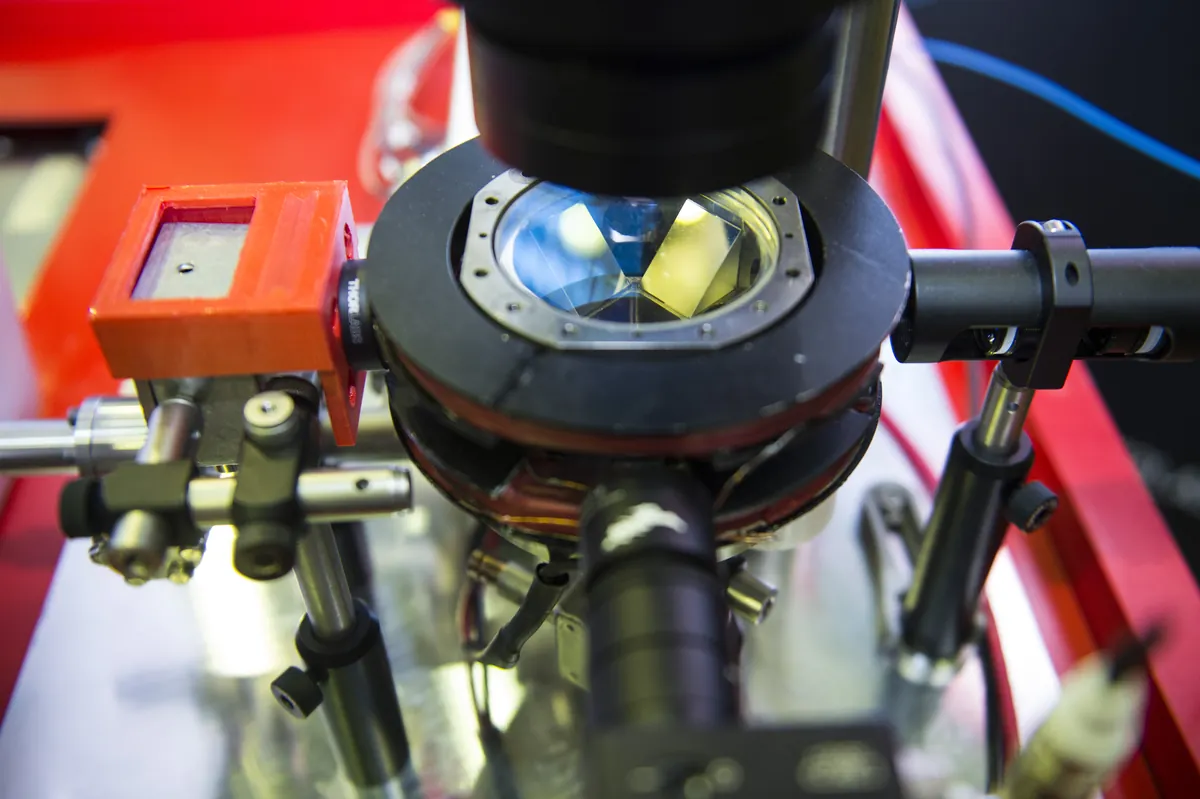

Delta Gold Technologies announced expanded sensing and communications research at Penn State and the University of Toronto on October 26. Planned equipment allocations are US$500,000 and C$500,000 respectively, drawn from existing research budgets. The company describes research-stage work toward devices; it provides no independently reproduced sensor-performance benchmark or delivered navigation product.[1]
The experiment needs a defined job
A research programme can establish an interesting physical effect without yet establishing an instrument that somebody can use. Connecting the two requires a target measurement, a suitable reference and conditions that resemble the intended application.
Our assessment is that the definition of success will matter more than the equipment purchase. A well-designed experiment should be able to challenge the commercial premise. If a proposed sensor responds strongly to its target signal but also drifts with ordinary environmental changes, that result would change what needs to be built next.
Sensitivity is only one part of usefulness
Consider an instrument intended to work outside a controlled laboratory. A user may need sensitivity, stability, response time and manageable maintenance together. A particularly strong number for one property leaves the remaining tradeoffs open.
A useful evaluation would report performance across the disturbances the instrument is expected to tolerate. It would also include preparation, calibration and interpretation in the comparison. Those steps determine how much work a customer must do to obtain a trustworthy measurement.
The route from a material to a product therefore needs both a measurement test and an operating-cost test. That does not predict the outcome. It defines the evidence that would make a success more persuasive and an unsuccessful approach easier to diagnose.
The next valuable milestone would be a specified sensing task, a documented apparatus and results against a suitable reference. A transparent negative result could still narrow an application or improve the design. Either outcome would provide more useful guidance than treating a research expansion as a finished product.