
SpinControl connects device tuning with circuit experiments on spin qubits
SpinControl connects configurable instruments, calibration and circuit execution. Reproducibility depends on retaining the physical settings behind each result.
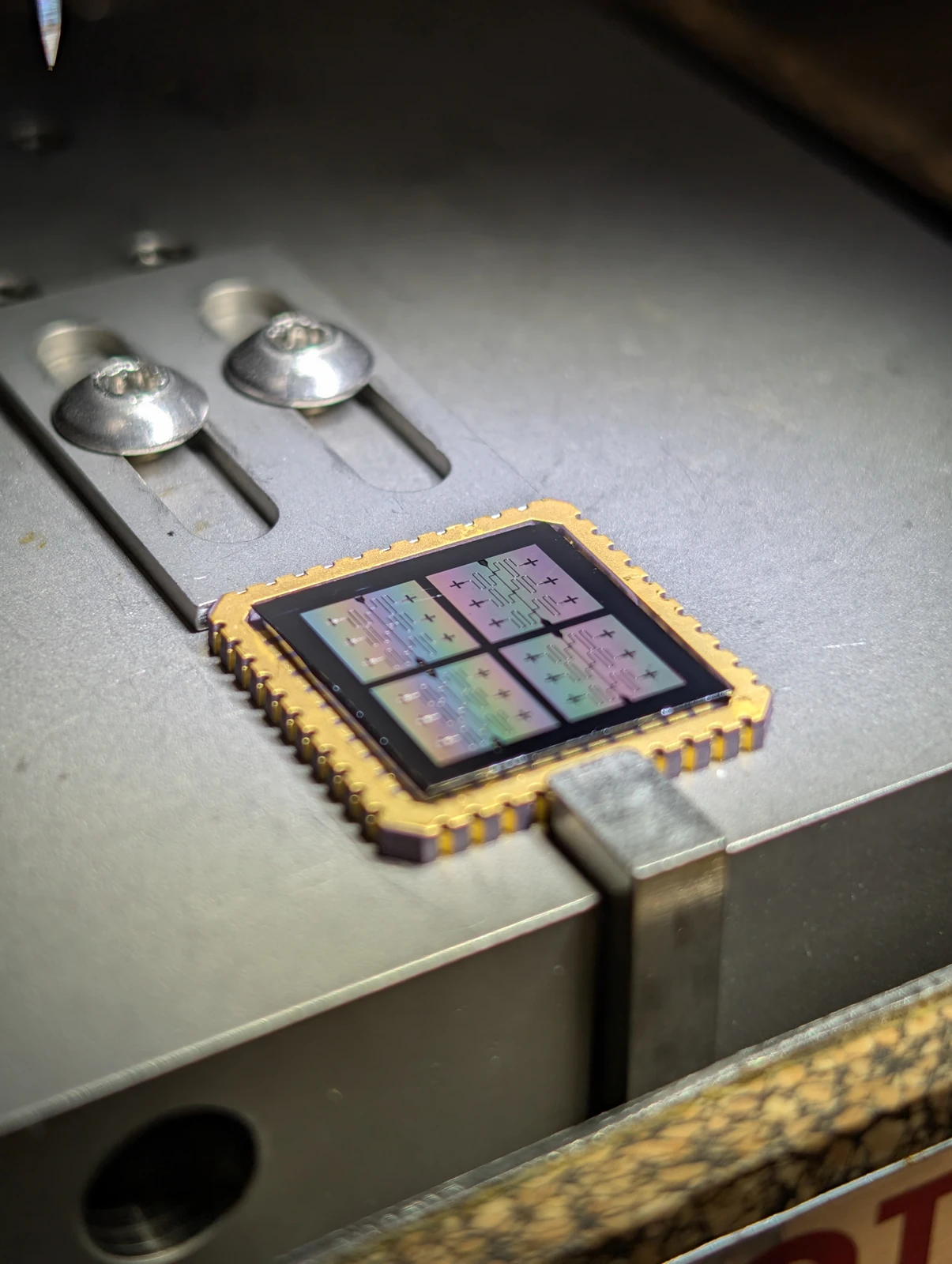

The reported development
The October 16 SpinControl preprint describes control software for spin- prototyping and benchmarking. Its design connects configurable instruments, pulse or circuit experiments, processing and calibration workflows. The authors emphasize modular components and separating configuration data from behavior. The paper discusses integration with existing tools; the openness of some dependencies should not be mistaken for a verified license covering the entire package.[1]
Two users of the same apparatus
A device researcher may need to adjust a voltage sweep or inspect a raw signal. An algorithm researcher may want a repeatable sequence of gates without manually reconstructing every pulse. Both are working on the same physical experiment. A software structure becomes useful when it allows those levels to communicate clearly: the high-level request has a defined implementation, and low-level changes can be traced to the results they affect.
Configuration is part of the evidence
A circuit label is not enough to reproduce an experiment if its physical implementation changed between runs. Calibration values, instrument settings and software versions help define what was actually executed. Keeping that information connected to the recorded data lets a researcher distinguish a scientific effect from a changed control condition. This is an experimental provenance problem, even when the most visible deliverable is a software interface.
Why modularity needs a contract
Replacing an instrument driver or an analysis block is easier when the rest of a system knows what inputs and outputs to expect. The challenge is preserving meaning as well as data format. A number expressed in the wrong units can be syntactically valid and physically wrong. Clear interfaces therefore need assumptions about units, timing and calibration validity. Testing those assumptions can be more consequential than making an interface look compact.
Automation should expose its dependencies
A calibration procedure may depend on the successful completion of another procedure. Running every step on a fixed schedule can waste time, while skipping an invalidated dependency can compromise the next measurement. A useful workflow makes those dependencies visible and records what triggered each update. This analysis describes the decision a control system needs to support; it does not claim that any one scheduling policy is optimal for every spin-qubit device.
How to judge the contribution
A meaningful evaluation would follow a representative experiment through setup, calibration, execution and analysis, then repeat it after a controlled change. Readers should ask how much work was reusable, what had to be customized and whether an independent operator could understand the resulting record.
Software architecture alone does not demonstrate better coherence or . Its value is in helping laboratories produce clearer, more reproducible measurements while retaining the flexibility that early devices require.
That is an important experimental capability with a different evidence standard from a new hardware record.