
Quantum cipher study tests what makes a decrypted message plausible
A historical-cipher study examines the acceptance rule inside Grover search. Its projected advantage is over random search, with no modern encryption break.
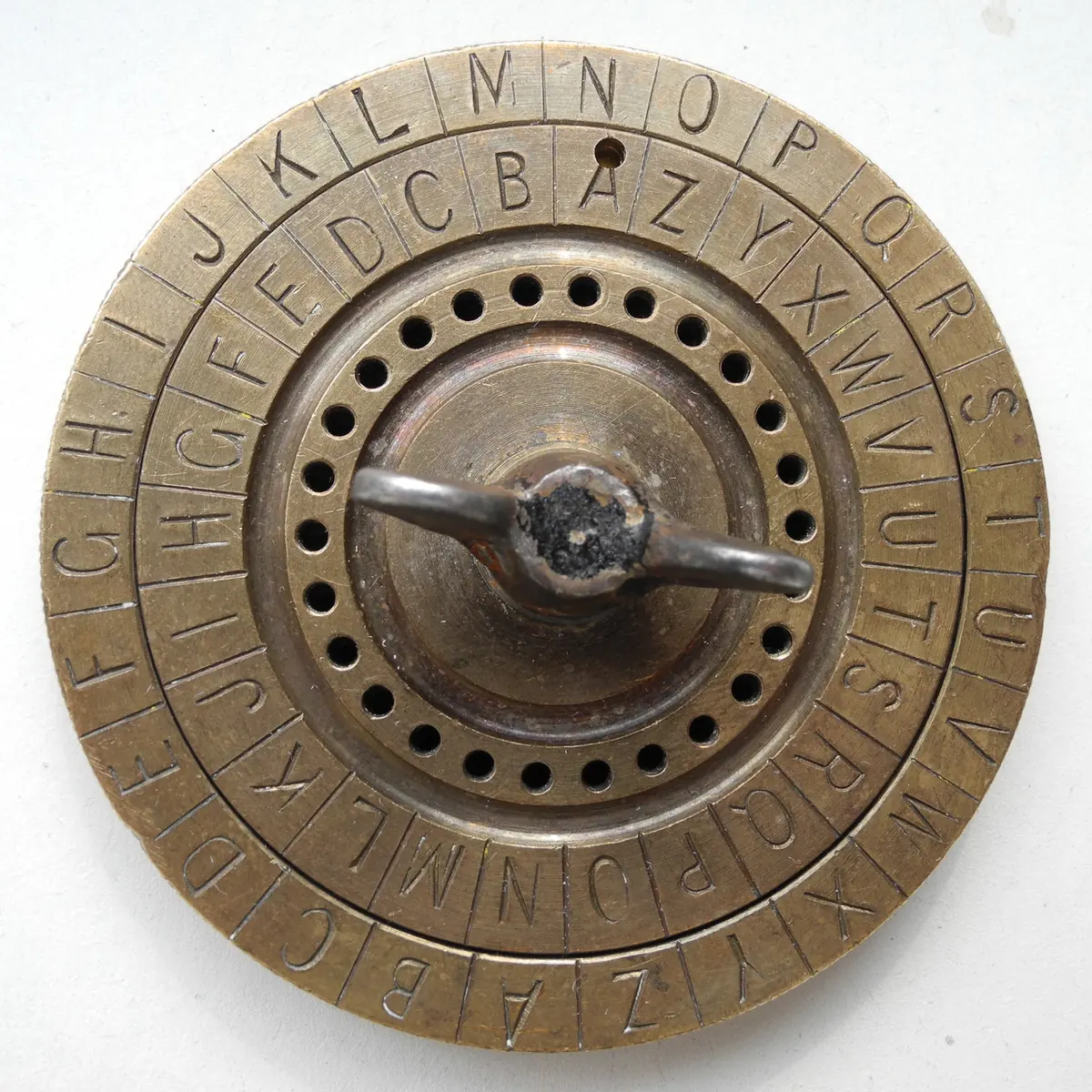


A quantum search needs a rule for recognizing a promising answer. A study released by Scientific Reports on October 26 examines how that rule changes the cost of searching for keys to a historical substitution cipher.[1]
The authors use language models trained on Renaissance Italian texts to judge candidate decryptions. They simulate Grover search over reduced alphabets and analytically project oracle-call counts for a 21-letter alphabet. The comparison concerns classical random search. The publisher identifies this as an accepted early version that will receive further editing.[1]
The work does not demonstrate a break of AES, RSA, Bitcoin or another deployed encryption system. It also does not establish an end-to-end runtime advantage over the strongest classical cryptanalysis.[1]
### QubitWire analysis
The useful question is what the acceptance rule actually buys. A permissive test could identify many plausible-looking messages without isolating the intended one. A stricter test might provide more confidence while making acceptable answers harder to find. That tradeoff belongs inside an assessment of the search task.
Oracle calls are one accounting unit. A deployment comparison would also need the cost of building and running the oracle, preparing inputs, checking results and correcting errors on the machine performing the search. The strongest relevant classical method would need an equivalent budget and success criterion.
A meaningful next comparison would therefore specify both a language-based target and a complete resource model. That would show whether the projected reduction in search calls survives the work required to recognize, produce and verify a useful answer.
A fair comparison would also report how ambiguous outputs are rejected rather than counting every plausible candidate as success.