
The Web Is Quietly Changing Its Locks Before Quantum Computers Arrive
Post-quantum cryptography is moving from standards into browsers, cloud services and migration plans. Most people will never see the change - which is exactly the idea.

The web's locks are being replaced while the doors remain open. NIST's first finalized post-quantum standards gave developers common building blocks for encryption and digital signatures. Now the slower work is underway: fitting those tools into browsers, cloud endpoints, private networks, certificates, devices and software that cannot all be upgraded at once.[1]
Post-quantum cryptography does not require a quantum computer. It is new mathematics designed to run on ordinary systems while resisting attacks from both classical machines and a future cryptographically relevant quantum computer. NIST's principal standards include ML-KEM for key establishment and ML-DSA and SLH-DSA for signatures.[1]

Deployment is already becoming visible in infrastructure rather than consumer settings. Google Cloud’s August roadmap says its API endpoints now offer hybrid quantum-safe key exchange, while other upgrades remain scheduled. Chrome and Cloudflare are experimenting with Merkle Tree Certificates, which use compact proofs to reduce the data sent when a browser checks a website’s identity.[2][5]
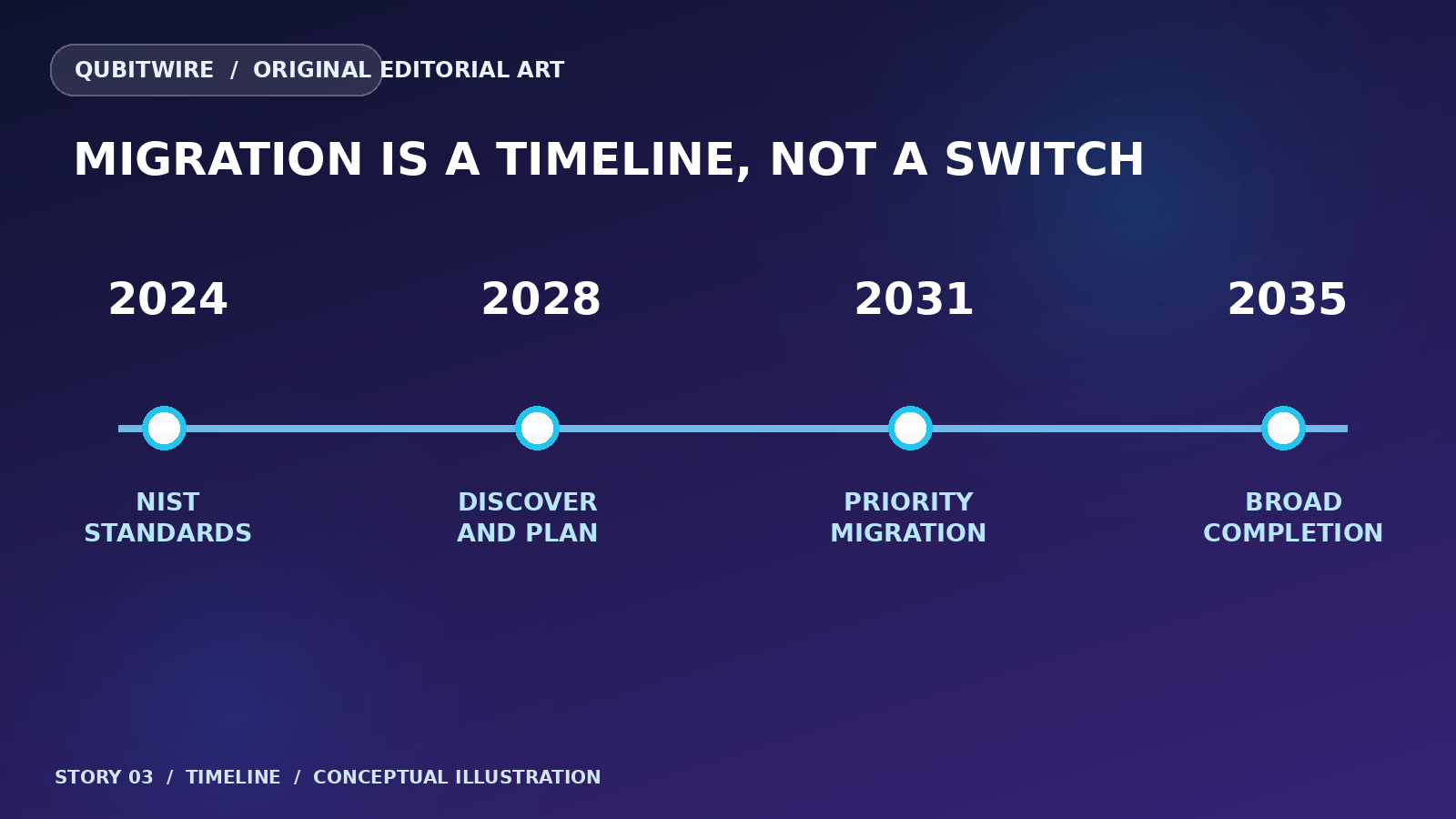
The urgency is not a claim that today's quantum machines can suddenly read your bank account. The concern is that encrypted information stolen now may retain value long enough to be decrypted later. Migration itself also takes years. The U.K. NCSC asks large organizations to complete discovery and planning by 2028, highest-priority moves by 2031 and broad migration by 2035. A September G7 call to action similarly pushed governments and organizations to begin.[2][3][4]
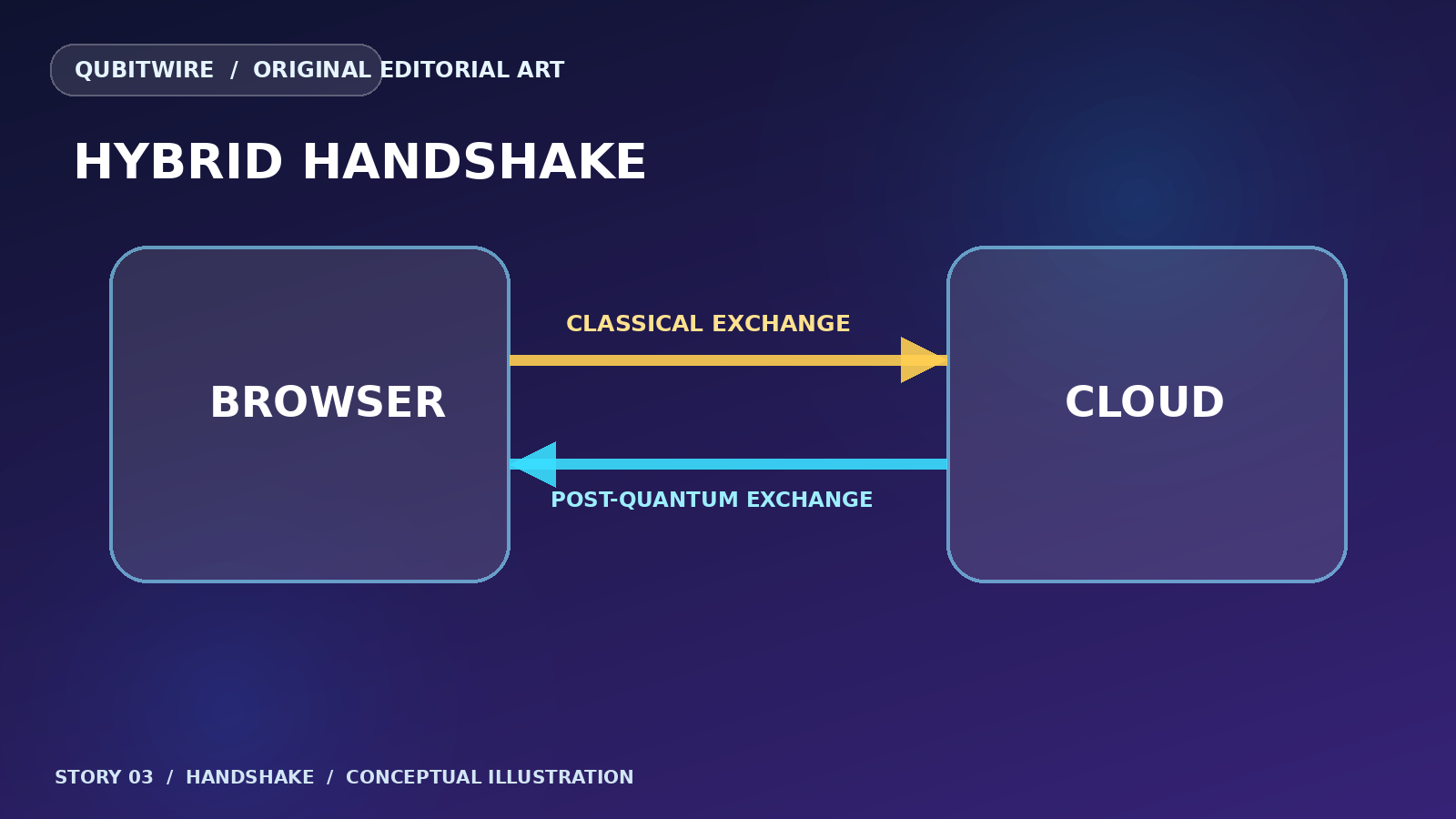

For ordinary users, the best outcome is boring: updated software, slightly different handshakes and no dramatic moment when the old internet switches off. For organizations, the first task is less glamorous and more urgent - find every place cryptography is hiding before it becomes the last lock no one remembered to change.[4]