Skip to content
SECURITY · EXPLAINER

Can a Quantum Computer Solve a Problem It Cannot See?

Blind quantum computing aims to hide your instructions and answer from the machine doing the work. A real experiment shows why that is more than a thought experiment.

Sources checked Published
My reading list
Metal vacuum chamber with glass viewports surrounding a linear Paul ion trap.
A real linear Paul ion trap inside a vacuum chamber. Trapped-ion hardware context, not the Oxford blind-computing experiment’s apparatus. Cropped/resized; no generative edits. Adapted image: CC BY-SA 4.0.Photo: Linear Paul ion trap vacuum chamber · Coldsmokerider · CC BY-SA 4.0

Imagine hiring a computer to do a calculation while keeping both the instructions and the answer hidden from it. That is the ambition of blind quantum computing. It is not simply an encrypted connection to a server. The protocol is designed to conceal the computation from the server itself.[1][2]

An Oxford-led experiment published in 2024 demonstrated a version using trapped ions and single photons. The server held matter-based . The client used a photon-detection system connected by optical fiber. The smaller device did not need to be a second full-scale quantum computer.[1]

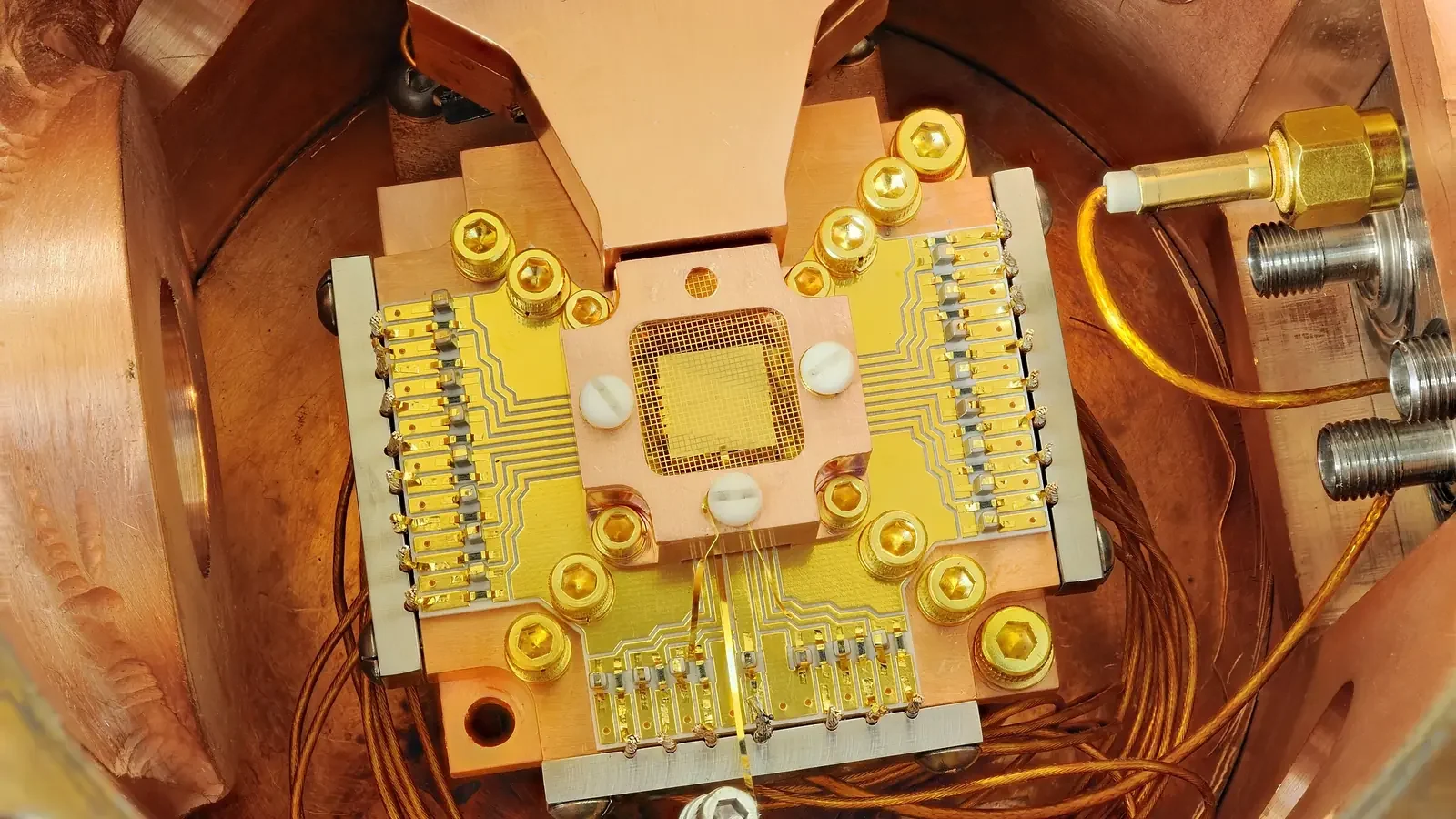
Gold ion-trap chip mounted inside a copper enclosure with fine wires.
NIST’s beryllium-ion trapping chip and enclosure. Historical context for matter-based qubits, not the server used in the Oxford experiment. Cropped/resized; no generative edits.Photo: NIST beryllium-ion trapping apparatus · Y. Colombe / NIST · NIST public-information reuse

The client’s private choices help disguise what the server is being asked to do. The protocol also includes a way to test the computation, addressing a second cloud problem: an answer is not very useful if you cannot establish that the remote machine behaved correctly.[2]

This was a laboratory demonstration, not a privacy setting available on every quantum-cloud account. The paper reports a small, quantified information leakage rather than an experimentally established absolute zero. Security also depends on the protocol and its assumptions; a successful physics experiment is not a guarantee against every software or hardware vulnerability.[1]

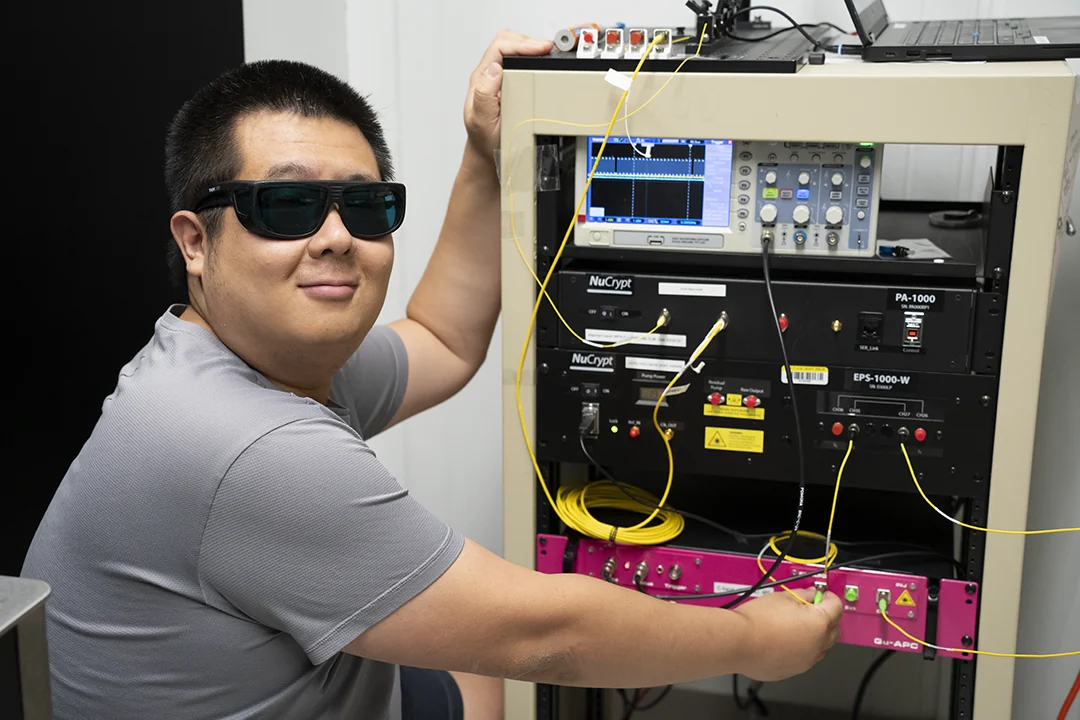
A researcher beside racks of NIST equipment used to distribute entangled photons.
NIST equipment for distributing entangled photons. Related quantum-networking context, not a photograph of blind quantum computation. Cropped/resized; no generative edits.Photo: NIST entangled-photon distribution equipment · Megan King / NIST · NIST public-information reuse

The appeal is easy to understand. A future customer might want access to an expensive quantum processor without handing its operator a valuable algorithm or sensitive calculation. Ordinary cloud access and blind cloud access are different products. This research asks whether renting the computing power must also mean revealing the work.[1][2]

READ NEXT

Continue exploring

All Security stories
  1. Related reading

    A Smarter Qubit Router Cut Modeled Network Traffic by 24%

    A conference benchmark reports lower EPR-pair use than QuComm, but only in simulation and under a matched communication protocol.

    Source date
  2. Related reading

    A quantum chip is not a computer. QuTech is connecting the pieces

    A new Delft unit will combine European components into complete superconducting quantum computers and develop a repeatable integration process.

    Source date
THE QUANTUM BRIEFING

A clearer signal.
Straight to your inbox.

A little perspective on a fast-moving field.

Read a briefing preview →

Selected quantum coverage in a weekly briefing. Read the preview or register your interest.