
Your Device Can Claim a Location. Can Physics Prove It?
A quantum experiment combines light signals and strict timing to test where a device actually is. It is not a replacement for GPS.
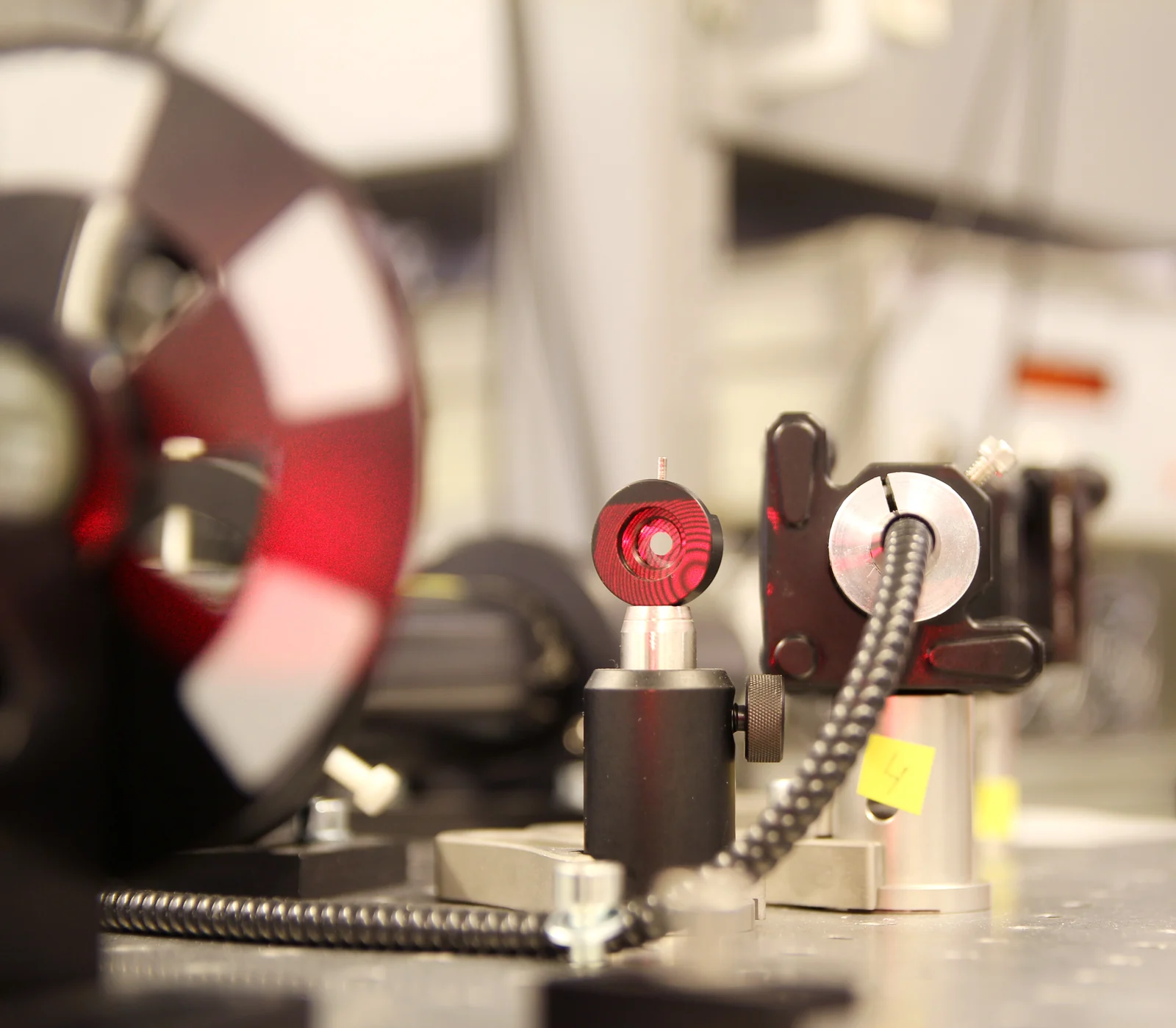

A location pin is a statement. Proof that the device occupies that location is something else.
That difference is the starting point of a Nature Physics experiment on relativistic position verification. Two verifying stations about two kilometres apart tested a device between them. The reported verification range was 74.3 metres, set by the demonstrated protocol’s timing budget. That is a region within which the test authenticates presence, not GPS-style positioning accuracy.[1]
An appointment that light cannot miss
Ordinary position estimates tell a system where something appears to be. Verification asks a more demanding question: is the response compatible with the device being at the claimed place, rather than with someone elsewhere producing an acceptable reply?
The protocol brings two constraints together. Information takes time to travel. Quantum signals also cannot generally be measured, copied and forwarded while preserving every property an unknown state may carry.[1]
The intuition is an appointment set by physics. A response must be appropriate and arrive within the allowed time. Neither a plausible-looking answer alone nor a fast but irrelevant response is sufficient.

.jpg)
That is an explanatory analogy, not a proof of the protocol’s security. The real argument depends on exactly what signals are sent, what the verifier checks and what resources the adversary is allowed to possess.
Real light, not idealised single photons
The experiment uses weak, phase-randomised coherent light pulses together with classical communication and tightly controlled timing. Such pulses require the analysis to account for practical effects, including loss and components containing more than one photon.[1]
This is the interesting engineering step. A persuasive proposal must survive contact with the kind of source, detector, fibre and electronics available to a real experiment. Otherwise the best part of the system exists only in an idealised diagram.
The measured responses crossed the security bound used in the analysis. That bound assumes limits on the auxiliary quantum resources available to attackers; it is not a guarantee against adversaries with unlimited resources. The authors also provide associated data. The result applies to this setup and its assumptions, not every possible attempt to spoof a location.[1][2]
What this would be useful for
The broader idea is to make physical presence a property a protocol can test, rather than trusting a coordinate supplied by the device itself. That could be relevant wherever access depends on being in a particular place. It is a possible application direction, not a service shown operating on consumer phones.
GPS answers a navigation question. This research asks an authentication question. Treating them as interchangeable obscures the achievement and invites claims the experiment does not support.
The sensible next questions concern scaling: less specialised equipment, different environments, losses, timing margins and how the assumptions are enforced outside a controlled test. Those are the details that would determine whether an elegant protocol becomes useful infrastructure.
The appeal of this story is not an unhackable-location promise. It is the possibility of replacing a statement with a physical test. A device saying “I am here” may one day be only the beginning of the conversation.