
GPS Can Be Jammed. Could Atoms Become the Backup?
Sandia is guiding cold atoms along a 420-nanometer fiber—a step toward motion sensors that would not need a satellite signal.

A navigation system that depends on hearing a satellite has an obvious weakness: someone can drown out the signal. A different approach is to keep track of motion onboard. The challenge is that small measurement errors accumulate. Sandia’s latest quantum-sensing work asks whether carefully controlled atoms could eventually make that backup far more dependable.[1][2]
The September 10 announcement centers on something almost absurdly thin: an optical fiber just 420 nanometers across. Researchers trapped cesium atoms using 5 milliwatts of optical power and made measurements mimicking atom interferometry with 150 nanowatts. Those are powers for particular optical functions—not the electricity consumption of a finished navigation system.[1]
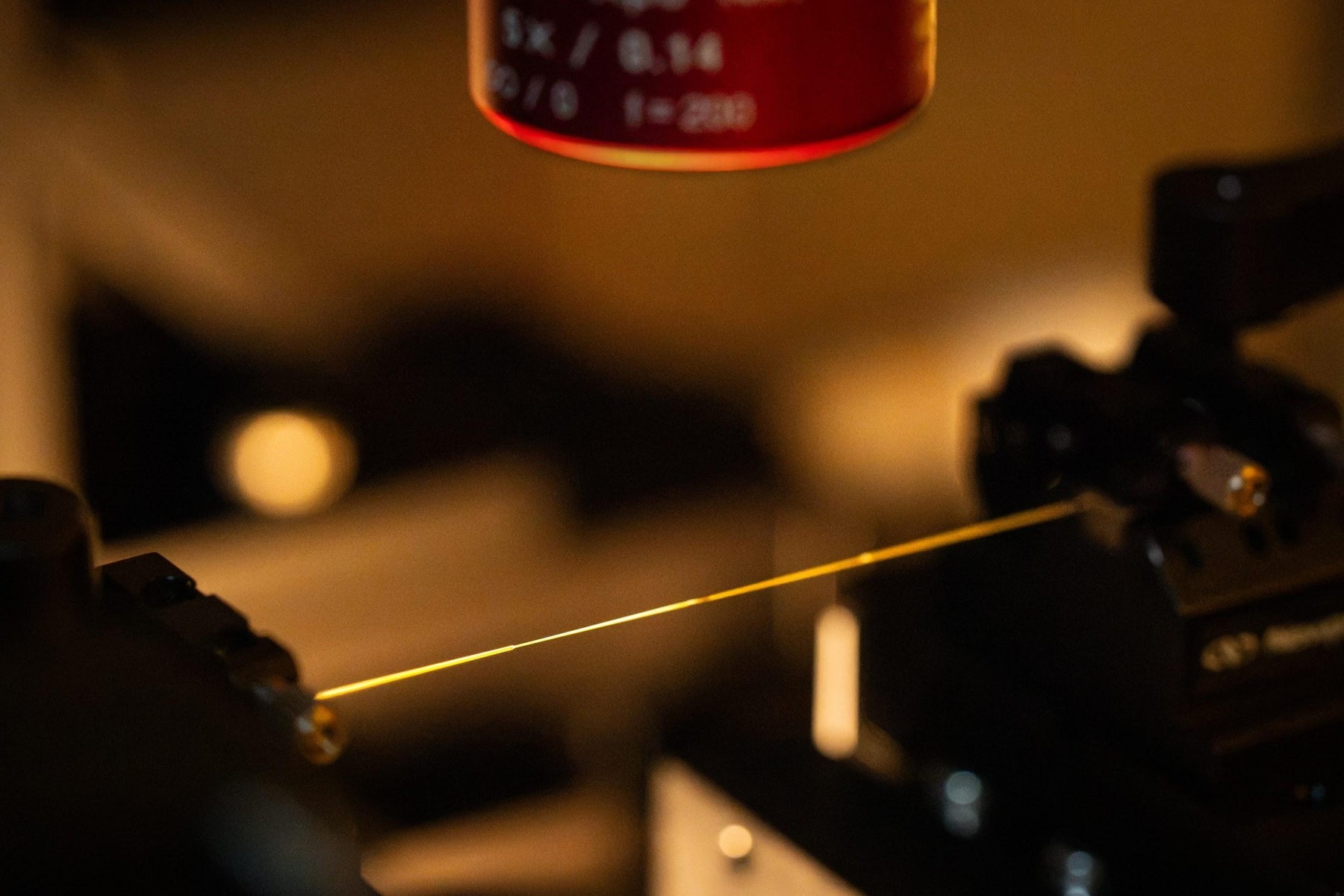
The visual trick is that the atoms are held by light around the fiber rather than dropped through open space. That could matter on a moving vehicle, where vibration can knock a delicate measurement out of alignment. A guide gives the atoms somewhere to remain together instead of leaving the experiment to chase them as they fall.[1]
This is part of a longer effort to shrink cold-atom instruments. In 2022, Sandia described a compact vacuum system for an atom interferometer, a device that compares atomic waves to sense motion. The newer work tackles another practical obstacle: controlling the atoms with less optical power. A good sensor needs more than impressive physics; its packaging has to cooperate.[2]

There is no satellite-free quantum navigator ready to install here. Sandia describes the nanofiber as a testbed, not a field-ready platform. The intended destination is a photonic chip, with further atom-control and integration work still required. The important distinction is between demonstrating a useful component and demonstrating reliable navigation through an actual flight or journey.[1]
That makes the most revealing future test easy to understand. Put the integrated instrument in motion, deny it satellite updates and measure how its position estimate drifts over time. If atoms can keep that error from growing as quickly, the payoff would be more compelling than any laboratory glamour shot: knowing where you are when the usual signal disappears.[1][2]