
One Atom, Two Paths—and a New Test of Einstein
Researchers held one branch of an atomic wave still while another fell. Reuniting them revealed a distinctive gravitational phase.
Imagine an atom taking two routes through the same experiment. Along one route, it stays put. Along the other, it rises and falls under gravity. Then the routes meet again, and their reunion reveals something neither path could tell you alone. That is the wonderfully strange setup behind a new quantum test involving Einstein’s equivalence principle.[1][2]
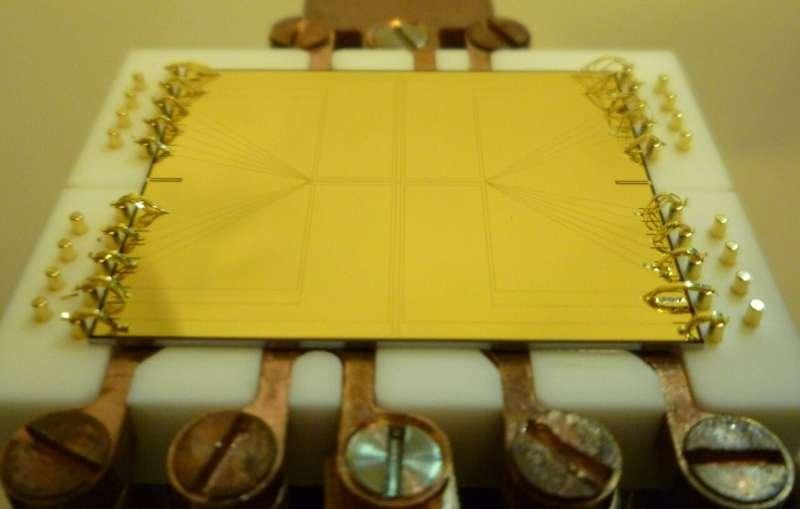
The experiment, reported in Science Advances in September, used ultracold rubidium atoms near a specially wired atom chip at Ben-Gurion University. Microwave and magnetic controls prepared and separated branches of the atoms’ quantum waves. One branch was supported against gravity; another was allowed to follow a free-fall trajectory. This is a superposition of matter-wave paths, not a photograph of a little ball split into two pieces.[1][2]
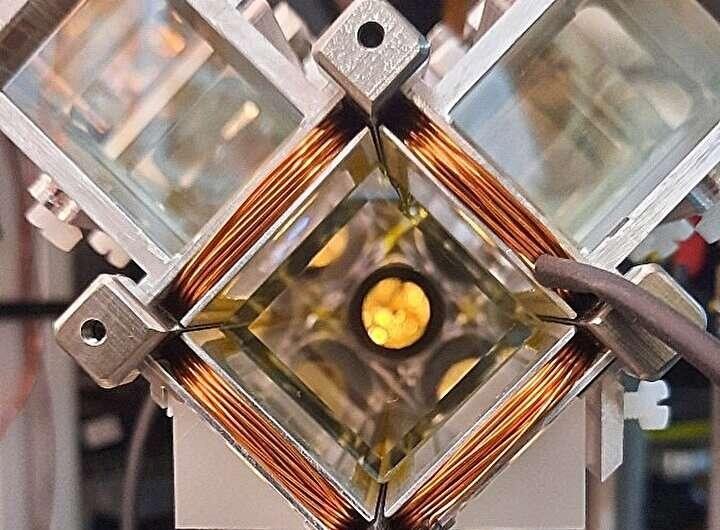
When the researchers recombined the branches, they measured their relative phase—the offset that determines how the waves interfere. It agreed with the predicted phase associated with free fall. The result is consistent with applying Einstein’s equivalence principle in this quantum setting: the same principle behind the weightlessness of someone falling freely inside an elevator.[1][2]
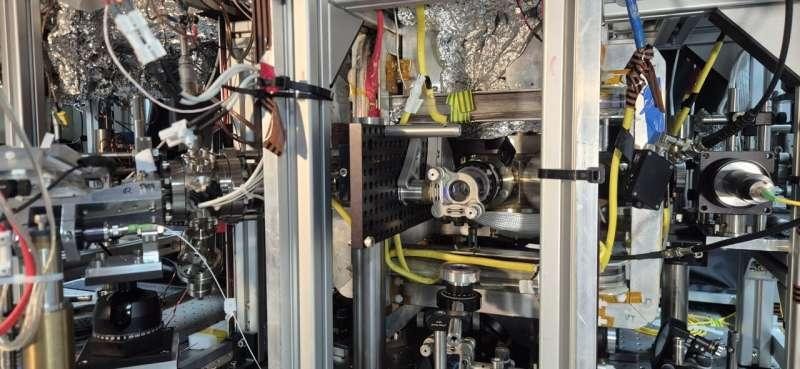
The apparatus is called the Quantum Galileo Interferometer. Its appeal is not that quantum particles had never encountered gravity before. They have. It is the particular comparison between a held branch and a freely falling branch, and the phase that can be read out when the two rejoin. The experiment turns an abstract argument about reference frames into a laboratory measurement.[1][2]
It is also important to resist the most tempting overstatement. This did not prove that gravity itself is quantized, reconcile all of general relativity with quantum mechanics or settle every dispute about quantum superpositions. Oxford explicitly notes that the masses and timescales were insufficient to test Roger Penrose’s proposal that sufficiently massive superpositions might break down. Penrose is a co-author of this study.[1][3]
The next leap would be to make such tests harder for our theories: larger masses, longer-lived separations and tighter measurements. For now, the fascination is more intimate than a theory of everything. Scientists let the two branches of a quantum object experience different histories of motion, brought them back together and checked whether Einstein’s principle still made sense. In this experiment, it did.[1][2]