
How High Is Your Clock? At This Precision, It Matters.
A Singapore comparison of lutetium-ion clocks makes small differences in height part of the measurement. The story is about gravity as well as time.
.jpg)
For most clocks, a table is furniture. For an extremely precise atomic clock, the table’s height can become part of the experiment.
Clocks at different gravitational potentials tick at slightly different rates. Near Earth’s surface, raising a clock changes that potential. The effect is usually far too small to notice, but it becomes an unavoidable part of comparing sufficiently sensitive instruments.[3]
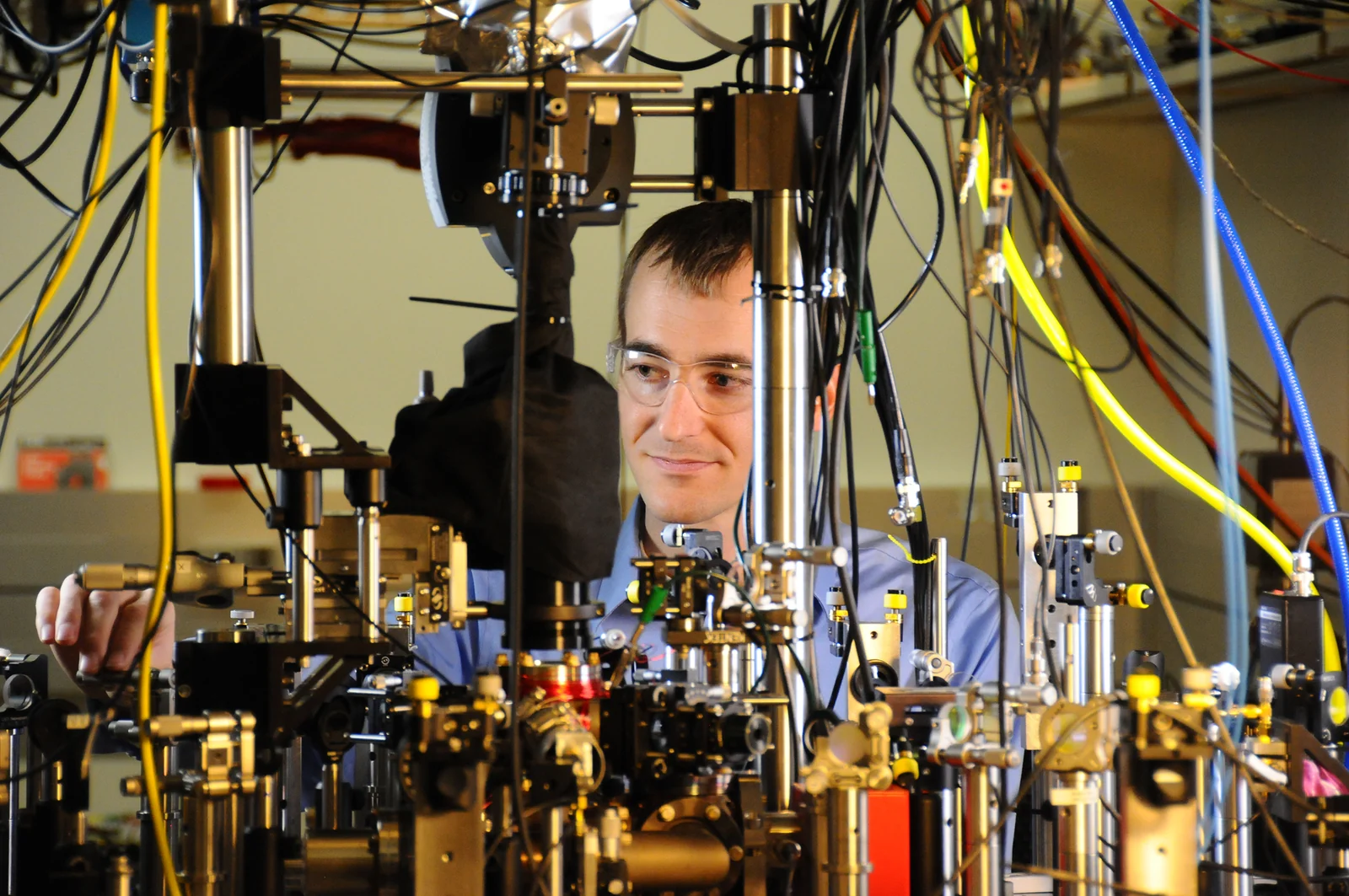
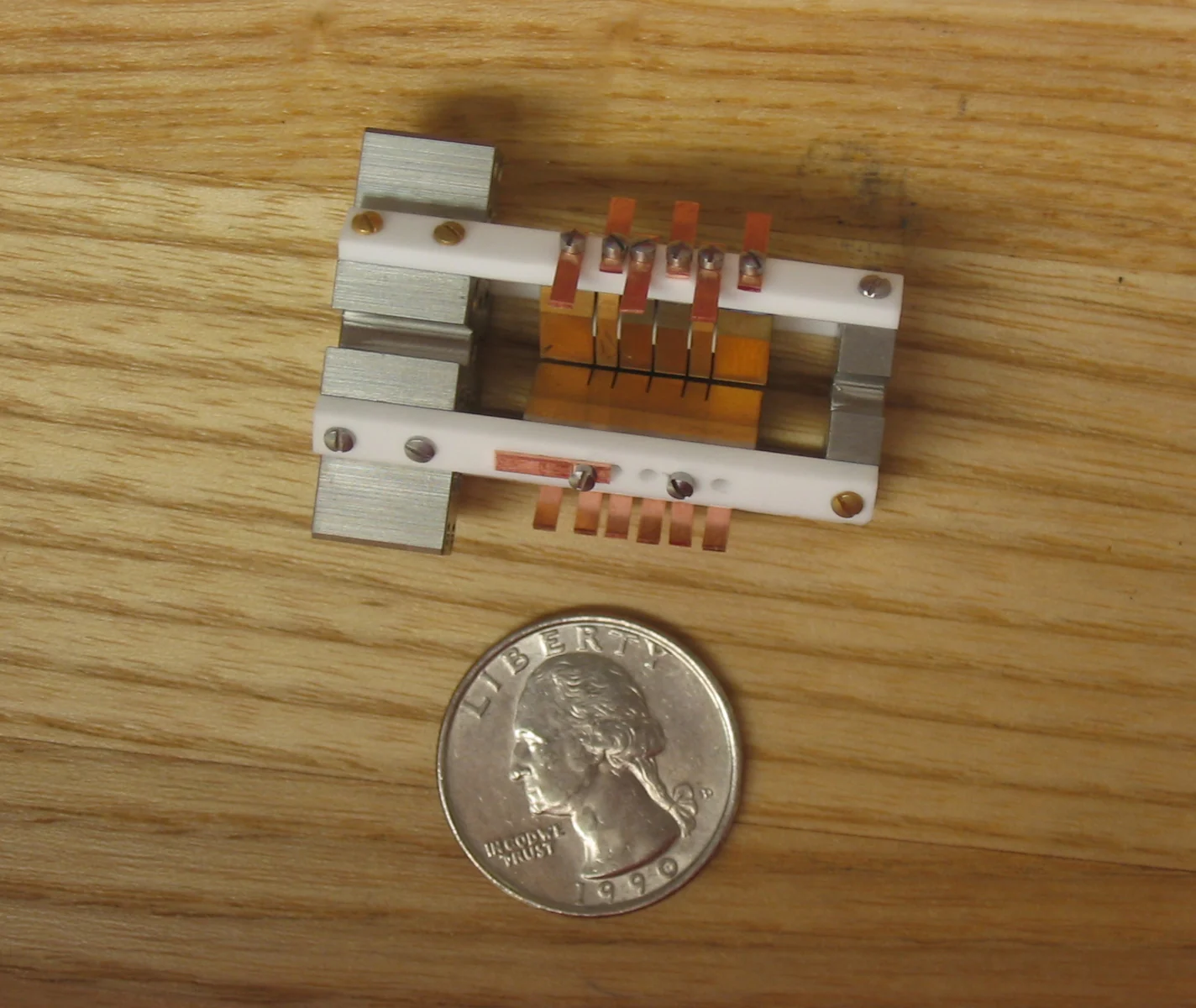
A Nature paper published on 23 September reports a Singapore experiment using two lutetium-ion optical frequency references. The team accumulated 200 hours of comparison data, testing how closely two independently characterised systems agreed.[1]
Precision is not one number
The two references have reported systematic uncertainties of 1.2 × 10⁻¹⁹ and 1.3 × 10⁻¹⁹. Their measured comparison has a separate statistical uncertainty of 5.7 × 10⁻¹⁹ and a systematic uncertainty of 1.0 × 10⁻¹⁹. These quantities answer different questions; they cannot be collapsed into one “accuracy” headline.[1]
The distinction is intuitive. A measurement can vary when repeated. It can also be consistently shifted by an effect that needs calibration. Collecting more data helps with some uncertainties; understanding the apparatus helps with others.
.jpg)
A strong clock comparison must therefore do more than print many decimal places. It must show why the agreement is meaningful and which environmental effects have been accounted for. More digits are useful only when the uncertainty budget earns them.
When gravity becomes a measuring tool
The National University of Singapore explains that the achieved comparison sensitivity could distinguish a height difference of about five millimetres. That is a statement about potential resolving power, not a claim that the experiment consisted of lifting a clock five millimetres and watching it change.[2]
The gravitational effect suggests an intriguing reversal. Normally, a measurement needs a correction for its environment. With sufficiently good clocks, the environmental effect can itself become something worth measuring.
This connects timekeeping with questions about Earth’s gravitational potential. It is not a promise that a laboratory clock is ready to replace a surveyor’s instruments. Transferring a capability into the field requires reliable comparisons, environmental control and a useful operating procedure. Earlier optical-clock research has also explored this connection.[3]
What a better clock is—and is not
An atomic clock exploits a well-defined atomic transition as a reference for frequency. It is quantum technology, but it is not thereby a quantum computer running an algorithm faster. The relevant achievement is a measurement of time and frequency, with a carefully stated uncertainty.[4]
That distinction makes the result easier to appreciate. Some quantum advances will be judged by calculations. Others will be judged by whether they reveal a difference that was previously too small to distinguish. These clocks belong to the second category.
The most useful follow-up is not an ever-larger number of years before a hypothetical clock loses a second. It is whether independent comparisons support the uncertainty claims, and whether the capability can be carried into measurements that answer new questions.
At this level, asking whether two clocks agree also means asking where they are. Time has become sensitive enough that the room matters.