
Detector timing separates seven photons from eight in a laboratory study
A narrow detector result explains the importance of defining an accuracy metric.
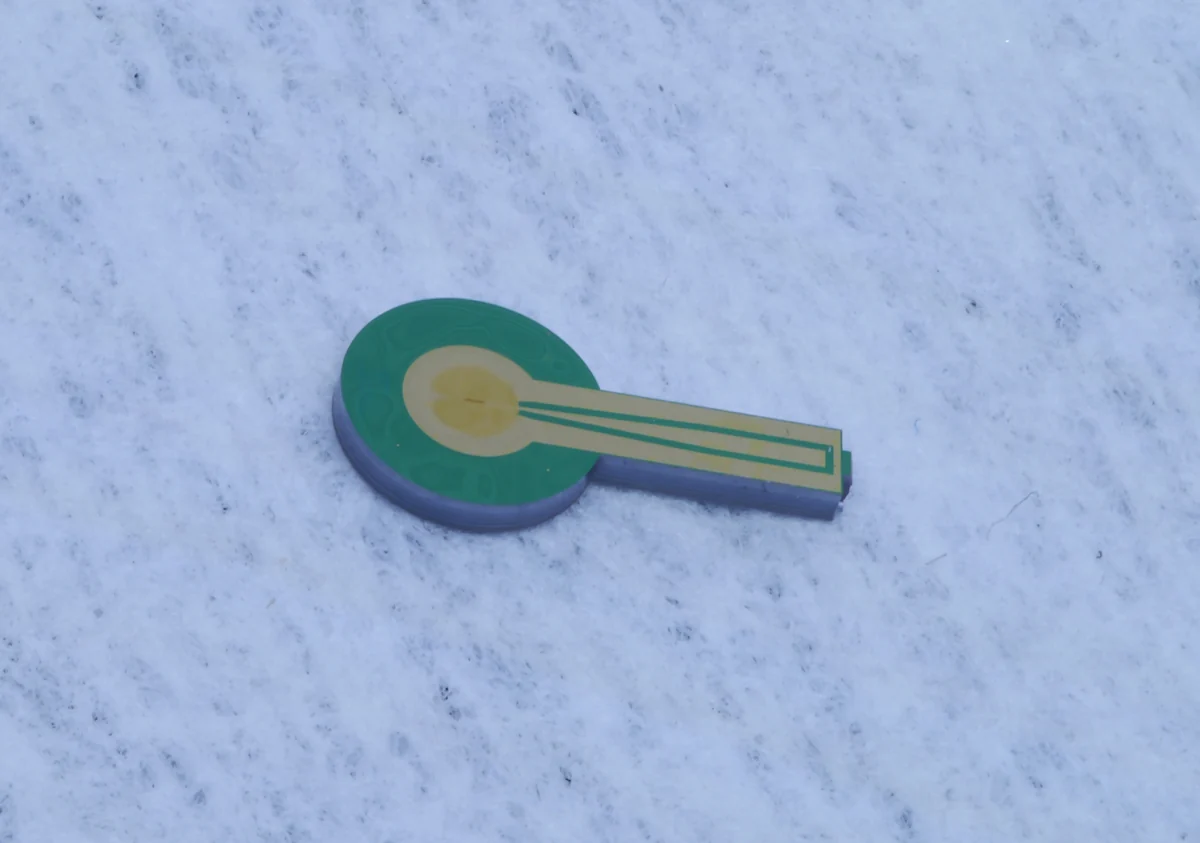
A superconducting-detector study uses differences in signal arrival time to distinguish photon numbers. Researchers test two wide niobium-nitride microstrip devices under pulsed 515-nanometer light, with the wider device showing timing components assigned to as many as eight photons.[1]
For the components assigned to seven and eight photons, fits to the timing distributions produce an equal-prior pairwise assignment fidelity of 99.6 percent. That is a specific discrimination result.[1]
It is not the detector's overall photon-detection efficiency or a universal accuracy for counting every possible photon number.[1]
The authors find that neighboring timing peaks become easier to separate relative to their widths at higher photon number. A phenomenological model connects those trends to absorption location, vortex processes and redistribution of current.[1]
The October 23 preprint is described as a draft prepared for APL. It should not be presented as an accepted journal paper or a finished commercial detector.[1]