
NIST’s bigger photon detectors have a quieter way to see
Superconducting rails help detectors reach 0.1 millimetres in width while reducing false signals—a useful step toward larger optical sensors.
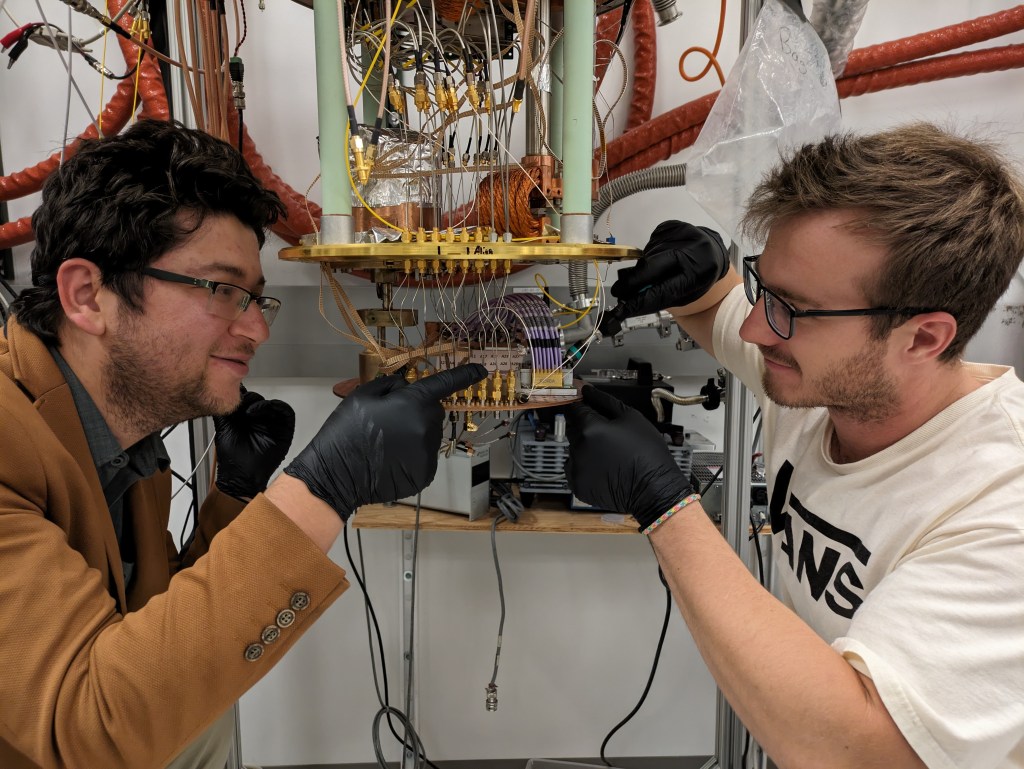
A quantum detector has a basic trust problem: a click should mean a particle of light arrived. False alarms can corrupt the information carried by those photons. NIST researchers have found a way to make superconducting photon detectors much wider while suppressing these unwanted signals. The obstacle was where electrical current flowed. It crowded along detector edges, limiting operation before the material reached its potential. The team placed superconducting rails on either side; their magnetic fields redistributed current through the central detector.
NIST’s August 24 account of an Optica paper published August 19 reports detectors up to 0.1 millimetres wide. The researchers’ latest preprint also describes near-unity internal detection efficiency at a four-micrometre wavelength in a narrower, 20-micrometre-wide device. That internal measure concerns absorbed photons; it is not an overall system-efficiency score.
This distinction matters because NIST says further testing is needed to establish whether the wider approach can match the 98% efficiency achieved by its best nanoscale detectors. The new result tackles size and unwanted counts; it does not settle every part of detector performance. For quantum engineers, the opportunity is a detector that could be easier to manufacture over larger areas while preserving sensitivity to weak light. The useful follow-through will be complete-device measurements showing how much incoming light becomes a reliable electrical signal.