
IBM Opens Its Error-Mitigation Stack—Without Claiming Better Qubits
A company-reported beta software release makes quantum error-mitigation workflows inspectable and customizable while leaving hardware noise and sampling cost intact.
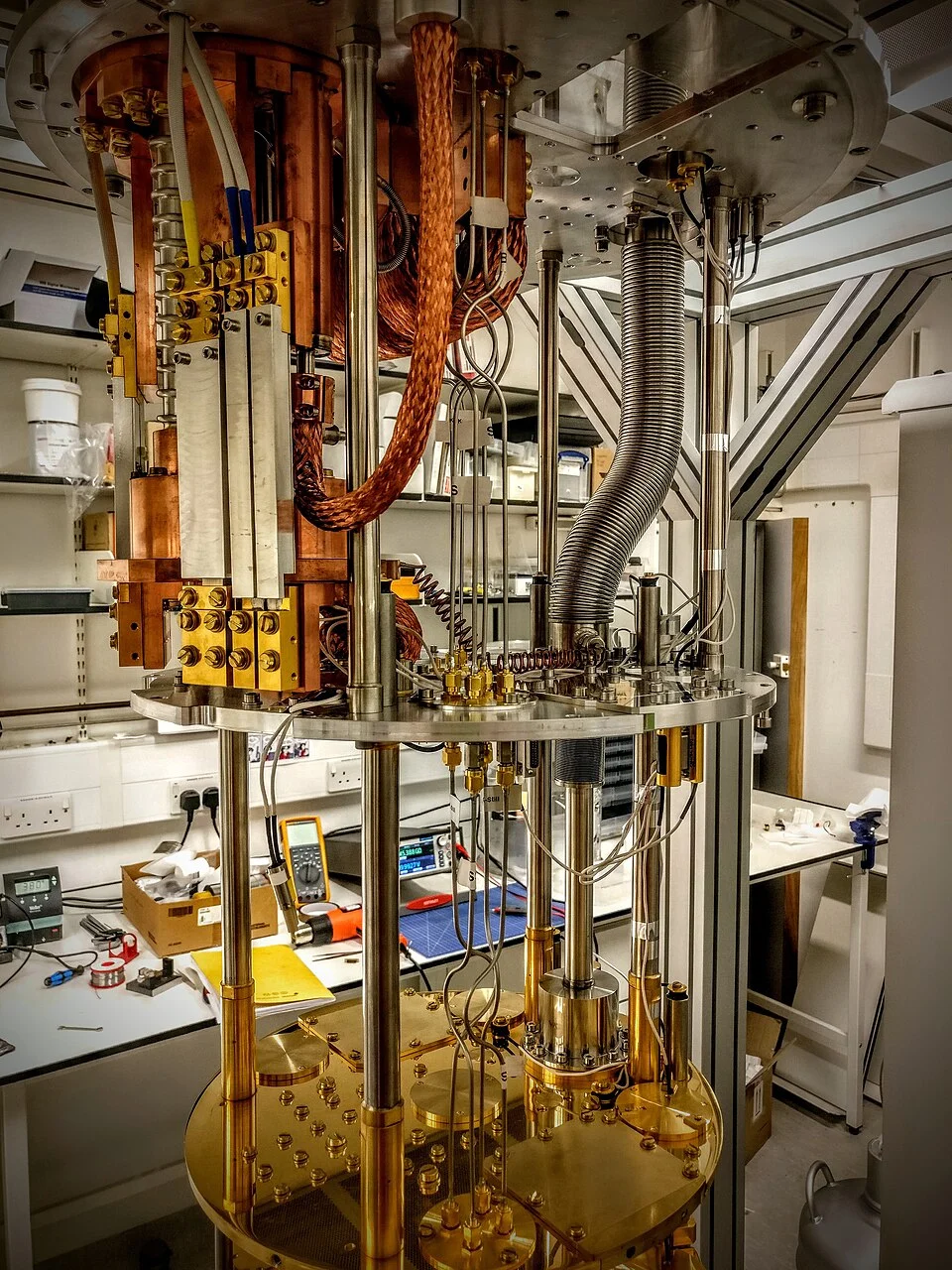

IBM's October 5 software release changes where researchers can see and control the machinery around a quantum job. In the beta directed-execution model, boxes and annotations express intended transformations, Samplomatic builds an inspectable template circuit and randomization recipe, and the Executor primitive generates and runs the requested variants. The practical change is transparency and composition—not a claim that IBM's became less noisy.[1][2]
Intent stays compact; expansion stays near the hardware
The mechanism separates intent from expansion. A researcher can mark circuit regions for twirling, basis changes or controlled noise injection, inspect the resulting template and samplex locally, then ask Executor to bind and execute the variants. IBM says Executor can handle 5,000 randomizations or more, while its current documentation labels every directed-execution component beta and potentially unstable.[1][2]
What actually shipped
The September 24 client release notes confirm that qiskit-ibm-runtime 0.50.0 added client-side Sampler and Estimator implementations. They perform pre- and post-processing on the client and delegate execution to Executor; local mode can run against fake backends or Aer, and a separate dry-run path can validate a job and estimate usage without executing it on a QPU. Those are workflow capabilities, not evidence of lower physical error rates or a general quantum advantage.[1][2][3]
Transparency moves the reproducibility burden
QubitWire's analysis: moving mitigation out of a server black box can make methods easier to inspect, version and compare, but it also exposes more of the software environment that researchers must report to reproduce a result. A transparent recipe does not remove probabilistic-error-cancellation overhead, calibration drift or model mismatch; it makes those choices easier to see and challenge.[1][2][3]
The next test should measure the workflow
The main limitation is that IBM supplies the performance claims and examples, and the beta documentation warns that components may not be stable. The informative next test is an independent, version-pinned comparison that runs the same workload through the legacy and directed paths, reports end-to-end latency and QPU usage, and checks whether matching mitigation settings produce statistically consistent outputs.[1][2][3]
What should a reproducible record contain?
A saved circuit alone may not explain a result. The execution plan, relevant software versions, target hardware, execution time, repetition count, processing method and uncertainty estimate can all matter. Keeping these together helps distinguish a changed scientific result from a changed workflow. Traceability does not promise that future hardware will produce identical observations.[1]
Does more control mean lower cost?
Inspectability can reveal unnecessary work, but a flexible interface can also run an expensive plan. A useful comparison keeps the task and target accuracy constant while counting circuit executions, classical processing and relevant overhead. A cleaner final estimate is not automatically a faster or cheaper job. Sampling and calibration costs still belong in the account.[1]
Where should a developer begin?
Start with the documentation for the actual account and installed version, then use a small example whose intended result is understood. Inspect how the plan represents the experiment and how observations become the final estimate. That test can establish a benefit in clarity or control before any independent end-to-end performance advantage is demonstrated.[1]