
Quantum computing’s next challenge: making the breakthrough repeatable
An expanded Infineon–ZuriQ partnership puts the factory question in focus: how does a promising quantum device become a machine that can be built again?
A reported nine-ion array is a component milestone
- Reported
- The partners say earlier work trapped a two-dimensional array of nine individually controlled ions.
- Supported observation
- Their October 7 announcement expands a collaboration on trapped-ion architecture, semiconductor manufacturing, packaging and photonics.
- Conditions
- October 7 is the announcement date, not a verified experiment date. The two company pages describe one announcement family; the array result remains attributed to the partners.
A direct methods review, independent replication, manufacturing yield, complete multi-qubit performance or an error-corrected application is not established by these releases.
- Infineon and ZuriQ deepen their collaborationZuriQ · Joint company announcement · Source published Source checked Source family: infineon-zuriq-2026-10-07. Partner account of the same announcement
- Infineon and ZuriQ deepen their collaborationInfineon · Joint company announcement · Source published Source checked Source family: infineon-zuriq-2026-10-07. Issuer account of the same announcement
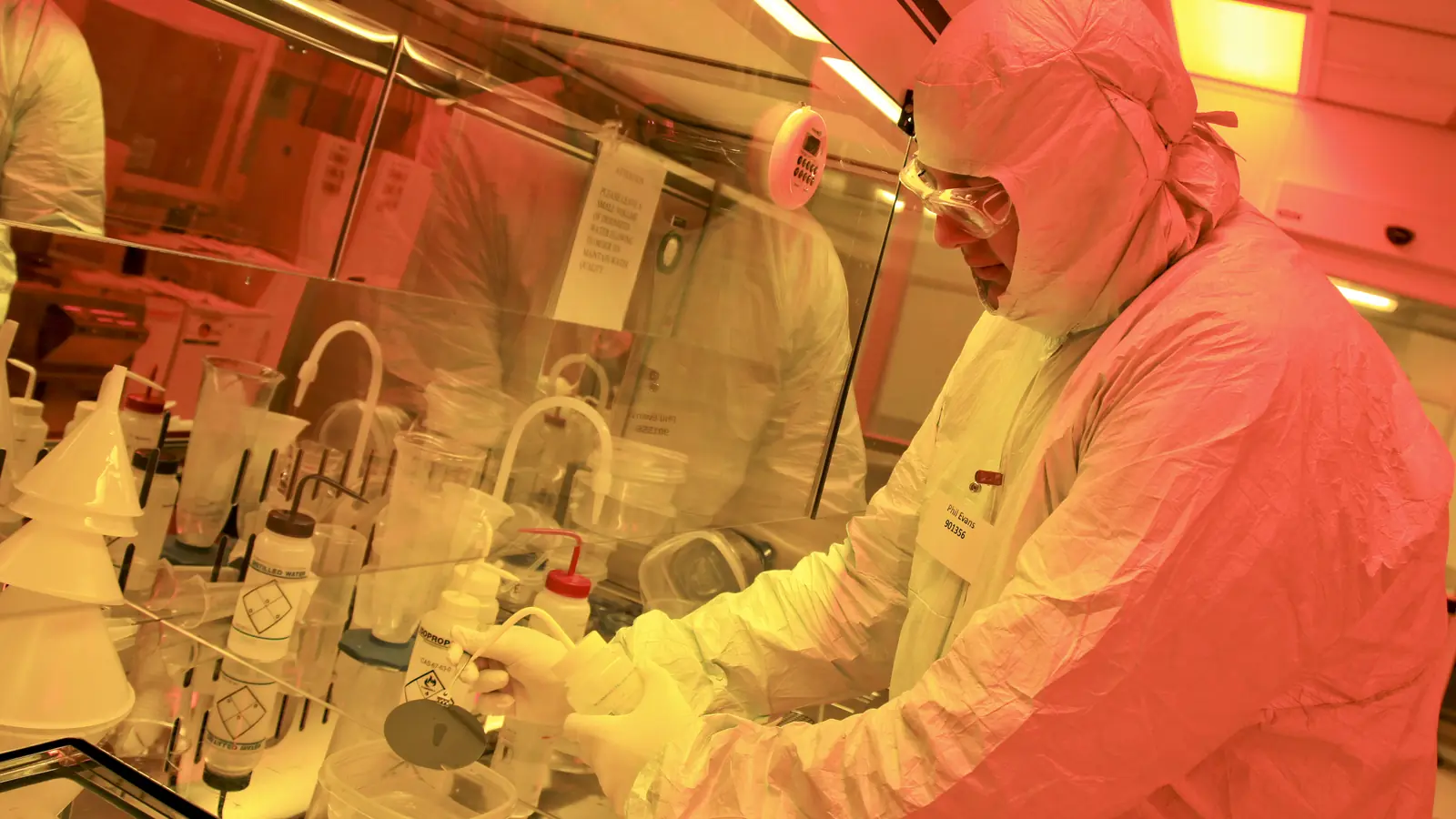
.jpg)
A spectacular experiment answers an exciting question: can this work? Building a useful industry adds a less glamorous one: can we make another system that works comparably well? That second question brings quantum computing into the world of process control, replaceable parts and dependable operation. The expanded partnership between Infineon and ZuriQ is a useful occasion to examine the gap between a laboratory result and a machine someone else can reliably use.
What the partnership actually announces
On October 7, Infineon and ZuriQ announced a deeper collaboration combining ZuriQ’s trapped-ion architecture with semiconductor manufacturing, packaging and integrated photonics expertise. ZuriQ’s release points to earlier work trapping nine individually controlled ions in a two-dimensional, three-by-three array. Larger systems are the next intended step, rather than a delivered result of the new announcement.[1]
The company describes a Penning micro-trap design that uses electric and magnetic fields to move ions across a chip. That identifies a particular approach to arranging and controlling the information carriers. It does not establish a finished fault-tolerant computer, manufacturing yield or independently reproduced performance. The useful news is the relationship between an architectural idea and the industrial capabilities intended to develop it.[1]
The second machine is a different test
Imagine two hypothetical devices with equally impressive best results. One performs consistently after an ordinary setup procedure. The other reaches that performance only after weeks of adjustments by the researcher who built it. Both experiments could be valuable. They would offer very different starting points for a service expected to run every day.
A serious manufacturing story therefore asks about the distribution of outcomes, not merely the most attractive example. How many builds meet the specification? How different are they? Can the team identify a weak component before assembling the complete machine? These are proposed questions for future evidence, not measurements disclosed by either partner.
A chip does not arrive alone
A reader sees a chip photograph and understandably imagines a component ready to slot into a computer. A better mental picture is a set of relationships: the device, the signals reaching it, the measurements leaving it and the procedures keeping those relationships stable. A change at one connection can alter what the complete system delivers.
Consider a hypothetical replacement part. If installing it means rediscovering every operating setting, its apparent interchangeability is limited. If the system can characterize it and return to a known configuration, replacement becomes a more manageable engineering task. The collaboration should eventually be assessed against demonstrated integration benefits, rather than the visual impressiveness of its hardware.
Scale has to preserve a working calculation
Scaling a small demonstration is tempting to imagine as multiplication: keep the successful unit and add more. That is a useful starting hypothesis, not a completed explanation. A larger design must account for the work needed to operate, characterize and recover the expanded system.
Imagine multiplying an array’s size while leaving the staff and maintenance window unchanged. Would preparing the system still fit into that window? Would one troublesome region interrupt everything else? Would the intended operations remain accessible? These hypothetical tests help turn a distant target into a sequence of observable conditions. A bigger number becomes informative when readers can see which condition the new result has actually addressed.
Fault tolerance is the effort to keep a computation reliable while its underlying operations can make mistakes. IBM’s explanation describes encoding logical information across and repeatedly gathering error information, interpreting it and applying corrections. Protecting stored information is part of the challenge; useful computation also requires operating on that protected information.[2]
A manufacturing improvement could support this effort without proving the whole computation. Readers should preserve the intermediate milestones: a fabricated structure, a controlled array, an operation and an encoded workflow answer different questions. Giving each achievement its proper name makes progress easier to recognize and harder to exaggerate.
The evidence worth watching next
The most revealing follow-up would connect an engineering change to an observed benefit. A team might report more consistent devices, a shorter setup procedure or successful operation after replacing a component. The value would lie in the documented conditions and repeated outcome, not simply in announcing another target.
For a general reader, the question is refreshingly concrete: what can the team now do reliably that it could not do reliably before? For an investor, the same event remains a collaboration until disclosed terms establish its financial significance. Industrial participation is worth following. Its promise becomes stronger when the machinery of repetition becomes visible.