
An optical testbed tunes around imperfect components
A laboratory demonstration uses variational optimization for polarization protocols. Deployed fiber networks remain future work.
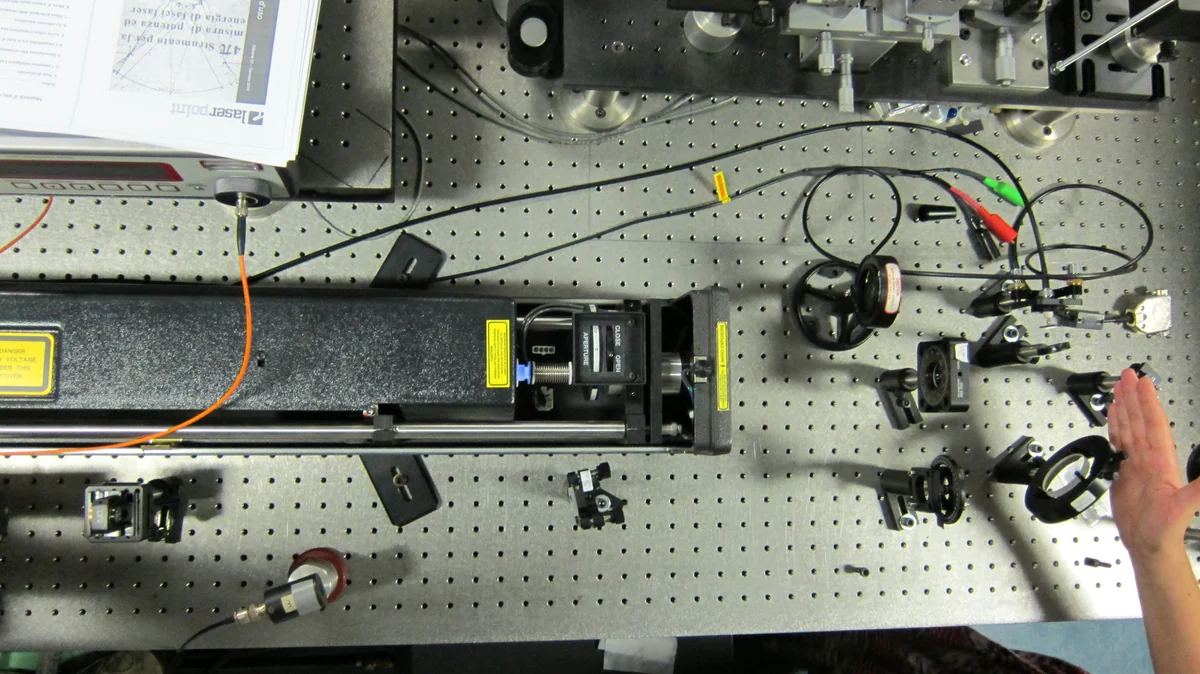

An October 23 preprint reports automated tuning of simple prepare-and-measure protocols on an optical testbed. An attenuated laser supplies light, while motorized waveplates control polarization preparation and measurement.[1]
The researchers demonstrate polarization compensation and examine hardware imperfections, background counts and alternative gradient estimates. Their conventional-method comparison uses different apparatus and input states, so it is not a controlled demonstration of superiority.[1]
The result is a laboratory proof of principle. Applying the method to nodes on deployed fiber networks is a proposed extension. A practical follow-up would need to establish calibration time, data requirements and reliability under changing network conditions.[1]
QubitWire analysis
Our assessment is that adapting a design to imperfect components can be as consequential as improving the components themselves. The comparison still needs a clearly specified target: which output should the system produce and how close must it be? Readers should distinguish successful compensation within the tested optical setup from a claim about every operating regime or source of noise that another machine might encounter. Measurements across several operating conditions would be more informative than a single carefully tuned demonstration in isolation.
A useful follow-up would examine repeatability and sensitivity to changes outside the training or calibration conditions. How often must the system be adjusted, and which measurements are required to do so? Those costs belong beside output quality in an engineering comparison. The testbed supplies evidence about the reported arrangement. Extending the conclusion to a different light source or computational task would require additional measurements that preserve the relevant operating conditions.