
Riverlane’s GPU Test Makes Decoder Calibration Faster
A company benchmark accelerates training. Complete calibration and live feedback require separate measurements.
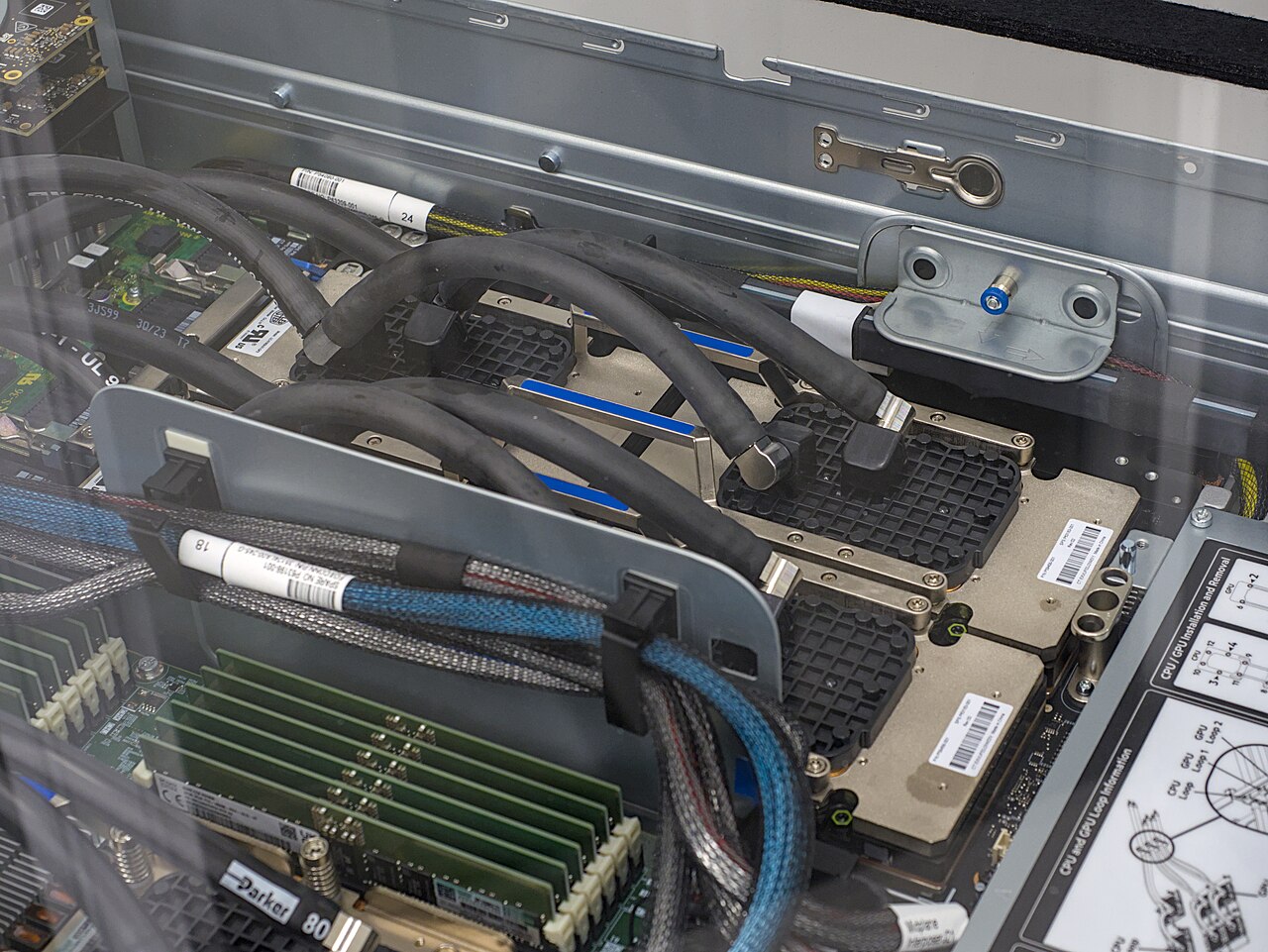

Riverlane’s October 14 benchmark reports a 2.79-second mean training epoch for distance-7 surface-code calibration on one NVIDIA H100. The CPU comparison takes 180.1 seconds on one core or 7.87 seconds on 32 cores. Those are training timings, not live response times.[1]
The test uses its Local Clustering Decoder, SI1000 noise at p = 0.003, and seven code rounds. Figures cover 100 epochs; the multicore comparison specifies 70 candidate weight sets per epoch.[1]
What the training learns
The underlying learning problem predates this GPU result. A 2024 paper by Google Quantum AI researchers Sivak, Newman and Klimov describes how a decoder combines observed error signals with prior estimates of which faults are likely. Those estimates influence the correction it chooses; the same observed signals can lead to different decisions under different assumptions.[2]
Their method uses small error-correcting codes as local probes. Candidate fault probabilities are evaluated by how often the chosen decoder fails to protect the logical information. Repeated training steps adjust the probabilities toward better performance. This targets the outcome of decoding, rather than merely matching a statistical description of the noise.[2]
That earlier research also found that learned settings did not always transfer well between different decoders. It identified runtime as an unresolved limitation. The historical paper explains the method and its constraints; it is not independent verification of Riverlane’s October GPU benchmark.[2]
Keep two clocks separate
QubitWire’s analysis: treat every installed set of weights as a dated configuration, not merely a faster calculation. A useful record would connect the training dataset, decoder version and deployment time. That would help an operator distinguish an outdated noise estimate from a software change when performance deteriorates.[1][2]
One epoch is not a training campaign. At the displayed average, 100 epochs imply 279 seconds: four minutes and 39 seconds. That calculation excludes data acquisition and deployment; it is not a measured end-to-end runtime.[1]
For an operator who already uses a multicore CPU, the single-core ratio answers the wrong purchasing question. Compare the available machines at the same accuracy target, including processor time and energy spent outside decoding. A shorter epoch could be offset by additional epochs, data movement or validation before the settings are ready.[1][2]
The next measurement that matters
A useful next test would hold the code, data and target accuracy fixed while reporting the complete update cycle: acquisition, transfer, optimization, validation and installation of the new settings. Testing on later measurements would reveal whether the settings remain useful after the training data was collected. Reporting only training-set accuracy would leave that question unanswered.[1][2]
The separate live decoder must still return decisions when the quantum program needs them. Measure that response independently. Calibration can make those decisions better informed without proving that the feedback path meets its deadline. Keeping both clocks visible makes GPU acceleration easier to assess and gives operators a clearer basis for choosing their classical hardware.[1][2]
Keep your reading trail
Keep up with these topics
Choose the subjects you want to find again in Your Updates.