
Inside Oratomic’s $775 million quantum computing bet
Oratomic reports $775 million in cumulative financing. Its neutral-atom bet connects ambitious error-correction research to a machine that still needs to be demonstrated.
A smaller atom count still needs its assumptions
- Reported
- The March 30 v1 preprint estimates cryptographically relevant Shor tasks using reconfigurable atomic qubits.
- Supported observation
- The abstract describes a physical-resource and runtime trade-off based on error-correcting codes, logical instructions and circuit design.
- Conditions
- Factoring and discrete logarithms are different tasks. Architecture, operating assumptions and parallelism determine the estimate. Precise error-rate inputs and full numeric comparisons were not reviewed in this record.
The theoretical analysis is not a built processor, completed cryptographic attack or confirmation that every neutral-atom architecture meets the assumed conditions. Later financing does not validate it.
- Shor’s algorithm with reconfigurable atomic qubits · v1Cain and colleagues · arXiv · Theoretical research preprint · Source published Source checked Source family: arxiv-2603.28627. Research originator; abstract and version record reviewed
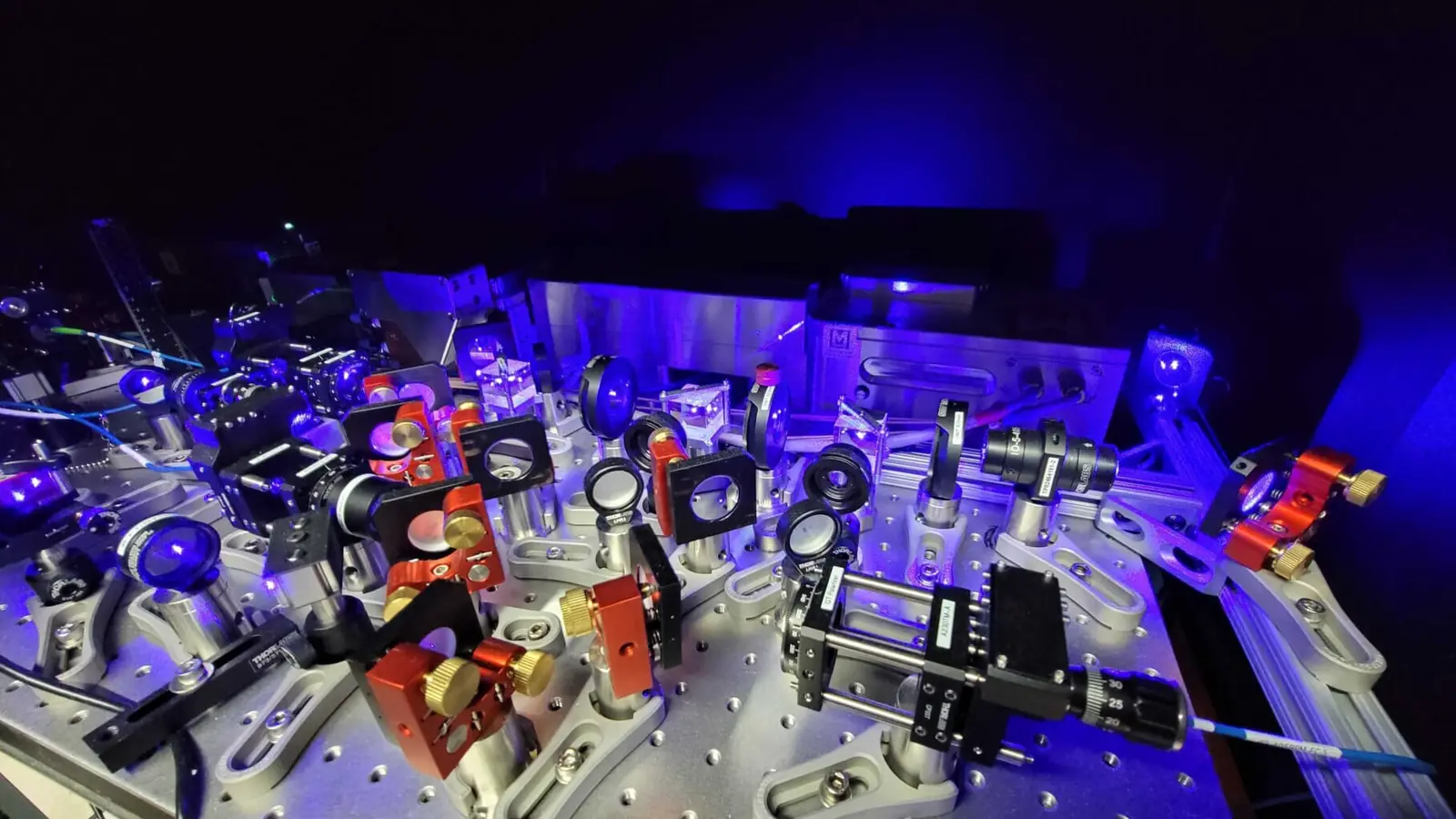

The striking part of a $775 million quantum-computing story is easy to understand: investors are committing serious money to a difficult machine. The harder part is deciding what the money tells us about that machine.
Oratomic announced on October 8 that it had raised $775 million in total financing since its March 2026 launch. The company is developing fault-tolerant computers using reconfigurable neutral-atom arrays and says the funding will support its team, laboratories and systems. The total is cumulative; it is not a newly disclosed $775 million single round.[1]
ARCH Venture Partners, Spark Capital, Khosla Ventures, Index Ventures, General Catalyst and Bezos Expeditions led the financing, according to Oratomic. The backing gives the company resources to tackle its engineering programme. To understand why the bet is interesting, readers need to follow the technical assumptions alongside the capital.[1]
Why the smaller resource estimate matters
A March 30 preprint examines cryptographically relevant versions of Shor’s algorithm on reconfigurable atomic qubits. The authors estimate that an appropriately designed system could use as few as 10,000 , with larger systems offering different runtime trade-offs. Their analysis depends on error-correcting codes, logical operations, circuit design and hardware assumptions.[2]
This is a theoretical resource estimate, not an observed attack on deployed encryption. Its contribution is to explore how the algorithm and the architecture could fit together. A smaller projected requirement can change the engineering question without demonstrating that the required machine exists.[2]
Think of a resource estimate as an itinerary with assumptions attached. A route may look shorter because its designer found a better connection. That is useful. But the connection must run when needed, carry the required load and remain available throughout the journey. Buying enough seats does not verify the timetable.
The assumptions have to survive contact with hardware
In the quantum case, a design can trade one scarce resource for another. Fewer qubits might require tighter control, slower operation or a more demanding procedure. The question is whether the complete package remains practical, rather than whether one number looks dramatically better.
protect quantum information through an encoding built from physical qubits. Fault tolerance also requires reliable computation on that protected information. Simply assembling the physical device count named in a paper is not equivalent to supplying the computational capability its algorithm assumes.[3]
Consider a hypothetical processor that performs a required operation accurately during a short demonstration. A multi-day calculation would need that operation to remain dependable through repeated cycles, changes in calibration and ordinary interruptions. The gap is not a minor footnote: the application depends on what happens across the whole run.
The evidence investors and everyone else can follow
The financing announcement also raises a useful organizational question. How will spending be converted into evidence? An expanded laboratory can increase experimental capacity, but readers learn more from a measured result with a clear test boundary than from a photograph of a larger room.
One valuable milestone would connect an error-correction scheme to the operating conditions of the intended architecture. Another would test the timing and reliability of a workflow repeatedly. A third would explain how a changed assumption affects the resources needed by the application. These are suggested evidence questions, not milestones the company has promised here.
Readers should keep three records side by side: financing, theoretical estimates and observed hardware. Their relationship can tell a powerful story. Merging them into a single progress score can hide whether a new announcement adds money, improves a model or measures something the machine actually did.
A compelling bet with a measurable next chapter
The cryptography connection makes the story easier to share and easier to exaggerate. This research does not supply a date on which encryption fails. Different algorithms, architectures and operating assumptions carry different resource requirements. A funding announcement cannot resolve those differences.[2]
What makes Oratomic worth following is the opportunity to compare a clear technical thesis with the evidence that comes next. The interesting updates may reveal a useful operation, a resource estimate revised after testing or a system limitation that becomes manageable. Each would tell readers more than another unexplained headline number.
The $775 million total is substantial. The decisive story now is how much of the proposed machine becomes observable: what runs, for how long, under which conditions and with which remaining assumptions. That is the path from a well-funded idea to a computer someone can trust.
Keep your reading trail
Keep up with these topics
Choose the subjects you want to find again in Your Updates.