
Quantum Computers Can Make Mistakes While They Wait
Qubits can accumulate errors while they wait. A surface-code experiment shows why the pauses between operations deserve more attention.
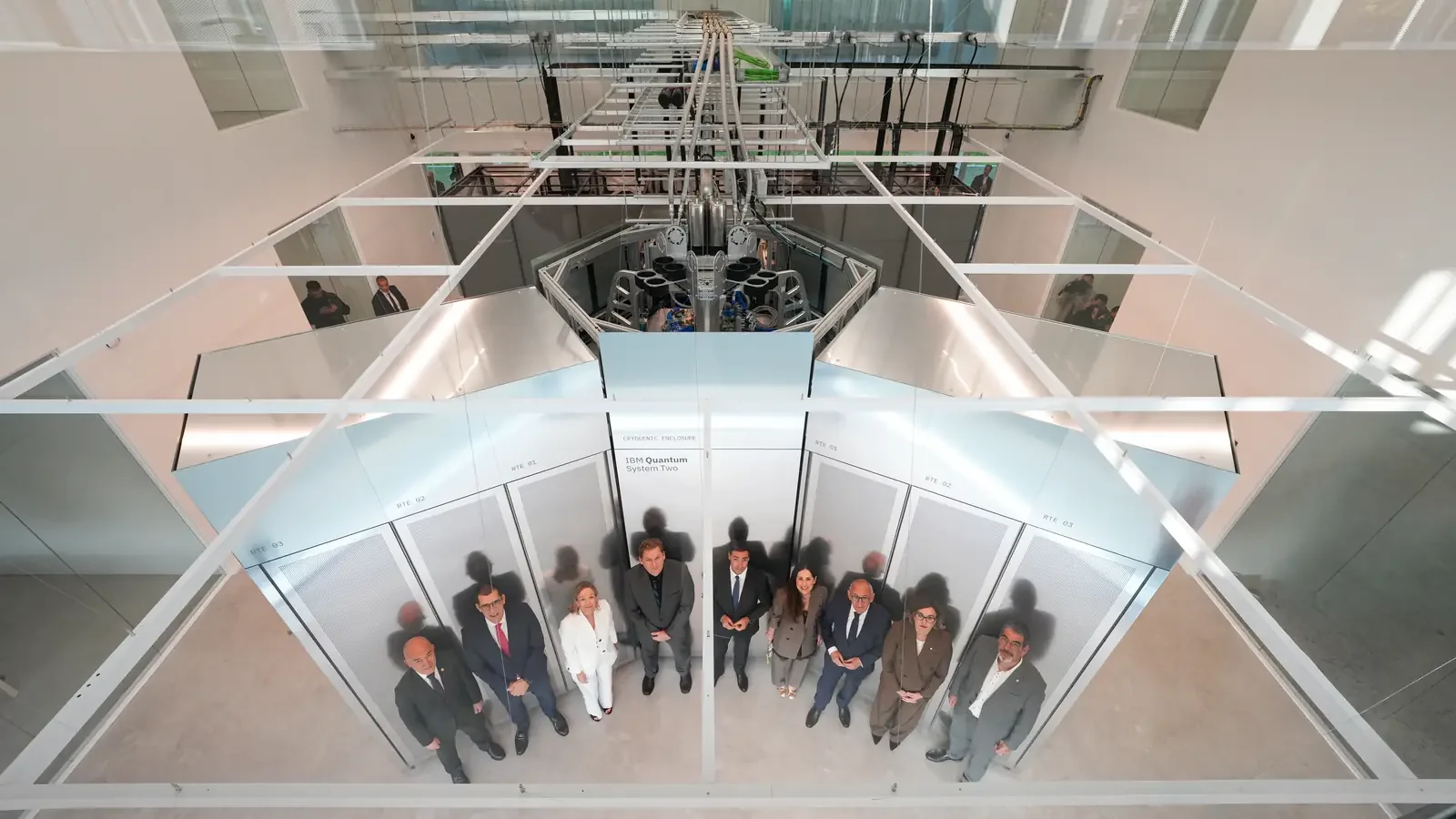

A quantum computer can make mistakes even when part of it appears to be doing nothing. The pause between two operations is not necessarily a safe place to leave a qubit. Its surroundings keep interacting with it. Neighbouring qubits can keep influencing it. The carefully prepared quantum state can drift while the program waits for another operation to finish. In this setting, “idle” describes the schedule—not an absence of physics.[1]
That overlooked problem sits behind an interesting surface-code study on IBM’s Heron-generation processors. Rather than relying on the chip’s layout alone, researchers combined a way of fitting operations onto the hardware with deliberate protection during idle periods. The result is a useful reminder that better quantum computing can come from managing the gaps, not just adding more active steps.[2]
A pause is still part of the experiment
Picture a group of musicians trying to hold their place during a complicated performance. Some are playing while others wait. The waiting musicians still have to keep time. If their internal timing drifts, simply asking them to resume at the right moment will not repair the performance.
The comparison is imperfect, but it captures an important distinction. A qubit contains more than an ordinary switch position. Relative phases matter to the interference that a quantum calculation is designed to produce. Unwanted evolution can damage that interference even without an obvious classical bit flip.[1]
A circuit diagram is therefore a kind of map rather than a complete picture of the terrain. Two programs that look similar as a list of logical operations may behave differently when operations are scheduled on actual hardware. What happens beside a qubit and while it waits can change the outcome.
IBM researchers have explored this through context-aware compilation: choosing protective measures with attention to connectivity, crosstalk and which instructions are happening together. Their work emphasises that noise can be correlated across both space and time, rather than behaving like independent random typos.[3]
The counterintuitive response is to do something
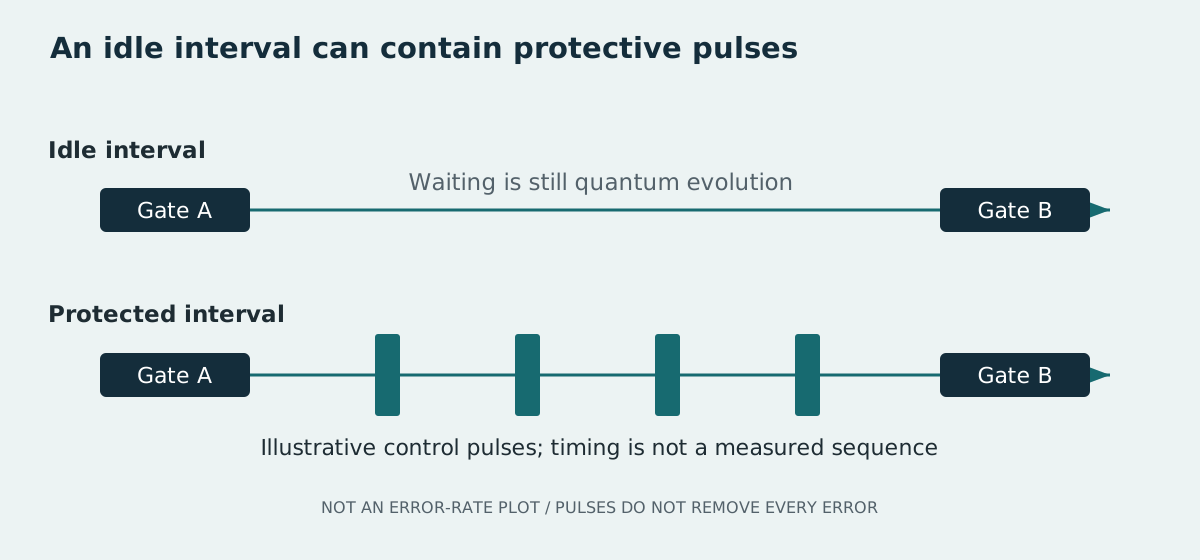
One way to protect an idle qubit is to apply a carefully chosen sequence of control pulses. Ideally, the sequence leaves the intended logical state unchanged while reducing the effect of certain unwanted interactions. This family of methods is called dynamical decoupling.[4]
The idea has something in common with reversing an accumulating drift before it carries you too far away. The detailed quantum mechanism is more precise than that analogy, and it depends on the noise being addressed. But the practical surprise is straightforward: a period that looks empty in a program may benefit from extra physical activity.
This is not free protection. Pulses are imperfect too. IBM’s documentation explicitly warns that adding them to a densely packed circuit can fail to help, or even make performance worse. The right question is not whether a program contains the feature, but whether the chosen sequence improves the actual experiment. That trade-off makes the problem feel more like engineering than magic. An intervention can suppress one source of error while introducing another. Its value depends on the balance. A good setting on one device or circuit need not be the best setting somewhere else.[1]
Error correction has its own operating costs
Dynamical decoupling is error suppression. Error correction is a different layer: encoding information across several and repeatedly gathering information that helps identify errors without simply reading out the protected quantum state. The surface code is a prominent example. Its appeal depends on a demanding condition: the physical operations must be good enough that expanding the protection reduces logical errors rather than adding too many new opportunities for failure. That is why “more physical qubits” is not automatically synonymous with “better .”[5]
Think of adding inspectors to a manufacturing process. More inspection can improve quality, but only when the inspections and the extra handling do not introduce more problems than they catch. The analogy should not be taken literally as a quantum decoding method. It illustrates why protection has to be evaluated as a complete process.
The hardware layout also matters. A code’s convenient interaction pattern may not match the connections available on a chip. Making it fit can require extra operations. Those extra operations take time, and time can create additional periods in which other qubits wait.
What the Heron experiment actually showed
The study used a fold-and-unfold approach to map surface-code operations onto heavy-hex hardware, whose connectivity differs from a square-grid surface-code layout. Dynamical decoupling addressed idle-time noise. The experiment reported directional improvements: enlarging the code in a particular direction reduced the associated logical error.[2]
The qualification matters. This was not a demonstration that increasing the code size produced general, state-independent improvements across every tested condition. The paper distinguishes directional subthreshold behaviour from the broader global scaling still needed. Turning that narrower result into “quantum errors solved” would lose the most useful part of the research.[2]
It is better understood as evidence that co-design helps: the protection scheme, the scheduling and the physical processor should be considered together. The result does not require us to declare one hardware layout the universal winner. It asks what careful adaptation can recover from a particular machine.

A better comparison asks what was protected
Quantum error-correction headlines often combine several different achievements under one label. A protected memory, a repeated error-detection experiment and a long computation with logical gates are related, but they are not interchangeable demonstrations.
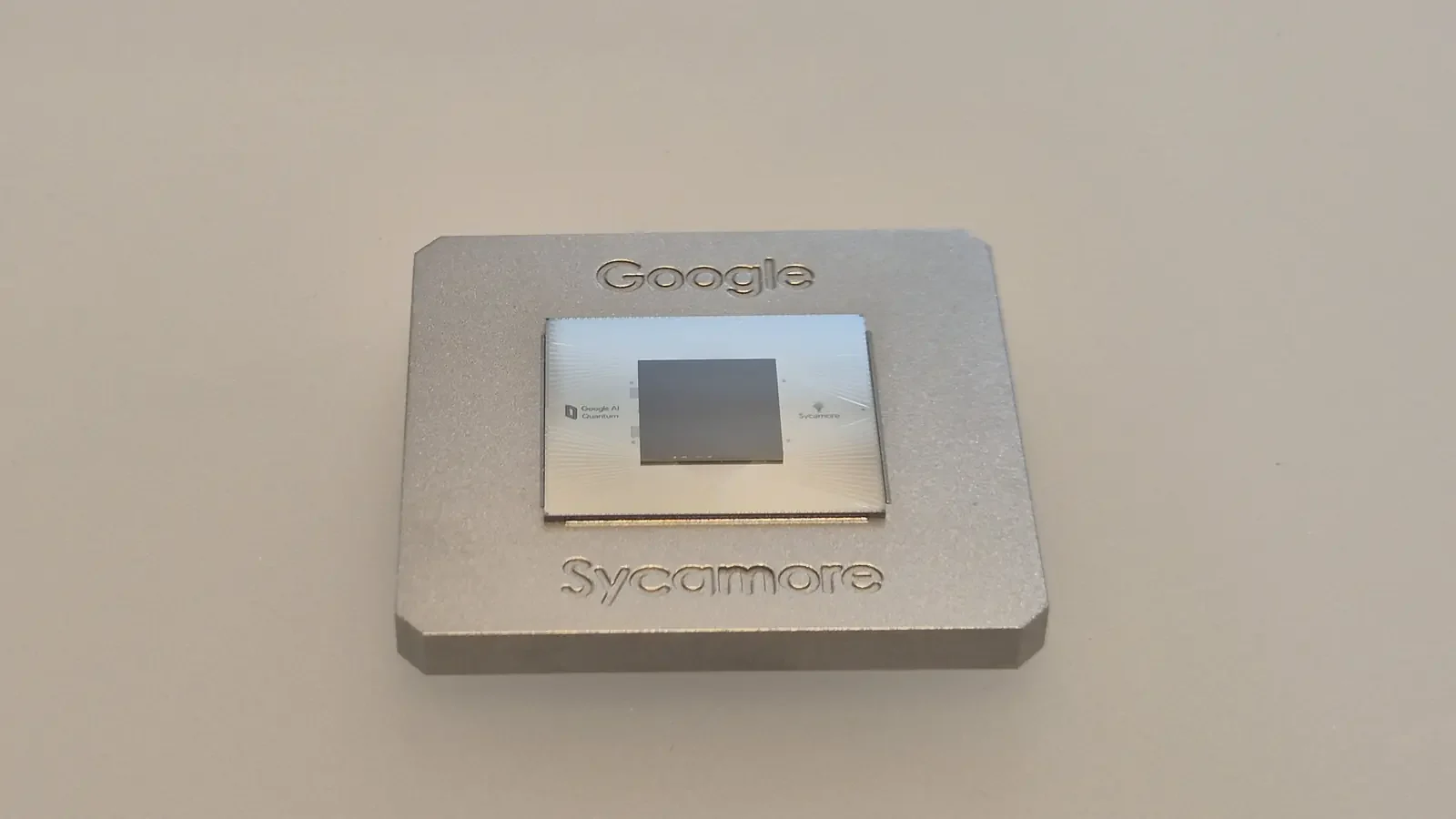
Google’s separate Willow research reported below-threshold surface-code memories, including a version with real-time decoding. It also describes challenges that remain when moving from protected memory toward large-scale computation. That is useful context for reading the Heron work, not a direct head-to-head benchmark between the two experiments. Their layouts, protocols and comparison conditions differ.[5]
For readers, the most revealing questions are simple enough to remember. What information was protected? Against which errors? For how long? What happened when the protection was expanded? Those questions turn an impressive phrase into a result you can actually interpret. A diagram should help with the same task. Showing an idle interval with and without protective pulses explains the intervention. It should not invent a falling error curve or imply a measured improvement that the pictured sequence has not demonstrated.
The gaps are part of the machine
It is tempting to imagine progress as a steady accumulation of bigger chips and faster gates. Those developments matter. But a useful calculation depends on everything that happens between its beginning and end—including intervals that a simplified diagram makes look uneventful.
That is what makes idle-time protection an unusually good window into the field. It connects an apparently small scheduling decision to the much larger challenge of preserving a computation. The quantum computer is not only the qubits, and the program is not only the named operations. Sometimes the most important instruction is what to do while waiting.