Skip to content
APPLICATIONS · EXPLAINER

You Can Try a Real Quantum Computer. Your Laptop Is Enough.

You can design a small circuit at home and submit it to remote quantum hardware. The first lesson is telling a real chip from a simulation.

Sources checked Published
My reading list
Overhead view of IBM Quantum System Two at Ikerbasque, with visitors beneath the installation.
An IBM Quantum System Two installation at Ikerbasque. This is real hardware, not a promise that this exact system is available to your account. Cropped/resized; no generative edits.Photo: IBM Quantum System Two at Ikerbasque · Íñigo Sierra / Irekia–Eusko Jaurlaritza · CC BY 3.0 ES

You do not need to buy a quantum computer to try one. Cloud services let you send small programs to real hardware elsewhere. IBM’s Quantum Platform provides a public route, including a graphical circuit tool called Composer. The quantum processor is remote; your laptop is the place where you design and submit the job.[1][2]

A manageable first experiment uses two . Starting from their zero states, apply a Hadamard operation to the first, then a controlled-NOT between them, then measure both. In an ideal model, this prepares a Bell pair: the results are correlated, with 00 and 11 appearing with equal probabilities.[1]

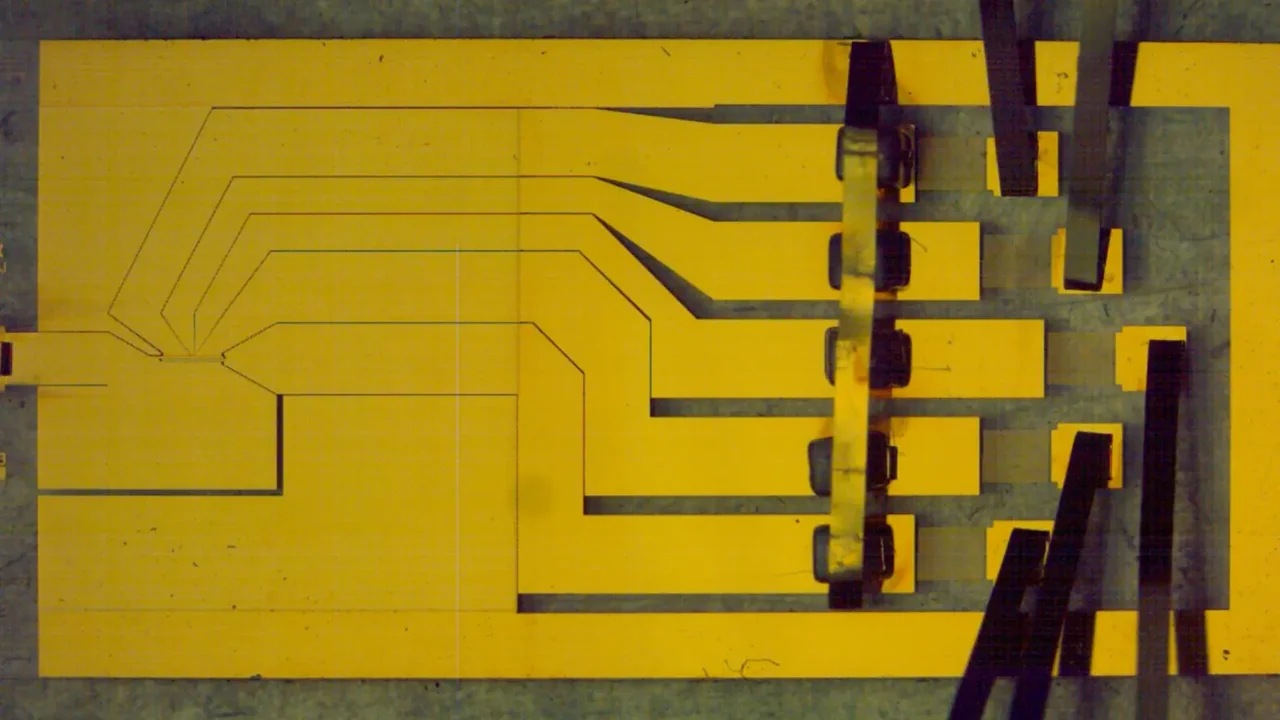
Microscope photograph of patterned gold electrodes in a NIST planar ion trap.
NIST’s planar ion trap. An archival example of another qubit technology, not a backend selectable in the IBM exercise. Cropped/resized; no generative edits.Photo: NIST planar ion-trap micrograph · Signe Seidelin and John Chiaverini / NIST · NIST public-information reuse

Composer can help you explore a circuit visually before submitting work to hardware. That distinction matters. A simulator calculates a model on a classical computer; a hardware run actually uses a quantum processor. Check the selected execution target rather than assuming every colorful result came from a chip.[2]

Real results need not match the ideal perfectly. Noise and a finite number of repetitions affect the observed counts. The simple correlation pattern by itself is not a loophole-free test of quantum , and this tiny exercise is not a demonstration of quantum advantage. A classical computer can easily model it.[1]

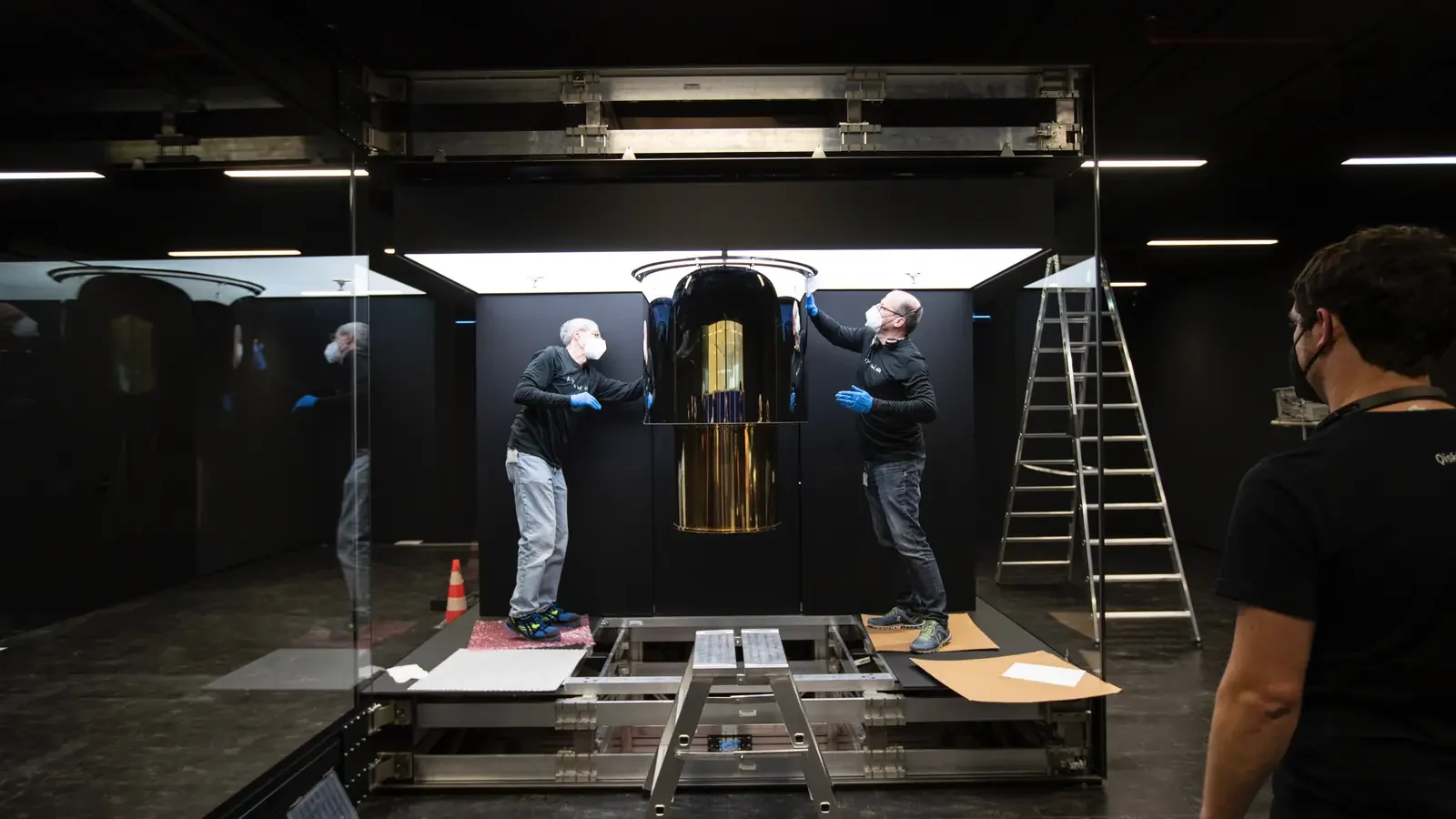
Engineers working around IBM Quantum System One during its installation in Germany.
Engineers installing an IBM Quantum System One. The photograph shows why cloud access and owning the hardware are very different things. Cropped/resized; no generative edits.Photo: IBM Q System One (Fraunhofer) installation · Holger Muench / IBM Research · CC BY 2.0

Account eligibility, available devices, queues and usage allowances can change, so check the provider’s current access terms and avoid enabling paid usage accidentally. The reward is more modest—and more tangible—than a miracle calculation: you can move from reading about a quantum circuit to submitting one to an actual machine.[1][2]


Evidence & context

2 linked sources

Access documentation checked: 12 September 2026. An educational two-qubit exercise. Ideal 50/50 probabilities are theoretical, not results from a run performed for this package. No guaranteed free allowance or instant hardware availability.

Sources

  1. IBM Quantum Documentation — Run your first circuit on hardware

    Current official hardware quickstart. Access, packages and account requirements must be rechecked at publication; do not copy credentials or promise a queue time. For the Bell-pair example, the first qubit controls the second.

  2. IBM Quantum Documentation — IBM Quantum Composer

    Official graphical circuit editor documentation. A local simulation and a submitted QPU job are distinct execution modes.

READ NEXT

Continue exploring

All Applications stories
  1. Related reading

    What a Braket Spending Limit Does Not Cover

    Amazon Braket can reject quantum tasks before they exceed a device limit, but that control is not a ceiling on the whole cloud bill.

    Source date
  2. Related reading

    5 Jobs Quantum Computers Still Give to Ordinary Computers

    Behind the futuristic hardware, familiar processors translate, rehearse and make sense of the experiment. Their job descriptions are surprisingly busy.

    Sources checked
THE QUANTUM BRIEFING

A clearer signal.
Straight to your inbox.

A little perspective on a fast-moving field.

Read a briefing preview →

Selected quantum coverage in a weekly briefing. Read the preview or register your interest.