
Skip to content
BUSINESS + POLICY · BUSINESS / PLANNED DEPLOYMENT

Vietnam’s planned photonic quantum computer is also an education project

Quandela and Quanova have announced a deployment at Quang Trung University. Delivery and practical access remain the milestones to watch.
Published Source report Sources checked
My reading list
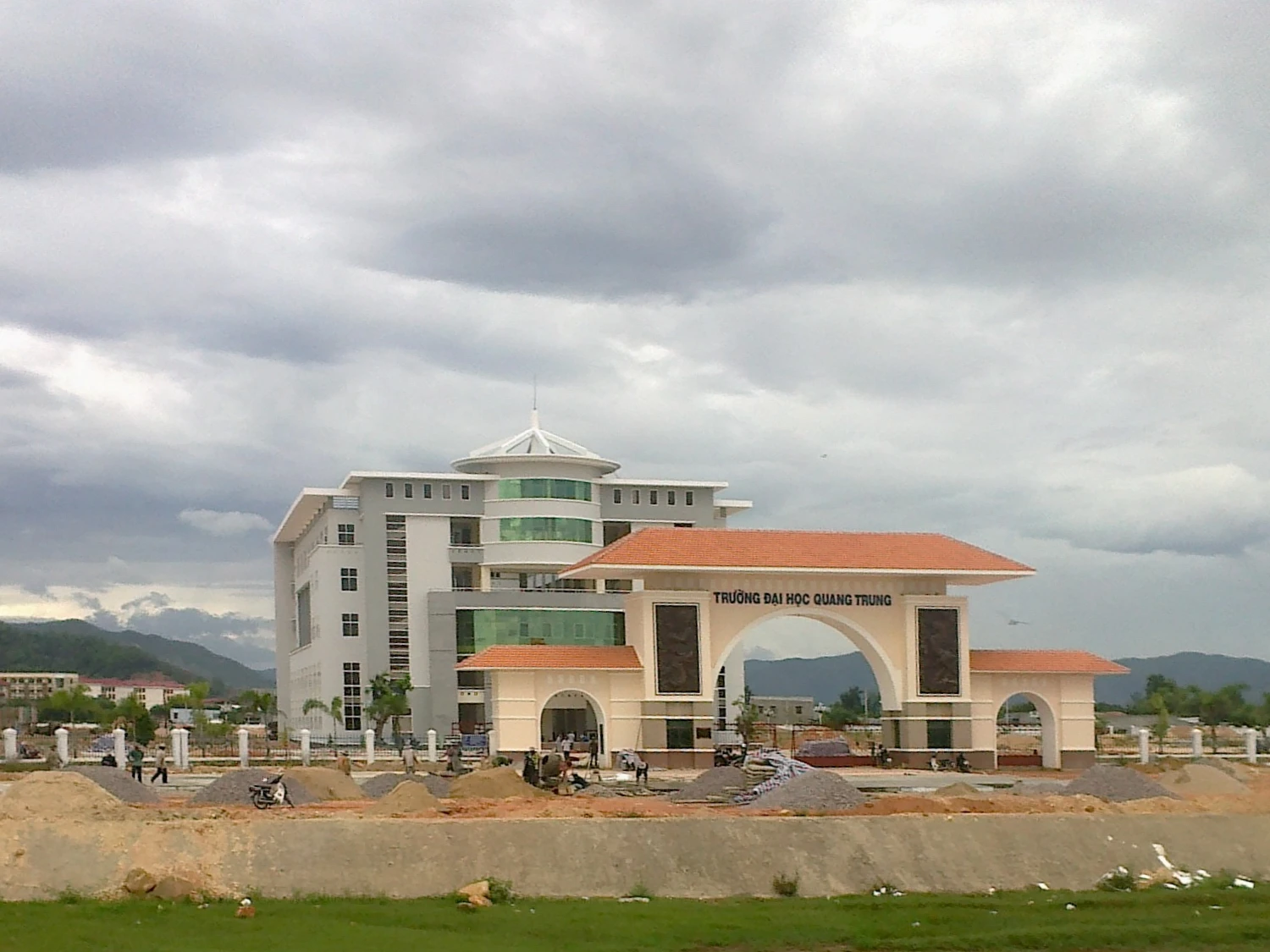
Archival 2011 view of Quang Trung University’s entrance arch and campus building in Vietnam.
Quang Trung University in an archival photograph taken on 15 September 2011. The university is the announced setting for the planned MosaiQ programme; this image does not show the proposed installation. Photo: Phó Nháy / Wikimedia Commons, public domain.Phó Nháy · Public domain · Public domainFull image credit

A new quantum computer can be a piece of equipment, a research programme or an opportunity to train the people who will use it. A deployment announced for Vietnam is being presented as all three.

Quandela said on October 22 that Quanova has selected its MosaiQ photonic quantum-computing solution for an education and research ecosystem at Quang Trung University in Quy Nhon, with support from Nam A Bank. The announced plans include training and a residency programme alongside the hardware deployment.[1]

The supplier calls the system Vietnam’s first quantum computer. That claim should remain attributed until its definition and competing examples have been checked. “First” can conceal important differences between an installed machine, remote cloud access, a research prototype and a particular hardware architecture. The more useful immediate fact is the announced selection and intended institution.[1]

This is also a plan, not a verified delivery report. The release does not by itself demonstrate that the system has passed acceptance tests, become available to students or produced a practical computational advantage. Those are distinct milestones, and an announcement is not a substitute for evidence that they have occurred.

The education angle offers a better way to follow the project than a race over a superlative. Who gets to use the machine? What training happens before access begins? Can students run experiments themselves, and will there be public teaching materials? Clear answers would make the project more relevant to readers than another photograph of a ceremonial handshake.

The planned system also has a specific technological identity: Quandela describes MosaiQ as photonic quantum computing. That should not be collapsed into a generic story about every kind of quantum hardware. Students learning to use one platform will need to understand its particular capabilities and limitations, not simply the broader promise of the field.[1]

The story to watch is whether a hardware announcement turns into a usable learning environment. A launch ceremony is a moment. Access, instruction and repeat use are the outcomes that could make it last.

Keep your reading trail

Your Updates →

Evidence & context

1 linked source

vendor announcement; planned deployment

How to read the evidence and dates

An announcement records what an organization stated. An experiment reports an observation. A simulation or resource estimate depends on its assumptions. QubitWire’s analysis connects these sources; the labels are not quality scores.

Published is the article’s first QubitWire publication. Updated marks a substantive content change. Sources checked records a review of the underlying evidence. An older paper can support a new explanation, and another press release about the same work is not independent replication.

QubitWire take

Access, instruction and repeated student use will determine the programme’s educational value.

Sources

  1. Quandela: planned MosaiQ programme at Quang Trung University, Vietnam

    Supplier announcement dated October 22, 2026, following an October 21 ceremony. Planned deployment, not independently verified delivery. Refreshed October 22, 2026 (Pacific time).

READ NEXT

Continue exploring

All Business + Policy stories
  1. Related reading

    One particle of antimatter. Months in a trap. A much bigger test ahead.

    A Northwestern experiment brings a positron under quantum control. The next question is whether matter and antimatter match as precisely as physics expects.

    Published · Source report · Sources checked
  2. Related reading

    A proposed quantum microscope would show more than where atoms sit

    New measurement protocols aim to reveal motion as well as position. They work within quantum uncertainty, not around it.

    Published · Source report · Sources checked
THE QUANTUM BRIEFING

A clearer signal.
Read the latest edition.

A little perspective on a fast-moving field.

Read the on-site briefing →

Read selected quantum coverage in the on-site briefing, or register your interest below.