
A proposed quantum microscope would show more than where atoms sit
New measurement protocols aim to reveal motion as well as position. They work within quantum uncertainty, not around it.
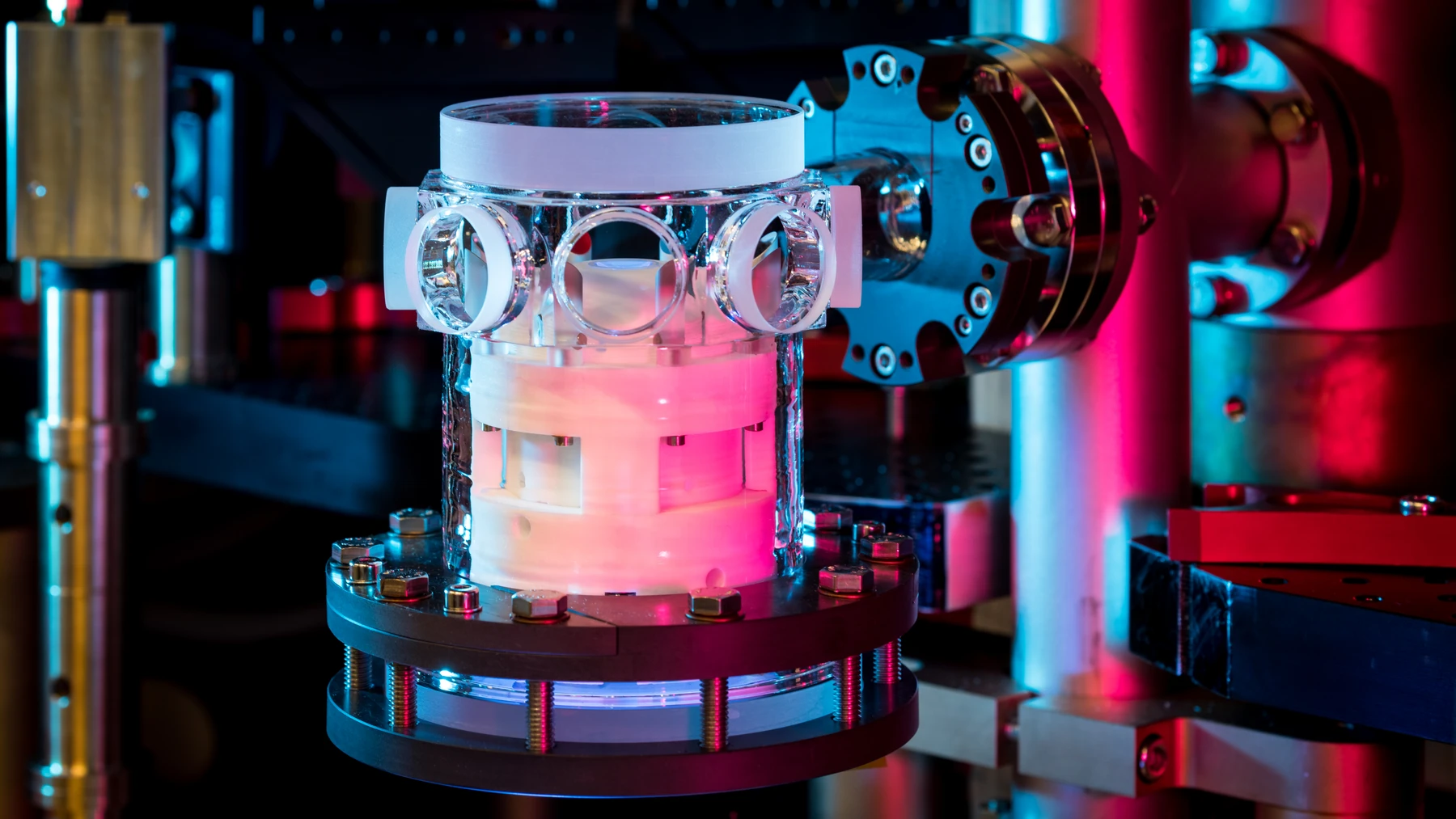
A photograph tells you where things appear to be. For a gas of ultracold atoms, that can be only part of the useful information. Researchers also want to know how the atoms move and how that motion varies across the system.
A paper published on October 21 proposes ways to extend quantum gas microscopy into phase space, the description that combines position and momentum. The work by N. R. Cooper, Y. Yang and C. Weitenberg lays out measurement protocols rather than unveiling a newly completed microscope.[1]
One mode jointly measures position and momentum through a Husimi-Q description. The price is fundamental quantum noise shared between the two quantities. The other extracts the spatial pattern of averaged momentum density and its moments. These are different measurement questions, not two names for the same capability.[1]
An everyday analogy helps, provided it is not pushed too far. A map of cars’ locations is different from a map of traffic flow. Knowing the average flow through a neighbourhood is also different from knowing the exact position and speed of every car. The quantum version has stricter limits, but the distinction between a single-object reading and a statistical map remains useful.
That is why “scientists beat Heisenberg” would be the wrong headline. The proposed joint measurement distributes the allowed noise. The averaged mode asks for different information. More informative measurements do not require abandoning the limits that define what can be measured together.[1]
The next questions are practical: which laboratory could implement the protocols, what control and imaging changes would it need, and what could a measurement reveal that an existing position image misses? Those are open questions, not experimental milestones already established by the paper.
For a reader, the useful shift is from asking how sharp an image looks to asking what information it contains. A picture of atom positions and a map of their motion answer different questions. The proposal offers a way to connect them without pretending they can both become perfectly precise.