
Schrödinger left an unpublished argument about quantum randomness. A new paper brings it back.
A historical preprint transcribes a forgotten model from the 1940s. It is a window into an old debate, not proof that quantum physics is wrong.
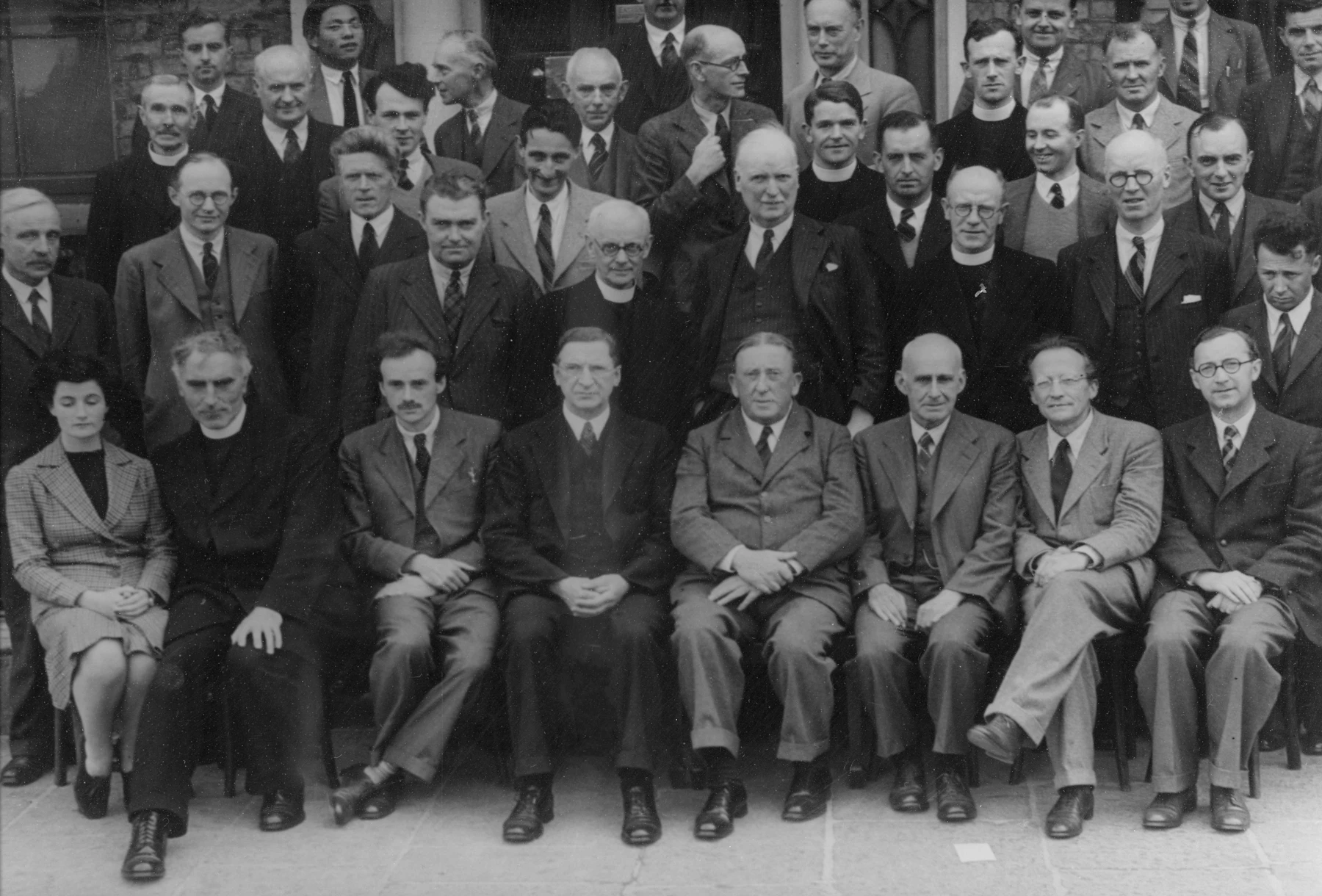

Schrödinger is remembered for a cat that was never meant to be a pet. A new historical paper turns to a less familiar part of his thinking: an unpublished attempt to show what an argument about quantum randomness had, and had not, established.[1]
In a preprint posted on October 14, physicist and historian Flavio Del Santo presents a transcription and analysis of a manuscript connected with a 1944–45 debate in Nature. The document contains a deterministic hidden-variable model of Malus’ law, the rule governing how the intensity of polarized light changes as polarizers are rotated. The paper identifies the manuscript as W33-781/9 in the Erwin Schrödinger Archive at the Austrian Central Library for Physics, University of Vienna.[1]
The appeal is easy to see. A famous scientist’s unpublished work seems to promise a secret answer to a century-old argument. The more interesting reading is narrower. Constructing a model for a particular phenomenon can expose a weakness in an argument claiming such a model is impossible. It does not, by itself, establish a complete theory of nature.
Del Santo explicitly distinguishes a proof of principle from a declaration that Schrödinger was committed to determinism. That matters because the tempting headline, “Schrödinger proved the universe is not random,” turns a historical intervention into a conclusion the paper does not support.[1]
There is a second distinction worth keeping. Hidden-variable theories are not all the same, and a model of one optical law is not a general escape from the later constraints on reproducing quantum correlations. The historical document needs to be understood in the debate it addressed rather than presented as though modern experiments had just been overturned.[1]
For readers, the value is a look at how scientific arguments develop. An influential impossibility claim can depend on assumptions that deserve to be made explicit. A counterexample can be illuminating without being the final answer. And a scientist can explore a position without adopting every philosophical conclusion attached to it.
The manuscript is old; the transcription and analysis are new. That is enough of a story. The best way to share it is to preserve both dates and let the unresolved history remain more interesting than a manufactured revolution.