
Quantum’s Hidden Cost Is Doing the Same Job Again and Again
An IBM preprint explores how to reduce the measurement burden behind cleaner answers. Its 63-fold figure needs a careful label.


A quantum calculation is not always finished when the circuit stops. Researchers often repeat an experiment many times to estimate the answer they need. Noise can make that repetition bill much larger. Improving the machine can mean reducing that bill, not only adding more .[2]
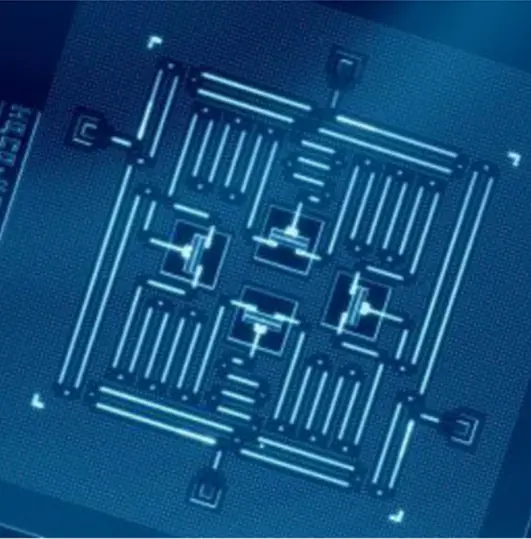
An IBM research preprint posted on September 11 combines error detection with a statistical technique called probabilistic error cancellation. In the reported experiment on ibm_aachen, 22 data qubits worked with 27 check qubits. The authors infer up to a 63-fold reduction in sampling overhead compared with error cancellation without post-selection.[1]
.png)
The wording is essential. Sampling overhead is not the same as the total time for an application. An inferred reduction is not a measured 63-fold speedup for every program. The comparison also has a specific baseline; it does not establish that the processor outperformed the best classical computer.[1]
Error detection flags runs with signs of trouble. Error mitigation tries to improve estimates statistically rather than making every underlying operation perfect. One way to picture the combination is to screen out visibly damaged measurements, then account for the remaining bias. The real mathematics is more demanding than that analogy.[2]

Why should a non-specialist care? Because cost per trustworthy answer is a better question than the most impressive isolated specification. A method that reduces wasted work could make certain experiments more useful even before a fully fault-tolerant computer exists. Whether that happens depends on the workload and the extra work the method itself requires.
This remains a preprint, not an established general-purpose solution. The next questions are how the method behaves on larger and deeper tasks, how reliably its noise assumptions hold and what the full execution cost looks like. The headline number is interesting. The more durable story is the attempt to get useful answers with less wasted effort.