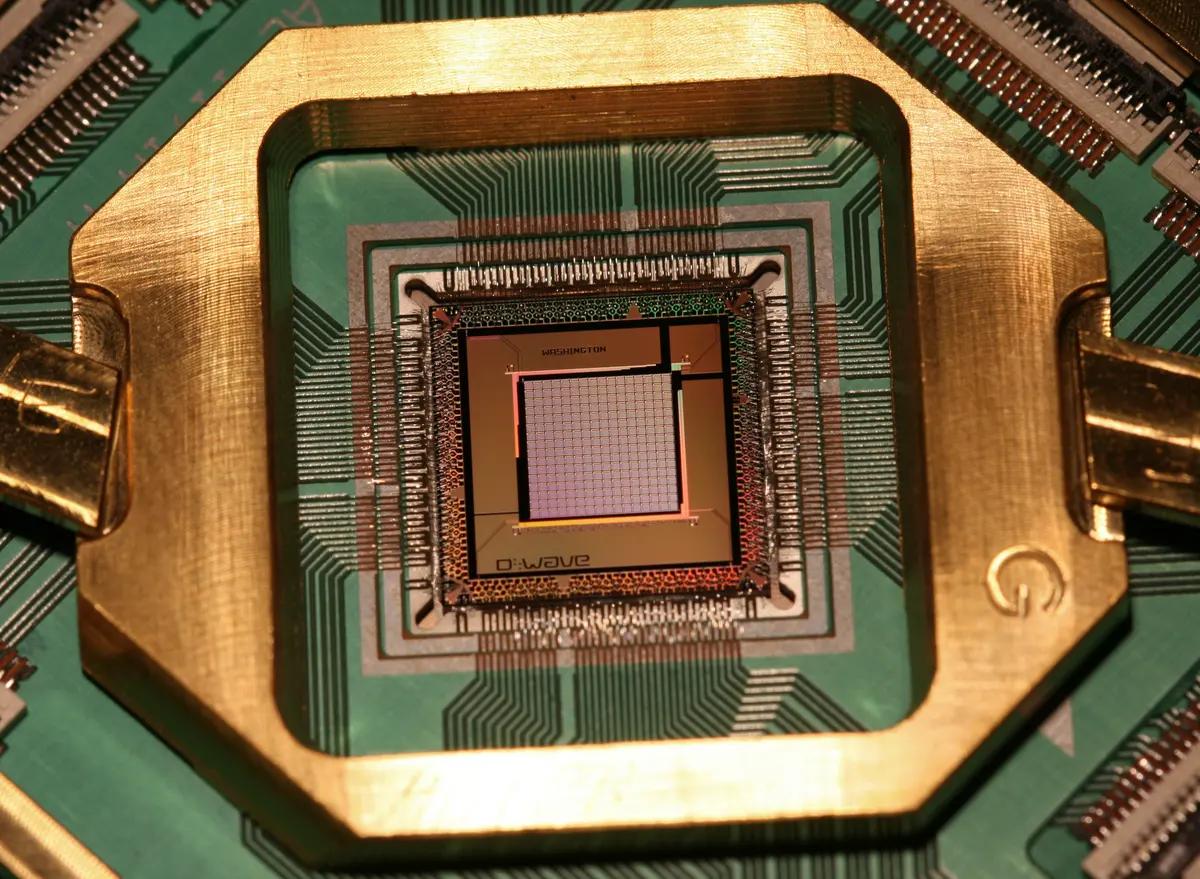
“False vacuum decay” sounds like the opening of a disaster film. In a quantum simulation, it can instead describe a controlled question: how does a system escape a state that looks stable but is not the lowest-energy option? Researchers used a quantum annealer to study that transition. They did not trigger a cosmic catastrophe.[1][2]
The experiment, published in Nature Physics in 2025, used 5,564 superconducting flux qubits. The team examined how regions of a new state form and interact inside an engineered quantum system. Those regions are the bubbles in the story, not physical pockets of a new universe spreading through the laboratory.[1]
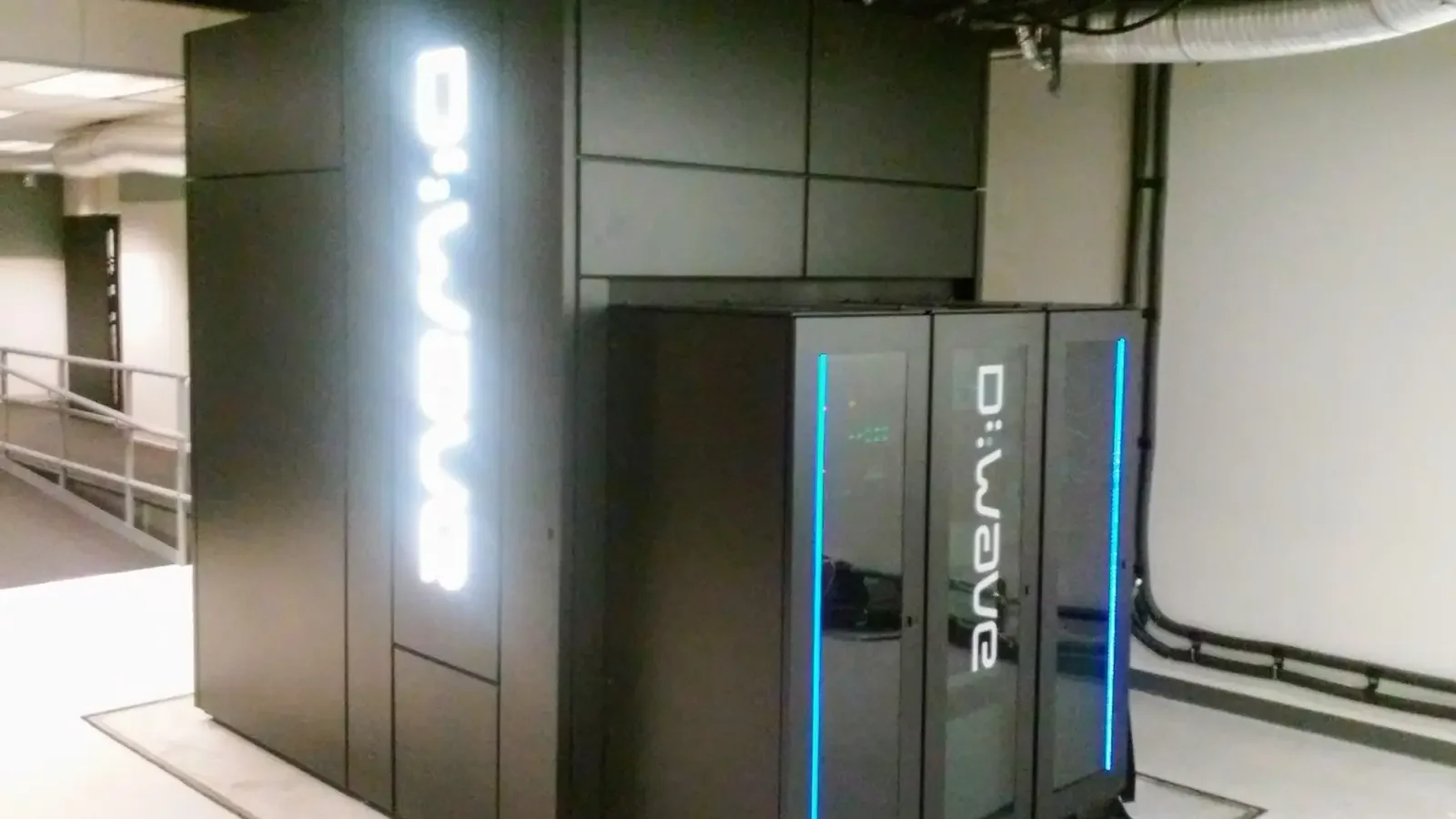
A D-Wave Two installation at NASA’s Advanced Supercomputing Facility. Historical platform context, not the reported false-vacuum apparatus. Cropped/resized; no generative edits. Adapted image: CC BY-SA 4.0.Image: D-Wave Two at NASA · Oleg Alexandrov · CC BY-SA 4.0Full image credit
A useful mental picture is a ball resting in a shallow dip while a deeper valley lies elsewhere. The shallow dip can hold it temporarily. In the quantum model, escape and the growth of new regions follow quantum dynamics, rather than the simple motion of a real ball on a hillside.[1]
The distinction matters because a simulation borrows mathematical structure from the phenomenon it investigates. It does not reproduce every feature of that phenomenon. The device was also an annealer, a specialized quantum machine, not a 5,564- general-purpose computer running an arbitrary program.[1][2]
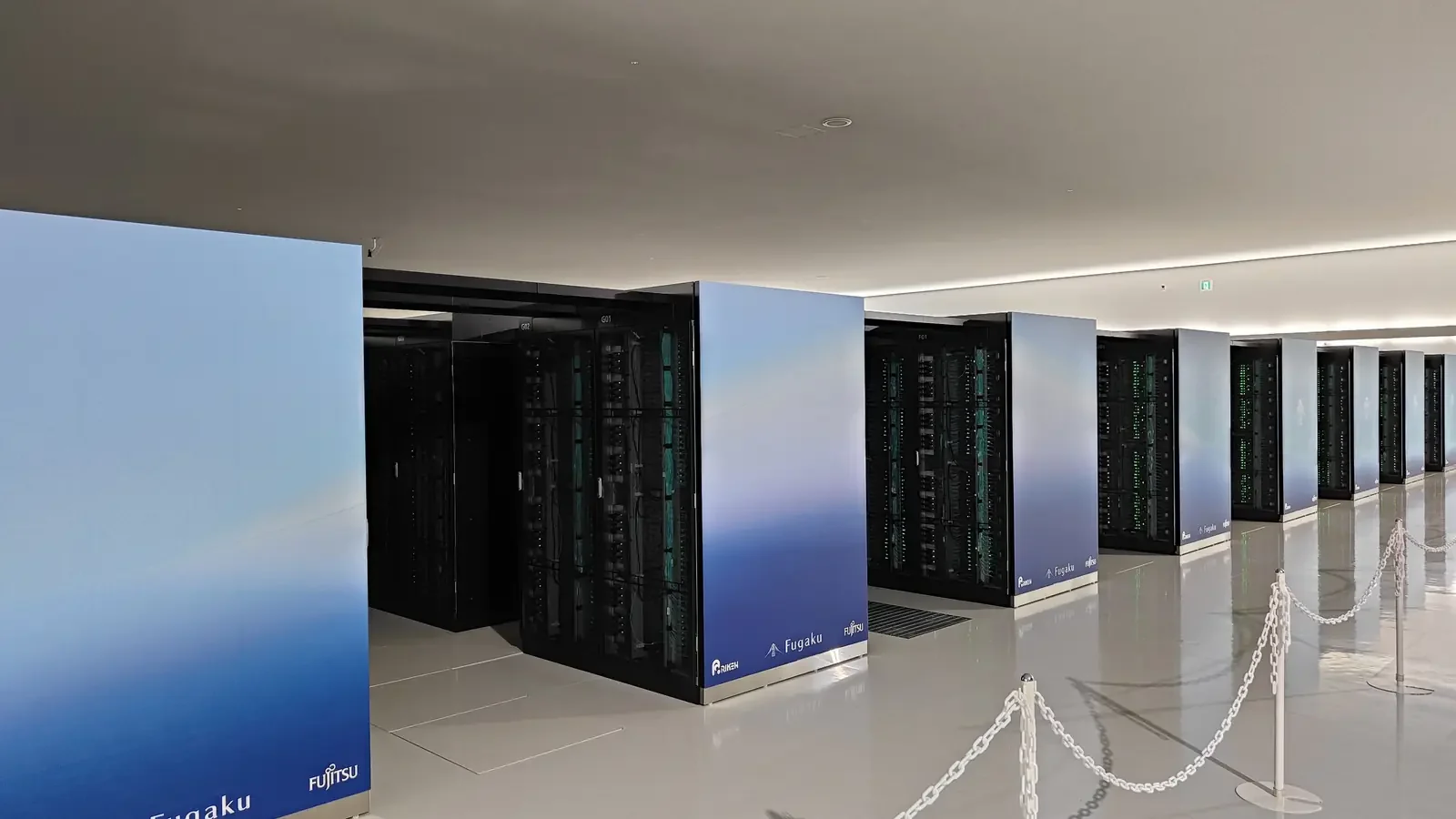
RIKEN’s Fugaku classical supercomputer. Computational context only; it is neither a quantum annealer nor an image of the study’s bubble dynamics. Cropped/resized; no generative edits.Image: Fugaku classical supercomputer at RIKEN · Barsaka2 · CC0 1.0Full image credit
The payoff is an experimental place to investigate behavior that is difficult to probe directly. The researchers observed bubble dynamics and compared them with an effective model. The dramatic phrase points toward real physics, but the achievement is precise and contained: studying how an engineered quantum system changes state, not discovering how to switch off the universe.[1]