
Quantum computers need a conductor. Qendra is building one
An ETH Zurich spin-off connects quantum software to laboratory signals. Its specifications reveal why the whole feedback loop matters.
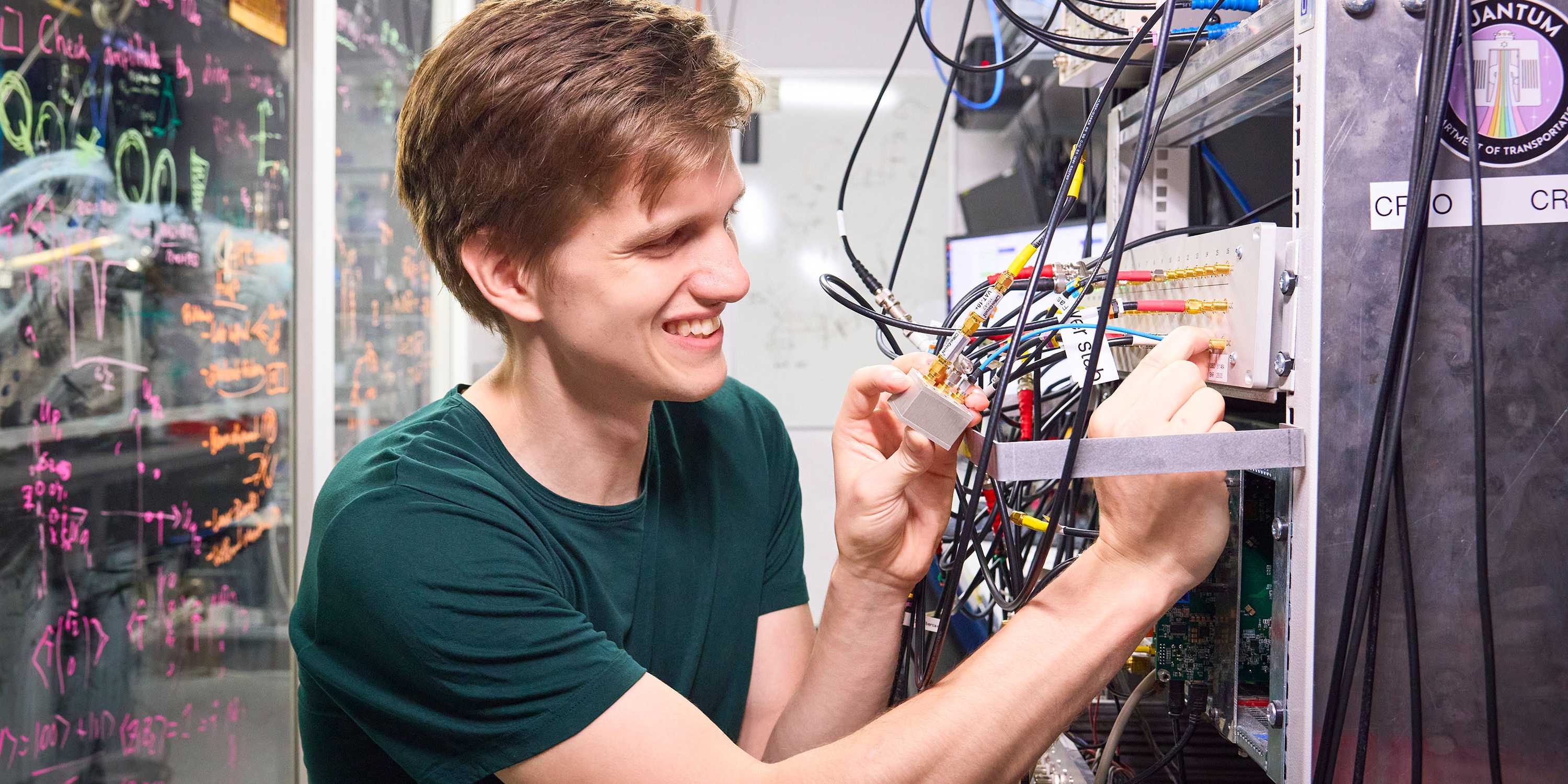
From code to a physical experiment
A quantum algorithm cannot move an atom by itself. Between the code and the experiment sits a control system that must deliver the right physical signal at the right moment. ETH Zurich highlighted one young company working on that connection on October 20: its spin-off Qendra, which builds controllers for trapped-ion and neutral-atom quantum computers.[1]
Think of a laboratory following a recipe that can change halfway through. A measurement arrives. The equipment has to decide what to do next, then deliver another precisely timed pulse. The useful question is how reliably that complete loop works, including the decision between operations.
The classical work around the qubits
Qendra grew out of Jonathan Home’s research group. The company describes three generations of control hardware, from direct digital synthesis through high-speed converters to integrated chips that combine radio-frequency generation, readout and logic. Its founders are Martin Stadler, Ferdinand Felder and Chidzahi Mabritto.[2]
The published Pulse specifications make the task tangible: sixteen radio-frequency outputs, four-nanosecond timing resolution and a sequencer that supports loops and branching. In ordinary language, branching lets an experiment choose a different next step. Those are manufacturer specifications for control electronics; they are not measurements of a quantum algorithm’s accuracy.[3]
The number still being measured
The camera connection is equally revealing. Qendra’s Vision product can send measured counts or thresholded values to Pulse. Its website says the latency of the complete feedback loop is still being characterized. A fast output specification therefore cannot stand in for the elapsed time from observing a result to acting on it.[4]
ETH identifies Home’s laboratory and the trapped-ion startup ZuriQ among early users. It also describes Qendra’s device as a minimum viable product that is not yet ready for rollout at large scale. Conversations with other organisations should be read as conversations, rather than additional confirmed installations.[1]
What progress would look like
For someone new to quantum computing, this is a useful shift in perspective. The processor is part of a working arrangement of instruments, software and decisions. More give that arrangement more to coordinate. A controller’s contribution becomes clearer when a report shows the full sequence and identifies where time, uncertainty or manual intervention enter.
QubitWire would look next for repeatable feedback timings, customer-confirmed operation and a clear account of which tasks the system automates. That evidence could show whether researchers spend less effort maintaining laboratory infrastructure and more effort running experiments. A promising controller earns its place through the work it makes possible; a complete fault-tolerant computer remains a much larger demonstration.
Keep your reading trail
Keep up with these topics
Choose the subjects you want to find again in Your Updates.