
The warm parts of a quantum computer matter too
The processor attracts the camera. Signals, calibration, interfaces and maintenance determine whether the installation can turn more qubits into dependable work.
_installation.jpg)
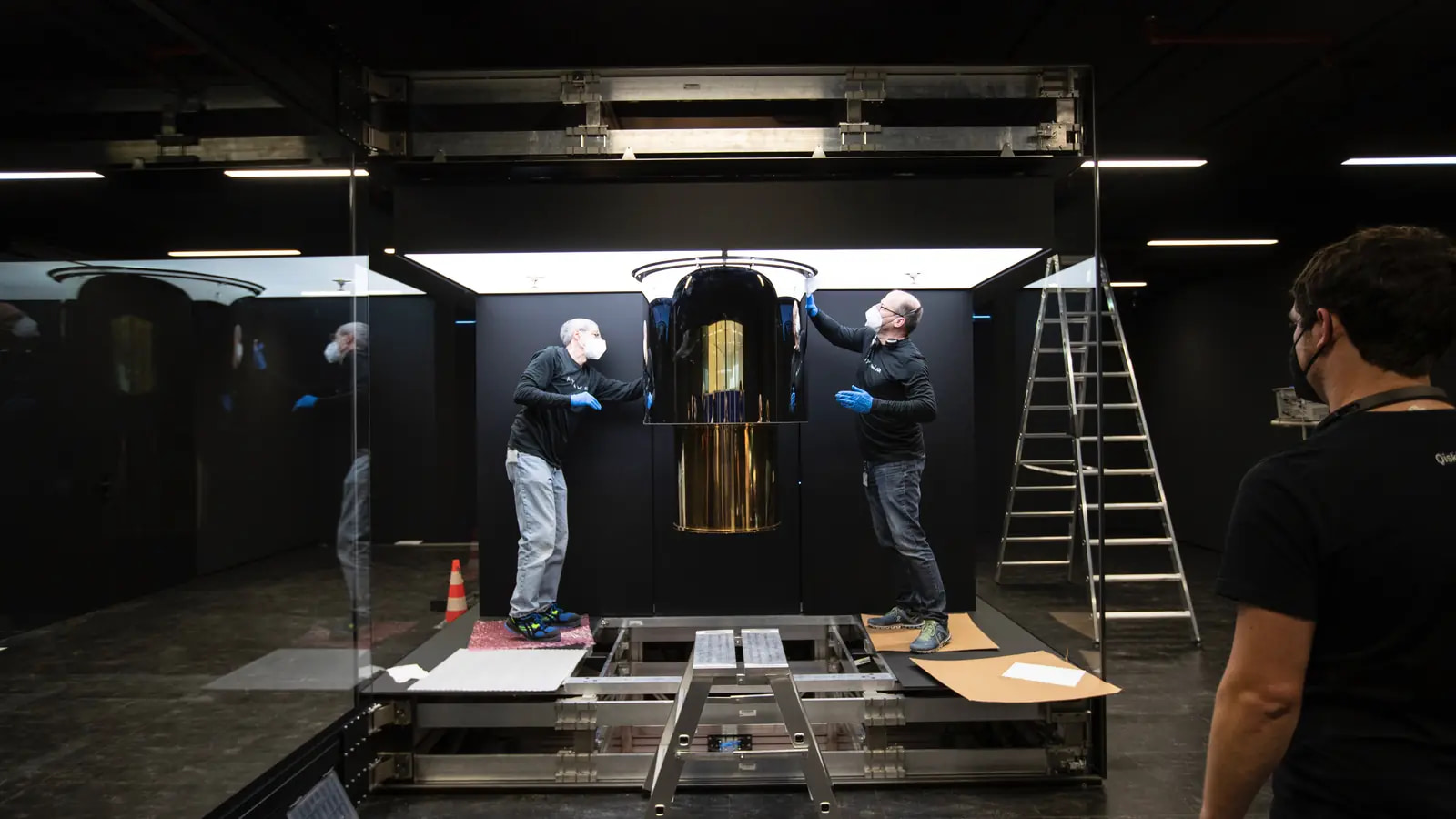
The famous chandelier photograph shows only part of a superconducting quantum computer. Beyond the cold stages sit electronics and software that prepare signals, coordinate operations, record measurements and interpret results. The shiny processor gets the attention; the whole installation has to earn the answer.
A simple way to broaden the picture is to follow one instruction in and one measurement out. What prepares the job? Which signals reach the device? What records the return signal, and what analysis turns it into a useful result? This is a reading method, rather than a claim that every architecture follows an identical path.
Follow the complete operating chain
The engineering review connects control, noise and readout with the physical device. Other approaches use different equipment: optical paths, atom traps and ion-control systems bring their own interfaces. A refrigerator is one architecture’s context, not a universal picture of the field or a shortcut to comparing efficiency.[1]
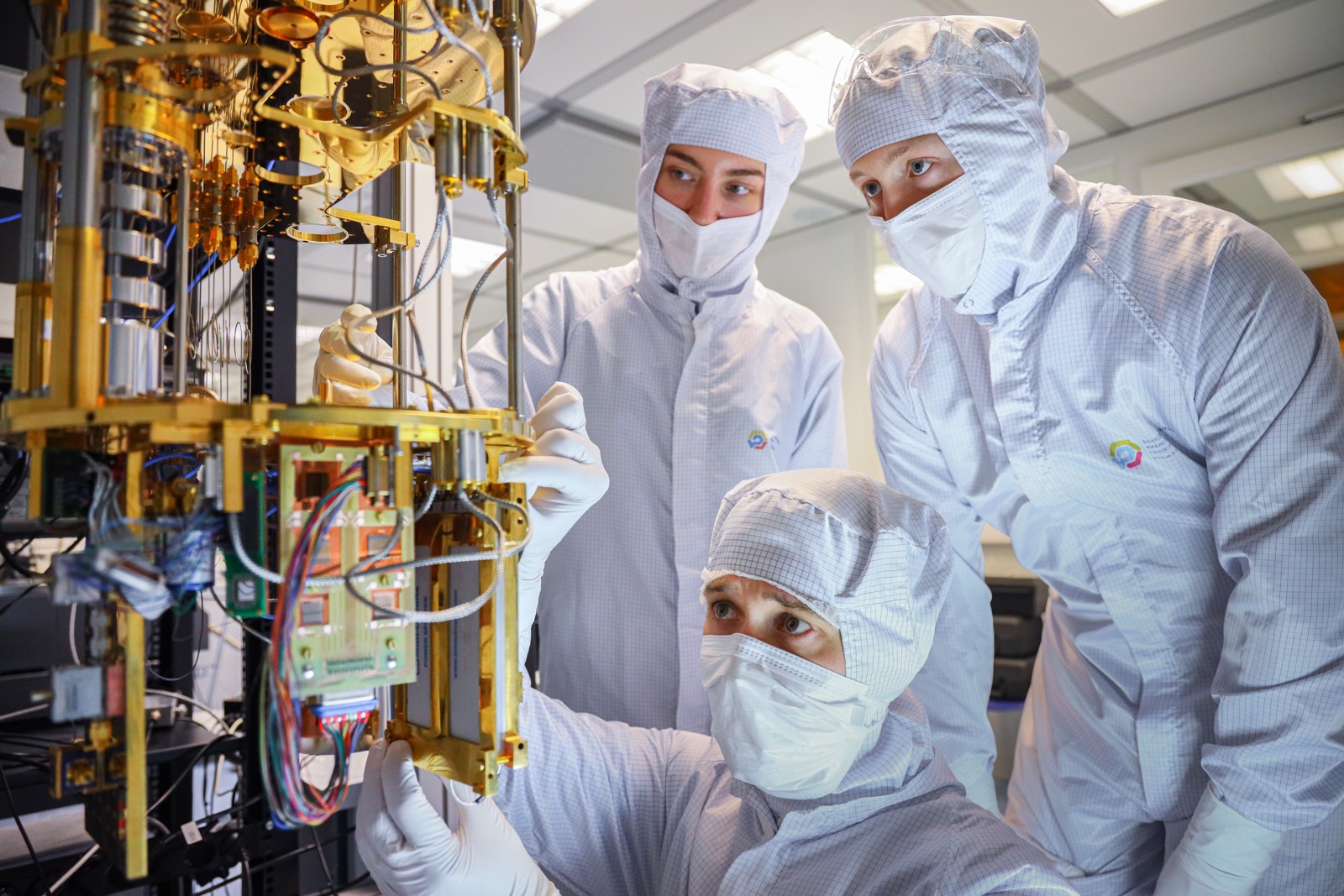

As an installation grows, its connections matter. More control channels can introduce questions about packaging, wiring, heat, timing and crosstalk. Those are engineering possibilities to investigate, not evidence that a named manufacturer has a defect. A promising design needs measured conditions showing which constraint it improves and which new tradeoffs appear.
Calibration is part of operation. A system may be capable of a good result at one operating point yet need work to maintain or restore that point. Useful reporting asks what stayed stable, how changes were detected and whether the experiment could be repeated. The best run and dependable availability are different achievements.[1]
Maintenance also affects scientific usefulness. An understandable interface and a recoverable configuration help researchers locate faults and return to known conditions. A larger machine that cannot explain what it did can be harder to evaluate than a smaller one with a complete record. These observations provide no physical operating settings or servicing instructions.
An interface is a milestone with its own scope
The boundary is visible in Quobly and SiPearl’s October 9 announcement. Their non-exclusive memorandum proposes exploring integration of classical CPUs and quantum processors, beginning with technical feasibility. It recognises that the surrounding classical environment matters. It does not establish a completed joint server, a delivered workload or an application advantage.[2]
For any claimed speedup, count the same complete task and answer quality. Preparation, communication, repeated runs and interpretation can consume benefits from a faster component. A synthetic workflow can illustrate that arithmetic; it cannot predict a company’s latency, energy use or commercial outcome without the missing measurements.
The same caution applies to price and power. Cost per qubit hides what the qubits can do and which supporting resources are included. A processor-only energy number differs from one covering cooling, electronics and classical analysis. Neither becomes a fair architecture ranking until task, conditions, boundaries and success criteria match.
The next result worth sharing might look ordinary: a more reproducible calibration, an interface that works across the complete job, or a larger installation that remains understandable and serviceable. Quantum physics supplies the unusual capability. The warm controls and software help determine how much of that capability becomes dependable computing.
Read the deeper explanation · about 6 min
This estimate covers the explanation below, separate from the overview. Optional depth was added in this reading edition. The article keeps one canonical address and its original chronology. Source review: . The relevant source dates and limitations are recorded below.
The most recognizable images of superconducting quantum computers show a suspended assembly of metallic stages and wiring. The photograph is striking, but it can produce a misleading impression: that the computer is only the cold object in the middle. In practice, a working experiment depends on equipment, control software and engineering decisions well beyond that assembly.[1]
Some of those parts operate at room temperature. They help generate instructions, handle signals, coordinate timing and turn observations into usable records. As systems become more demanding, these supporting functions can shape what is practical. Scaling is not simply the act of drawing more qubits on a diagram.
The boundary of the computer is a choice
When a report describes the size, energy use or performance of a quantum computer, the system boundary matters. Does it include only the processor? The cryogenic equipment? The control electronics? Classical processing? The surrounding infrastructure? Different boundaries can produce different numbers without any change in the underlying installation.[1]
A fair comparison states that boundary before presenting a conclusion. It also identifies the workload. An idle system, a calibration sequence and a completed computational task are not necessarily comparable operating conditions. Without this context, an apparently precise resource figure can be difficult to use.[1]
This article does not provide a universal power estimate or a claim that one architecture is more efficient than another. Those questions require device- and workload-specific evidence. The broader point is simpler: the supporting system must be counted when the claim concerns a working computer rather than a component.
A control channel is not just a line on a slide
An instruction eventually has to become a physical interaction with the hardware. Depending on the architecture, that can involve microwave signals, optical signals, voltages or other controls. The required precision, routing and timing create engineering constraints. Adding channels can increase the demands on equipment and integration.[1]
The details differ sharply between superconducting circuits, trapped ions, neutral atoms, photonic systems and other approaches. A useful publication should not paste the same cryogenic story onto every modality. Nor should it assume that solving a control problem in one architecture settles the corresponding problem in another.[1]
For readers exploring a 3D model, the relevant question is functional. What does this component supply, carry, filter, isolate, measure or protect? A label that answers that question is more educational than an unexplained part name or an exaggerated claim that every visible cable is a qubit.
More components create more interfaces
A system with additional components also has additional connections between them. Mechanical, electrical, optical and software interfaces can become sources of complexity. A change that improves one subsystem may impose a new requirement elsewhere.
For example, reducing one kind of signal loss may change thermal or packaging constraints. Increasing parallel control can alter timing and crosstalk requirements. A software upgrade may need a new calibration representation or a different hardware interface. These examples are general engineering possibilities, not claims that a particular vendor has encountered a particular defect.
The important habit is to follow the consequences of a design change across the system. A component milestone is valuable, but its contribution to usable computing depends on how well it integrates. This is one reason photographs and headline qubit counts leave important questions unanswered.
Calibration is part of operating the machine
A quantum processor is not simply assembled once and then treated as a permanently fixed abstract device. Useful operation can depend on characterization and calibration. The time and resources devoted to those activities belong in an honest description of the operating workflow.[1]
The right question is not whether calibration exists; many advanced instruments require it. It is how the calibration process scales, how stable the relevant parameters remain and how the system detects when assumptions no longer hold. An improvement that makes operation more dependable can be important even if it does not increase a headline capacity metric.[1]
This also gives readers a better way to interpret availability claims. A device listed on a service is not necessarily available to every user, for every workload, at every moment. Access conditions, queueing, maintenance and task restrictions are part of the practical experience. They should be verified rather than inferred from a product announcement.[1]
Serviceability is a scientific advantage, too
An experiment becomes more useful when operators can identify problems, replace or adjust components appropriately and restore a known working state. That sounds like maintenance rather than discovery. In a complex system, it can be one of the things that makes further discovery possible.
A clear configuration record helps distinguish a hardware change from an analysis change. Observability helps identify whether an unexpected result came from a physical process, a control problem or incomplete data. Well-designed interfaces make it easier to improve one subsystem without accidentally invalidating another.[1]
None of this replaces the need for better quantum hardware. It makes the progress easier to use and evaluate. A spectacular individual trial is one kind of achievement. A platform that supports repeated, interpretable experiments is another. Both deserve reporting, with their scopes kept distinct.
The economics of a useful operation
It can be tempting to reduce the system to a cost per qubit. That ratio can hide more than it reveals if the qubits differ in capability, connectivity, error behavior or role. A resource estimate tied to a specified workload is often more informative than a universal component ratio.
Such an estimate might need to include repeated measurements, supporting classical work, error-correction overhead and the time required to complete the task at a stated success criterion. Depending on the question, capital equipment and operational costs may also matter. The assumptions should be explicit, especially when comparing a future proposed machine with present-day alternatives.
For an investing page, the same discipline separates scientific potential from a financial forecast. A company can have an interesting component without an established profitable business model. An integration partnership can be strategically relevant without proving a delivered system or a stream of revenue. The evidence should identify which step actually occurred.
What the next useful system photograph would show
A more informative visual could connect the processor to its surrounding workflow. It would identify the control path, the readout path, the supporting classical computation and the facilities boundary. It would explain which parts of the illustration are specific to the depicted architecture and which are conceptual.
The goal is not to bury the reader in a wiring diagram. It is to show that quantum computing is a coordinated process. A staged tour can begin with the central device, then follow one instruction into the machine and one measurement back out. That journey makes the warm infrastructure visible without turning the experience into a compulsory course.
For the same reason, a good system announcement should explain what changed for an actual workflow. Did setup become easier? Did operation become more stable? Did more tasks fit within a practical schedule? Did a previously manual step become reliably automated? These are concrete questions that a reader can follow over time.
The whole machine is the story
The cold processor will remain an important part of the quantum-computing image. It should not be asked to represent every other engineering achievement by itself. Controls, interfaces, software and serviceability are part of the path from an experiment to a useful system.
The next breakthrough worth sharing might therefore be something that looks ordinary: a better control architecture, a more dependable interface or a way to operate a larger installation without losing track of what it is doing. In a field full of extraordinary physics, ordinary engineering can still decide how far the machine goes.
Evidence for this explanation
- A Quantum Engineer’s Guide to Superconducting Qubits — version 5
Review first submitted April 13, 2019; this version revised July 7, 2021. Complete primary HTML checked October 11, 2026. Historical superconducting controls, readout and calibration; other architectures have different operating equipment.
- Quobly and SiPearl: explore European CPU–QPU integration
Company announcement October 9, 2026; complete primary text checked October 11. Non-exclusive memorandum and feasibility work, not a completed joint server, application speedup or revenue result.