
The quantum chip is not the whole computer. Europe is working on the rest
A new Quobly–SiPearl agreement asks how a quantum processor should fit into a conventional computing system. The interface and the complete workflow are still work to be demonstrated.
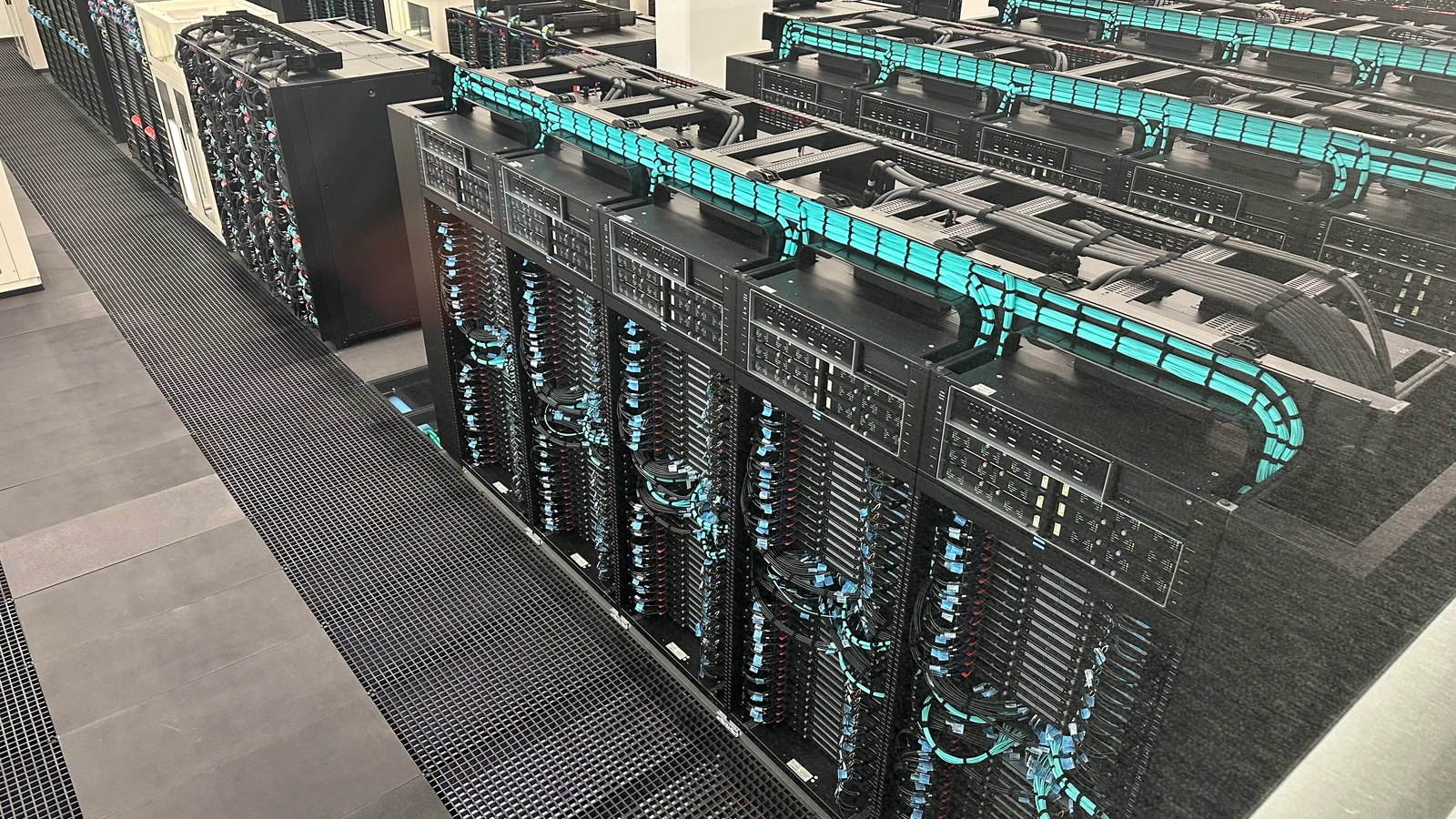
.jpg)
Imagine a restaurant with an extraordinary oven but no workable way to take orders, prepare ingredients or serve the food. The oven could be impressive while the restaurant struggles. A quantum processor faces a different technical problem, but the comparison explains why the surrounding computer matters. A fast specialist only helps if the complete job becomes better.
On 9 October, Quobly and SiPearl announced a non-exclusive memorandum of understanding to explore conventional and quantum processor integration. The proposed work brings SiPearl’s Rhea1 processor and Seine reference-server platform together with Quobly’s Alloy quantum-processing programme. The initial phase is a feasibility assessment. This is an exploratory agreement, not a launch of a tested joint server or a demonstrated computational advantage.[1]
A hybrid workflow can assign different work to conventional and quantum resources. Conventional systems still prepare inputs, coordinate the task and interpret measurements. The useful comparison is the complete outcome: the same problem and answer quality, with preparation, communication, repeated runs and analysis included. Timing only a chosen quantum operation can miss much of what the person waiting for an answer experiences.
Count the whole job
A deliberately simplified example shows why. Suppose a job takes 100 units of time, with only ten spent in the stage an accelerator improves. Even making that stage instantaneous leaves 90 units. This is illustrative arithmetic, not a forecast for Quobly or SiPearl. It asks which part of the work can change and what new overhead the specialist introduces.
The line between two boxes in a diagram stands for real engineering. It can mean program descriptions, schedules, returned measurements and error handling. A useful interface says what happens if a job is interrupted, which calibration applies and how unsupported operations are handled. The announcement sets a direction for that work; it does not establish that every interface has been specified and validated.[1]
SiPearl’s current Rhea1 page describes a conventional processor designed in Europe and manufactured by TSMC. Its forthcoming sampling language is separate from delivery of a Quobly–SiPearl system. That distinction also sharpens the partnership’s sovereignty framing. European collaboration and design can build local capability without establishing that every fabrication step, material and supporting component comes from Europe.[2]
The non-exclusive wording matters too. Readers should not infer that either participant has abandoned other possible collaborations. A useful next update could be a funded joint project, a documented interface or a working integration demonstration. Each would answer a different question. Partner names alone do not establish deployment, application performance or undisclosed revenue, and private ecosystem participants should not receive invented public stock symbols.[1]
What would earn the next headline?
The strongest follow-up would measure a complete workflow under a stated task and quality requirement, explain its resources and overhead, and use an appropriate conventional comparison. An integration test that exposed communication or preparation as the main cost could still teach something useful. The story to return for is evidence that someone can use the quantum chip within a complete system. The rest of the computer helps decide whether that result matters.
Read the deeper explanation · about 6 min
This estimate covers the explanation below, separate from the overview. Optional depth was added in this reading edition. The article keeps one canonical address and its original chronology. Source review: . The relevant source dates and limitations are recorded below.
Imagine a restaurant with an extraordinary oven and no workable system for taking orders, preparing ingredients or serving the food. The oven might be genuinely impressive. The restaurant would still struggle. A quantum processor inside a computing system presents a very different technical problem, but the analogy helps explain why a processor announcement is not the whole computing story.
On October 9, Quobly and SiPearl announced a non-exclusive memorandum of understanding to explore integration between conventional and quantum processing. Their stated context includes SiPearl's Rhea1 processor and Seine server work alongside Quobly's Alloy quantum-processing program. This is an agreement to investigate and develop a path, not a report that a completed joint system has demonstrated a useful computational advantage.[1][2]
The announcement is worth examining because it puts the surrounding computer back into a field that often communicates progress through a single chip photograph or qubit count.
A specialist is not a replacement for everything
A conventional processor and a quantum processor need not be rivals for every task. A proposed hybrid workflow can assign different work to different resources. The question is whether that division produces a better complete outcome than a relevant alternative once the preparation, communication and analysis are included.
Consider a deliberately simplified example. A job takes one hundred units of time, and only ten of them belong to the step a new accelerator improves. Even making that step instantaneous leaves ninety units. This is not a forecast for any particular quantum application. It is an arithmetic reminder that the surrounding workflow sets a limit on how much a local speedup can help.
The useful question is therefore not simply how fast the specialist runs. It is what fraction of the task the specialist can address, what extra work is required to use it and whether the quality of the final result meets the same standard. A comparison that changes the task or accuracy target halfway through does not settle that question.
The interface is a real engineering object
It is tempting to draw a conventional computer and a quantum processor as two boxes connected by a line. That line stands for work. It can involve descriptions of operations, schedules, data formats, control responsibilities, returned measurements and error handling. The precise interfaces depend on the implementation; this article does not claim the Quobly–SiPearl announcement has already specified and validated every one.
A useful interface tells each side what it can expect from the other. What happens if a job is interrupted? Which version of a program or calibration applies to a result? How are unsupported operations handled? Which part of the system owns a timing requirement? These questions are not as photogenic as the processor, but a user depends on their answers.
For readers, the central distinction is between compatibility as an intention and compatibility as an observed property. A partnership can establish a shared intention. A documented demonstration can establish a narrower observed property. Neither should be silently promoted into a guarantee that every future workload will transfer smoothly.
The clock on the wall matters too
End-to-end time is often more revealing than the duration of one selected operation. A quantum experiment may require repeated measurements, preparation and conventional processing before its output is useful. How much of that work is included in a published comparison can change the interpretation of the result.
Suppose a team reports that one specialized stage is ten times faster. That can be valuable. The next question is how the complete procedure changed when the surrounding stages were counted. A smaller total improvement does not make the specialized result false. It identifies where the next engineering effort may need to go.
The same principle applies to reliability and cost. A procedure that sometimes produces a good answer may require retries. A workflow that depends on unusually favorable preparation may be difficult to reproduce. A complete evaluation should explain those conditions rather than hide them behind a single best-case run. These are proposed reporting questions, not allegations about the new collaboration.
Why conventional hardware deserves a place in the picture
SiPearl's Rhea1 page describes a conventional processor platform. That context matters because the partnership is about integrating different kinds of computing resources, not replacing all conventional computation with quantum operations.[2]
A reader-friendly diagram should preserve that division. Show preparation, the bounded quantum task and interpretation as distinct stages. Do not animate every arrow as though it represents a measured real-time connection, and do not make the quantum box larger simply to imply greater importance. The diagram's job is to reveal responsibilities and unknowns.
This also helps visitors approach quantum applications with better questions. Which step actually needs quantum behavior? What information must be supplied to that step? What result comes back? What conventional work remains necessary? An application becomes more understandable when those questions are answered explicitly instead of being buried under the word hybrid.
What European means, and what it does not
The announcement frames the collaboration in terms of European capability and sovereignty. That can involve design expertise, control over important technology and the ability to develop integrated systems. It should not automatically be read as a claim that every material, fabrication step and supporting component comes from Europe.[1][2]
Supply-chain statements need a defined boundary just as performance statements do. A company can design a processor in one place and rely on manufacturing or components elsewhere. A collaboration can increase local expertise without eliminating every external dependency. Readers deserve that distinction rather than a geographical badge standing in for an industrial analysis.
For QubitWire's Investing page, this means treating the agreement as an ecosystem development with specific participants and an exploratory status. It is not a reason to attach an invented public ticker to a private company or to infer revenue that has not been disclosed.
An agreement is the beginning of a testable sequence
A memorandum of understanding is an organizational step. Its significance depends on what follows. Useful next evidence could include a funded joint project, an interface specification, a functioning integrated prototype or a measured workflow. Each would move a different part of the story forward.
A visitor should be able to follow those steps without being asked to memorize an entire roadmap. A compact record can show the last verified development, the open question and the next kind of evidence that would answer it. When no new evidence has appeared, the honest state is unchanged, not a newly stamped update containing the same promise.
The agreement is non-exclusive, another detail worth preserving. A reader should not infer that either participant has abandoned every other possible collaboration. Precision about that word prevents an ordinary exploratory partnership from becoming an unsupported story about a permanently closed ecosystem.[1]
The result that would deserve the next headline
The most useful follow-up would compare a complete workflow under a stated task and quality requirement. It would explain what was measured, which resources were used, what overhead was counted and why the conventional comparison was appropriate. A successful result could still be limited to one kind of task; a limitation does not erase a genuine achievement.
A less successful integration test could also be informative. It might reveal that communication, preparation or control dominates the cost. That would not be a reason to conceal the result. It would identify where an ambitious architecture meets an ordinary engineering constraint.
The story to return for is therefore not simply the arrival of another quantum chip. It is evidence that someone can use the chip within a complete system, for a well-defined purpose, with a result that survives fair accounting. The rest of the computer is not background scenery. It is part of what makes computation useful.
Evidence for this explanation
- Quobly and SiPearl: exploratory CPU–QPU integration agreement
9 October 2026 non-exclusive memorandum. Initial feasibility work around Rhea1, the Seine reference server and the Alloy QPU; no delivered joint machine or advantage result.
- SiPearl: Rhea1 processor
Current product page checked 11 October 2026. European design and TSMC manufacturing are distinct; future sampling language does not establish a deployed Quobly–SiPearl server.
Keep your reading trail
Keep up with these topics
Choose the subjects you want to find again in Your Updates.