
Skip to content
RESEARCH · QUANTUM MANUFACTURING

Why Matching Quantum Chips Can Still Behave Differently

A blinded study points to nanoscale oxide and etching differences as clues to uneven qubit lifetimes.
Published Updated Source report Sources checked
My reading list
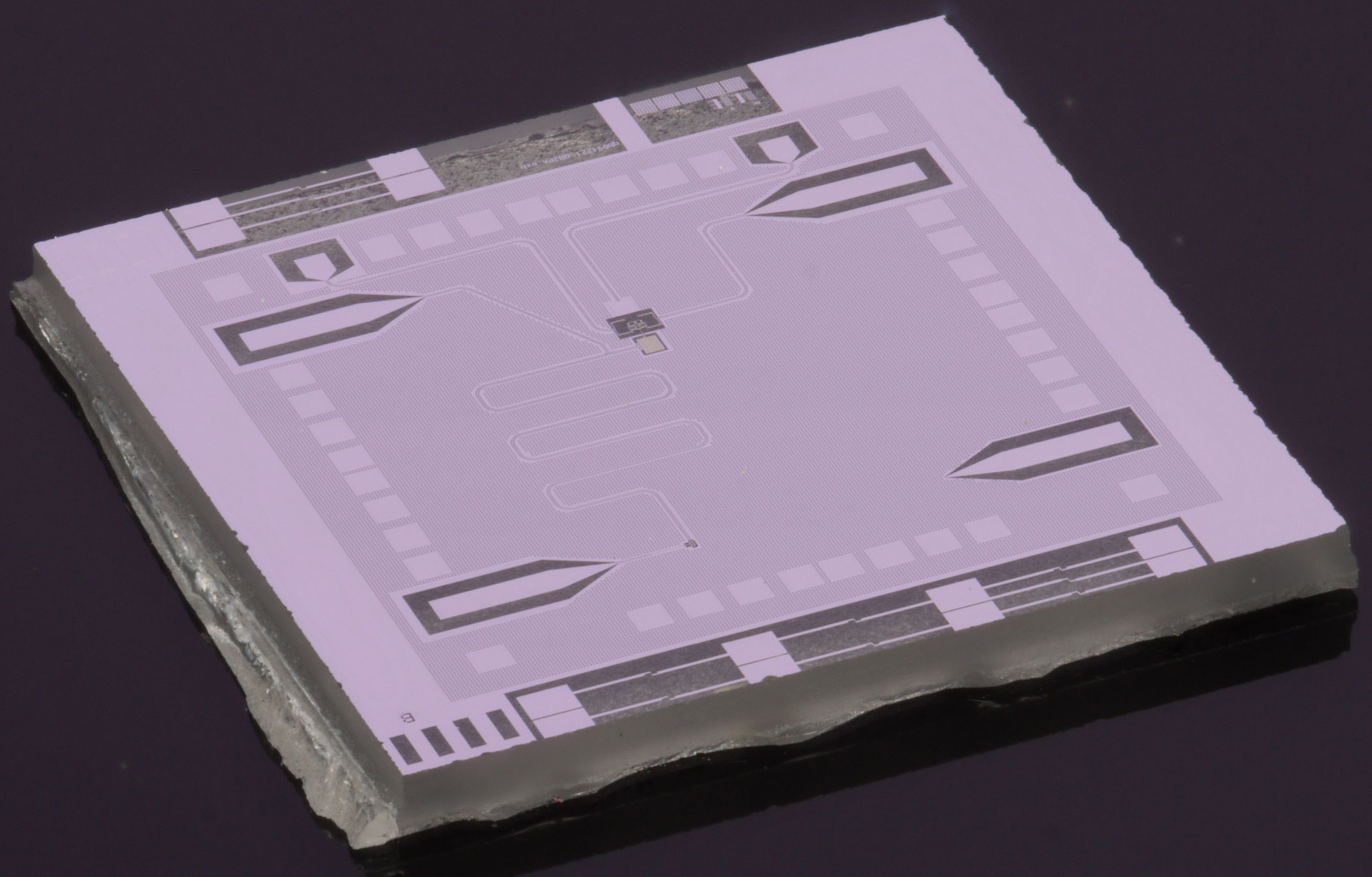
Historical superconducting circuit on a sapphire chip at NIST.
Representative superconducting circuit on a sapphire chip, photographed at NIST in 2011. Credit: D. Schmidt/NIST. Historical context; this is not the apparatus used in the reported study.D. Schmidt/NIST D. Schmidt/NIST · Explicit NIST reuse permission for unmarked materialsFull image credit

Two made together can hold quantum information for different lengths of time. A SQMS study attacked that variation by withholding the performance results from the teams inspecting the materials. They characterized 22 transmon qubits across seven chips before comparing what they found with each device's energy-relaxation lifetime.[2]

The strongest clues were small: the depth of etched trenches beside the metal, the angle of its sidewalls, and the thickness of surface oxides. Visible scratches and debris showed no clear correlation in this device set. A fabrication process that looks consistent to the eye can therefore leave differences that matter to the quantum state.[1][2]

The engineering question is whether tighter control can narrow the spread across a whole chip. A long-lived best qubit does not describe every qubit used by a circuit. The blinded measurements give manufacturers evidence about which features deserve controlled process experiments next.[1]

This remains a correlation study focused on energy relaxation, or T1. It does not establish a universal recipe, or prove that changing one feature will improve every processor. Fermilab describes phase coherence, T2, and broader architectures as future work. The October 1 spotlight explains an earlier paper; it should not be dated as a new October experiment.[1][2][3]

For scalable quantum computing, reproducibility matters alongside a record lifetime. A controlled follow-up could change one fabrication feature and repeat the blinded comparison across devices. That would test whether the observed associations offer a reliable process improvement, rather than a better explanation of this particular sample. Follow-up tests should report gate performance as well as relaxation.[1][2]

Why hide the performance labels?

Knowing a device’s score can influence which imperfections an analyst notices or emphasizes. Withholding the score makes the materials observations come first. It reduces one route for expectations to shape an explanation, even though sample selection, measurement sensitivity and analysis choices can still introduce bias. Blinding improves the comparison without making every later association causal.[1]

A candidate cause needs an intervention

The next engineering test is to change a candidate feature deliberately, keep other important conditions comparable and ask whether device performance changes as predicted. A successful intervention on a new batch would extend the evidence beyond explaining the original samples. Repeating the comparison elsewhere would test how widely the relationship holds.[1]

What does this establish for a company?

Participating in a multi-institution study is not the same as owning the entire result. A materials correlation also is not a delivered improvement in production yield. For companies in the collaboration, the meaningful progression runs from characterization to a controlled process change, then to repeatability across devices and manufacturing runs. Each step needs its own evidence.[1]

Keep your reading trail

Your Updates →

Evidence & context

4 linked sources

Peer-reviewed materials study newly highlighted October 1; study correlates microscopic device features with energy relaxation, rather than demonstrating a new processor.

How can a materials study be blinded?

Analysts can measure a material while its device-performance score stays hidden. This reduces the chance that knowing the desired answer steers interpretation. It does not eliminate sampling or measurement bias, and a later correlation still needs a controlled intervention before it supports a causal claim.

Read the supporting source ↗

Why does one good qubit not establish a good manufacturing process?

One exceptional device shows what is possible. Manufacturing evidence must show how often comparable performance occurs across devices and conditions. The next useful step is a controlled process change followed by a repeatable distribution of results; a materials correlation alone does not establish production yield.

Read the supporting source ↗

How to read the evidence and dates

An announcement records what an organization stated. An experiment reports an observation. A simulation or resource estimate depends on its assumptions. QubitWire’s analysis connects these sources; the labels are not quality scores.

Published is the article’s first QubitWire publication. Updated marks a substantive content change. Sources checked records a review of the underlying evidence. An older paper can support a new explanation, and another press release about the same work is not independent replication.

For material corrections, check the article’s context note and source trail. A routine formatting or link change does not create a new scientific result.

Sources

  1. Fermilab — SQMS Center uncovers material origins of variations in qubit performance through landmark study
  2. Murthy et al. — Identifying Materials-Level Sources of Performance Variation in Superconducting Transmon Qubits
  3. SQMS Center — Science Highlights
  4. Applied Physics Reviews publication record
READ NEXT

Continue exploring

All Research stories
  1. More on quantum manufacturing

    A $27.9 Million Institute Targets a Microscopic Quantum-Chip Bottleneck

    Princeton-led MARQUIS will bring materials science and semiconductor processing to the Josephson junction, a core superconducting-qubit component.

    Published · Source report
  2. More on quantum manufacturing

    D-Wave Extends Its Chipmaking Deal With IonQ-Owned SkyWater

    A familiar Minnesota manufacturing team remains behind D-Wave’s hardware. Device quality and repeatability explain why the factory relationship matters.

    Published · Source report · Sources checked
THE QUANTUM BRIEFING

A clearer signal.
Read the latest edition.

A little perspective on a fast-moving field.

Read the on-site briefing →

Read selected quantum coverage in the on-site briefing, or register your interest below.