
Skip to content
RESEARCH · RESEARCH

AI decoder reaches an 18.1% simulation threshold, with hardware questions still open

A transformer decoder reaches journal publication with promising surface-code simulations. The headline percentage describes code-capacity noise, not a hardware gate-error allowance.
Published Source report Sources checked
My reading list
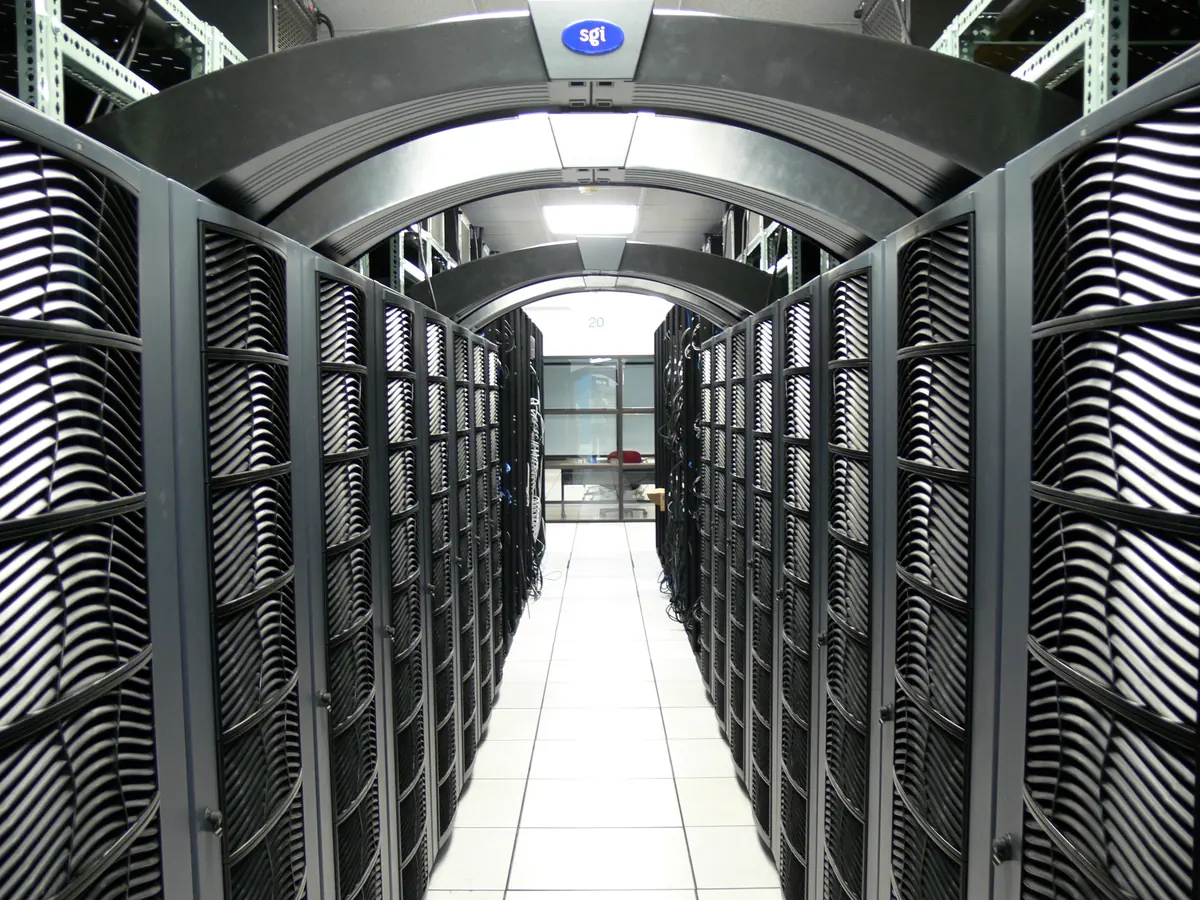
Rows of black equipment cabinets beneath curved overhead supports in a data center.
Virginia Tech data-center equipment, shown as classical-computing context. These servers are not identified as running the decoder simulation or a quantum processor.Image: Virginia Tech - data center.jpg · Christopher Bowns · CC BY-SA 2.0Full image credit

A transformer-based quantum error decoder has reached journal publication with an eye-catching simulated threshold: 18.1%. The condition beside that number matters as much as the number itself.[1][2][3]

Published in Physical Review A on October 26, the study by Seong-Joon Park, Hee-Youl Kwak and Yongjune Kim organizes error-syndrome information around . Its 18.1% result uses a code-capacity noise model. A separate circuit-level extension processes repeated measurements and reports stronger simulated error suppression than the tested comparison decoders. The authors' preprint first appeared on October 13, 2025.[1][2][3]

The study does not demonstrate that a processor can tolerate an 18.1% physical gate-error rate. Nor does the reviewed evidence establish a decoder operating in real time on quantum hardware.[1][2][3]

Why it matters

For a prospective system builder, the interesting question is whether better error decisions can arrive within a useful time and computing budget. A decoder that performs well in one simulation still needs an operating requirement against which its usefulness can be judged.

A worthwhile comparison would hold the noise assumptions, code size and resource budget steady. It would then ask how reliably the decoder performs, how long each answer takes and how performance changes when incoming errors differ from training examples. Those are deployment questions, not additional findings of this paper.

What comes next

The most informative follow-up would connect decoding accuracy to a defined hardware deadline and disclose the full classical computing cost. The journal milestone gives readers a concrete method to examine while preserving the distinction between a simulated threshold and a working correction loop.

Keep your reading trail

Your Updates →

Evidence & context

3 linked sources

Theory and numerical decoding benchmarks. Journal-publication milestone; earlier disclosures retained. Source scope checked October 26, 2026; original analysis is identified in the text.

How to read the evidence and dates

An announcement records what an organization stated. An experiment reports an observation. A simulation or resource estimate depends on its assumptions. QubitWire’s analysis connects these sources; the labels are not quality scores.

Published is the article’s first QubitWire publication. Updated marks a substantive content change. Sources checked records a review of the underlying evidence. An older paper can support a new explanation, and another press release about the same work is not independent replication.

Sources

  1. Publisher record: 10.1103/ll1h-sm1y

    Primary evidence checked October 26, 2026. Scope and stage retained in the article.

  2. Earlier disclosure for 10.1103/ll1h-sm1y

    Primary evidence checked October 26, 2026. Earlier disclosure; journal date is a separate milestone.

  3. Publisher primary record

    Primary evidence checked October 26, 2026. Scope and stage retained in the article.

READ NEXT

Continue exploring

All Research stories
  1. Explore error decoding

    Simulation Rankings Can Mislead Quantum Decoder Selection

    A preprint using Google Willow records separates predicting error rates from choosing error-correction software.

    Published · Source report
  2. Explore error decoding

    AI Can Filter Bad Quantum Runs. The Rejected Runs Still Count.

    A new preprint uses neural networks to flag likely decoding failures. Large error reductions apply to retained simulated results, with a cost in discarded attempts.

    Published · Source report · Sources checked
THE QUANTUM BRIEFING

A clearer signal.
Read the latest edition.

A little perspective on a fast-moving field.

Read the on-site briefing →

Read selected quantum coverage in the on-site briefing, or register your interest below.