
Scientists Picked Up 6,100 Atoms With Light. Yes, Individually.
Laser tweezers turn single atoms into movable quantum bits, and the resulting grid is something researchers can actually photograph.
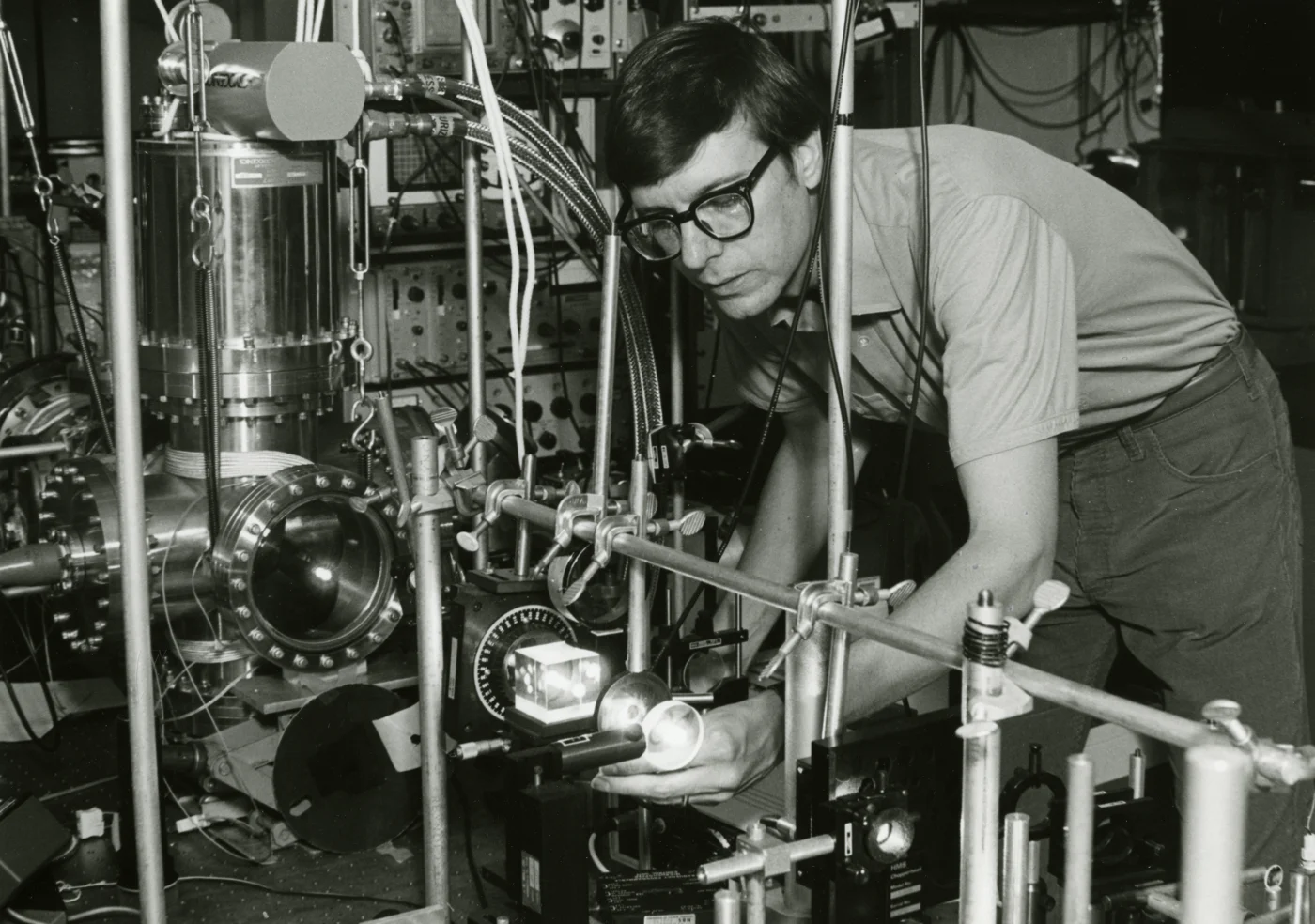

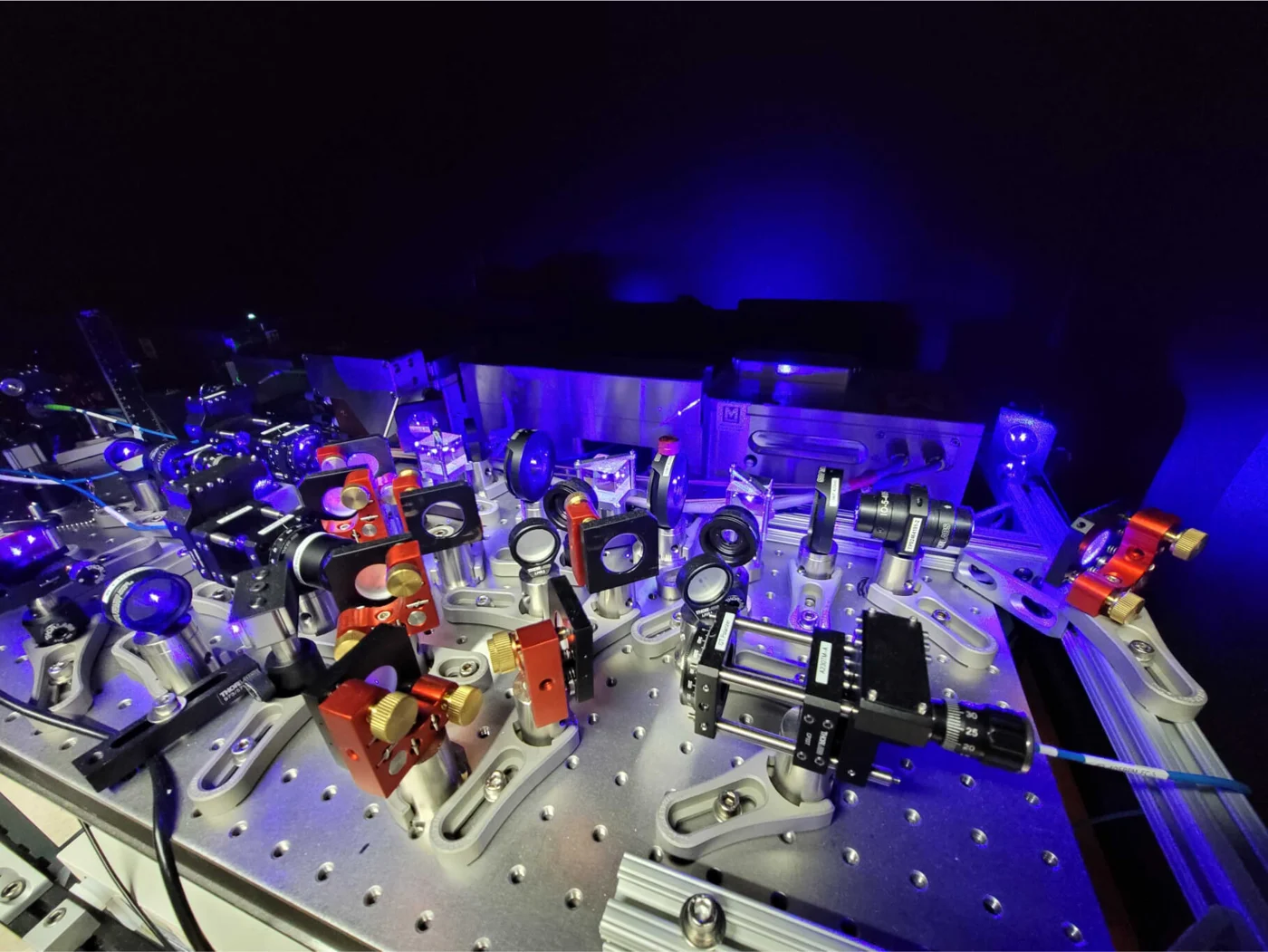
Imagine assembling a computer by grabbing its smallest parts with beams of light. That is the idea behind optical tweezers: tightly focused lasers that can hold individual atoms in place. In a neutral-atom quantum system, each trapped atom can carry a quantum bit, or .
In September 2025, a Caltech team reported an array of more than 6,100 cesium atoms held in roughly 12,000 optical traps. Inside a vacuum chamber, the atoms formed a grid that researchers could image as separate points of light. The hardware was tiny; the coordination problem was enormous.
The impressive part wasn’t simply getting that many atoms together. The Nature paper reported a coherence time of about 13 seconds, a measure of how long the qubits could preserve their quantum information under the experiment’s conditions. Increasing the array’s size had not destroyed that delicate control.
The team could also move atoms hundreds of micrometers while preserving superposition. That matters because moving qubits offers a way to bring different partners together during a calculation. Earlier research had already demonstrated transporting entangled atom arrays, helping establish the approach behind this unusual kind of computer architecture.
There is one important catch to the big number: this particular 6,100-atom array was not yet performing full quantum computations. Caltech described entangling its qubits as a next step. The result demonstrated a larger, controllable collection of building blocks, with useful computation still requiring those blocks to work together.