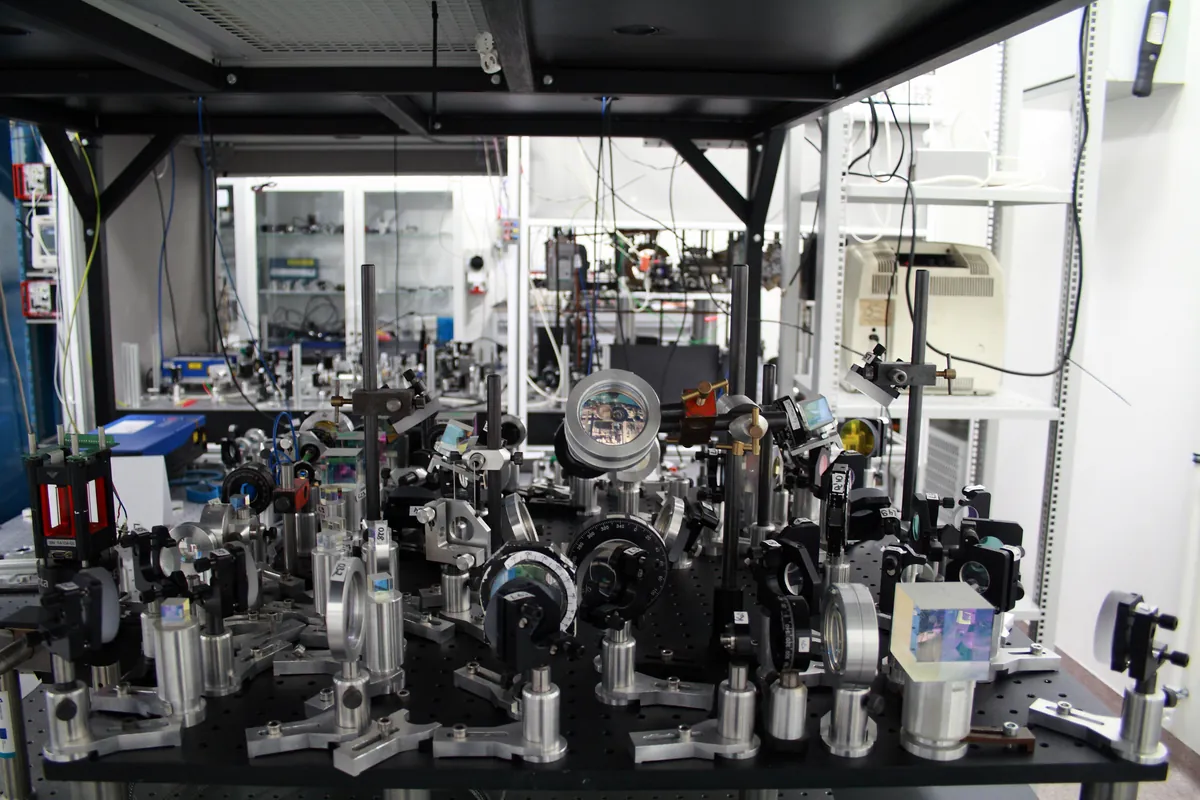
Rubidium cooling and trapping apparatus photographed in 2015. Archival context for handling atoms with light; this photograph does not show the reported automatic-refilling system.Image: Cold atoms experiment 03.JPG · Tomasz Kawalec · CC BY-SA 4.0Full image credit
Most computers do not have to worry about pieces of their processor escaping. Neutral-atom quantum machines do. They hold individual atoms in traps made with light, and losing those atoms can interrupt the experiment. One research team tackled the problem with a wonderfully literal solution: keep bringing in replacements.[1]
The team reported maintaining an array of more than 3,000 atoms for over two hours. Its system uses two optical conveyor belts to bring fresh atoms into the working region, where tightly focused light picks them out. The work appeared in Nature in 2025; an updated manuscript was posted in May 2026.[1]
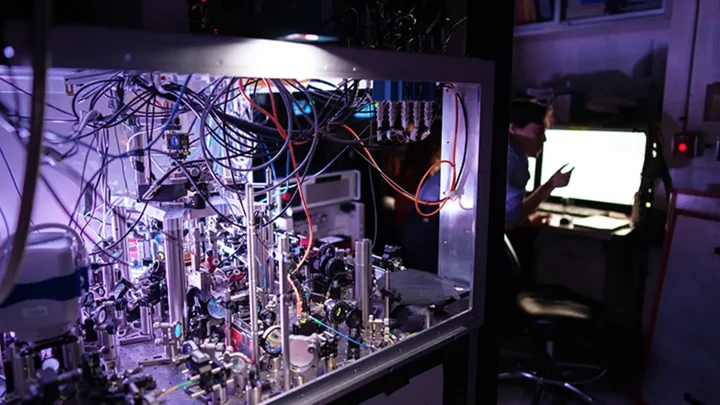
Sandia’s neutral-atom apparatus, with a vacuum chamber and surrounding optics. Historical hardware context, not the Chiu team’s system. Cropped/resized; no generative edits.Quantum Lab — Sandia neutral-atom apparatus. Photo: Craig Fritz / Sandia National Laboratories. Sandia editorial media permission. Cropped/resized; no generative edits. Image: Quantum Lab — Sandia neutral-atom apparatus · Craig Fritz / Sandia National Laboratories · Sandia editorial media permissionFull image credit
The important trick is not simply keeping the array full. Nearby atoms may already hold delicate quantum information. Reloading must avoid disturbing them. The researchers demonstrated refilling alongside coherent storage, rather than treating every missing atom as a reason to stop and rebuild the whole setup.[1]
A separate atom-replacement experiment also explored replenishing an array while isolating stored from the light used to prepare newcomers. Neither result means a lost quantum state can simply be copied into a fresh atom. Keeping the physical carriers available and protecting the information are different jobs.[2]
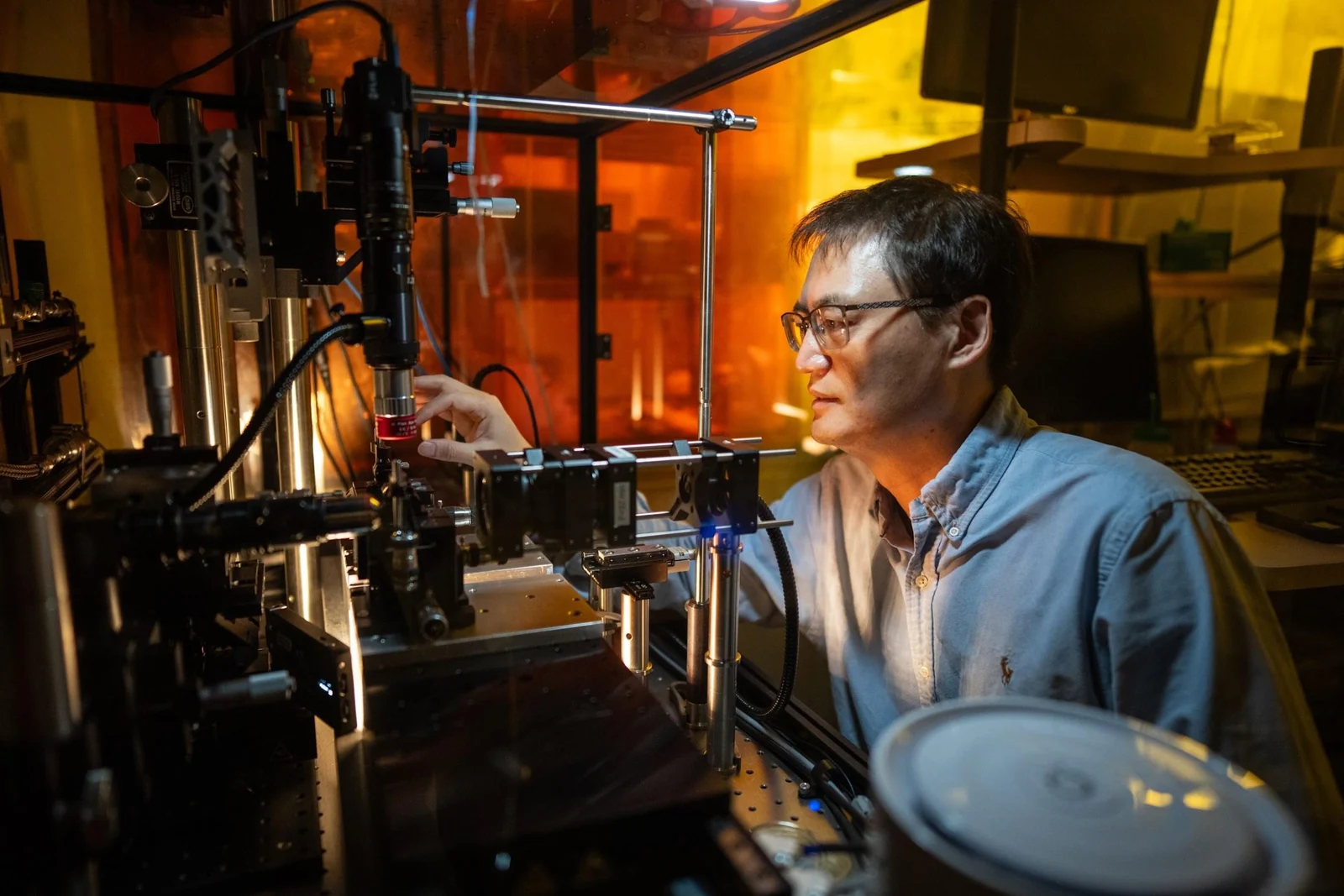
A separate Sandia quantum-sensing laboratory uses light to work with cold atoms. It illustrates the experimental setting, not the reported computing result. Cropped/resized; no generative edits.Sandia optical-nanofiber laboratory. Photo: Craig Fritz / Sandia National Laboratories. Sandia editorial media permission. Cropped/resized; no generative edits. Image: Sandia optical-nanofiber laboratory · Craig Fritz / Sandia National Laboratories · Sandia editorial media permissionFull image credit
Think of this as maintenance for a computer whose components can disappear. Two hours of array operation is not two hours of flawless calculation, nor proof that each atom remembered its state that long. But moving from repeated shutdowns toward continuous operation changes a practical question: how much useful work can the machine keep doing?[1]