
TUM’s new quantum centre brings devices, materials and modelling together
The Garching centre opened in October. Its significance lies in the research it can connect and the capabilities it can support.
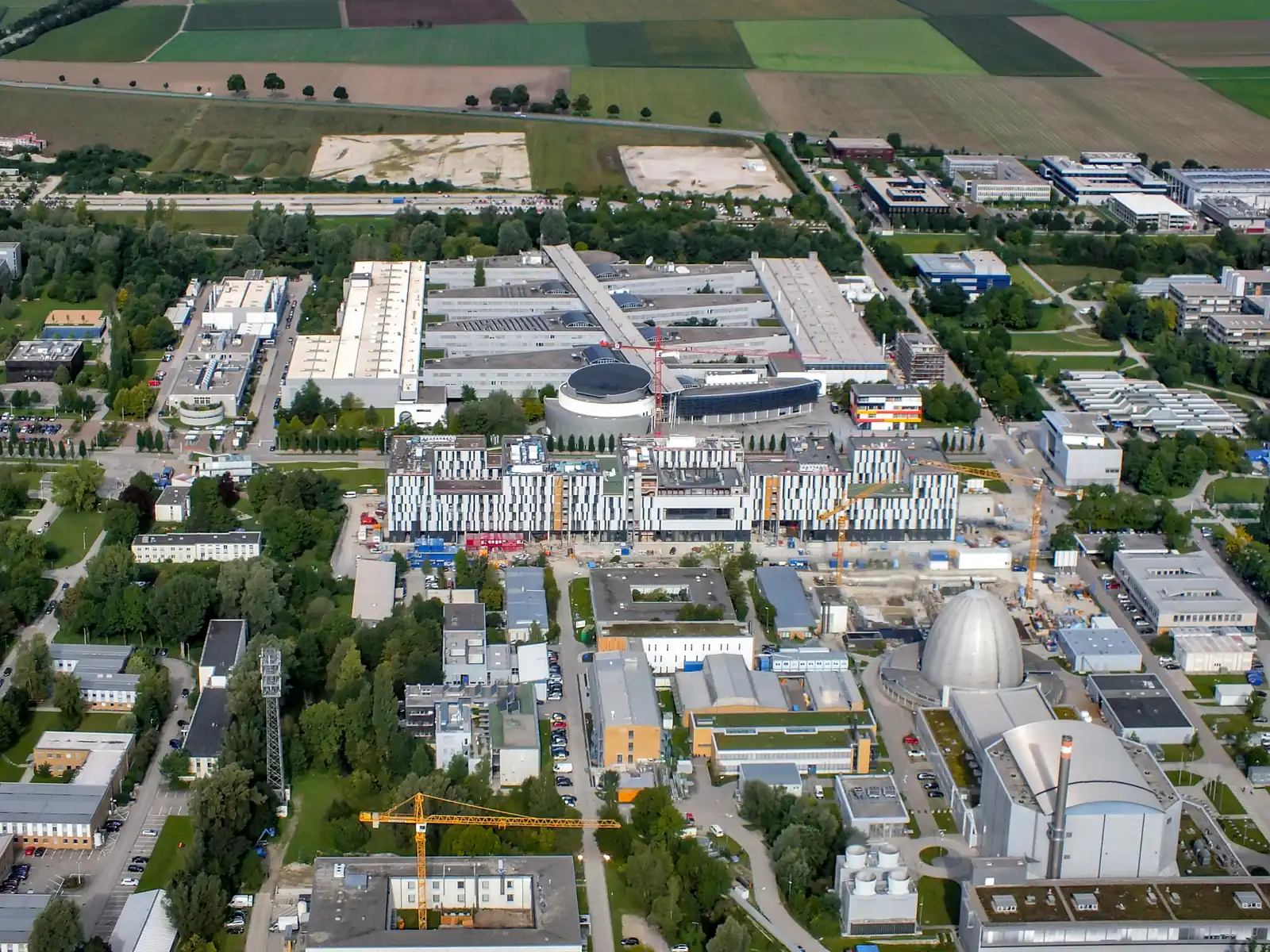
The Technical University of Munich has opened its Center for QuantumEngineering at Garching. TUM’s announcement is dated October 19, 2026. The university says the centre brings together approximately 100 scientists working across hybrid quantum devices and circuits, functional quantum materials, and the modelling of complex quantum systems. It is a research-infrastructure milestone.[1]
TUM reports approximately €35 million from Bavaria and €20 million from the federal government for the building. It also describes five additional professorships through Bavaria’s Hightech Agenda. These figures describe institutional investment; they are not a measurement of a processor’s capability or a demonstration that a commercial quantum application has become practical.[1]
The three research areas offer a useful way to understand what a shared centre could enable. A device problem may begin with a material, appear in the behaviour of a circuit and require a model to explain it. Bringing those perspectives into closer contact could shorten the conversation between a physical observation and a proposed engineering change.
That possibility is an editorial interpretation of the centre’s scope, rather than a result already measured at the new building. Co-location alone cannot establish how quickly teams will solve problems. Useful evidence would include joint experiments, reproducible measurements and facilities that researchers can actually access. Those outcomes give a concrete meaning to collaboration beyond an opening ceremony.
For prospective partners, the next questions are practical: which capabilities become available, how collaborations are arranged and what outputs follow. The opening establishes a new home for the work. Its longer-term value will be easier to judge through the research and access it supports than through the building’s price or the number of people under its roof.