
AI Helped Find 564 New Magic-State Factory Classes. Exact Checks Did the Proving.
An October 5 preprint combines AI-guided search with mathematical verification to expand a quantum-circuit catalog. The designs are theoretical; complete hardware savings remain to be established.
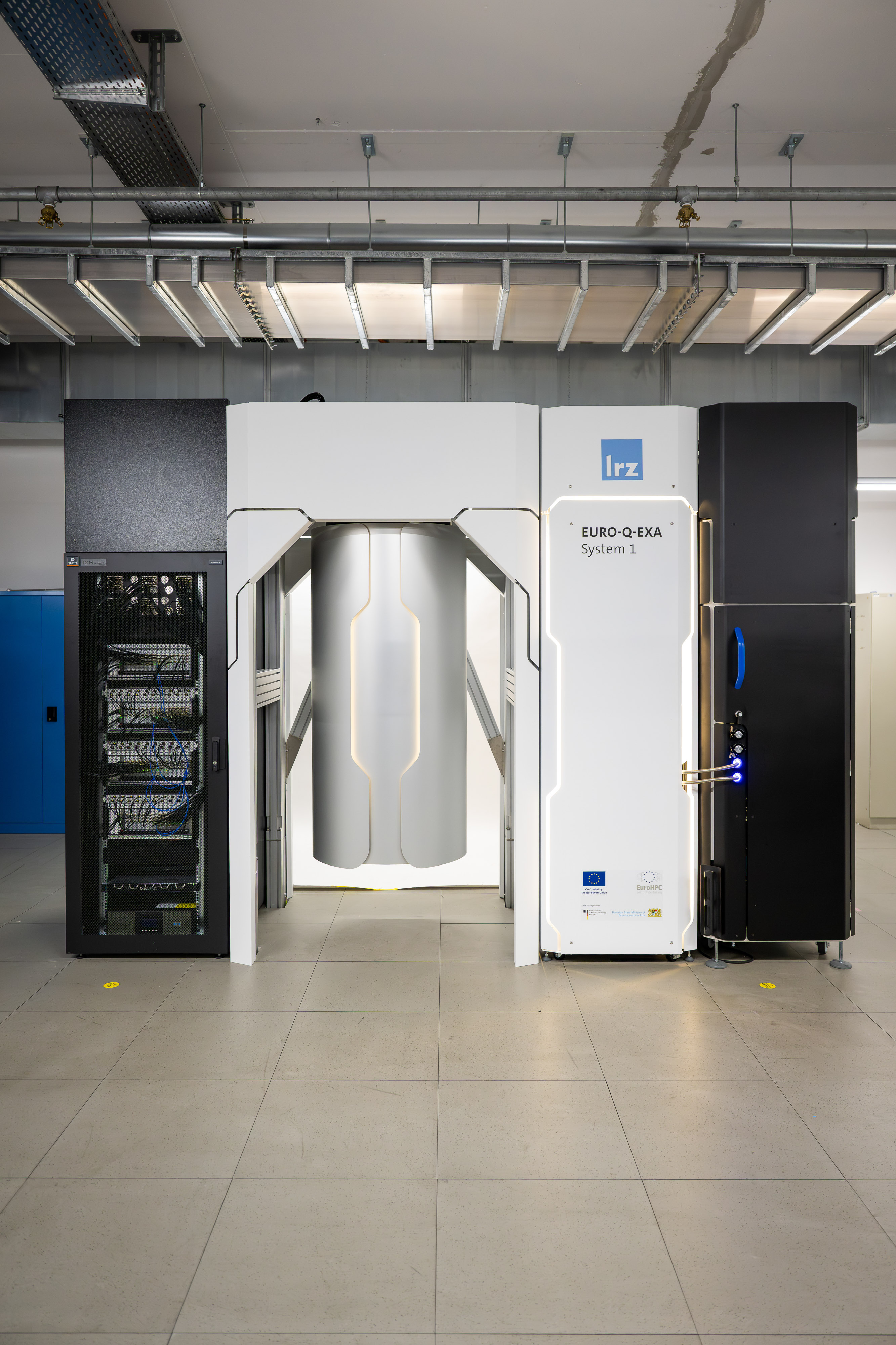
.jpg)
Artificial intelligence has helped expand a catalog of circuits for one of fault-tolerant quantum computing's expensive supporting jobs: preparing magic states. An October 5 preprint reports 699 factory classes, including 564 the authors identify as new. These are mathematically described circuit families, not fabricated devices. The important feature is how the claims are checked. Language-model agents suggest where to search, deterministic solvers construct candidates and separate verification routines establish what the resulting circuits actually do.[1][2]
What a magic-state factory actually makes
A magic state is a specially prepared quantum resource used to implement operations beyond the Clifford gates that many error-correcting schemes handle relatively conveniently. Producing sufficiently clean resources can consume substantial overhead. Distillation takes several imperfect input states and uses checks to reject or suppress certain errors before delivering better outputs. A factory in this context is a quantum circuit for that process. The industrial vocabulary can mislead: this announcement is about discovering and verifying circuit designs, not opening a manufacturing plant.[2][3]
The paper represents each factory with binary matrices that describe the checks and desired output operation. This turns the search into a constrained mathematical problem. Some arrangements of input errors leave distinctive check results, called syndromes; others can slip through undetected and damage the output. The authors separate the choice of syndromes from the search for compatible output gates. Symmetry then reduces the number of candidates that a solver has to examine, at the cost of restricting which part of the full design space it searches. The earlier Bravyi–Haah construction established triorthogonal binary matrices as a route to distillation circuits; the new search builds on that mathematical foundation.[2][3]
AI proposes. Verification decides.
Language-model agents guide that exploration by proposing groups, input structures or places to remove coordinates from a larger construction. They do not certify their own answers. The solver can return a valid candidate, prove that none exists within the specified constraints, or stop with the question unresolved. These outcomes are different. A timeout is not a proof of impossibility, and a plausible agent explanation is not evidence that a circuit satisfies its mathematical obligations. The workflow keeps those distinctions explicit.[2]
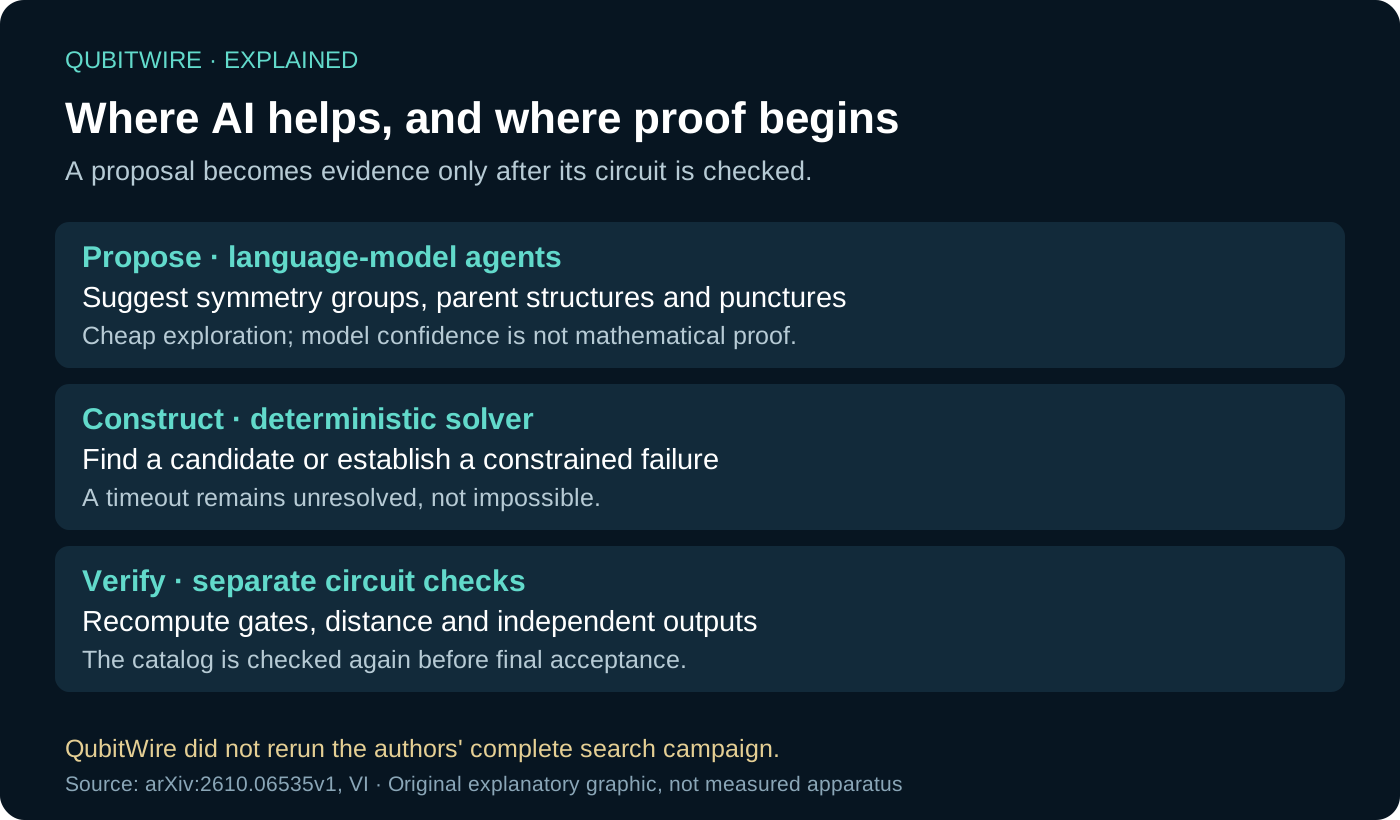
A separate verifier derives the candidate's output operation and check properties from its matrix representation. It checks the claimed distance bound and any witness used to establish an exact distance, as well as whether output labels are genuinely independent. The final catalog is verified again as a collection. That is the transferable lesson for AI-assisted science: use a model to make search proposals inexpensive, then require an independently specified acceptance test. The paper reports this verification workflow; QubitWire has not rerun the authors' complete search or verification campaign.[2]
Read the resource numbers carefully
The familiar-looking notation [[n,k,d]] needs translation before comparing results. Here n counts noisy input magic states and k counts output wires; for the pure-T examples discussed below, those are the output T states. The distance d concerns the smallest harmful input-fault pattern that escapes detection, giving an output-error scaling of order p to the d for small independent input error probability p. It is not a label for the number of physical hardware qubits in a finished implementation, nor a complete statement of the output failure probability.[2]
One useful matched example comes from the paper's distance-six comparison. An earlier [[912,112,6]] factory is placed beside a new [[850,128,6]] construction. Dividing inputs by pure-T outputs gives approximately 8.14 and 6.64 input states per output, before rejection and implementation costs. QubitWire's calculation is an approximately 18.4% reduction in that narrow ratio. The comparison does not establish an 18.4% saving in , electricity or wall-clock runtime. Those quantities depend on how the circuit is protected, arranged and operated.[2]
The authors also report an overhead exponent, gamma, calculated as log(n/k) divided by log(d). It summarizes how input-state cost scales when a factory is concatenated with itself to reach increasingly small target errors. For those two distance-six examples, the reported exponents are 1.170 and 1.057. A larger [[1715,287,6]] construction reaches 0.998. An exponent below one describes this asymptotic logarithmic scaling; it does not imply that a machine uses fewer physical qubits than or that the factory has become almost free.[2][3]
![Fewer inputs. System savings still unproven.. Earlier comparison · [[912,112,6]] 912 inputs / 112 outputs = 8.14 inputs per output Reported overhead exponent: 1.170. New construction · [[850,128,6]] 850 inputs / 128 outputs = 6.64 inputs per output Reported overhead exponent: 1.057. QubitWire calculation · 18.4% lower ratio 1 − (850 / 128) / (912 / 112) This is not an 18.4% physical-qubit or runtime saving.. Compare acceptance, target error and space-time cost next.](/media/quantum/qw-magic-ratio-comparison-20261007.svg)
The costs that a compact metric leaves out
Why could the smaller ratio still fail to win in practice? Distillation rejects some runs. The paper notes that, in the small-error regime and when every single input fault is detected, the rejection probability is approximately n times p. Increasing the size of a factory can therefore increase the chance that a run supplies no accepted output. Leading error coefficients also matter at a finite target error, as do the operations needed to consume the result. A compact asymptotic metric cannot decide all of those engineering tradeoffs.[2]
QubitWire's analysis: a useful comparison should start at the output of a complete computation's resource budget and work backward. Specify how many reliable non-Clifford operations the algorithm needs, the permitted output error and the available input quality. Then compare candidate factories using accepted outputs per unit of space and time. A design with attractive input counts can lose after rejection, routing or a slower schedule is included. Conversely, a less striking headline number may win if it fits the architecture and delivers resources when the algorithm needs them.[2]
The catalog also includes entangled outputs involving T, controlled-S and controlled- resources. That broadens the design question beyond supplying interchangeable single-qubit T states. A computation that needs a particular multi-qubit operation might benefit from preparing its resource more directly, while another workload might not. The authors explicitly identify the compiled algorithm's gate mix as part of the eventual comparison. There is consequently no single factory in this result that should be declared best for every quantum computer and every useful algorithm.[2]
Where the claims stop
The scope of the search remains bounded. The reported constructions are postselected diagonal CSS protocols with independent Z-type input faults. Catalytic and Hadamard-assisted approaches are outside that class. The authors' statements about lowest known exponents are conditioned on specified protocol types and input-count ranges, not a proof of global optimality across all possible factories. The results are also a research preprint. Mathematical verification of circuit properties should not be confused with independent experimental validation of hardware performance or a guarantee that an implementation's noise matches the model.[2]
The reported count of 564 new classes is useful evidence of an expanded design space, but it is not the number of products ready for deployment. Different explicit circuits can belong to the same class, and a class groups equivalent output descriptions under the paper's rules. The valuable downstream artifact is therefore the combination of explicit circuits, checks and assumptions that another team can inspect. Counting accepted designs tells readers how much the search produced; evaluating their usefulness requires choosing which real architecture and workload to optimize.[2]
The next decisive step is to compare selected constructions at equal input quality and equal target output error on the same fault-tolerant architecture. Include acceptance probability, leading error terms, protected Clifford operations, routing and schedule, then publish the complete space-time cost. That is how an interesting catalog becomes evidence of a cheaper computation. For now, the study offers both new candidates and a disciplined division of labor: AI proposes promising directions, exact checks determine which mathematical claims survive, and engineering measurements still decide the eventual system benefit.[2]
Keep your reading trail
Keep up with these topics
Choose the subjects you want to find again in Your Updates.