
Magic-State Cultivation May Cost Far More Than Idealized Estimates Suggest
A simulation study replaces a destructive diagnostic with mid-circuit information and finds protocol-dependent overheads—from 10% to about 5×.
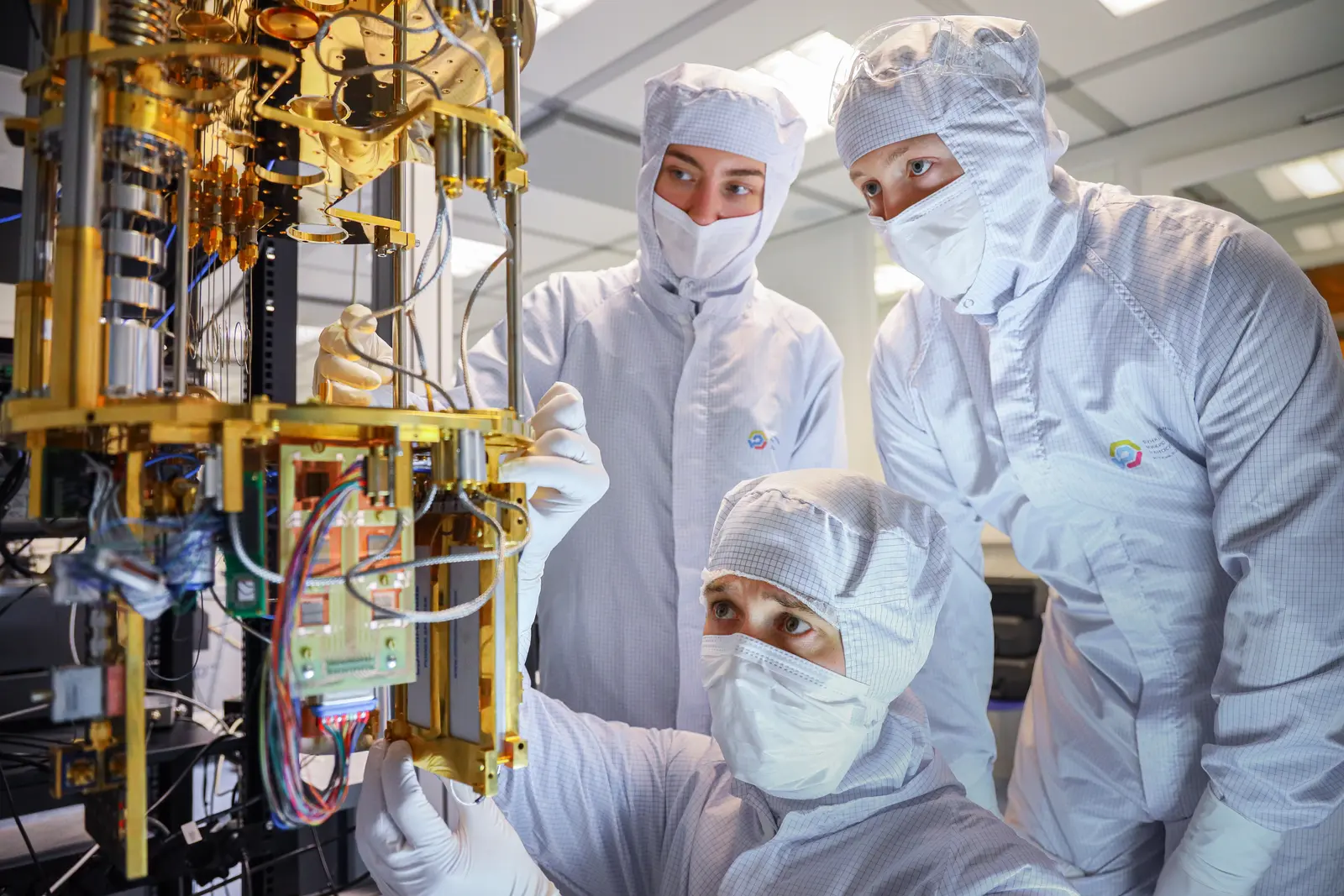

A simulation study submitted October 5 finds that some low-overhead magic-state cultivation estimates depend on a diagnostic that cannot be used during computation: a final, noiseless transversal measurement that would destroy the state being prepared. Replacing that closed-boundary information with the nondestructive syndrome record available mid-circuit leaves some estimates almost intact and makes others several times more expensive.[1][2]
Postselection is an information problem
Magic states supply the non-Clifford operations needed for universal fault-tolerant computing. Cultivation grows a noisy encoded state into a larger code and discards risky attempts during an escape stage. The paper's Caliper method estimates failure risk from the visible syndrome while summing over plausible hidden future syndromes. That turns postselection into an inference problem: better classical discrimination can save quantum space-time, but missing information cannot always be decoded away.[1][2]
The overhead is not one number
The tradeoff is protocol-dependent, not a blanket fivefold penalty. In the simulated distance-five color-code case, Caliper reaches a 10⁻⁷ logical-error target at only 10% more expected space-time volume than the idealized closed-boundary calculation. At 10⁻⁹, the same case needs about 3.7 times the volume.[2][3]
One surface-code case grows sharply
For one distance-three surface-code protocol, recovering the stated 2×10⁻⁶ target required expanding the escape stage from distance 7 with three rounds to distance 11 with six rounds—about five times the expected volume for the whole protocol.[2][3]
Observability belongs in the budget
QubitWire's analysis: a resource estimate is only as physical as the information its controller can obtain without consuming the resource. The important comparison is therefore not Caliper versus an impossible perfect readout; it is whether protocol design, decoder inference or extra code volume delivers the lowest end-to-end cost at a fixed logical-error target. Architectures that price magic states from closed-boundary curves should treat postselection observability as part of the hardware budget, not a free simulation detail.[1][2]
The next test needs exact states and real noise
The principal limitation is that these are circuit-level simulations of proxy Y-state cultivation under a depolarizing error model at physical error rate 10⁻³, not measurements from a working fault-tolerant computer. Exact T-state simulations can differ, and correlated device noise may change the ranking. The informative next test is a like-for-like resource study using exact T-state dynamics, hardware-calibrated correlated noise and real decoder latency, followed by an experimental mid-circuit demonstration that reports accepted-state error and total space-time cost together.[1][2][3]
Keep your reading trail
Keep up with these topics
Choose the subjects you want to find again in Your Updates.