
Quantum Coherence Can Hide Between the Snapshots
An October 6 preprint finds coherence in a complete three-time process even when pairwise tests miss it. An IBM hardware demonstration shows why a quantum diagnostic needs an explicit scope.
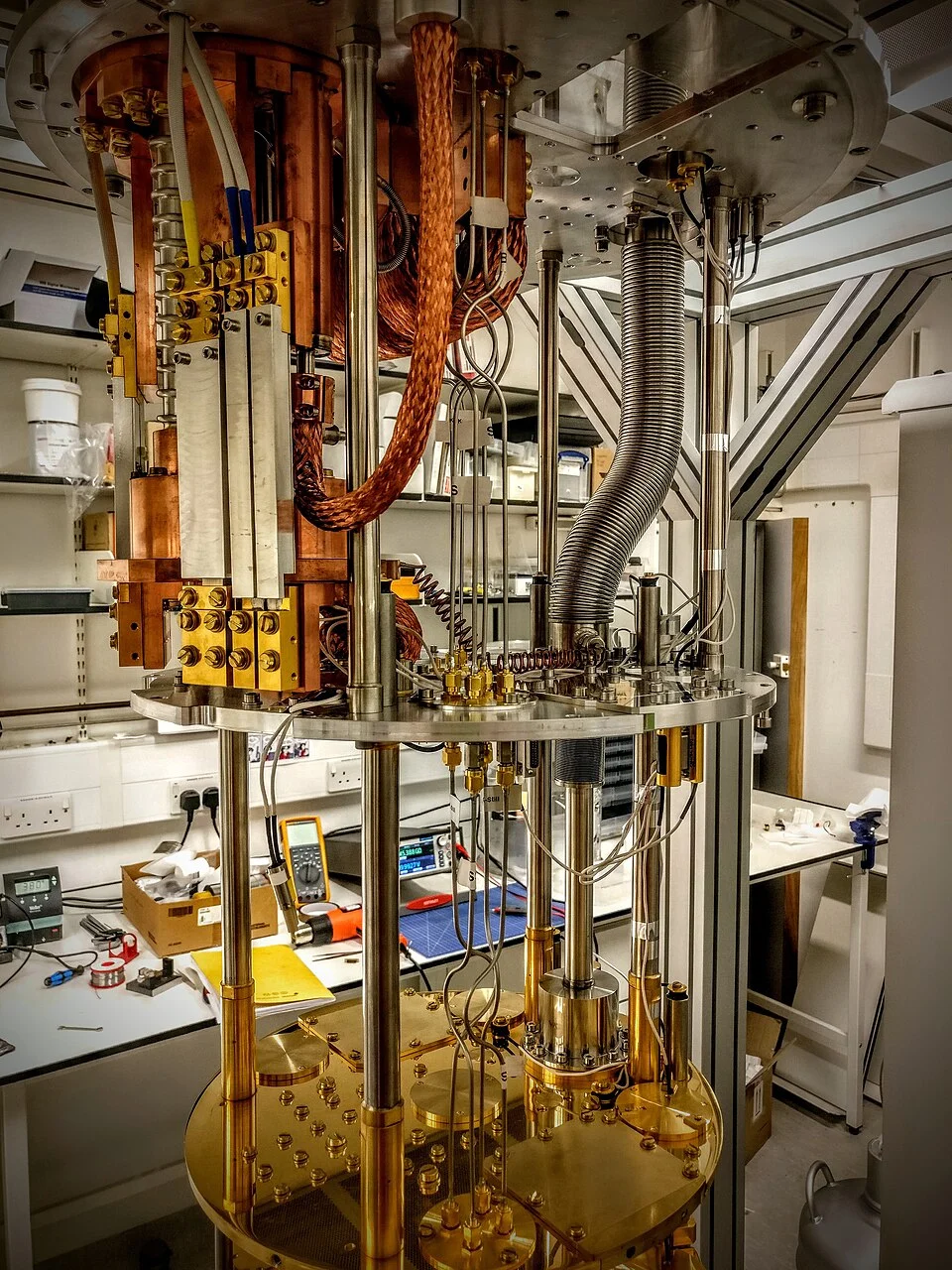

A quantum process can look almost classical when inspected two times at a time and still contain coherence across its complete history. An October 6 preprint by Karol Sajnok and Fabio Costa demonstrates that distinction in a deliberately constructed model and tests it on IBM’s ibm_fez superconducting processor. The result is a warning about the scope of a diagnostic: pairwise descriptions need not capture everything an intervention between measurements can reveal.[1][2]
The researchers study a system interacting repeatedly with two environmental qubits. The same environment persists between intervals, carrying memory forward. In the ideal Ising model, each of the three pairwise channels is completely dephasing in the selected reference basis. The full three-time process nevertheless remains coherent. This separation concerns a defined experimental construction, rather than a claim that the processor’s naturally occurring noise has these properties.[1][2]
A channel connects an input to an output. A multi-time process also describes what happens when an experimenter acts in the middle. That extra slot matters: removing it throws away possible correlations with the earlier interval. A useful everyday analogy is a sequence of decisions whose consequences depend on something retained from a previous step. Comparing isolated pairs of observations can conceal that dependency. The quantum question is whether the full process preserves off-diagonal structure in its specified basis.[1][2]
The paper’s definition makes that basis explicit. It calls a process incoherent when dephasing every open input and output leg leaves its operator unchanged. This is stricter than asking whether one fixed measurement sequence produces statistics that fit a classical account. Readers should keep the selected basis and allowed interventions attached to the claim. Otherwise, a precise statement about one diagnostic can become an unsupported declaration that an entire device is classical or quantum.[1][2]
On ibm_fez, the authors report a multi-time witness magnitude of 0.3486 ± 0.0146, compared with the ideal value 0.5. Full process tomography provides a second reconstruction. The pairwise diagnostics stay close to their ideal zero values but are not exactly zero on hardware. The experiment therefore supports the predicted separation with residual imperfections; the ideal model supplies the exact vanishing-channel statement. These are complementary results and should not be collapsed into one claim.[1][2]
QubitWire’s analysis: the most useful baseline is the description that deliberately discards memory while keeping the local channels. Ask whether it predicts the same response to an intermediate operation as the persistent-memory construction. That comparison focuses attention on the information missing from the reduced description. A single impressive witness value matters less for engineering than a repeatable difference between predictions under explicitly matched controls.[1][2]
This suggests a practical reporting rule for quantum hardware characterization. A calibration statement should identify the operations and time intervals that it covers. If an application repeatedly measures, resets or changes a system while degrees of freedom retain information, a diagnostic that ignores those interventions may answer a narrower question than the application needs. This is an inference about testing scope, not evidence that the new protocol improves an error-correcting code or algorithm.[1][2]
There are several limits. The work is a preprint and a small engineered proof of principle. Coherence here is basis dependent. The authors also explain that the separation does not require a quantum environment: a persistent classical memory can correlate coherent histories. Finding process coherence therefore does not certify an bath, computational speedup, longer usable memory or fault tolerance. None of those outcomes was tested by this witness experiment.[1][2]
The resource question also remains open for larger devices. The authors use targeted witness measurements alongside full tomography. Their four-qubit process reconstruction requires 81 local Pauli settings, each evaluated for four environmental branches. That illustrates why a purpose-built witness can be more practical than reconstructing everything. It does not establish a scalable measurement budget for arbitrary many-qubit, many-time processes; a new application would need its own cost and confidence analysis.[1][2]
The next informative test would compare a memory-sensitive witness with matched pairwise diagnostics over repeated calibrations, chosen intervening operations and controlled changes to the retained environment. Report confidence intervals and systematic-error checks as well as the ideal prediction. Then ask whether the extra diagnostic improves prediction of a concrete sequence used by an application. That is QubitWire’s proposed engineering test, not a performance result claimed by the authors.[1][2]
For readers evaluating quantum benchmarks, the takeaway is simple: a snapshot has a scope. Before deciding that a process contains no useful coherence, ask what the experiment allowed between snapshots and what it averaged away. This study makes that distinction unusually concrete, pairing an exact model with a hardware demonstration. The useful advance is a better question to ask about a diagnostic, rather than a new headline number for a quantum computer.[1][2]
Keep your reading trail
Keep up with these topics
Choose the subjects you want to find again in Your Updates.