
Skip to content
HARDWARE · PHOTONIC CIRCUITS

A photonic fusion design needs fewer spare photons

A new theoretical circuit reaches the same direct success probability as an earlier design with half its auxiliary photons.
Published Source report Sources checked
My reading list
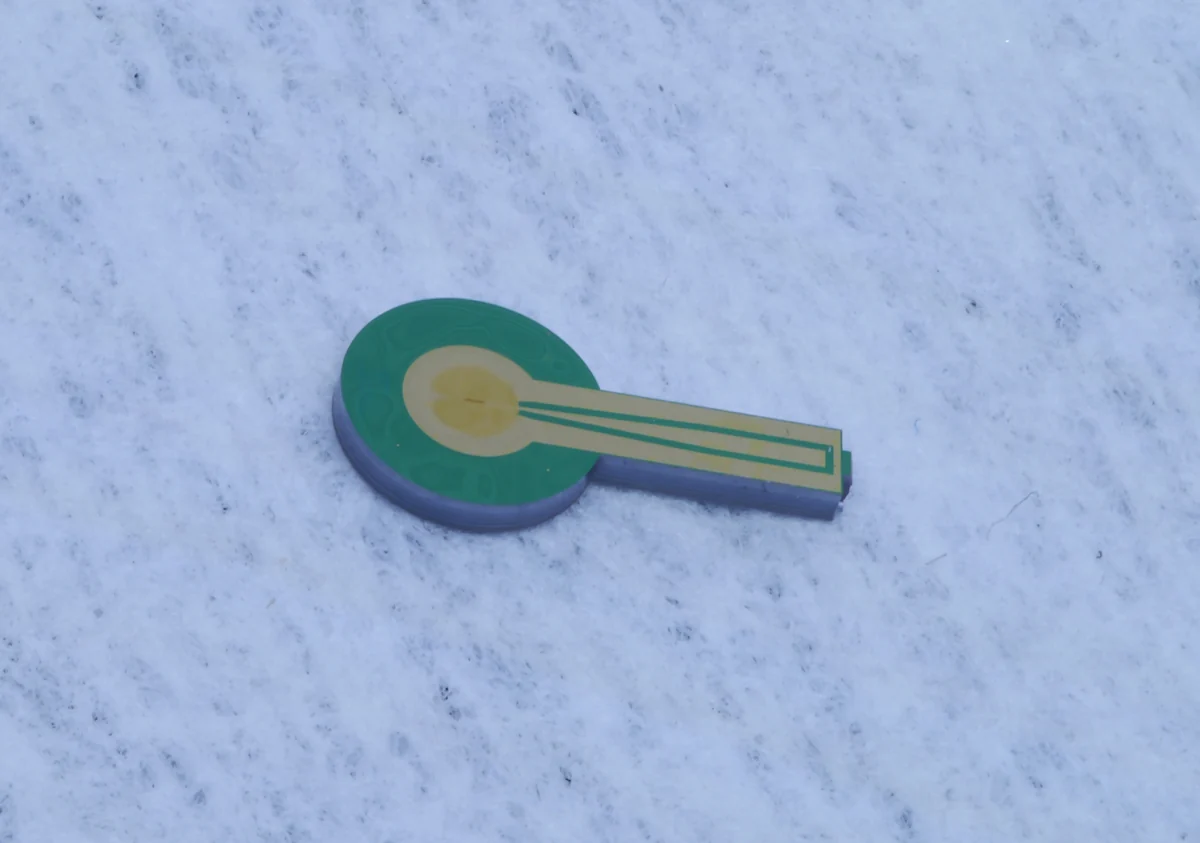
A small green-and-gold superconducting detector chip lying on a pale surface.
A NIST superconducting nanowire single-photon detector chip. Archival photograph created September 15, 2014. Detector context for photonic research; this is not an implementation of the proposed fusion design.Image: Single-Photon Detector - NIST chip · Verma/NIST · NIST public information reuse termsFull image credit

An October 25 preprint proposes a type-I photonic fusion gate using two independent auxiliary photons. Its calculated direct success probability is 5/8, matching an earlier four-single-photon proposal. The new design needs no auxiliary input.[1]

Most of the circuit is passive. One active element responds to intermediate detector outcomes, while successful outputs remain in fixed modes. The authors also examine imperfect auxiliary-photon preparation and resource requirements for small entangled states.[1]

This is an optical-circuit proposal. The calculation does not establish the efficiency of a complete quantum computer. Source quality, detector behavior, loss and switching remain practical implementation questions.[1]

QubitWire analysis

Our assessment is that reducing the number of spare photons changes one part of the engineering bill. A complete comparison must also count the operations, measurements and switching needed to use the proposed construction. Readers should ask whether its apparent saving depends on the same assumptions about photon generation, loss and measurement as the alternative. A smaller resource count under one model can be useful without resolving every source of implementation cost. The relevant question is which assumptions another group could realistically test first.

A useful follow-up would show the proposal inside an explicit system design and vary the assumptions that have the strongest effect on its resource requirements. That would help distinguish a robust saving from one that depends on an especially favorable operating point. An experimental demonstration could then target the step most likely to change the conclusion. Until then, the paper provides a design comparison whose value rests on the stated model and its accounting boundary.

Keep your reading trail

Your Updates →

Evidence & context

1 linked source

Preprint · source published 2026-10-25. Primary source checked October 27, 2026.

How to read the evidence and dates

An announcement records what an organization stated. An experiment reports an observation. A simulation or resource estimate depends on its assumptions. QubitWire’s analysis connects these sources; the labels are not quality scores.

Published is the article’s first QubitWire publication. Updated marks a substantive content change. Sources checked records a review of the underlying evidence. An older paper can support a new explanation, and another press release about the same work is not independent replication.

Sources

  1. Primary preprint v1

    Full primary v1 HTML: abstract, circuit construction, outcome classes, photon-preparation analysis. Date and exact version confirmed.

READ NEXT

Continue exploring

All Hardware stories
  1. More on photonics

    A photonic design study asks when a success signal is misleading

    An analysis of small entangled photon states tracks false heralds and distinct error channels. Conditional state quality alone does not measure useful output.

    Published · Source report · Sources checked
  2. More on photonics

    A no-click branch becomes a controllable optical filter

    A photonic analog experiment makes the surviving state and the probability of reaching it part of the same story.

    Published · Source report · Sources checked
THE QUANTUM BRIEFING

A clearer signal.
Read the latest edition.

A little perspective on a fast-moving field.

Read the on-site briefing →

Read selected quantum coverage in the on-site briefing, or register your interest below.