
Quantum Entanglement Took the Suburban Route
A 62-kilometer fiber link near Washington carried entanglement through a messy real-world environment. Reliability, not distance, is the story.
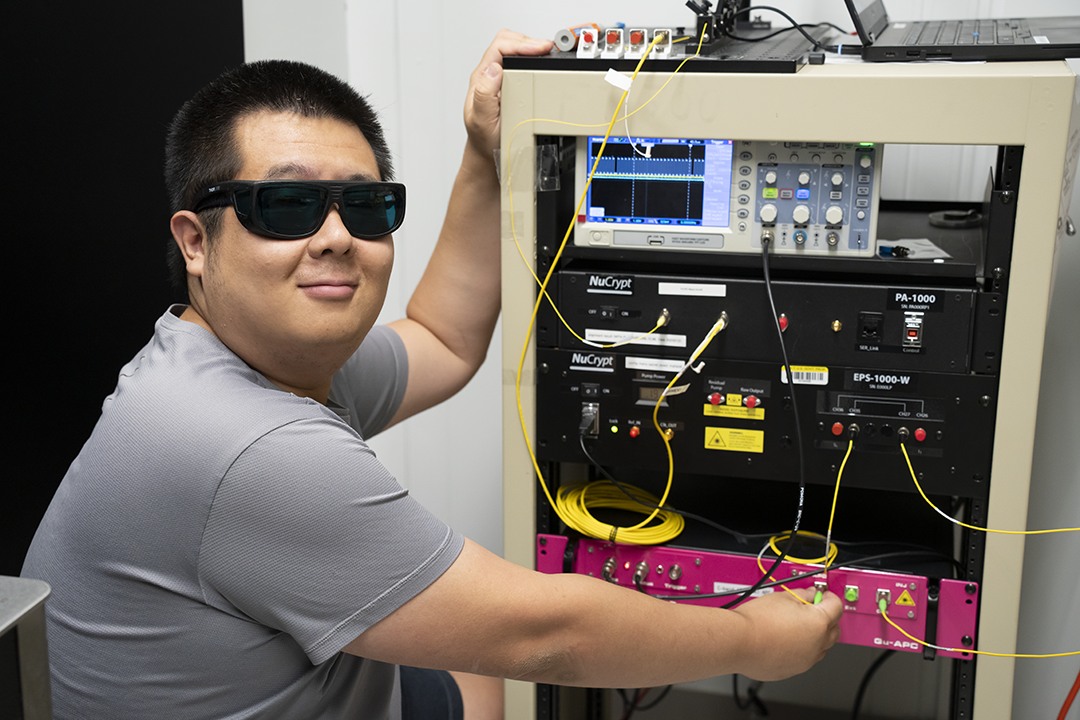
The setting for this quantum experiment was not a perfectly isolated underground tunnel. It was a commercial fiber route through the Washington suburbs, much of it hanging above ground. For fragile quantum states, that is a less forgiving place to travel—and exactly why the result is interesting.[1]
In work publicized by NIST in August 2026, researchers distributed photons over 62 kilometers of fiber between Gaithersburg and the University of Maryland in College Park. The experiment was conducted in early 2025; the paper appeared online in July 2026. This is a newly published result, not a claim that a national quantum internet just switched on.[1][2]
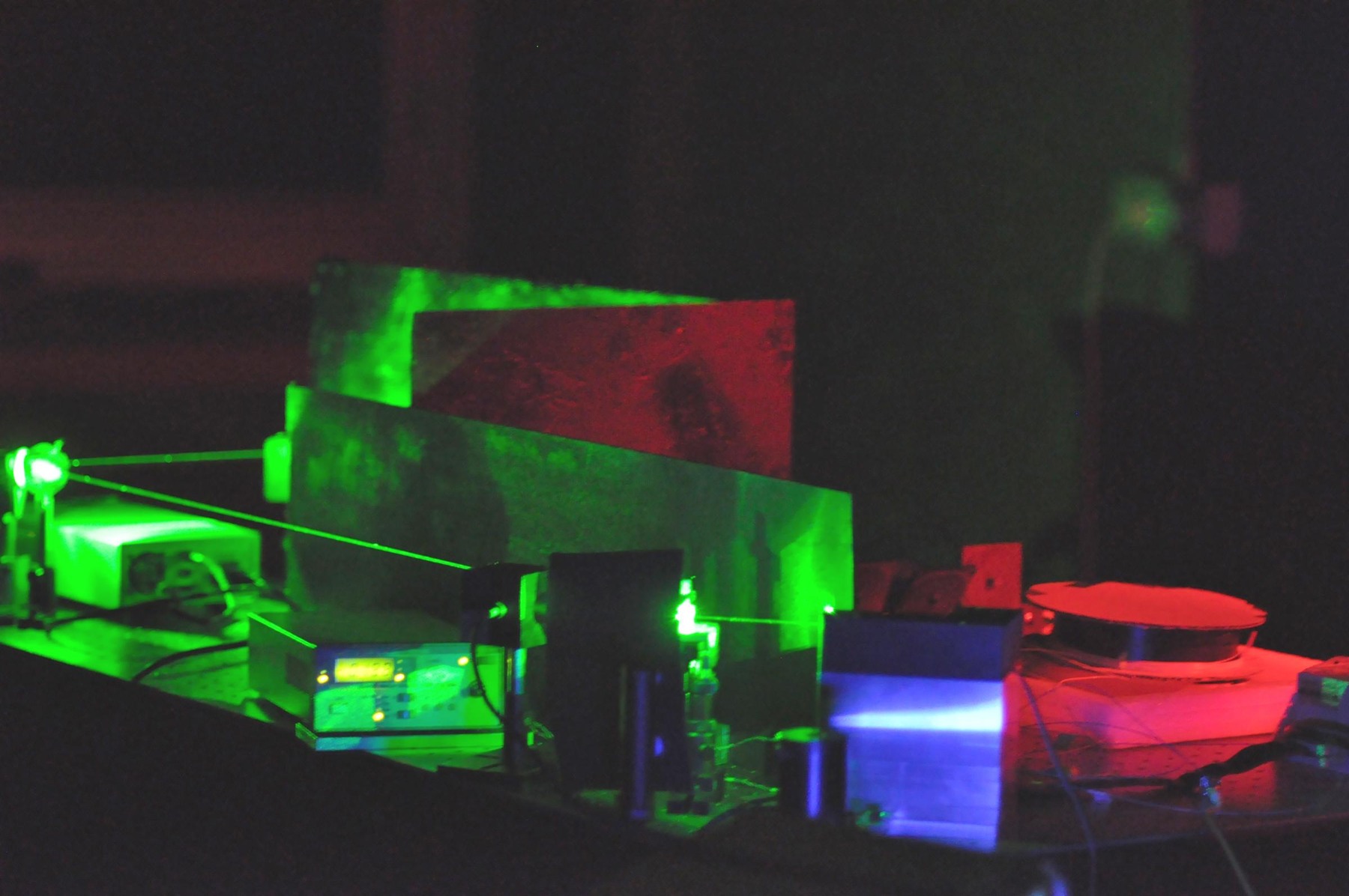
The technical obstacle sounds deceptively mundane. Stress and temperature changes in the fiber alter light’s polarization, disrupting the correlations the experiment needs. Equipment developed by Qunnect sent reference light through the route, measured those changes and applied compensating transformations. The system was effectively checking what the journey did to the light and correcting for it.[1]
NIST reports 1,500 entangled photons per second, with distribution available for 92.8 percent of a 24-hour period. The remaining 7.2 percent was used for polarization correction. This was not a distance record. Its value was showing that an exposed, noisy route could still carry useful entanglement for most of the test window.[1]
A quantum network needs more than a fiber with light in it. Its purpose is to connect quantum systems while preserving the properties that make them different from ordinary data. And the usual trick of simply amplifying a weak signal cannot freely copy an unknown quantum state. Memories, interfaces and ways to extend entanglement reliably remain central engineering challenges.[3]
Nor does entanglement create faster-than-light messaging or make every connected system automatically secure. The useful takeaway is less magical and more industrial: equipment has to keep working outside the laboratory. If quantum networking becomes infrastructure, readers may someday care less about how eerie the physics sounds than how often the connection needs to stop and recalibrate.[3]