A Quantum Link Just Rode the Same Fiber as 5G
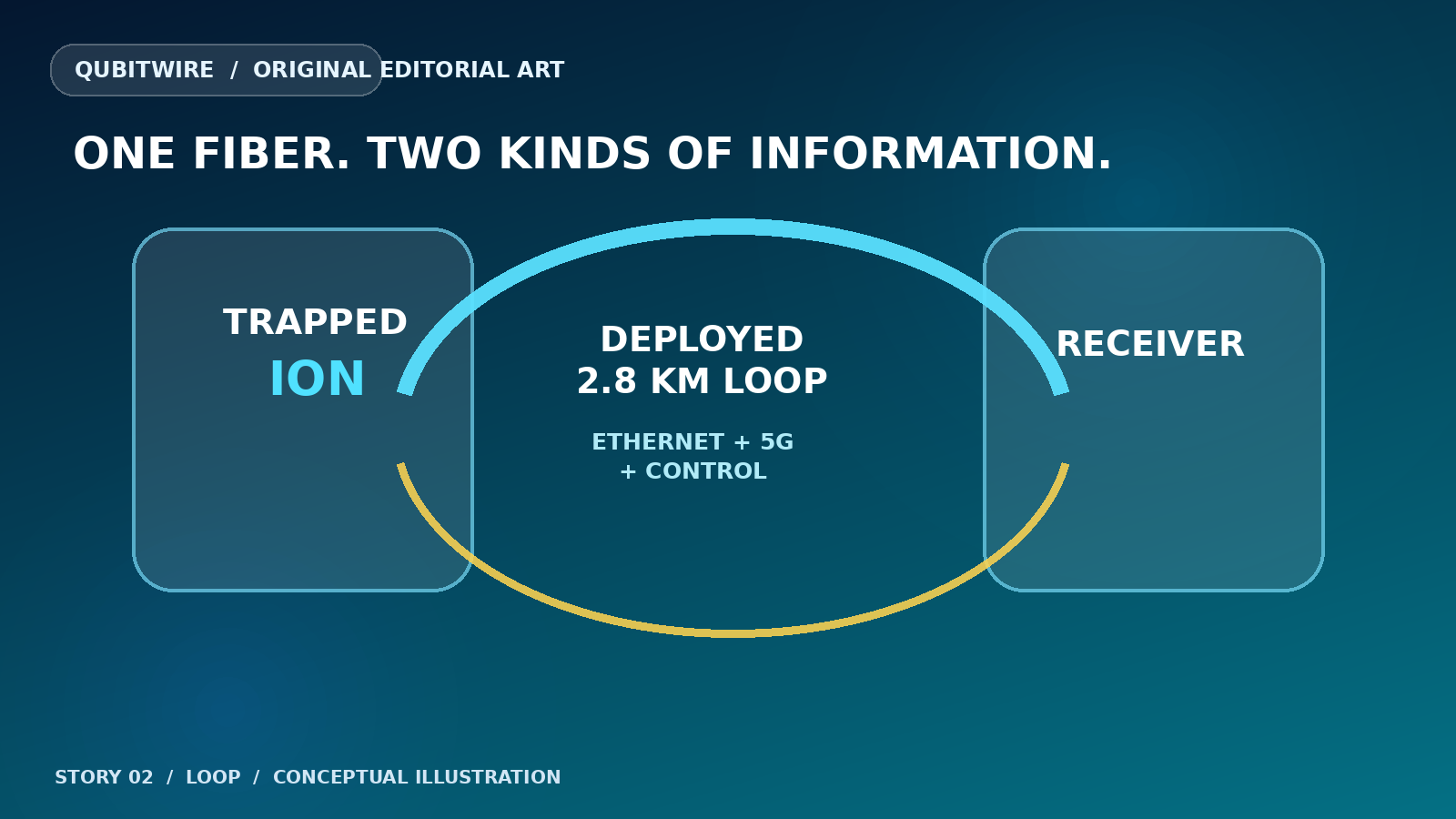
A trapped ion shared a quantum connection across a 2.8-kilometer fiber loop carrying Ethernet and 5G traffic. The preprint tackles a practical networking problem.
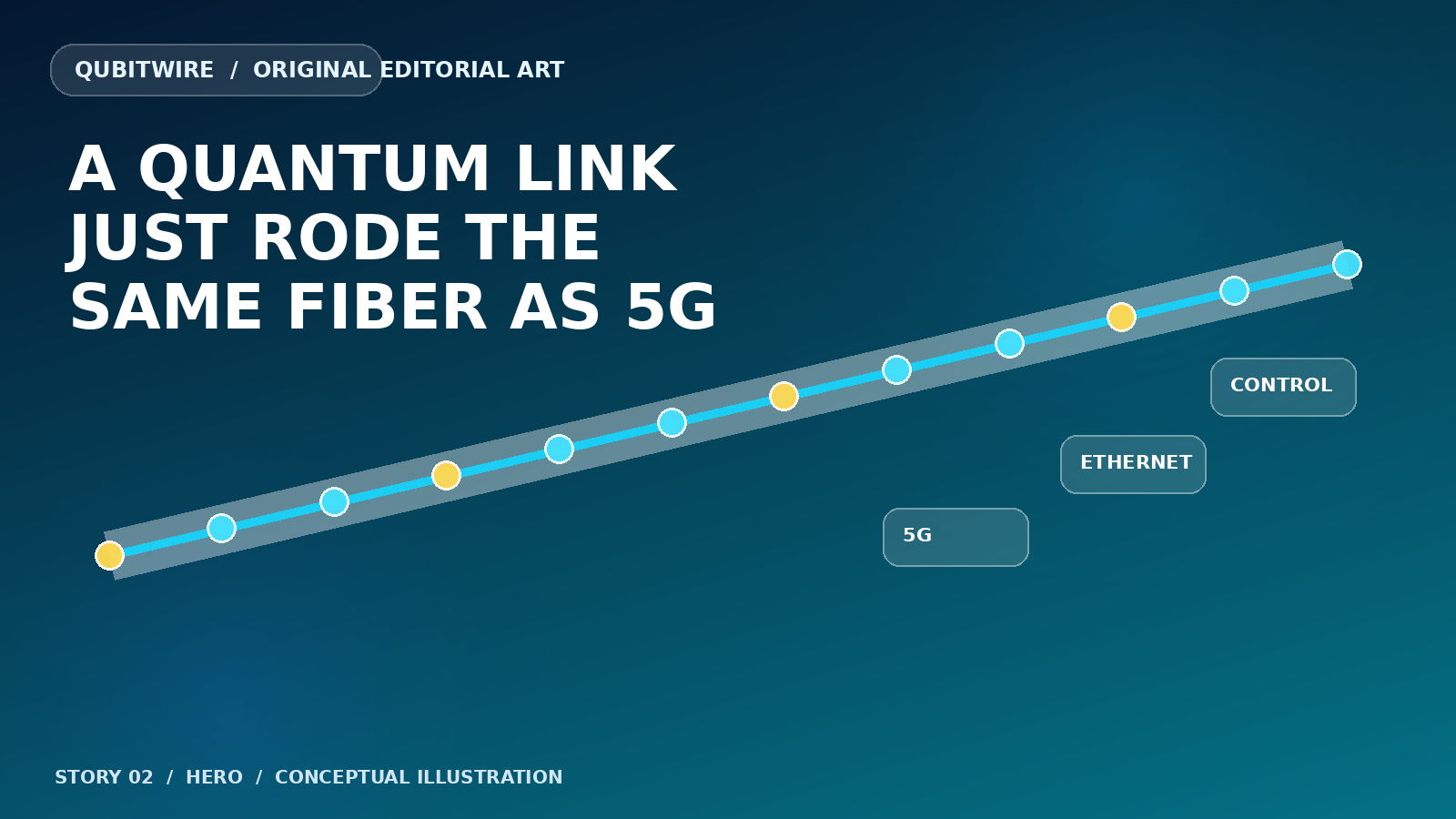

Quantum networking usually gets the quiet lane. Fragile quantum signals are often sent through dark fiber reserved for experiments because ordinary telecom traffic creates noise that can overwhelm single-photon detectors. A new preprint reports a more practical test: ion-photon traveled through a deployed 2.8-kilometer fiber loop while that same strand carried Ethernet and 5G traffic.[1]
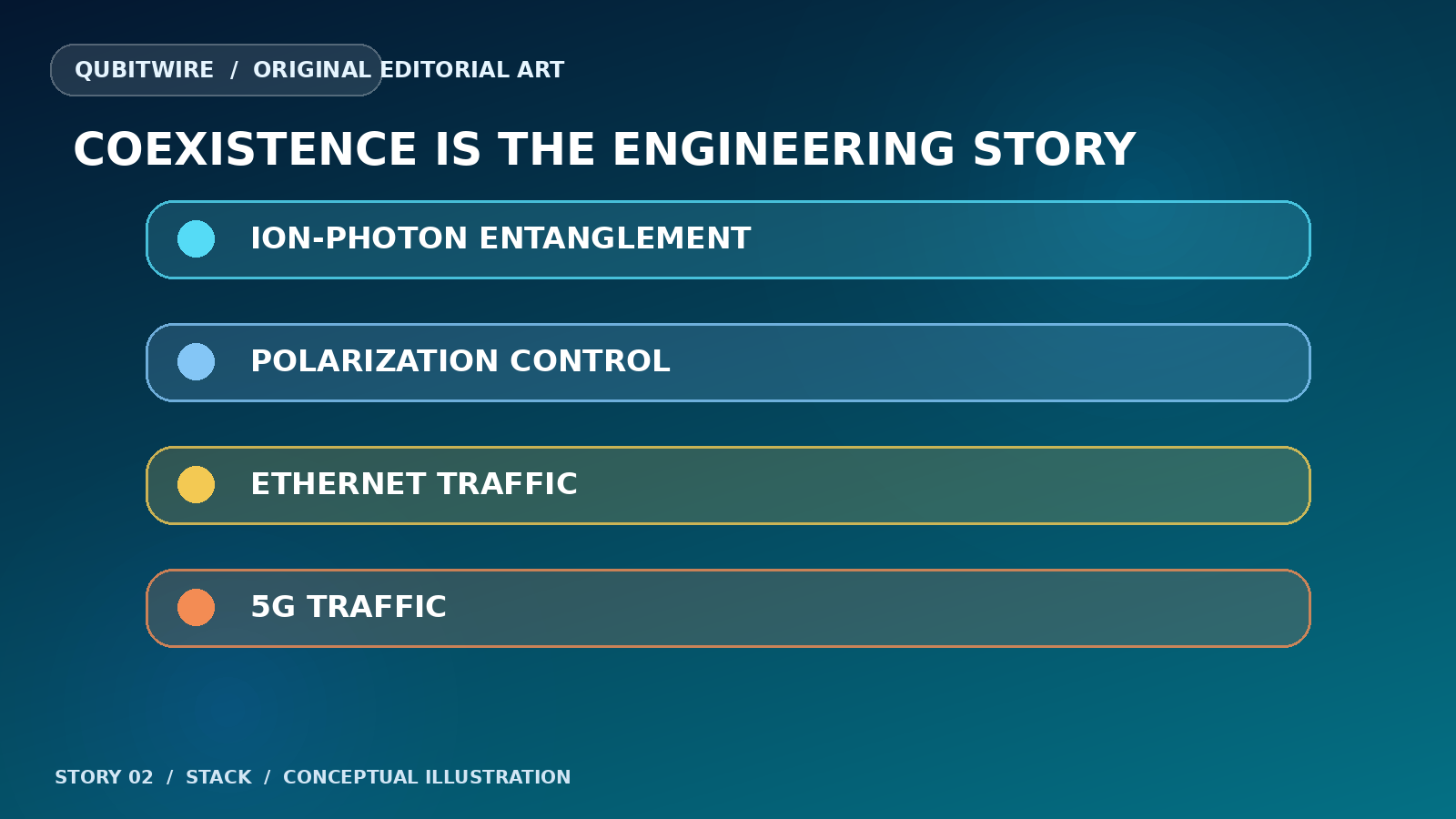
The experiment began with a trapped strontium-88 ion acting as a memory. A photon, a particle of light, carried its quantum connection into the fiber at a wavelength of 1092 nanometers. Signals coordinating the transmitter and receiver traveled alongside it, including controls that kept the light’s orientation stable as the fiber changed.[1]

That coexistence is the point. A future quantum network cannot assume every route comes with a pristine strand of unused glass. If quantum memories and telecom signals can share active infrastructure, researchers gain access to far more of the fiber already beneath streets and between buildings.[1]
This is not a quantum internet going live, and it is not a verdict on commercial readiness. The result is a preprint, not peer-reviewed publication. A 2.8-kilometer loop is also different from a continental network with many switches, amplifiers and fluctuating traffic loads. Rates, fidelity, stability and repeatability all matter beyond the headline.[1]

Still, the experiment shifts a useful question. Instead of asking whether quantum signals can survive only in a protected laboratory lane, engineers can ask how much ordinary network activity they can tolerate. That is the kind of constraint a real network eventually has to answer.[1]