
Skip to content
BUSINESS + POLICY · BUSINESS / RESEARCH INFRASTRUCTURE

What Fujitsu’s planned New Mexico research centre still has to build

The collaboration spans hardware, software and workforce development. An operating centre needs staff, accessible resources and projects with measurable outputs.
Published Source report Sources checked
My reading list
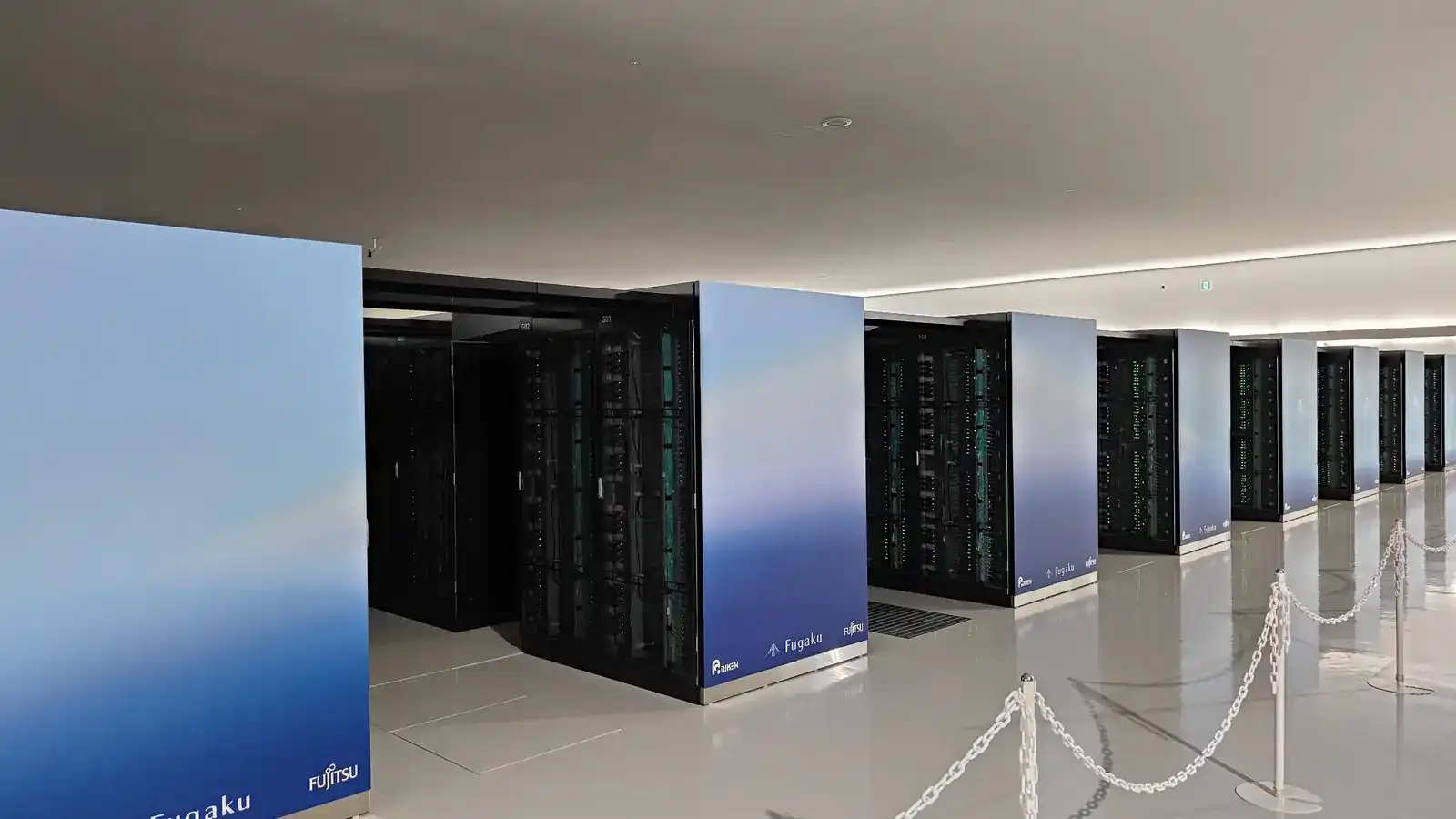
Rows of patterned Fugaku supercomputer cabinets at RIKEN in Kobe.
Fugaku at RIKEN in Kobe, Japan. Archival high-performance-computing context for the planned research program; this is not an operating New Mexico research centre.Photo: RIKEN R-CCS Fugaku · Barsaka2 · CC0 1.0Full image credit

Fujitsu and New Mexico plan to establish a quantum computing research centre covering hardware, software, algorithms and theory. The state announced the collaboration on October 8; Fujitsu followed on October 9. Both accounts place education and workforce development alongside the research programme. They describe a planned centre, rather than a newly operational computing service.[1][2]

The proposal builds on Fujitsu’s existing work with New Mexico State University around its FUJITSU-MONAKA processor and high-performance computing. The partners aim to extend their collaboration into quantum and hybrid systems. The state also identifies the Quantum New Mexico Institute and the region’s universities and national laboratories as part of the research environment.[1][2]

Funding language needs its own boundary. New Mexico’s announcement cites a $150 million research and development fund within its broader quantum initiative. It does not identify that amount as a grant to Fujitsu or the budget of this centre. An ecosystem commitment and a project’s awarded funding are different entries in the public record.[2]

For a student or research group, the most useful next information would be practical: who can join, which resources they can access, who supports an experiment and how results will be shared. A research centre becomes tangible when those arrangements let a team complete work that previously lacked equipment, expertise or coordination.

A hypothetical materials project illustrates the distinction. Before comparing methods, the team would need a defined scientific question, an appropriate computing workflow and a way to assess its output. Announcing the partnership does not settle any of those choices. Publishing the project’s assumptions and milestones would make subsequent progress easier to judge.

The next report should identify the centre’s operating timetable, staff, access arrangements and initial projects, with funding amounts tied to their actual recipients. That would allow readers to follow the proposal into working research capacity. The partnership is a credible institutional starting point; the announcements do not yet supply a completed facility or a measured computing advantage.[1][2]

Keep your reading trail

Your Updates →

Evidence & context

2 linked sources

State and company announcements

How to read the evidence and dates

An announcement records what an organization stated. An experiment reports an observation. A simulation or resource estimate depends on its assumptions. QubitWire’s analysis connects these sources; the labels are not quality scores.

Published is the article’s first QubitWire publication. Updated marks a substantive content change. Sources checked records a review of the underlying evidence. An older paper can support a new explanation, and another press release about the same work is not independent replication.

QubitWire take

A functioning research centre is demonstrated by people, access and completed work, with project funding kept distinct from statewide commitments.

Sources

  1. Fujitsu: planned New Mexico research centre

    Company announcement dated October 9, 2026. Describes intended research, institutional collaboration and workforce development.

  2. New Mexico: research centre collaboration

    State announcement dated October 8, 2026. The $150 million research fund is statewide context, not a disclosed award of that amount to Fujitsu.

READ NEXT

Continue exploring

All Business + Policy stories
  1. Explore the related question

    IonQ’s Cambridge Centre Opens With Nine Research Projects

    The Ray Dolby Centre now houses the research partnership. IonQ describes its planned 256-qubit computer in future tense, keeping the opening distinct from hardware delivery.

    Published · Source report · Sources checked
  2. Explore the related question

    Quantum’s Error Problem Is Getting a New Address.

    Riverlane’s planned Maryland headquarters puts error correction, university collaboration and the people building the stack in one story.

    Published · Source report · Sources checked
THE QUANTUM BRIEFING

A clearer signal.
Read the latest edition.

A little perspective on a fast-moving field.

Read the on-site briefing →

Read selected quantum coverage in the on-site briefing, or register your interest below.