
IonQ’s Cambridge Centre Opens With Nine Research Projects
The Ray Dolby Centre now houses the research partnership. IonQ describes its planned 256-qubit computer in future tense, keeping the opening distinct from hardware delivery.
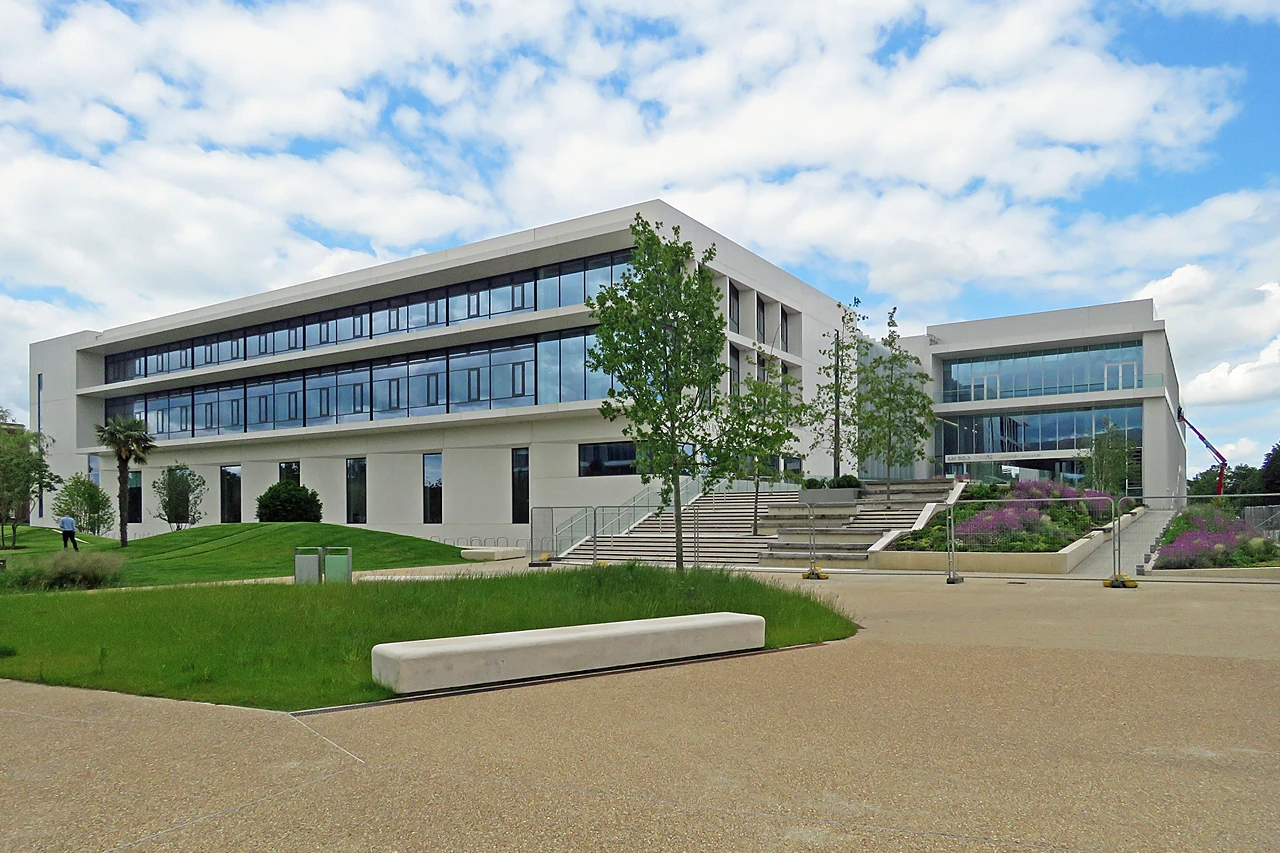

IonQ says its Quantum Innovation Centre at the University of Cambridge opened on October 15, giving the partnership a physical home in the Cavendish Laboratory’s Ray Dolby Centre. The company describes nine inaugural research projects across quantum technology and applications. The announcement marks an infrastructure milestone, rather than a new processor benchmark.[1]
One important distinction sits in the release’s own tense: IonQ says it will deploy a Superion 256- computer and an -distribution network at the university. The opening announcement therefore should not be read as confirmation that the planned computer is already installed and operating. The proposed campus network comprises two networking data centres and three nodes.[1]
An earlier agreement reaches a new stage
Cambridge’s March account described the planned centre, funding for university-led research and work on quantum memory nodes. It also outlined a route for UK researchers and early-stage companies to receive computing time through Innovate UK and the National Quantum Computing Centre. That earlier university account corroborates the partnership’s scope; the October opening is reported here from IonQ’s new announcement.[2]
Among the initial projects, IonQ highlights microscopic mirrors for collecting light from trapped ions and computational work on investment portfolios, structural engineering and biological networks. These are research directions. The announcement does not supply completed results showing that a quantum method has improved those applications against a matched classical alternative.[1]
A useful facility is more than a room
QubitWire’s interpretation is that shared infrastructure can be valuable before anyone demonstrates a faster calculation. A research team needs equipment, time to use it, calibration records and people who can diagnose failures. Bringing those ingredients together can make a difficult experiment practical to attempt. The later scientific result still has to earn its own evidence.
Consider a fictional laboratory where four teams each wait six weeks to arrange access to an instrument. A shared scheduling process reduces each wait to two weeks, saving 16 team-weeks in total. That improves access without making the instrument three times more accurate. These invented figures illustrate why access, throughput and technical performance need separate measures; they are not estimates for Cambridge.
The university’s earlier description also tied the collaboration to academic positions, postdoctoral researchers and PhD students, spanning computing, networking, sensing and security. Those commitments give readers more than a machine specification to follow. Progress could include trained researchers, published methods and experiments that connect previously separate areas of expertise.[2]
What would make the next update meaningful?
For an outside researcher, an access announcement becomes actionable when it explains who can apply, which resources are available, what support is provided and how work is scheduled. The March university account establishes an intended access route, not a current public booking guarantee. Readers considering a project should check the linked institutions’ present requirements rather than assume the opening makes every resource immediately available.[2]
For readers tracking the technology, the useful next checkpoints are concrete: confirmation of installed equipment, documented operating conditions, completed experiments and inspectable results. A networking demonstration and an application calculation also answer different questions. Each deserves its own description of the task, the comparison and the uncertainty, rather than a single score for the centre as a whole.
The opening creates a place to do that work. It does not settle how quickly the planned systems will arrive or which research ideas will succeed. Following the centre through those later milestones will reveal more than treating the ceremony as a finished computing result. The photograph accompanying this article shows the building in May 2024, before this opening, and does not document installed IonQ hardware.