
Eight big science questions. Can quantum computers answer them?
DOE’s October 8 agenda names problems in chemistry, materials, subatomic physics and mathematics. It shifts the conversation from machine size to scientific value.
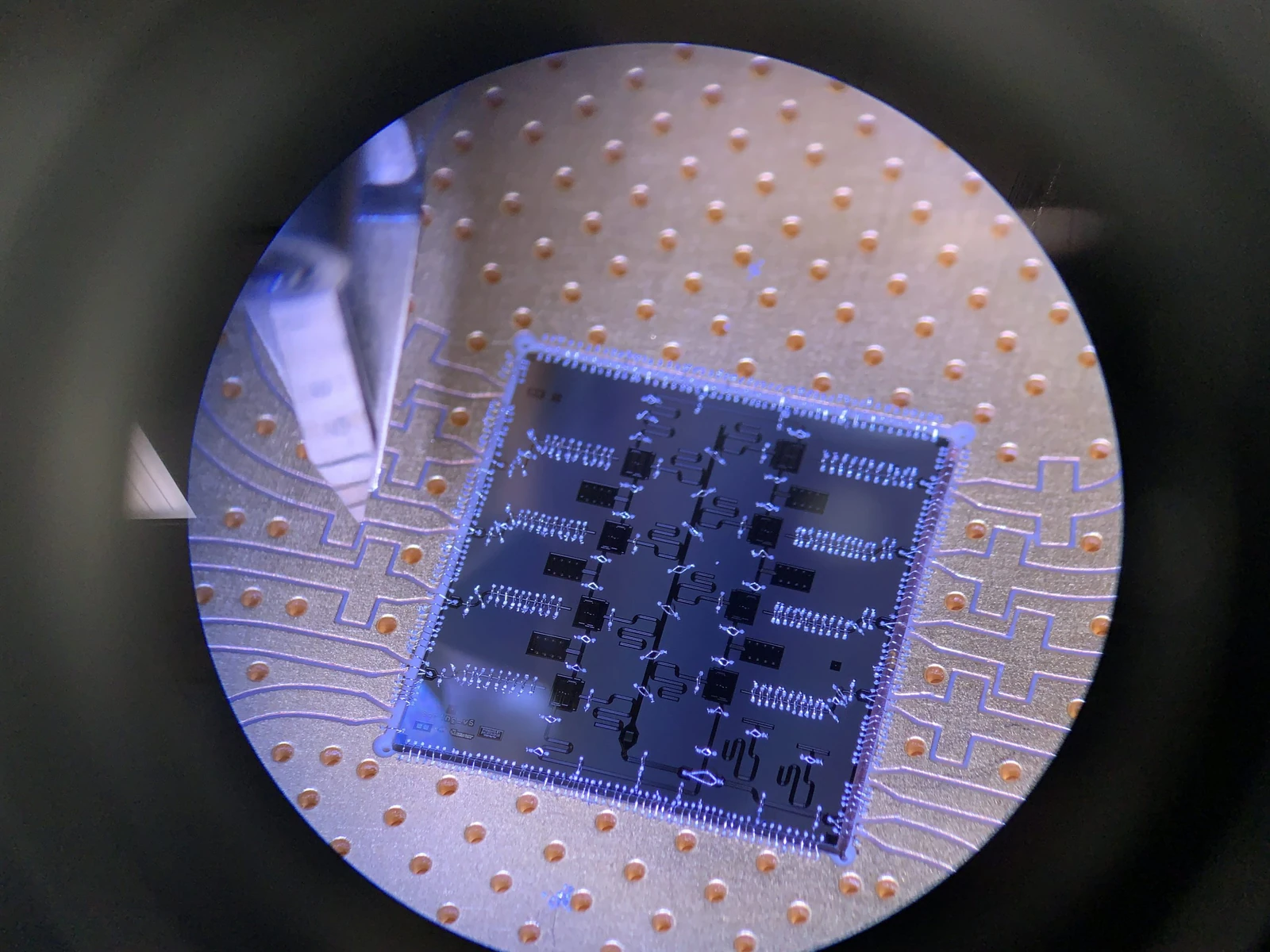
Could a calculation explain a difficult chemical reaction, reveal an unusual material or describe matter under extreme conditions? Those are the kinds of questions that make a scientific computer valuable. The US Department of Energy has now put eight of them on the agenda for future quantum machines. On 8 October 2026, DOE announced the release of its Quantum Genesis Priority Applications: eight problems across chemistry, materials, subatomic physics and applied mathematics. The document gives developers and scientists specific questions to work towards. It is a research agenda, not a report that the proposed calculations have already been achieved.[1][2]
For a general reader, its value is less the institutional vocabulary than the reversal of perspective. Instead of asking how many a machine has, ask what evidence a chemist, materials researcher or physicist would accept as a useful result. A small number that changes a decision may matter more than an enormous number that describes an artificial task.
Begin with an argument scientists are having
Imagine two explanations for why a reaction proceeds differently under two conditions. Both seem plausible. The available experiment cannot isolate every microscopic detail, and the calculations simplify the system in different ways. A useful computer would not need to simulate the entire universe. It might need to distinguish those explanations at the precision that matters for the next experiment. That example is illustrative, not a result claimed by the DOE document. It shows why application-first thinking is demanding. The researchers must specify the question before seeing the answer. They must decide what accuracy would resolve the disagreement. They must also explain why existing calculations and experiments cannot already do the job more economically.
The burden then falls on the proposed quantum workflow. What has to be represented? How is an initial state prepared? What observations can be extracted? How often must the calculation be repeated? Where does a conventional computer do the work around the quantum processor? Each question connects scientific value to a resource bill. A processor specification alone cannot settle any of them.
Four scientific doors, not one universal app
The eight problems sit within four domains. Chemistry contributes reaction mechanisms and molecular dynamics. Materials contributes equilibrium properties and behaviour away from equilibrium. Subatomic physics contributes the dynamics of strongly interacting matter, matter at high density, and nuclear structure. Applied mathematics contributes solving linear systems and partial differential equations. In everyday terms, the list asks how reactions unfold, what difficult materials do, how matter behaves in extreme regimes, and how to solve equations underlying scientific models. Each problem still needs an answer that improves on the strongest relevant classical approach.[2]
These are not interchangeable workloads. A method that helps with one does not automatically help with another. Nor does a common word such as “simulation” mean that every project faces the same difficulty. Some problems are dominated by preparing a useful starting description. Others become hard because the state evolves in a complicated way, or because the output needed by a scientist is expensive to estimate.
Think of the agenda as several doors into the same building. The plumbing, power and staff may be shared, but what happens behind each door is different. That analogy has a limit: quantum algorithms and hardware are not rooms that can simply be assigned at will. The compatibility between a problem, its representation and the machine is part of the research. For readers following the sector, this is a reason to resist a single scoreboard. A company can be making progress on engineering while the most valuable applications for that engineering remain uncertain. A scientific team can clarify an application without having built the machine that would eventually run it at scale.
A target is not a delivery receipt
The Quantum Genesis programme describes ambitions for future scientific machines and applications. Those ambitions help organise investment and technical work, but they remain targets. They should not be converted into statements that a particular computer will arrive on time, at a known cost, with a proven advantage. There are at least three different kinds of uncertainty. The machine may take longer to build than expected. The algorithm may require more resources once practical overheads are included. And a classical method may improve enough to change the comparison. A roadmap that treats only the first uncertainty as real will be too comfortable.[3]
This does not make a roadmap worthless. A good one makes assumptions visible. It states the success criterion and identifies what would falsify the plan. A poor one hides uncertainty behind a calendar graphic. The difference is particularly important when a public announcement combines a scientific aspiration with an engineering milestone. The right reader question is not simply “Will they make the date?” It is “What would have to be true for this date to mean what I think it means?”
The ordinary computer is still in the picture
A useful quantum workflow does not have to exclude classical computing. In many plausible research designs, conventional machines organise data, optimise parameters, analyse measurements or perform calculations that are already efficient. The interesting question is whether adding the quantum component improves the whole process enough to justify its costs. Consider a hypothetical workflow with ten steps. A quantum routine accelerates one step dramatically, but that step accounted for only a small share of the original effort. The headline speed-up may be real and still have little effect on total time. Conversely, a modest improvement in the step that limits the entire experiment can have considerable practical value.
This is ordinary systems thinking, not a special exception invented to discourage quantum computing. It is how useful technologies should be evaluated. A microscope is not judged only by the brightness of its lamp. A scientific computer should not be judged only by the most flattering subroutine. The comparison also needs a fair classical baseline. That means an appropriate method, sensible optimisation and a question that genuinely matters. Beating an intentionally weak alternative teaches little. Keeping pace with the best available alternative while offering a different scientific capability may teach a great deal.
What would a convincing result look like?
A convincing application story would let a reader trace a chain from question to consequence. First comes the scientific problem, stated in terms the relevant community recognises. Next comes the reason present tools are inadequate. Then come the proposed calculation, its assumptions and the resources it needs. Finally comes a result that changes what a researcher can infer or do. This chain should not disappear when the story is simplified for a wider audience. It can be expressed without equations: here is the uncertainty, here is why it is difficult, here is what the new method resolves, and here is what remains unresolved. That structure makes the story easier to share accurately because the caveat belongs to the explanation rather than to a distant footnote.
It also creates a useful way to follow progress over time. A team may first make an application more precise. Later it may reduce the estimated resources. Later still it may demonstrate a limited component experimentally. Those are different achievements. Reporting each on its own terms is more informative than repeatedly announcing that the future is almost here.
Why this is a better public conversation
The public does not need to memorise every quantum architecture to ask whether a proposed benefit makes sense. People already understand that a medicine must work outside a computer model, a material must survive real conditions and an engineering system must be reliable enough to use. Bringing those instincts into quantum coverage improves the questions. Application-first thinking also makes room for results that are less dramatic but more durable: a better estimate, an unsuccessful approach ruled out, a benchmark made fairer, or an experiment designed more intelligently. Those outcomes can be valuable even when they do not produce a marketable superlative.
The most useful way to watch the next phase of quantum computing may therefore be surprisingly simple. Find a scientific question worth answering. Follow the evidence about whether a new machine helps answer it. Keep the qubit count in the story, but do not let it become the story.