
Romania’s quantum hub adds software and training before the facility opens
Classiq’s agreement with FreeYa Mind Campus builds an applications programme. An October site visit still described the quantum facility as a future project.
Classiq and FreeYa Mind Campus announced a Romanian quantum applications hub on October 14. Their multi-year agreement brings Classiq’s software and training into the campus programme and envisages a regional headquarters. FreeYa says the agreement was signed in September. It is an institutional and software partnership with further delivery steps ahead.[2][3]
The proposed work connects application development with education. Classiq supplies tools for expressing computational problems and synthesizing quantum circuits, while the partners intend to train researchers, students and industry users. The agreement offers a way to build skills around access to quantum computing; it does not establish that an industrial application has already outperformed existing methods.[2][3]
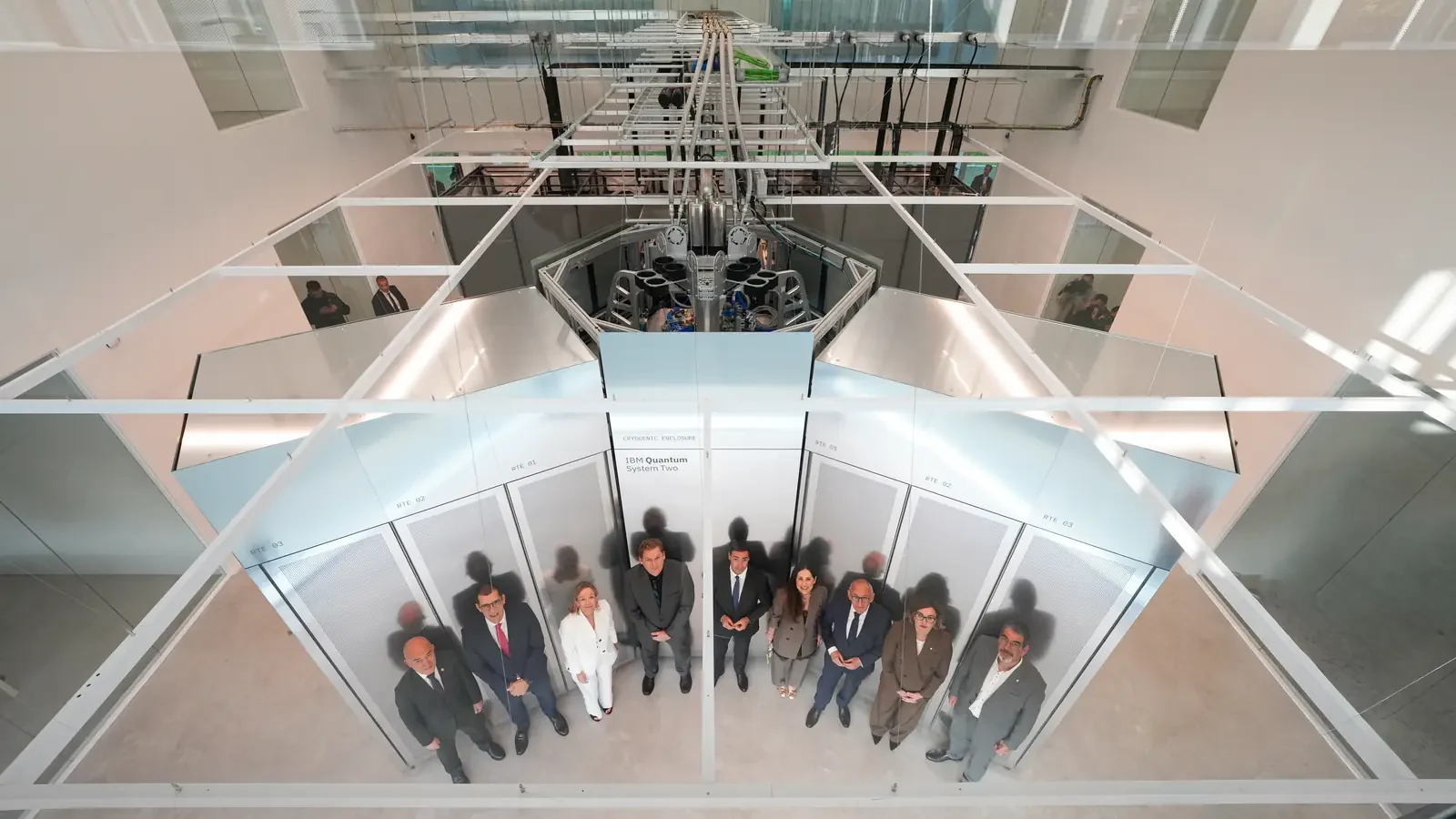
A later project update makes the hardware timeline clearer. On October 20, FreeYa hosted diplomatic, IBM, financial and university representatives at the Iași site. Its account explicitly calls this the future facility and describes a scale model of IBM Quantum System Two. A visit and a model do not confirm installation, commissioning or public access.[1]
For a prospective user, a hub has several practical dependencies. Someone must define a useful problem, obtain access to suitable computing resources, prepare an experiment and interpret its result. Teaching the software can move one part of that process forward while the building and equipment follow a different schedule.
The distinction matters when judging regional programmes. A trained cohort, a working access service and a validated industrial study are all worthwhile outcomes, but they require different evidence. Combining them into a single announcement makes it harder to see which capability a student or business can actually use today.
The next informative update would identify available courses, eligibility, a documented access route and projects with stated evaluation criteria. Classiq’s enterprise partnership in Japan raises similar questions about turning software access into useful experiments. The accompanying photograph shows an existing IBM system in Spain in 2025; it does not show the planned Romanian installation.