
Pruning a quantum neural network works better when the chip’s wiring is counted
ConQUESTA evaluates pruning after compilation under an accuracy constraint. Hardware connectivity changes which deletions save useful resources.
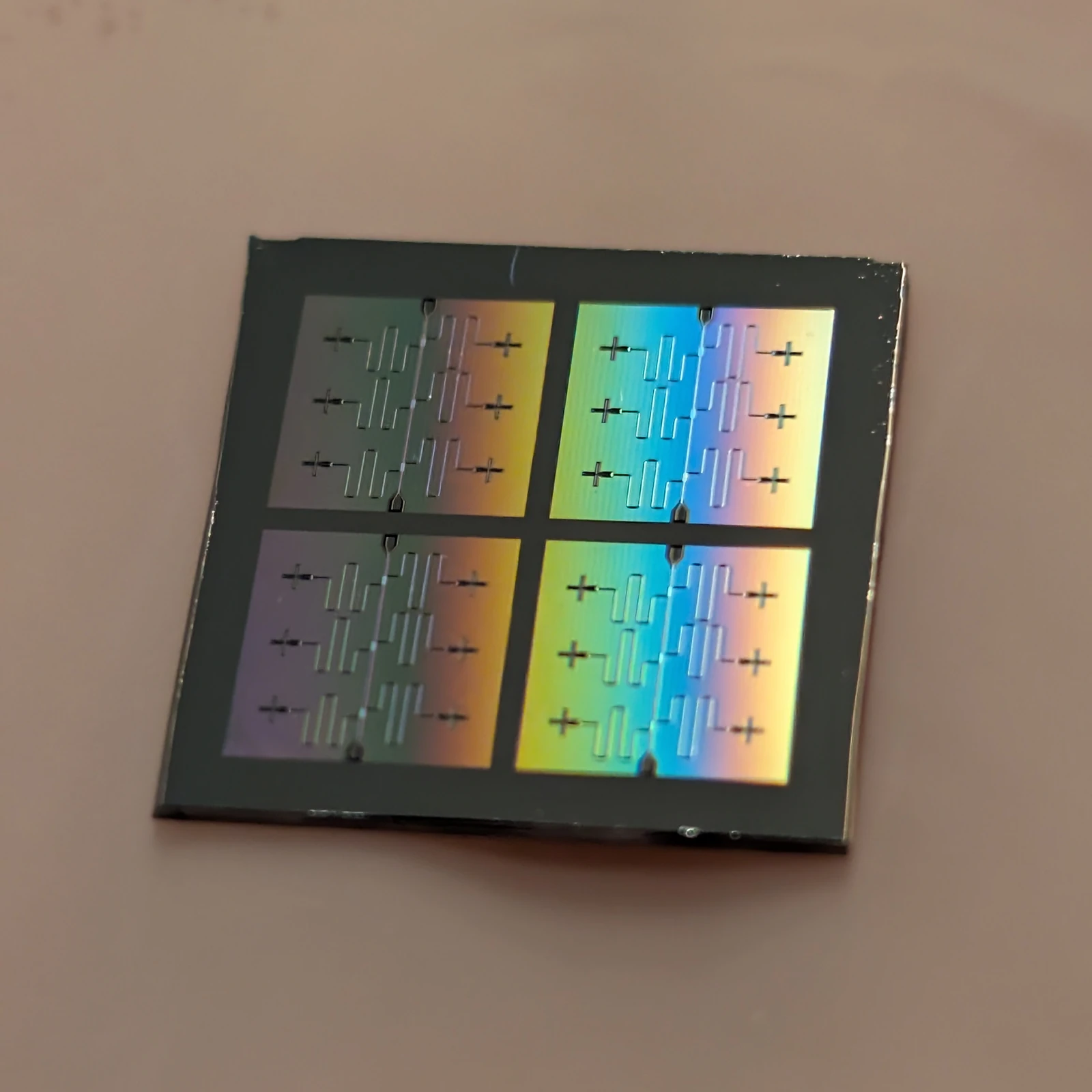

The reported development
The October 16 ConQUESTA preprint studies structural pruning of trained quantum neural networks while accounting for hardware connectivity. It evaluates complete pruning choices after compilation and constrains task accuracy, using small benchmark models across several topologies. Reported resource savings depend on the study’s compilation metrics and baselines. They are not measurements of application speed or clinical performance.[1]
The study evaluates four-, six- and eight- models over eight random seeds. At 55% pruning, reported mean resource reductions range from 61.6% to 82.2%; improvements over the best matched baseline range from 1.7 to 8.9 percentage points. These numbers concern the stated compiled resource metrics and accuracy constraint. They do not measure elapsed hardware runtime, and the manuscript’s submission to ISCAS 2027 is not an acceptance.[1]
Logical simplicity can be physically misleading
A circuit diagram can draw an interaction between any two lines. A processor may only support direct interactions between particular neighbors. Implementing a distant interaction can require moving information or rewriting the circuit. Removing an operation from the abstract diagram therefore does not tell the whole story about the compiled implementation. The surrounding operations and their placement help determine whether the deletion saves useful work.
Evaluate the whole choice
Suppose a hypothetical model contains two interactions that share a routing opportunity. Removing either one in isolation might seem beneficial, yet removing both could change how the remaining operations are arranged. The combined effect need not equal the sum of two separate estimates. Evaluating a complete pruning mask after compilation addresses this kind of interaction. The illustration explains why a local ranking can be a helpful search guide without being a complete cost model.
Preserve the task, not just the diagram
A pruned model is only useful if it still meets the task requirement. The acceptable loss in predictive quality should be specified before choosing the most attractive resource reduction. Otherwise a method can appear efficient by giving up more accuracy than its competitor.
Repeated seeds and held-out evaluation help reveal whether the selected model is robust or simply benefited from a favorable run. Any recovery training should also be included in the procedure being compared.
A resource metric needs its definition
Gate counts, circuit depth and weighted compilation scores describe related but different costs. A reduction in a composite score cannot be translated directly into the same percentage reduction in wall-clock time. Hardware noise can also make two circuits with equal counts perform differently. Clear reporting would expose the components of the resource measure and then test the relation between that measure and a physical implementation.
The question after a small benchmark
The next challenge is whether the selection procedure remains effective as the number of possible deletions grows and the hardware constraints become less idealized. A search method's own computation belongs in that assessment. Comparisons should give simpler pruning strategies the same accuracy target and compilation access. The preprint makes the systems issue visible: a machine-learning model and the quantum device that runs it should be optimized together.
Its benchmark results motivate that approach while leaving larger-scale learning value and hardware execution as distinct claims to establish.