
Australia’s A$12.3 Million Quantum Bet Targets the Power Grid
Six projects move into demonstrators. Energy forecasting and a grid clock show why practical quantum progress needs more than a funding headline.
The useful question about a quantum project is often what it will do outside the laboratory. Australia has now put A$12.3 million behind six projects that are meant to answer that question through demonstrators. The government announced the awards on October 2, covering energy, health, biosecurity and supply chains.[1]
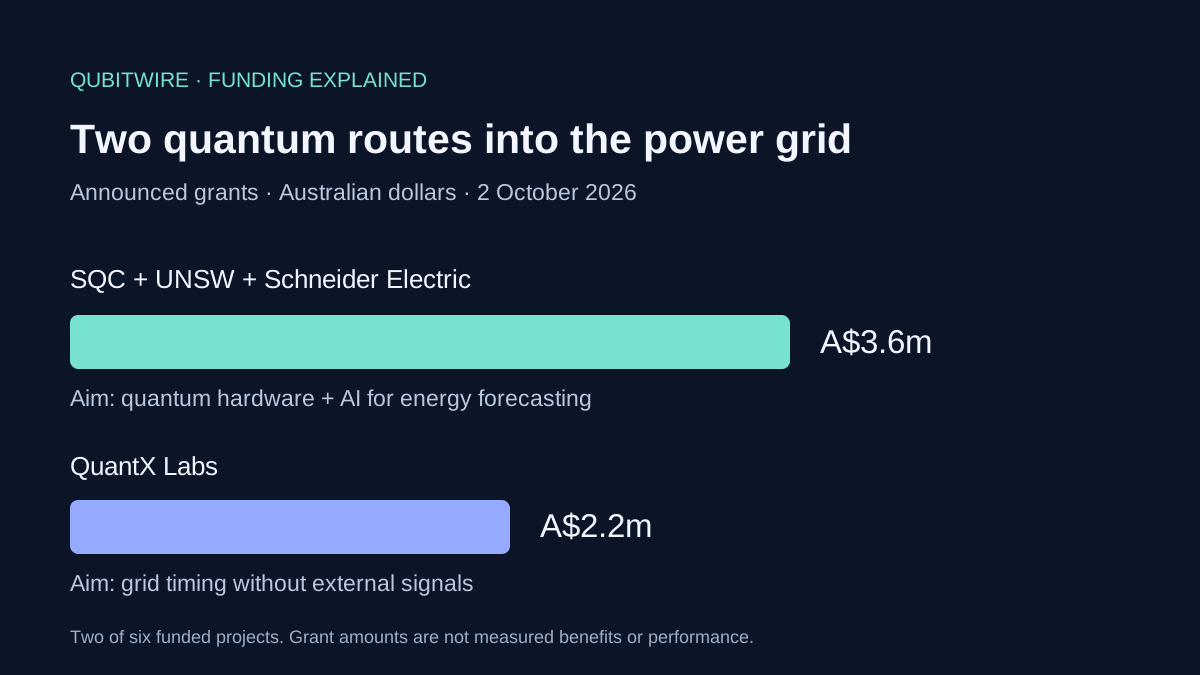
Two of the awards address electricity networks through different approaches. Silicon Quantum Computing receives A$3.6 million for a project with UNSW and Schneider Electric. Its aim is to combine quantum hardware with artificial intelligence models for energy forecasting and renewable energy utilisation. These are intended benefits, not published results.[1]
QuantX Labs receives A$2.2 million to build and test a quantum clock for keeping the electricity grid accurately timed without depending on external signals. A forecasting processor and a timing device belong to different branches of quantum technology. Funding both does not make them interchangeable versions of a quantum computer.[1]
The distinction is useful for readers following practical applications. A broad quantum funding announcement can bring computing, sensing and timing together. To evaluate a particular project, start with the job the proposed device must perform. A clock should be judged by timing performance and resilience. A forecasting system needs an appropriate forecasting comparison.
The Critical Technologies Challenge Program separates early feasibility work from a subsequent demonstrator stage. Its guidance permits solutions that combine quantum technology with other advanced technologies. That structure encourages asking what the quantum component contributes to the whole proposed system. A combined approach still needs an explanation of each component’s role.[2]
The official guidance says demonstrators are expected to validate prototypes and trial technology in a relevant operational environment. It also asks applicants to explain end-user involvement, the quantum component and competitor comparisons. Those requirements are useful context for the awards. They describe the program’s expectations, rather than completed milestones for these six projects.[2]
A demonstrator can make a technical claim easier to inspect, but receiving its funding does not settle the claim. For the energy projects, readers should look for a clearly defined task, operating conditions and a fair comparison with existing approaches. Any eventual claim about efficiency needs measured outcomes from that comparison, including the surrounding workflow.
The announcement supplies no such performance scorecard and establishes no quantum advantage. The next meaningful update will be evidence from the funded work. Ask which problem was tested, what the conventional alternative achieved and whether the result survives practical constraints. The commitment is real; the size of any useful improvement remains a question for the demonstrators.[1]