
Washington Moves Closer to the Quantum Cap Table
Three final awards of up to $100 million each advance a funding framework that gives Washington a stake in quantum companies. The manufacturing targets explain why.


Government-backed quantum companies may soon have government shareholders. On September 8, the U.S. Department of Commerce announced final CHIPS research awards of up to $100 million apiece for Rigetti, Quantinuum and D-Wave. The broader framework unveiled in May said Commerce would receive minority, non-controlling ownership stakes as a condition of funding. The final notices do not confirm that those shares have transferred.[1][2][3][4]
Look past the headline and the spending list is revealing. Rigetti's award targets readout electronics, cryostat design and fabrication. Quantinuum's targets include integrated photonics, cryogenic semiconductors and optical components. D-Wave's award focuses on materials, interfaces and dense packaging. These are the unglamorous bottlenecks between a promising device and a repeatable machine.[2][3][4]
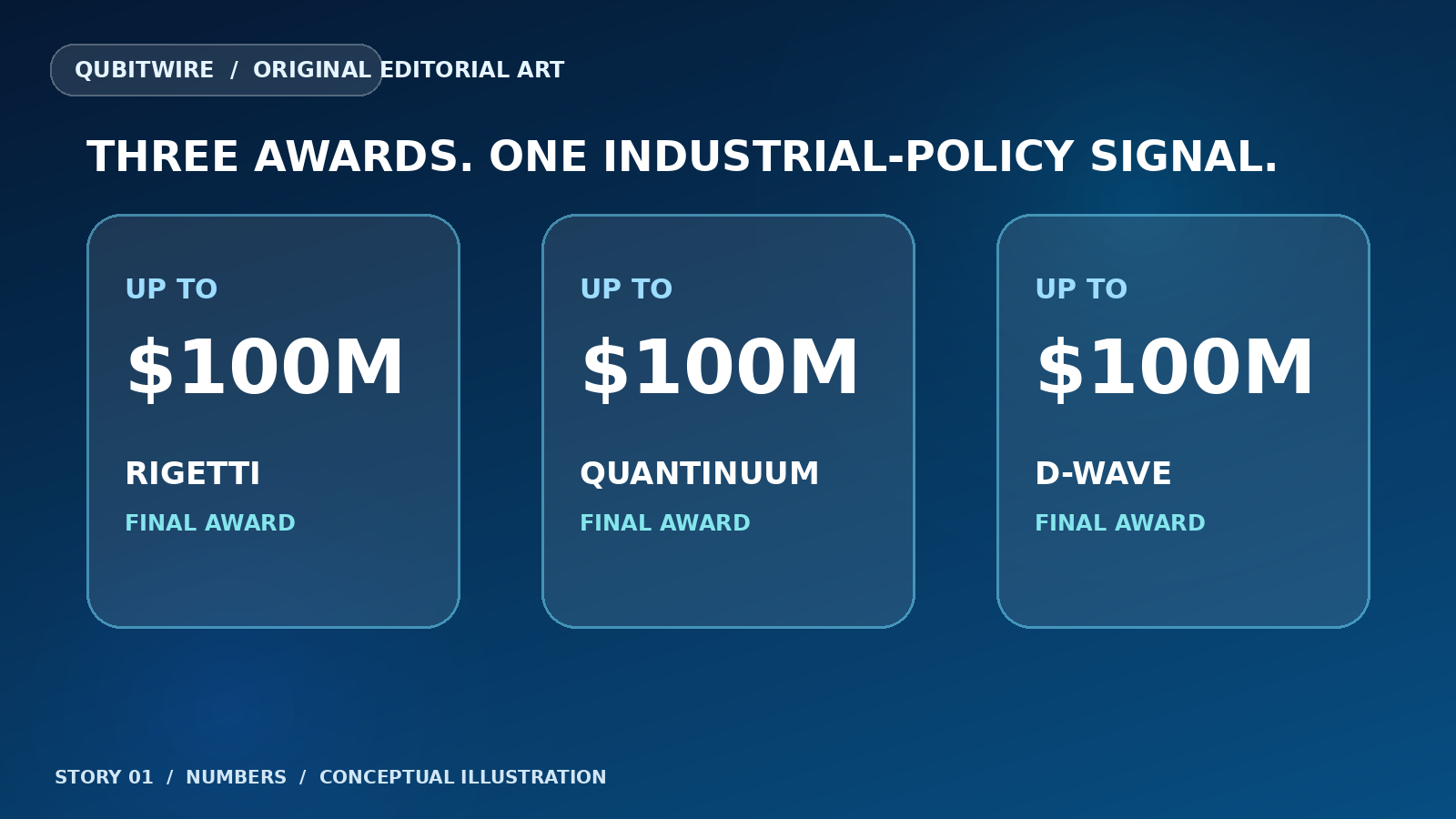

The structure has a clear logic. Public capital can absorb some of the long, expensive engineering work that private investors may struggle to value quarter by quarter. A non-controlling stake can also let taxpayers participate if a recipient creates durable value. The tradeoffs are just as real: milestones matter, conditions matter and an award of up to $100 million is not the same thing as $100 million arriving on day one.[1]
For investors, the awards are evidence of strategic importance, not proof of technical leadership or future revenue. The useful questions come next: how much is actually disbursed, which manufacturing milestones are met, whether the work improves system performance and what the equity terms mean for each cap table.[1][2][3][4]
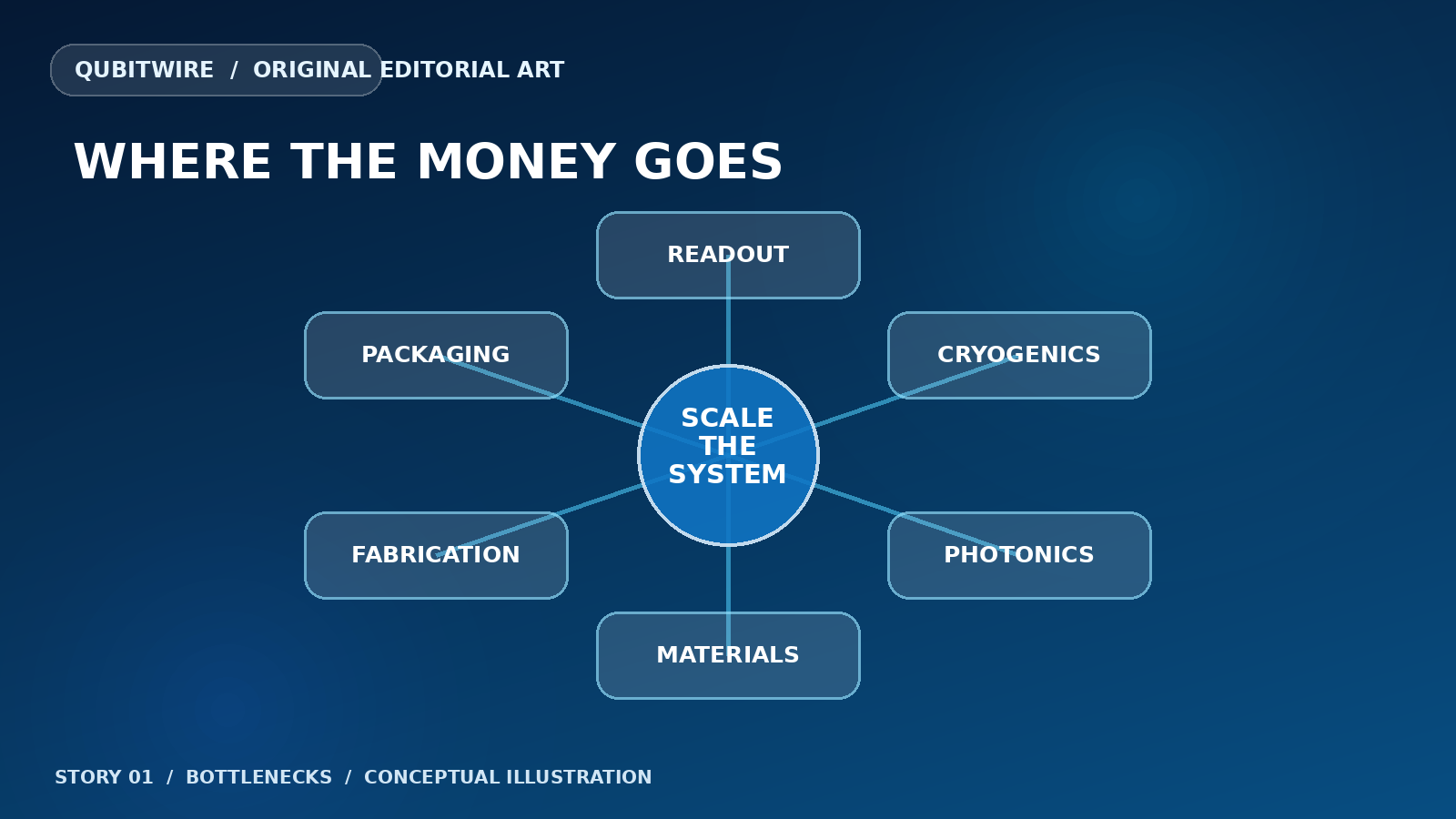

The structure amounts to a bet on domestic quantum capacity. The outcome will not be decided by the announcement. It will depend on whether public dollars turn delicate laboratory systems into components and processes that can be built again and again.[1]