
Skip to content
HARDWARE · SOFTWARE / QUANTUM SERVICES

qBraid puts the queue, access and billing around a quantum processor

The October announcement describes an operating layer for hybrid computing services. Early access and integration claims remain separate from measured quantum performance.
Published Source report Sources checked
My reading list
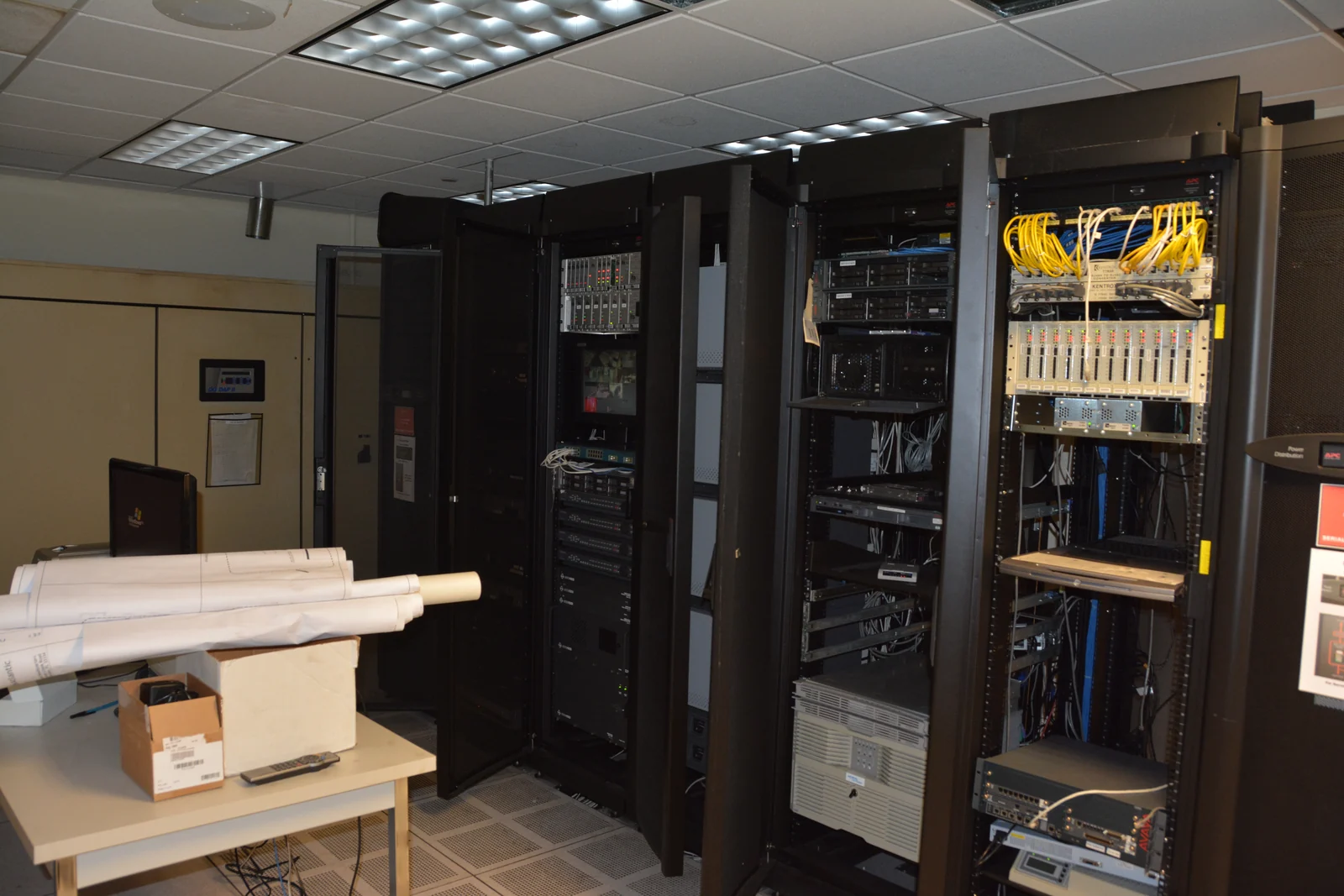
Open black server cabinets stand beside worktables in a room lit by ceiling panels.
Archival illustration: a conventional server room photographed in November 2015. It does not show qBraid OS or a partner installation.Carl Lender · CC BY 2.0 · CC BY 2.0Full image credit

The work around a quantum job

Using a quantum processor involves more than choosing an algorithm. Someone must grant access, allocate machine time, track jobs and account for usage. qBraid’s October 21 announcement puts those operational tasks at the centre of its qBraid OS offering.[1]

The company describes software for running quantum processors alongside CPUs and NVIDIA GPUs, using CUDA-Q. It brings scheduling, access control, usage metering and billing together, with connections either to an existing processor interface or to control electronics.[1]

What the announcement establishes

The release says early-access partners include Diraq, Quobly, IBM, MemQ, Quantum Machines, Equal1 and IonQ. Those names describe the company’s stated early-access group; they do not establish identical deployments or measured performance at every partner.[1]

A longer path to the announcement

The operating-system idea predates this release. MIT News reported in November 2025 that qBraid had developed qBraid-OS and that four quantum companies were using it. The same account traced the business back to a cloud software sandbox intended to reduce the setup work facing programmers, followed by connections to different quantum devices.[2]

The October announcement therefore belongs in that product history, rather than being described as the invention of a new category overnight. The release does not supply a comparative benchmark establishing faster or more accurate quantum computation.[1][2]

What to watch next

QubitWire’s interpretation is that the useful comparison is operational: how much integration work remains for an operator, what permissions are enforced, and whether a job’s classical and quantum stages can be monitored together. A product demonstration should make those boundaries visible.

Easier access to a processor is valuable for experimentation, but it does not by itself improve that processor’s error rates or show a commercial advantage for an application. Watch for documented integrations and reproducible workload measurements.

Keep your reading trail

Your Updates →

Evidence & context

2 linked sources

Company product announcement and earlier institutional reporting

How to read the evidence and dates

An announcement records what an organization stated. An experiment reports an observation. A simulation or resource estimate depends on its assumptions. QubitWire’s analysis connects these sources; the labels are not quality scores.

Published is the article’s first QubitWire publication. Updated marks a substantive content change. Sources checked records a review of the underlying evidence. An older paper can support a new explanation, and another press release about the same work is not independent replication.

QubitWire take

Operational convenience and application performance need separate evidence.

Sources

  1. qBraid: qBraid OS for operating quantum computing services

    Company announcement dated October 21, 2026. Product capabilities and early-access partners are attributed company claims, not independent deployment benchmarks. Reviewed October 21.

  2. MIT News: A gateway to coding on quantum computers

    November 4, 2025 report already describes qBraid-OS and use by four companies. Establishes earlier product history; current usage is not inferred from those historical figures. Reviewed October 21, 2026.

Keep up with these topics

Choose the subjects you want to find again in Your Updates.

READ NEXT

Continue exploring

All Hardware stories
  1. Related reading

    Quantum computers need a conductor. Qendra is building one

    An ETH Zurich spin-off connects quantum software to laboratory signals. Its specifications reveal why the whole feedback loop matters.

    Published · Source report · Sources checked
  2. Related reading

    NVIDIA simulates a 104-qubit error-correction protocol on JUPITER

    A distributed simulation models a 104-qubit protocol with a smaller evolving representation. Memory, runtime and noise assumptions define the result.

    Published · Source report · Sources checked
THE QUANTUM BRIEFING

A clearer signal.
Read the latest edition.

A little perspective on a fast-moving field.

Read the on-site briefing →

Read selected quantum coverage in the on-site briefing, or register your interest below.