
The Noise in an Ion Trap May Be Hiding in the Materials
A new model predicts electric-field noise from dielectric and metallic losses and comes within a factor of four for one tested trap.
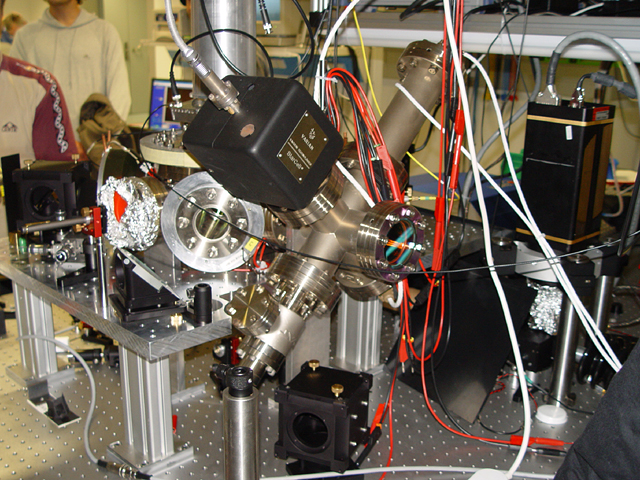

Trapped ions can lose coherence or heat when fluctuating electric fields reach the particle. An October 1 preprint presents a way to estimate part of that noise from the materials and geometry around an ion, using fluctuation electrodynamics rather than treating the environment as an unexplained background.[1][2]
The method connects electric-field noise with energy loss in bulk dielectric and metallic materials. That turns choices such as substrates, electrodes and surrounding structures into inputs for a calculation. The authors designed the approach for arbitrary trap geometries, where simple distance rules may not capture how structures shield or expose the ion.[1][2]
For a trap with an electrically floating electrode, the authors find that the dielectric contribution dominates and say the model predicts the observed noise within a factor of four. They also apply the calculation to representative surface-trap designs to examine how electrode structures shield noise.[1][2]
Agreement within a factor of four can guide engineering, but it is not precision prediction. The paper does not report a better , a lower logical error rate or a newly built quantum computer. The dominant material in the studied floating-electrode trap should not be assumed to dominate every trapped-ion system. Surface contamination, electronics and other mechanisms may still matter.[1][2]
A useful next test would compare the model with multiple fabricated traps whose materials and geometry are varied deliberately. Repeating the measurements across temperatures and operating conditions would help separate material loss from competing noise sources. If the predictions track those measurements, designers could screen noise sources earlier. For now, this preprint offers a physically grounded diagnostic, not a universal recipe for quiet ion traps.[1][2]