
A classical emulator challenges tests of photonic quantum advantage
A classical emulator reproduces selected tests used in photonic advantage claims. Passing those tests does not make every sampling problem easy.

A stronger classical comparison
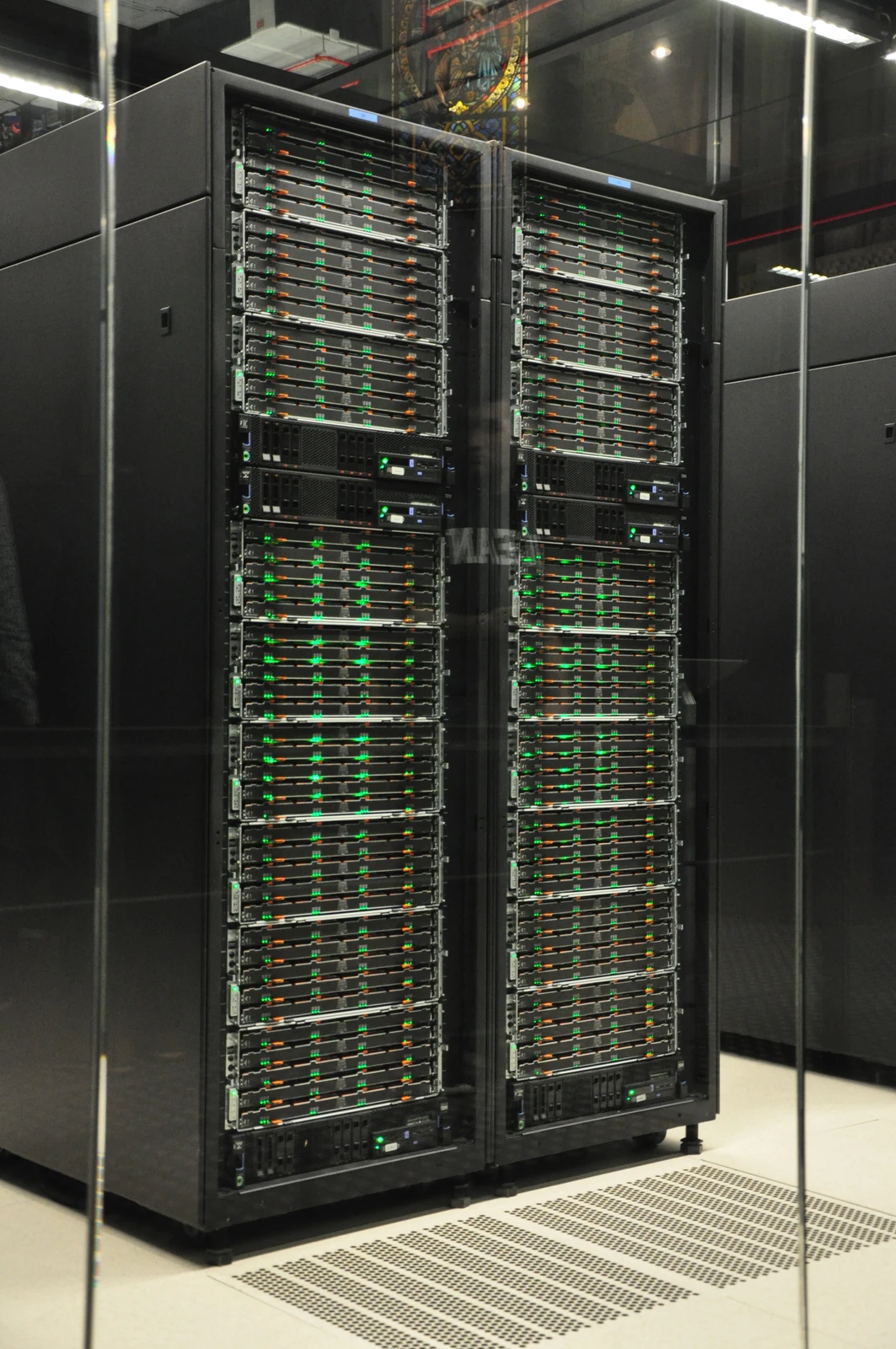
A Science Advances paper published on October 14 reports a classical emulator that performs strongly on established tests of 100-mode Gaussian boson-sampling experiments using a single CPU or GPU. The work comes from researchers associated with Edinburgh, EPCC and Montreal. Its preprint was released in 2025, so the current development is journal publication, not the first disclosure.[1][2]
A benchmark is a defined question
The finding sharpens the comparison for the sampling problems and tests studied. It does not say an ordinary computer can efficiently reproduce every possible photonic calculation. Those are different claims. A useful benchmark identifies a task, specifies how close two outputs must be and includes a test capable of noticing the differences that matter. Improving a classical emulator can reveal that an earlier test was less demanding than expected, or that the classical baseline has become more capable.
Why this helps quantum engineering
The competitive framing misses a practical benefit. Better simulation tools can make it easier to investigate a proposed device and identify where its output departs from the intended behavior. At the same time, a harder classical baseline forces claims of computational advantage to become more exact. Those roles can coexist. Researchers can use a classical model as a design aid while seeking tasks where the physical quantum system remains difficult to emulate.
What a fair next comparison needs
The useful follow-up would publish the sampling task, validation statistics, runtime, memory use and hardware configuration together. The comparison should include the cost of setting up and tuning the emulator, as well as the cost of producing more samples once it is ready. QubitWire’s analysis is that the most shareable insight is also the most defensible one: quantum progress is measured against a moving classical frontier. A claim can be important when first demonstrated and require a different interpretation later.
Updating the baseline is scientific progress, not an embarrassment to hide.
A benchmark needs a discrimination test
Suppose two samplers pass the same validation test but produce different distributions on an untested feature. Passing that test establishes agreement on the tested property, not identity of the full output. The scientifically useful question becomes whether the remaining difference matters to the claim the benchmark was intended to support.
This points toward a constructive response to stronger classical methods. Publish more informative tests, state their scope and compare competing approaches under the same resource accounting. A result that survives those comparisons becomes better understood. A result whose original interpretation changes still contributes knowledge about what the task actually requires. The discussion is most useful when it identifies a specific assumption or comparison that has changed.
Describing the development as a defeat for every photonic architecture would erase the task boundaries that made the emulator result meaningful in the first place.
Research in context · checked 20 Oct 2026
Two distributions can pass a weak test and still differ completely
A worked explanation of the distinction behind the result.
Imagine two devices that each output two bits. Device A produces 00 half the time and 11 half the time. Device B produces 01 half the time and 10 half the time. If you inspect the first bit alone, both devices produce zero and one equally often. The second bit alone also looks identical. A test restricted to those separate averages cannot distinguish the devices.
Yet the outputs are completely different. Device A always has matching bits. Device B never does. A parity or correlation test immediately separates them. This is an original toy example, not a reconstruction of the Edinburgh paper. It illustrates why a sampling claim must name the tests it passes rather than treating agreement as a universal property.
A reader can use the example to ask three questions about a published benchmark. Which features of the distribution are checked? Could a simpler generator reproduce those features without reproducing the entire distribution? Is passing the test tied to the scientific or computational claim being made? These questions do not prejudge whether a quantum or classical method wins. They specify what winning means.
There is also a data-volume issue. A test that could theoretically distinguish two distributions may require more samples than an experiment provides. Reporting a statistical uncertainty is therefore part of describing the result. Failure to detect a difference can mean the distributions are close, but it can also mean the test lacks enough information.
Comparing separate-bit averages, parity and full outcome frequencies reveals the difference. The same pair of devices can look identical under the first comparison and distinct under the others. The lesson is that the choice of test determines which differences become visible.
Sources and evidence
- Software breakthrough could spur quantum computer advances ↗Source published 2026-10-15. university announcement.
- A fast and frugal Gaussian Boson sampling emulator ↗Source published 2026-10-14. university record of peer-reviewed research. Science Advances DOI 10.1126/sciadv.aef8431; preprint first appeared in 2025. Current news is journal publication, not first disclosure.
Research in context · checked 20 Oct 2026
Does a better emulator end the case for photonic quantum computers?
A worked explanation of the distinction behind the result.
No such general conclusion follows from improving one class of simulations. Computational claims are statements about specified problem families, allowed resources and accuracy. Changing any of those can change the comparison. A photonic experiment may also be scientifically valuable for learning about sources, losses, interference or control even when a classical method can reproduce its tested output.
The stricter lesson is to keep the achievement and the implication separate. Demonstrating an optical process is one achievement. Showing that its output defeats a defined classical baseline is another. Delivering an application result more efficiently is a third. A clear article lets readers appreciate the first without silently granting the second and third.
A probability distribution may be too large to list in full. Validation then relies on selected properties or samples. The important editorial question is which alternatives those tests can actually rule out. Stronger tests are valuable because they make the comparison more informative, even when neither device can provide a complete distribution table.
Sources and evidence
- Software breakthrough could spur quantum computer advances ↗Source published 2026-10-15. university announcement.
- A fast and frugal Gaussian Boson sampling emulator ↗Source published 2026-10-14. university record of peer-reviewed research. Science Advances DOI 10.1126/sciadv.aef8431; preprint first appeared in 2025. Current news is journal publication, not first disclosure.