
Physicists Want to Turn a Superconductor’s Trouble Spots Into a Diagnostic Tool
A new Fermilab project will use magnetic vortices to investigate hidden sources of superconducting loss. It is a proposed way to diagnose a problem, not an announcement that the problem has been cured.
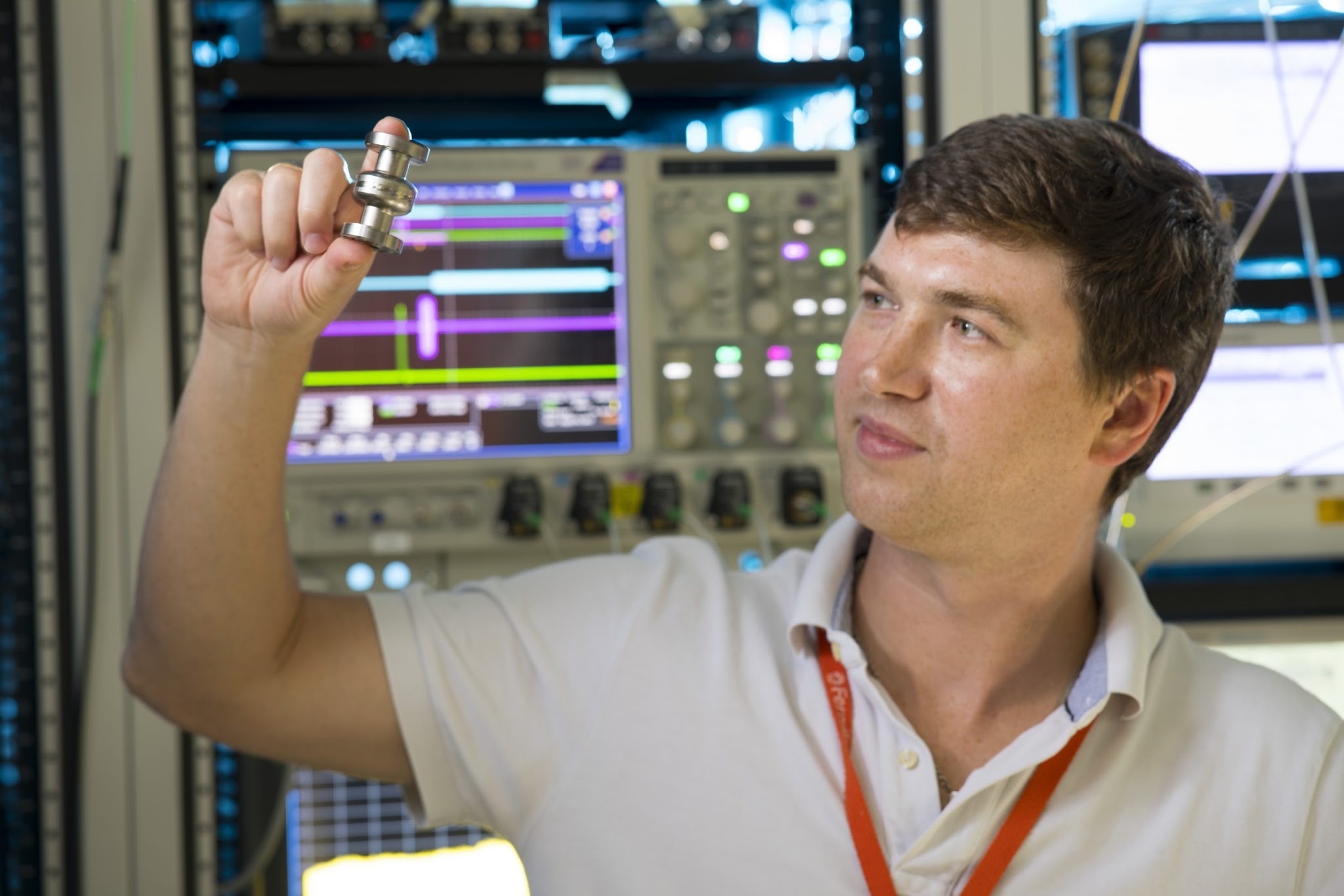
A feature that can make a superconducting device troublesome may also help reveal what is going wrong inside it. That is the appealing idea behind a newly announced research project at Fermilab.
On 8 October 2026, the laboratory described Daniel Bafia’s Early Career work on using magnetic vortices to uncover sources of loss in superconducting quantum devices. The announcement concerns a research programme and its intended diagnostic approach. It does not report a universal remedy, a measured production-yield improvement or a completed solution for every .[1]
The distinction between finding a problem and fixing it is especially important here. A better diagnostic can be a major step forward without already being the repair.
Superconducting devices still have losses
The word superconducting can suggest an ideal object in which nothing is ever dissipated. Real devices are more complicated. They have surfaces, interfaces, fields, geometry and operating conditions, all of which can affect how energy is stored or lost.
A superconducting circuit may be designed to preserve a delicate response, yet still experience loss through processes that are difficult to isolate. Understanding those processes is part of making devices more consistent and useful.
The challenge is not only to measure that a device loses energy. It is to determine where the loss comes from and which intervention would change it. Several mechanisms can produce similar-looking symptoms in an aggregate measurement.
Use a vortex as a probe
Magnetic vortices can form in type-II superconductors, including niobium and tantalum, when magnetic flux penetrates the superconducting material. Superconductivity is suppressed at the core, with currents circulating around it. How a vortex interacts with defects can affect dissipation. The detailed behavior depends on material, geometry and operating conditions.[1]
The proposed project treats vortices as a way to probe loss mechanisms, rather than merely regarding them as an unwanted complication. The institutional account supplies the programme’s motivation; the exact experimental protocol and results will need to be evaluated as the research proceeds.[1]
An everyday analogy is using a controlled disturbance to learn where a system is sensitive. The disturbance is not the hidden problem itself, and the analogy does not specify the superconducting experiment. It explains why deliberately changing a condition can reveal more than passively observing a failure.
Separating possible causes
A measured quality or decay characteristic can summarize the behaviour of an entire device. It does not automatically identify a microscopic cause.
A surface condition might matter, but so might an interface, processing history or a field-dependent effect. Two devices can share a broad design while differing in details that affect the result. A single number can conceal those differences.
This is why a diagnostic programme needs controlled comparisons. Vary one relevant condition, preserve the important alternatives and observe whether the response follows the proposed mechanism. Then test whether the relationship survives another device or run.
A useful diagnosis changes the next test
Imagine two possible sources of loss that would require different remedies. A measurement that cannot distinguish them may show that the device is imperfect but leave the engineer unsure what to do.
A more discriminating test could direct the next experiment toward a material treatment, design change or operating condition. That is the practical value of diagnosis: it reduces uncertainty about which intervention is worth trying.
The project’s eventual success should therefore be evaluated by what its method can distinguish, how reliably it does so and whether those distinctions are validated independently. A colourful response map alone would not settle those questions.
Nor would a single successful intervention automatically establish a universal process rule. The range of materials, geometries and conditions over which the conclusion holds matters to anyone trying to use it.
The longer path to manufacturing
If a loss mechanism can be identified reliably, that knowledge may guide fabrication or processing. The path from diagnosis to repeatable manufacturing still contains several steps.
A candidate intervention has to be tested. Its benefit has to be separated from other changes. It needs to survive repetition across devices and, eventually, the conditions of a process that can be run consistently.
That sequence is relevant to companies and investors, but it is not a revenue forecast. A newly funded research project is not a customer order, and an association with a promising technique is not exclusive ownership of every future benefit.
Using a troublesome feature as a controlled probe is an appealing strategy because it turns an obstacle into a question the experiment can ask. Whether the method succeeds, and where it is useful, remains to be demonstrated.